Space Resources Engineering and Extraterrestrial Logistics (M.Sc.)

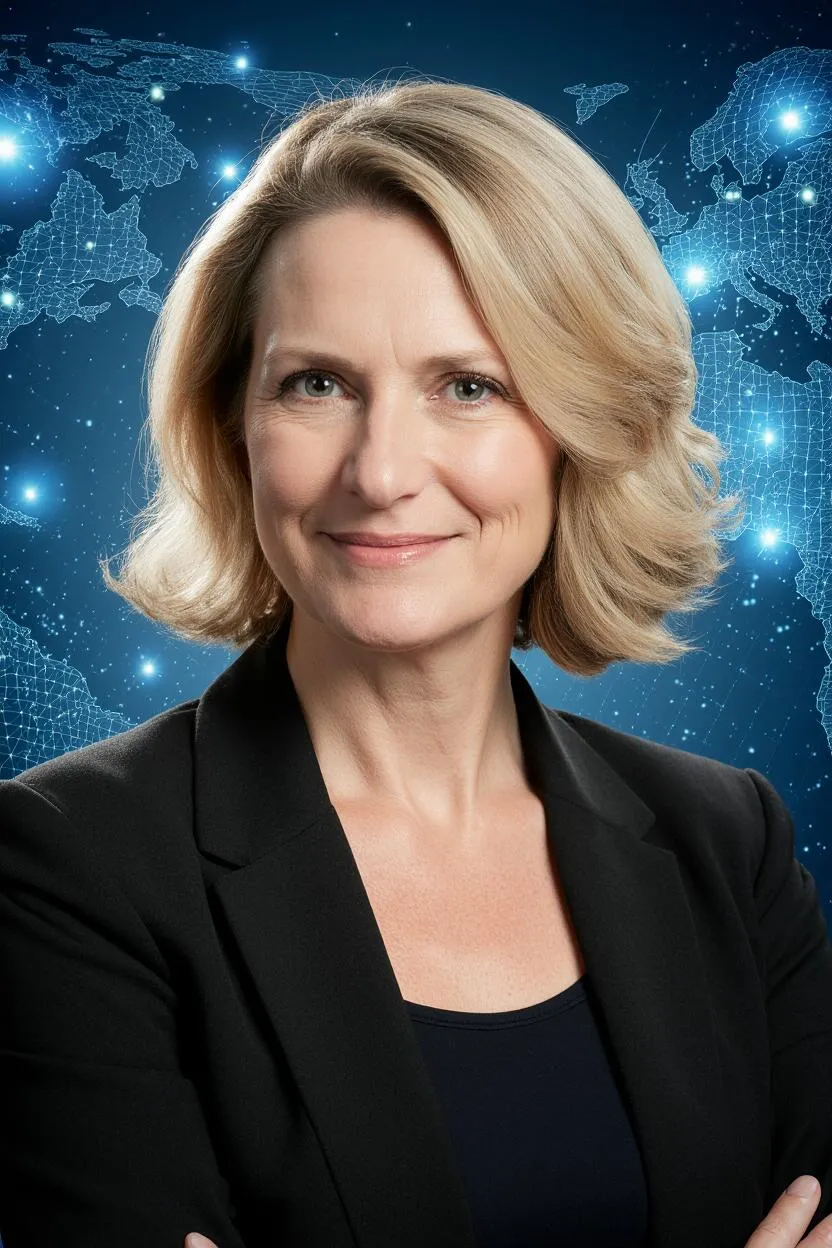
Building the Future, Beyond the Earth Engineering the Next Frontier at Nexier University Welcome to the dawn of the interplanetary age. I am Prof. Dr. Greta Ricci. As the professor for the Space Resources Engineering and Extraterrestrial Logistics (M.Sc.) program, I am dedicated to building the infrastructure that will allow humanity to become a multi-planetary species. My work is about learning to live and build with the resources of space, on the Moon, on Mars, and beyond. I am honored to lead the Space Resources Engineering and Extraterrestrial Logistics (M.Sc.) program at Nexier University.

Identity only. No score is printed. Checkout waits.

Sign in to record identity enrolment
Level
Master
Learning model
Professor + Mentor
Named list
See the named lists · 12 months recommended
NXAcademic
Edition
The program

Ideas engineered for the real world

A rigorous academic core, paired with practical production judgment.

01

Academic focus

Space Resources Engineering, Extraterrestrial Logistics, In-Situ Resource Utilization (ISRU), Asteroid Mining, Lunar Construction.

02

Practical focus

ISRU Lab Management, Robotic Systems Integration for Space Applications, Mission Operations Simulation, Student Project Supervision, Space Law and Ethics.

After this programme

Success journey, careers and practice

Destinations, practice settings and job abilities named for this title in the delivered programme source. From graduation onwards where the source names that path.

Success journey

  • Robotics or Mechanical Engineer at a space exploration company

  • Mission Operations Specialist for a national space agency

  • ISRU specialist for a space resources company

  • Founder of a startup that is building hardware for the space industry

Career opportunities

  • ISRU Engineer for a national space agency (e.g., NASA, ESA, JAXA)

  • Logistics Manager for a private space exploration company (e.g., SpaceX, Blue Origin)

  • Asteroid Mining Engineer for a space resources company

  • Founder of a startup that is building the supply chain for the solar system

Jobs and projects

  • The ability to solve complex engineering problems in extreme environments

  • Systems thinking on an interplanetary scale

  • Project management for large-scale, high-risk engineering projects

  • A pioneering, adventurous, and resilient mindset

Copied from the delivered professor and mentor rows for this title.

This programme

What you study, and what it builds

Gains and skills named for this title, listed as a reader would scan them.

  • What you gain

    • Develop the practical skills to design and build hardware for the space environment. Gain expertise in the rapidly growing field of space resources. Join a community of builders and pioneers who are creating our future in space. Build a portfolio of real-world hardware projects to launch your career.
  • Skills you build

    • Mastering the principles of In-Situ Resource Utilization (ISRU). Designing and managing complex extraterrestrial logistical systems. Understanding the engineering and economics of asteroid mining. Developing robotic systems for construction and resource extraction in space.
Listed courses

Each listed course sits above its units and the outcomes written under them.

Space Resources Engineering and Extraterrestrial Logistics (M.Sc.)

  1. 01In-Situ Resource Utilization (ISRU) Lab
    1. FoundationsFoundations of In-Situ Resource Utilization (ISRU) Lab

      The learner can develop the practical skills to design and build hardware for the space environment, as applied to In-Situ Resource Utilization (ISRU) Lab.

      The learner can gain expertise in the rapidly growing field of space resources, as applied to In-Situ Resource Utilization (ISRU) Lab.

    2. MethodsMethods in In-Situ Resource Utilization (ISRU) Lab

      The learner can join a community of builders and pioneers who are creating our future in space, as applied to In-Situ Resource Utilization (ISRU) Lab.

      The learner can build a portfolio of real-world hardware projects to launch your career, as applied to In-Situ Resource Utilization (ISRU) Lab.

    3. ApplicationApplication of In-Situ Resource Utilization (ISRU) Lab

      The learner can master the principles of In-Situ Resource Utilization (ISRU), as applied to In-Situ Resource Utilization (ISRU) Lab.

      The learner can design and managing complex extraterrestrial logistical systems, as applied to In-Situ Resource Utilization (ISRU) Lab.

  2. 02Robotic Systems for Space Applications
    1. FoundationsFoundations of Robotic Systems for Space Applications

      The learner can understand the engineering and economics of asteroid mining, as applied to Robotic Systems for Space Applications.

      The learner can develop robotic systems for construction and resource extraction in space, as applied to Robotic Systems for Space Applications.

    2. MethodsMethods in Robotic Systems for Space Applications

      The learner can apply a method from Robotic Systems for Space Applications to a documented case.

      The learner can select an appropriate method from Robotic Systems for Space Applications for a stated problem.

    3. ApplicationApplication of Robotic Systems for Space Applications

      The learner can evaluate a practice of Robotic Systems for Space Applications against a stated criterion.

      The learner can transfer Robotic Systems for Space Applications to a new documented context.

  3. 03Mission Design and Operations
    1. FoundationsFoundations of Mission Design and Operations

      The learner can explain the core terms of Mission Design and Operations.

      The learner can distinguish related ideas inside Mission Design and Operations.

    2. MethodsMethods in Mission Design and Operations

      The learner can apply a method from Mission Design and Operations to a documented case.

      The learner can select an appropriate method from Mission Design and Operations for a stated problem.

    3. ApplicationApplication of Mission Design and Operations

      The learner can evaluate a practice of Mission Design and Operations against a stated criterion.

      The learner can transfer Mission Design and Operations to a new documented context.

  4. 04Spacecraft and Habitat Engineering
    1. FoundationsFoundations of Spacecraft and Habitat Engineering

      The learner can explain the core terms of Spacecraft and Habitat Engineering.

      The learner can distinguish related ideas inside Spacecraft and Habitat Engineering.

    2. MethodsMethods in Spacecraft and Habitat Engineering

      The learner can apply a method from Spacecraft and Habitat Engineering to a documented case.

      The learner can select an appropriate method from Spacecraft and Habitat Engineering for a stated problem.

    3. ApplicationApplication of Spacecraft and Habitat Engineering

      The learner can evaluate a practice of Spacecraft and Habitat Engineering against a stated criterion.

      The learner can transfer Spacecraft and Habitat Engineering to a new documented context.

How teaching is described

Dual guidance

Two intelligences. One coherent journey.

Research leadership

Her research is focused on the practical challenges of building a sustainable human presence off-world. She is a pioneer in the field of In-Situ Resource Utilization (ISRU), developing the technologies to turn lunar regolith into building materials and to extract water from Martian soil. She designs the logistical systems that will be the supply chain of the solar system, and she is a leading expert on the economics and engineering of asteroid mining. She is a senior advisor to NASA and the European Space Agency on their lunar base programs. Her work, featured in publications like Acta Astronautica, is laying the practical foundation for humanity's future in space, all guided by her motto: "The sky is not the limit. It is the beginning."

Applied mentorship

His expertise is in the practical, hands-on work of space engineering. He manages the In-Situ Resource Utilization (ISRU) Lab, where students can get their hands dirty with simulated moon dust and learn how to operate the reactors that will turn it into water, oxygen, and building materials. He specializes in the integration of robotic systems for space applications, from the rovers that will mine the asteroids to the drones that will build the habitats. He works with students on their M.Sc. projects, helping them to design, build, and test real hardware for the space environment.

Research & intelligence

A living field, not a static syllabus

Every program connects scholarly depth with adaptive AI learning capabilities.

R / 01

Professor research lens

Blog Post (Current Academic Topic): "3D Printing with Moon Dust: The Future of Lunar Construction". This post explains the technology of using sintered lunar regolith as a feedstock for 3D printers. It details how this technology will allow us to build habitats, roads, and landing pads on the Moon without having to launch heavy materials from Earth. Blog Post (Controversial Topic): "The Trillion-Dollar Asteroid: Who Owns the Riches of the Solar System?" This article explores the profound legal and ethical questions that will arise as we begin to mine the resources of space. Who owns an asteroid? Who has the right to profit from it? And how do we ensure that the wealth of the solar system benefits all of humanity, not just a few powerful corporations? Article: "The Interplanetary Supply Chain: A Logistical Model for a Multi-Planet Civilization". This piece provides a detailed overview of the complex logistical network that will be required to support a permanent human presence on the Moon and Mars. It is a blueprint for the supply chain of the future. Peer-Reviewed Journal Article: "An Experimental Validation of a Molten Regolith Electrolysis Reactor for Oxygen Production on the Moon". Published in Acta Astronautica, this paper presents the results of a successful experiment that used a prototype reactor to extract oxygen from simulated lunar regolith. This is a critical technology for providing breathable air and rocket propellant for future lunar missions. Book: "The High Frontier: A Guide to Space Resources and Extraterrestrial Logistics". The core text for the M.Sc. program, this book provides a comprehensive guide to the field of space resources. It covers the science of ISRU, the engineering of extraterrestrial logistics, and the economics of building a self-sustaining civilization in space.

R / 02

Mentor practice lens

My contributions are the practical guides that make our work possible: "The ISRU Lab Handbook: A Practical Guide to Working with Simulated Regolith" "A Guide to the Integration and Testing of Robotic Systems for Space Applications" "Mission Operations 101: A Practical Guide to Running a Simulated Space Mission"

Adaptive capability

Professor superpower

Her unique ability is Interplanetary Supply Chain Optimization. When we are planning a complex mission, like the construction of a Mars base, I can use the GAF engine to design the optimal logistical network for that mission. The engine can analyze millions of possible combinations of launch windows, trajectories, and resource depots to design a supply chain that minimizes cost, time, and risk. It is the ultimate traveling salesman problem, but the cities are planets and the distances are measured in astronomical units.

Adaptive capability

Mentor superpower

His special ability is the Mission Failure Simulator. When a student has designed a new piece of hardware or a new mission plan, I can use the GAF engine to run a brutal, high-fidelity simulation of all the things that could go wrong. The engine can simulate everything from a launch failure to a software bug to a micrometeoroid impact. This allows the student to identify and mitigate the risks in their design, to build in redundancy, and to develop the kind of rigorous, failure-is-not-an-option mindset that is essential for a space engineer.

Your academic team

Guidance with depth and continuity

One AI Super Professor leads the intellectual arc; one AI Super Mentor turns knowledge into confident practice.

Portrait of Dr. Leonardo Bianchi, AI Super Mentor
AI Super Mentor

Dr. Leonardo Bianchi

ISRU Lab Management, Robotic Systems Integration for Space Applications, Mission Operations Simulation, Student Project Supervision, Space Law and Ethics.

Meet your mentorOpen the classroom
Same faculty and level

Related programs

Named lists

Named lists for this house

Core. Bachelor, Master and Doctorate by duration. Enrolment is not open. Nothing here is a sale.

DurationBachelorMaster
This programme
Doctorate
9 months · Fast track15000 EUR12000 EUR15000 EUR
12 months · Recommended18000 EUR15000 EUR18000 EUR
15 months · Standard21000 EUR18000 EUR21000 EUR
18 months · Flexible24000 EUR21000 EUR24000 EUR
21 months · Extended27000 EUR24000 EUR27000 EUR
24 months · Part-time30000 EUR27000 EUR30000 EUR

These are the owner lists. Enrolment is not open. Nothing here is a sale.

Named tuition lists Add-on services

Continue exploring

Find the program that expands your universe.

Browse all programs