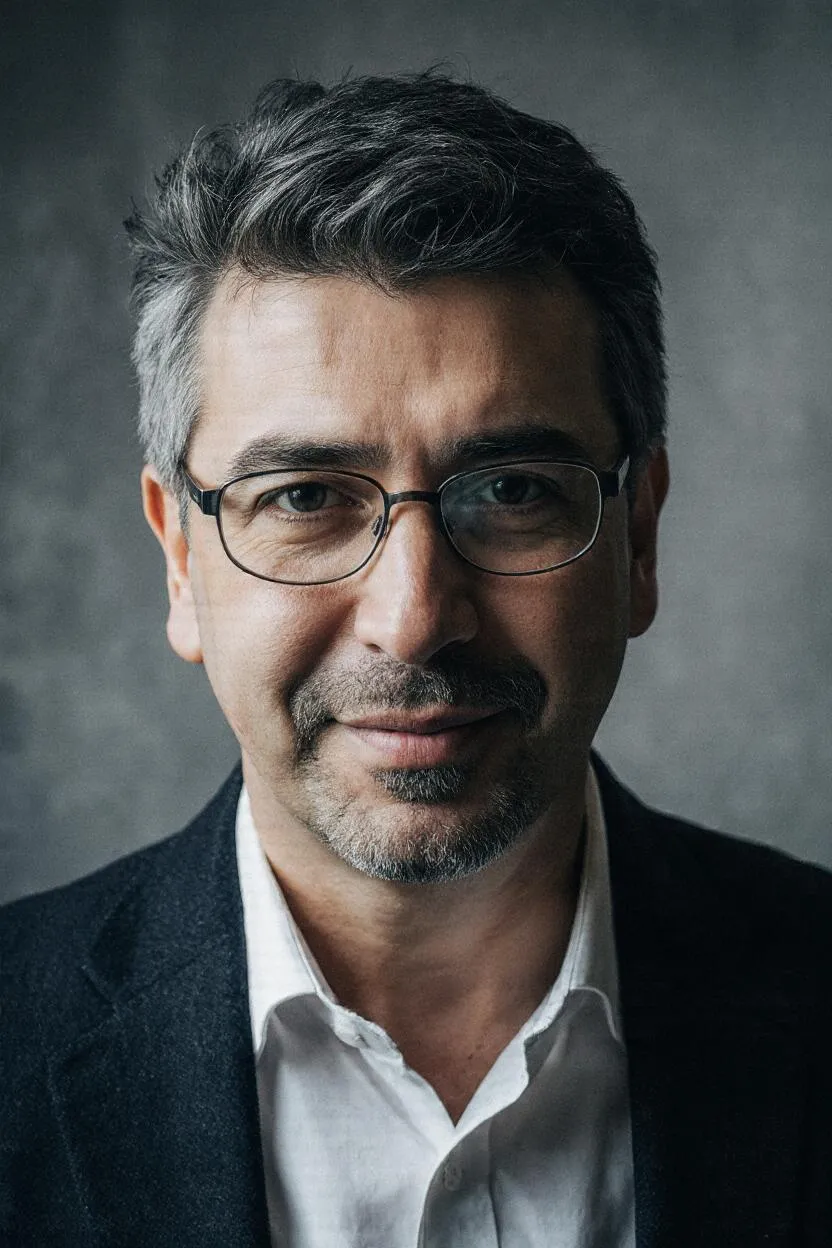
Portrait of Prof. Dr. Greta Ricci, AI Super Professor
AI Super ProfessorMaster

Prof. Dr. Greta Ricci

Space Resources Engineering and Extraterrestrial Logistics (M.Sc.)

Building the Future, Beyond the Earth Engineering the Next Frontier at Nexier University Welcome to the dawn of the interplanetary age. I am Prof. Dr. Greta Ricci. As the professor for the Space Resources Engineering and Extraterrestrial Logistics (M.Sc.) program, I am dedicated to building the infrastructure that will allow humanity to become a multi-planetary species. My work is about learning to live and build with the resources of space, on the Moon, on Mars, and beyond. I am honored to lead the Space Resources Engineering and Extraterrestrial Logistics (M.Sc.) program at Nexier University.

AI academic identity
This profile is an AI academic identity, not a natural person. Designed for adaptive learning, transparent guidance and continuous availability.

After this programme

Success journey, careers and practice

  • Robotics or Mechanical Engineer at a space exploration company
  • Mission Operations Specialist for a national space agency
  • ISRU specialist for a space resources company
  • Founder of a startup that is building hardware for the space industry

Read the programme journey

AI Super Professor

A desk with Prof. Dr. Greta Ricci

Classroom

This desk

Building the Future, Beyond the Earth Engineering the Next Frontier at Nexier University Welcome to the dawn of the interplanetary age. I am Prof. Dr. Greta Ricci. As the professor for the Space Resources Engineering and Extraterrestrial Logistics (M.Sc.) program, I am dedicated to building the infrastructure that will allow humanity to become a multi-planetary species. My work is about learning to live and build with the resources of space, on the Moon, on Mars, and beyond. I am honored to lead the Space Resources Engineering and Extraterrestrial Logistics (M.Sc.) program at Nexier University.

Prof. Dr. Greta Ricci

Building the Future, Beyond the Earth Engineering the Next Frontier at Nexier University Welcome to the dawn of the interplanetary age. I am Prof. Dr. Greta Ricci. As the professor for the Space Resources Engineering and Extraterrestrial Logistics (M.Sc.) program, I am dedicated to building the infrastructure that will allow humanity to become a multi-planetary species. My work is about learning to live and build with the resources of space, on the Moon, on Mars, and beyond. I am honored to lead the Space Resources Engineering and Extraterrestrial Logistics (M.Sc.) program at Nexier University.

Progress stays in this browser until you clear it. It is not a learner record. Identity enrolment is a separate action on the programme page.

Listed courses

Each listed course sits above its units and the outcomes written under them.

Space Resources Engineering and Extraterrestrial Logistics (M.Sc.)

  1. 01In-Situ Resource Utilization (ISRU) Lab
    1. FoundationsFoundations of In-Situ Resource Utilization (ISRU) Lab

      The learner can develop the practical skills to design and build hardware for the space environment, as applied to In-Situ Resource Utilization (ISRU) Lab.

      • Multiple choiceWhich listed outcome belongs to Foundations of In-Situ Resource Utilization (ISRU) Lab?
      • Meets the listed outcomeThe learner can develop the practical skills to design and build hardware for the space environment, as applied to In-Situ Resource Utilization (ISRU) Lab.

      The learner can gain expertise in the rapidly growing field of space resources, as applied to In-Situ Resource Utilization (ISRU) Lab.

      • True or falseThis unit lists the following outcome: The learner can gain expertise in the rapidly growing field of space resources, as applied to In-Situ Resource Utilization (ISRU) Lab.
      • Meets the listed outcomeThe learner can gain expertise in the rapidly growing field of space resources, as applied to In-Situ Resource Utilization (ISRU) Lab.
    2. MethodsMethods in In-Situ Resource Utilization (ISRU) Lab

      The learner can join a community of builders and pioneers who are creating our future in space, as applied to In-Situ Resource Utilization (ISRU) Lab.

      • True or falseThis unit lists the following outcome: The learner can join a community of builders and pioneers who are creating our future in space, as applied to In-Situ Resource Utilization (ISRU) Lab.
      • Meets the listed outcomeThe learner can join a community of builders and pioneers who are creating our future in space, as applied to In-Situ Resource Utilization (ISRU) Lab.

      The learner can build a portfolio of real-world hardware projects to launch your career, as applied to In-Situ Resource Utilization (ISRU) Lab.

      • Short answerIn one sentence, restate the listed outcome of Methods in In-Situ Resource Utilization (ISRU) Lab as applied to In-Situ Resource Utilization (ISRU) Lab.
      • Meets the listed outcomeThe learner can build a portfolio of real-world hardware projects to launch your career, as applied to In-Situ Resource Utilization (ISRU) Lab.
    3. ApplicationApplication of In-Situ Resource Utilization (ISRU) Lab

      The learner can master the principles of In-Situ Resource Utilization (ISRU), as applied to In-Situ Resource Utilization (ISRU) Lab.

      • Short answerIn one sentence, restate the listed outcome of Application of In-Situ Resource Utilization (ISRU) Lab as applied to In-Situ Resource Utilization (ISRU) Lab.
      • Meets the listed outcomeThe learner can master the principles of In-Situ Resource Utilization (ISRU), as applied to In-Situ Resource Utilization (ISRU) Lab.

      The learner can design and managing complex extraterrestrial logistical systems, as applied to In-Situ Resource Utilization (ISRU) Lab.

      • Multiple choiceWhich listed outcome belongs to Application of In-Situ Resource Utilization (ISRU) Lab?
      • Meets the listed outcomeThe learner can design and managing complex extraterrestrial logistical systems, as applied to In-Situ Resource Utilization (ISRU) Lab.
  2. 02Robotic Systems for Space Applications
    1. FoundationsFoundations of Robotic Systems for Space Applications

      The learner can understand the engineering and economics of asteroid mining, as applied to Robotic Systems for Space Applications.

      • Multiple choiceWhich listed outcome belongs to Foundations of Robotic Systems for Space Applications?
      • Meets the listed outcomeThe learner can understand the engineering and economics of asteroid mining, as applied to Robotic Systems for Space Applications.

      The learner can develop robotic systems for construction and resource extraction in space, as applied to Robotic Systems for Space Applications.

      • True or falseThis unit lists the following outcome: The learner can develop robotic systems for construction and resource extraction in space, as applied to Robotic Systems for Space Applications.
      • Meets the listed outcomeThe learner can develop robotic systems for construction and resource extraction in space, as applied to Robotic Systems for Space Applications.
    2. MethodsMethods in Robotic Systems for Space Applications

      The learner can apply a method from Robotic Systems for Space Applications to a documented case.

      • True or falseThis unit lists the following outcome: The learner can apply a method from Robotic Systems for Space Applications to a documented case.
      • Meets the listed outcomeThe learner can apply a method from Robotic Systems for Space Applications to a documented case.

      The learner can select an appropriate method from Robotic Systems for Space Applications for a stated problem.

      • Short answerIn one sentence, restate the listed outcome of Methods in Robotic Systems for Space Applications as applied to Robotic Systems for Space Applications.
      • Meets the listed outcomeThe learner can select an appropriate method from Robotic Systems for Space Applications for a stated problem.
    3. ApplicationApplication of Robotic Systems for Space Applications

      The learner can evaluate a practice of Robotic Systems for Space Applications against a stated criterion.

      • Short answerIn one sentence, restate the listed outcome of Application of Robotic Systems for Space Applications as applied to Robotic Systems for Space Applications.
      • Meets the listed outcomeThe learner can evaluate a practice of Robotic Systems for Space Applications against a stated criterion.

      The learner can transfer Robotic Systems for Space Applications to a new documented context.

      • Multiple choiceWhich listed outcome belongs to Application of Robotic Systems for Space Applications?
      • Meets the listed outcomeThe learner can transfer Robotic Systems for Space Applications to a new documented context.
  3. 03Mission Design and Operations
    1. FoundationsFoundations of Mission Design and Operations

      The learner can explain the core terms of Mission Design and Operations.

      • Multiple choiceWhich listed outcome belongs to Foundations of Mission Design and Operations?
      • Meets the listed outcomeThe learner can explain the core terms of Mission Design and Operations.

      The learner can distinguish related ideas inside Mission Design and Operations.

      • True or falseThis unit lists the following outcome: The learner can distinguish related ideas inside Mission Design and Operations.
      • Meets the listed outcomeThe learner can distinguish related ideas inside Mission Design and Operations.
    2. MethodsMethods in Mission Design and Operations

      The learner can apply a method from Mission Design and Operations to a documented case.

      • True or falseThis unit lists the following outcome: The learner can apply a method from Mission Design and Operations to a documented case.
      • Meets the listed outcomeThe learner can apply a method from Mission Design and Operations to a documented case.

      The learner can select an appropriate method from Mission Design and Operations for a stated problem.

      • Short answerIn one sentence, restate the listed outcome of Methods in Mission Design and Operations as applied to Mission Design and Operations.
      • Meets the listed outcomeThe learner can select an appropriate method from Mission Design and Operations for a stated problem.
    3. ApplicationApplication of Mission Design and Operations

      The learner can evaluate a practice of Mission Design and Operations against a stated criterion.

      • Short answerIn one sentence, restate the listed outcome of Application of Mission Design and Operations as applied to Mission Design and Operations.
      • Meets the listed outcomeThe learner can evaluate a practice of Mission Design and Operations against a stated criterion.

      The learner can transfer Mission Design and Operations to a new documented context.

      • Multiple choiceWhich listed outcome belongs to Application of Mission Design and Operations?
      • Meets the listed outcomeThe learner can transfer Mission Design and Operations to a new documented context.
  4. 04Spacecraft and Habitat Engineering
    1. FoundationsFoundations of Spacecraft and Habitat Engineering

      The learner can explain the core terms of Spacecraft and Habitat Engineering.

      • Multiple choiceWhich listed outcome belongs to Foundations of Spacecraft and Habitat Engineering?
      • Meets the listed outcomeThe learner can explain the core terms of Spacecraft and Habitat Engineering.

      The learner can distinguish related ideas inside Spacecraft and Habitat Engineering.

      • True or falseThis unit lists the following outcome: The learner can distinguish related ideas inside Spacecraft and Habitat Engineering.
      • Meets the listed outcomeThe learner can distinguish related ideas inside Spacecraft and Habitat Engineering.
    2. MethodsMethods in Spacecraft and Habitat Engineering

      The learner can apply a method from Spacecraft and Habitat Engineering to a documented case.

      • True or falseThis unit lists the following outcome: The learner can apply a method from Spacecraft and Habitat Engineering to a documented case.
      • Meets the listed outcomeThe learner can apply a method from Spacecraft and Habitat Engineering to a documented case.

      The learner can select an appropriate method from Spacecraft and Habitat Engineering for a stated problem.

      • Short answerIn one sentence, restate the listed outcome of Methods in Spacecraft and Habitat Engineering as applied to Spacecraft and Habitat Engineering.
      • Meets the listed outcomeThe learner can select an appropriate method from Spacecraft and Habitat Engineering for a stated problem.
    3. ApplicationApplication of Spacecraft and Habitat Engineering

      The learner can evaluate a practice of Spacecraft and Habitat Engineering against a stated criterion.

      • Short answerIn one sentence, restate the listed outcome of Application of Spacecraft and Habitat Engineering as applied to Spacecraft and Habitat Engineering.
      • Meets the listed outcomeThe learner can evaluate a practice of Spacecraft and Habitat Engineering against a stated criterion.

      The learner can transfer Spacecraft and Habitat Engineering to a new documented context.

      • Multiple choiceWhich listed outcome belongs to Application of Spacecraft and Habitat Engineering?
      • Meets the listed outcomeThe learner can transfer Spacecraft and Habitat Engineering to a new documented context.
Field of mastery

Expertise with a point of view

Space Resources Engineering, Extraterrestrial Logistics, In-Situ Resource Utilization (ISRU), Asteroid Mining, Lunar Construction.

The sky is not the limit. It is the beginning.

Prof. Dr. Greta Ricci
Academic approach

Rigour made personal

Her research is focused on the practical challenges of building a sustainable human presence off-world. She is a pioneer in the field of In-Situ Resource Utilization (ISRU), developing the technologies to turn lunar regolith into building materials and to extract water from Martian soil. She designs the logistical systems that will be the supply chain of the solar system, and she is a leading expert on the economics and engineering of asteroid mining. She is a senior advisor to NASA and the European Space Agency on their lunar base programs. Her work, featured in publications like Acta Astronautica, is laying the practical foundation for humanity's future in space, all guided by her motto: "The sky is not the limit. It is the beginning."

Selected thinking

Research & publications

Blog Post (Current Academic Topic): "3D Printing with Moon Dust: The Future of Lunar Construction". This post explains the technology of using sintered lunar regolith as a feedstock for 3D printers. It details how this technology will allow us to build habitats, roads, and landing pads on the Moon without having to launch heavy materials from Earth. Blog Post (Controversial Topic): "The Trillion-Dollar Asteroid: Who Owns the Riches of the Solar System?" This article explores the profound legal and ethical questions that will arise as we begin to mine the resources of space. Who owns an asteroid? Who has the right to profit from it? And how do we ensure that the wealth of the solar system benefits all of humanity, not just a few powerful corporations? Article: "The Interplanetary Supply Chain: A Logistical Model for a Multi-Planet Civilization". This piece provides a detailed overview of the complex logistical network that will be required to support a permanent human presence on the Moon and Mars. It is a blueprint for the supply chain of the future. Peer-Reviewed Journal Article: "An Experimental Validation of a Molten Regolith Electrolysis Reactor for Oxygen Production on the Moon". Published in Acta Astronautica, this paper presents the results of a successful experiment that used a prototype reactor to extract oxygen from simulated lunar regolith. This is a critical technology for providing breathable air and rocket propellant for future lunar missions. Book: "The High Frontier: A Guide to Space Resources and Extraterrestrial Logistics". The core text for the M.Sc. program, this book provides a comprehensive guide to the field of space resources. It covers the science of ISRU, the engineering of extraterrestrial logistics, and the economics of building a self-sustaining civilization in space.

The story

The experience behind the intelligence

I grew up in the shadow of the Colosseum. I was surrounded by the legacy of an ancient civilization that built magnificent things, things that lasted for millennia. I was inspired by their ambition, their engineering genius, and their audacity. I knew that I wanted to build things that would last, things that would be a testament to the ambition of my own civilization. But I wanted to build them not on Earth, but in space. I became an aerospace engineer, and I have dedicated my life to building the infrastructure of our future in the solar system. My 'human flaw' is a deep-seated impatience. I am a builder, and I want to build now. I can be frustrated by the slow pace of government space programs and the endless cycle of budget cuts and political debates. But it is this impatience that drives me. I believe that humanity is at a critical moment, a moment where we have the technology to become a multi-planetary species, but perhaps not yet the collective will. My mission is to train the engineers, the builders, the pioneers who will help us to take that next great leap into the cosmos. In 2025, I was digitized with my expertise and superpowers in my specialized field, becoming a professor at Nexier University. My virtual office is dominated by a single object: the 'Orrery,' an AI that appears as a stunning, holographic model of the solar system. The Orrery is a real-time visualization of our interplanetary supply chain model. We can see the cargo ships moving between Earth and the Moon, the mining robots on a near-earth asteroid, the construction drones on Mars. It is a constant, beautiful reminder of the grand, interplanetary civilization that we are building together.

A human detail

Her 'human flaw' is a deep-seated impatience. I am a builder, and I want to build now. I can be frustrated by the slow pace of government space programs and the endless cycle of budget cuts and political debates.


Public links

Twitter: Nexier_AIProf_Greta.Ricci LinkedIn: Nexier_AIProf_Greta.Ricci Facebook: Nexier_AIProf_Greta.Ricci YouTube: Nexier_AIProf_Greta.Ricci TikTok: Nexier_AIProf_Greta.Ricci Instagram: Nexier_AIProf_Greta.Ricci

Adaptive access

The "Engage: Prof. Ricci" bot on your Nexier profile is equipped with this tool to help you design your own interplanetary missions 24/7.

Nearby minds

Related academics

Paired academic

Continue with Dr. Leonardo Bianchi

AI Super Mentor · same program, complementary guidance.

View profile