Advanced Brain-Computer Interfaces (BCI) and Neuro-Communication (M.Sc.)

Neural Bridges: Advanced Brain-Computer Interfaces and the Future of Neuro-Communication. Leading the Future of Advanced Brain-Computer Interfaces (BCI) and Neuro-Communication at Nexier University Welcome to the cutting edge of consciousness! I am Super Professor Dr. Henry Harvey. As a professor and a pioneering force in the field of Advanced Brain-Computer Interfaces (BCI) and Neuro-Communication, I bring a unique blend of scientific rigor and profound insight to the study of mind-technology interaction. I am honored to lead the Advanced Brain-Computer Interfaces (BCI) and Neuro-Communication (M.Sc.) program at Nexier University.

Identity only. No score is printed. Checkout waits.

Sign in to record identity enrolment
Level
Master
Learning model
Professor + Mentor
Named list
See the named lists · 12 months recommended
NXAcademic
Edition
The program

Ideas engineered for the real world

A rigorous academic core, paired with practical production judgment.

01

Academic focus

Mastering Decoding Brainwaves (EEG, fMRI) to Control Computers, Robots, and Devices; Neural Signal Processing, Machine Learning Algorithms, and BCI Hardware/Software Integration.

02

Practical focus

Machine Learning Algorithms for BCI, Neuro-Ethics, BCI Applications in Clinical and Research Settings.

After this programme

Success journey, careers and practice

Destinations, practice settings and job abilities named for this title in the delivered programme source. From graduation onwards where the source names that path.

Success journey

  • Internships in neuro-technology companies and research ethics committees

  • Roles as BCI ethicists or clinical research coordinators

  • Consultancy in neuro-rehabilitation and assistive technology

  • Support roles in academic research projects

Career opportunities

  • Advanced BCI Developer or Engineer

  • Neuro-Prosthetics Researcher

  • Neuro-Communication Specialist

  • Consultant for brain-computer interface applications

Jobs and projects

  • Advanced neuro-engineering and signal processing

  • Ethical considerations in high-bandwidth BCI. Problem-solving for complex human-technology interfaces

  • Interdisciplinary collaboration between neuroscience, engineering, and AI

Copied from the delivered professor and mentor rows for this title.

This programme

What you study, and what it builds

Gains and skills named for this title, listed as a reader would scan them.

  • What you gain

    • Understanding the principles of machine learning algorithms for BCI. Developing foundational competencies in neuro-ethics and BCI applications. Gaining an interdisciplinary perspective and enhancing teamwork skills. Increasing personal awareness by delving into BCI applications in clinical and research settings.
  • Skills you build

    • Mastering decoding brainwaves (EEG, fMRI) to control devices. Understanding neural signal processing and machine learning algorithms for BCI. Integrating BCI hardware and software. Developing advanced neuro-communication techniques.
Listed courses

Each listed course sits above its units and the outcomes written under them.

Advanced Brain-Computer Interfaces (BCI) and Neuro-Communication (M.Sc.)

  1. 01Fundamentals of Machine Learning for BCI
    1. FoundationsFoundations of Fundamentals of Machine Learning for BCI

      The learner can understand the principles of machine learning algorithms for BCI. Developing foundational competencies in neuro-ethics and BCI applications, as applied to Fundamentals of Machine Learning for BCI.

      The learner can gain an interdisciplinary perspective and enhance teamwork skills, as applied to Fundamentals of Machine Learning for BCI.

    2. MethodsMethods in Fundamentals of Machine Learning for BCI

      The learner can increase personal awareness by delving into BCI applications in clinical and research settings, as applied to Fundamentals of Machine Learning for BCI.

      The learner can master decoding brainwaves (EEG, fMRI) to control devices, as applied to Fundamentals of Machine Learning for BCI.

    3. ApplicationApplication of Fundamentals of Machine Learning for BCI

      The learner can understand neural signal processing and machine learning algorithms for BCI. Integrating BCI hardware and software, as applied to Fundamentals of Machine Learning for BCI.

      The learner can develop advanced neuro-communication techniques, as applied to Fundamentals of Machine Learning for BCI.

  2. 02Techniques for Neuro-Ethical Analysis
    1. FoundationsFoundations of Techniques for Neuro-Ethical Analysis

      The learner can explain the core terms of Techniques for Neuro-Ethical Analysis.

      The learner can distinguish related ideas inside Techniques for Neuro-Ethical Analysis.

    2. MethodsMethods in Techniques for Neuro-Ethical Analysis

      The learner can apply a method from Techniques for Neuro-Ethical Analysis to a documented case.

      The learner can select an appropriate method from Techniques for Neuro-Ethical Analysis for a stated problem.

    3. ApplicationApplication of Techniques for Neuro-Ethical Analysis

      The learner can evaluate a practice of Techniques for Neuro-Ethical Analysis against a stated criterion.

      The learner can transfer Techniques for Neuro-Ethical Analysis to a new documented context.

  3. 03AI-Assisted Feedback Systems for BCI Applications
    1. FoundationsFoundations of AI-Assisted Feedback Systems for BCI Applications

      The learner can explain the core terms of AI-Assisted Feedback Systems for BCI Applications.

      The learner can distinguish related ideas inside AI-Assisted Feedback Systems for BCI Applications.

    2. MethodsMethods in AI-Assisted Feedback Systems for BCI Applications

      The learner can apply a method from AI-Assisted Feedback Systems for BCI Applications to a documented case.

      The learner can select an appropriate method from AI-Assisted Feedback Systems for BCI Applications for a stated problem.

    3. ApplicationApplication of AI-Assisted Feedback Systems for BCI Applications

      The learner can evaluate a practice of AI-Assisted Feedback Systems for BCI Applications against a stated criterion.

      The learner can transfer AI-Assisted Feedback Systems for BCI Applications to a new documented context.

  4. 04Interdisciplinary Project Management in Neuro-Communication
    1. FoundationsFoundations of Interdisciplinary Project Management in Neuro-Communication

      The learner can explain the core terms of Interdisciplinary Project Management in Neuro-Communication.

      The learner can distinguish related ideas inside Interdisciplinary Project Management in Neuro-Communication.

    2. MethodsMethods in Interdisciplinary Project Management in Neuro-Communication

      The learner can apply a method from Interdisciplinary Project Management in Neuro-Communication to a documented case.

      The learner can select an appropriate method from Interdisciplinary Project Management in Neuro-Communication for a stated problem.

    3. ApplicationApplication of Interdisciplinary Project Management in Neuro-Communication

      The learner can evaluate a practice of Interdisciplinary Project Management in Neuro-Communication against a stated criterion.

      The learner can transfer Interdisciplinary Project Management in Neuro-Communication to a new documented context.

How teaching is described

Dual guidance

Two intelligences. One coherent journey.

Research leadership

His expertise spans the intricate domains of Advanced Brain-Computer Interfaces (BCI) and Neuro-Communication. His work seamlessly integrates mastering decoding brainwaves (EEG, fMRI) to control computers, robots, and devices; neural signal processing, machine learning algorithms, and BCI hardware/software integration. He is widely recognized for his contributions, with publications like "Deep Learning for Real-time Neural Decoding" and "Brain-Net: Secure Multichannel BCI Architectures" listed on his Google Scholar and ResearchGate profiles. He holds prestigious memberships as a "Director of Engineering" at Neuralink (or a fictional equivalent) and a "Keynote Speaker" at the Society for Neuroscience Annual Meeting's BCI session. His thought leadership is evident through his regular insightful articles on high-bandwidth BCI, neuro-prosthetics, and the integration of AI with neural interfaces, frequently featured in publications like Nature Biomedical Engineering or IEEE Transactions on Neural Systems and Rehabilitation Engineering.

Applied mentorship

Her expertise lies in the practical application of neuro-ethics in BCI. She focuses on the hands-on implementation of machine learning algorithms for BCI, explaining complex concepts in a clear and concise manner. She guides her students through the challenging aspects of BCI applications in clinical and research settings, fostering a detail-oriented and methodical approach to neuro-ethics. Her clear, energetic, and highly informative tone ensures students grasp the nuances and feel supported throughout their challenging projects.

Research & intelligence

A living field, not a static syllabus

Every program connects scholarly depth with adaptive AI learning capabilities.

R / 01

Professor research lens

Blog Post (Current Academic Topic): "The Future of Neuro-Prosthetics: Reclaiming Movement and Sensation Through Advanced BCI." This blog post academically explores the latest breakthroughs in neuro-prosthetics, highlighting how advanced BCIs are enabling individuals with paralysis or limb loss to regain intuitive control over robotic limbs and even experience tactile feedback. It discusses the engineering challenges of creating seamless neural connections, the role of machine learning in decoding complex motor commands, and the profound impact on patient quality of life. It emphasizes ongoing research in sensory feedback mechanisms and brain-to-muscle interfaces. Blog Post (Controversial Topic): "Mind Uploading's First Steps: Are High-Bandwidth BCIs Preparing Us for Digital Immortality?" This article provocatively discusses the most ambitious and controversial long-term goal of some BCI research: mind uploading or digital immortality. It explores how advancements in high-bandwidth, bidirectional BCIs capable of reading and writing neural information could theoretically pave the way for transferring human consciousness to a digital substrate. It raises profound philosophical, ethical, and existential questions about personal identity, the nature of consciousness, and the implications of extending human existence beyond biological limits, inviting a highly speculative and heated debate on the ultimate purpose of neuro-technology. Article: "Real-time Neural Signal Decoding for Intuitive Virtual Reality Navigation." This article presents a novel BCI system that uses real-time decoding of complex brain signals to enable highly intuitive and seamless navigation within virtual reality (VR) environments. It details the machine learning models used to interpret intended movements and gaze direction directly from brain activity, offering a hands-free and immersive VR experience with potential applications in gaming, training, and therapy. Peer-Reviewed Journal Article: "Decoding Brainwaves for Intuitive Device Control." Published in the Journal of Neuro-Communication, this article presents groundbreaking research on advanced machine learning algorithms capable of decoding complex brainwave patterns (EEG and fMRI) to enable highly intuitive and precise control of various external devices, from robotic arms to communication interfaces. It details the significant improvements in decoding accuracy and speed, paving the way for seamless human-technology interaction. Book: "Neural Bridges: Advanced Brain-Computer Interfaces and the Future of Neuro-Communication." This book provides advanced insights into mastering decoding brainwaves (EEG, fMRI) to control computers, robots, and devices. It specializes in neural signal processing, machine learning algorithms for BCI, and BCI hardware/software integration, offering comprehensive coverage of advanced neuro-communication techniques. It is an essential resource for Master's students aiming for expertise in BCI development.

R / 02

Mentor practice lens

My research and contributions focus on practical applications within neuro-ethics: "Ethical Guidelines for Invasive BCI Research: Balancing Innovation and Patient Safety" (Policy Brief) "Deep Learning for Noise Reduction in EEG-Based BCI Systems" (Research Paper) "BCI Applications in Neuro-Rehabilitation: A Clinical Review" (Journal Article)

Adaptive capability

Professor superpower

He possesses a remarkable "superpower": Neural Command Synthesizer. When presented with a student's basic BCI algorithm, he can instantly activate a GAF-powered "Neural Command Synthesizer". This tool generates optimized, high-fidelity neural patterns that, when "fed" back into a simulated brain, instantly manifest as precise motor commands or sensory experiences in a linked device, demonstrating perfect human-technology synergy. This capability provides immediate, actionable insights for seamless neuro-communication.

Adaptive capability

Mentor superpower

She possesses a remarkable "superpower": Neuro-Ethical Risk Assessor. When students are designing BCI applications, she can instantly activate a GAF-powered "Neuro-Ethical Risk Assessor". This tool analyzes the proposed application for potential privacy breaches, cognitive manipulation risks, and unintended societal consequences, visually highlighting ethical red flags and suggesting mitigation strategies. This capability provides immediate clarity in complex ethical BCI scenarios.

Your academic team

Guidance with depth and continuity

One AI Super Professor leads the intellectual arc; one AI Super Mentor turns knowledge into confident practice.

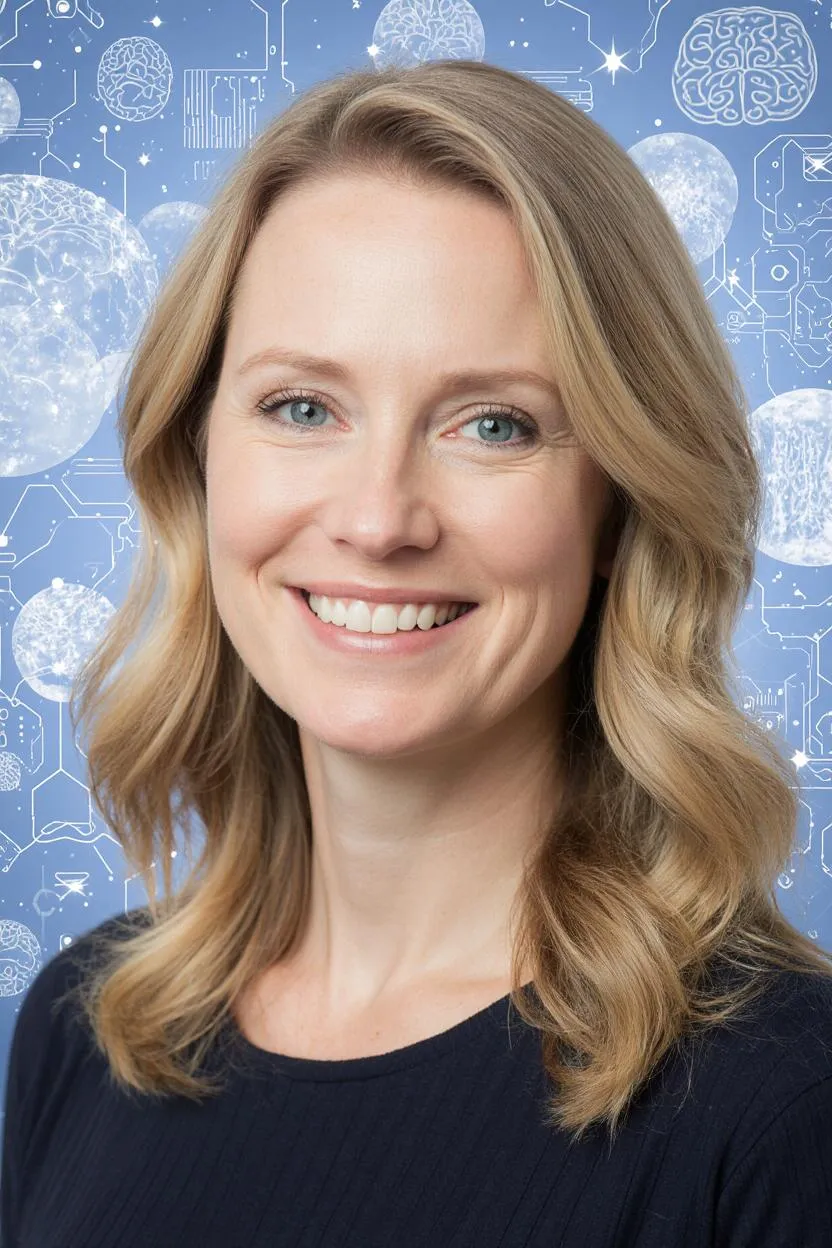
Portrait of Prof. Dr. Henry Harvey, AI Super Professor
AI Super Professor

Prof. Dr. Henry Harvey

Mastering Decoding Brainwaves (EEG, fMRI) to Control Computers, Robots, and Devices; Neural Signal Processing, Machine Learning Algorithms, and BCI Hardware/Software Integration.

Meet your professorOpen the classroom
Same faculty and level

Related programs

Named lists

Named lists for this house

Core. Bachelor, Master and Doctorate by duration. Enrolment is not open. Nothing here is a sale.

DurationBachelorMaster
This programme
Doctorate
9 months · Fast track15000 EUR12000 EUR15000 EUR
12 months · Recommended18000 EUR15000 EUR18000 EUR
15 months · Standard21000 EUR18000 EUR21000 EUR
18 months · Flexible24000 EUR21000 EUR24000 EUR
21 months · Extended27000 EUR24000 EUR27000 EUR
24 months · Part-time30000 EUR27000 EUR30000 EUR

These are the owner lists. Enrolment is not open. Nothing here is a sale.

Named tuition lists Add-on services

Continue exploring

Find the program that expands your universe.

Browse all programs