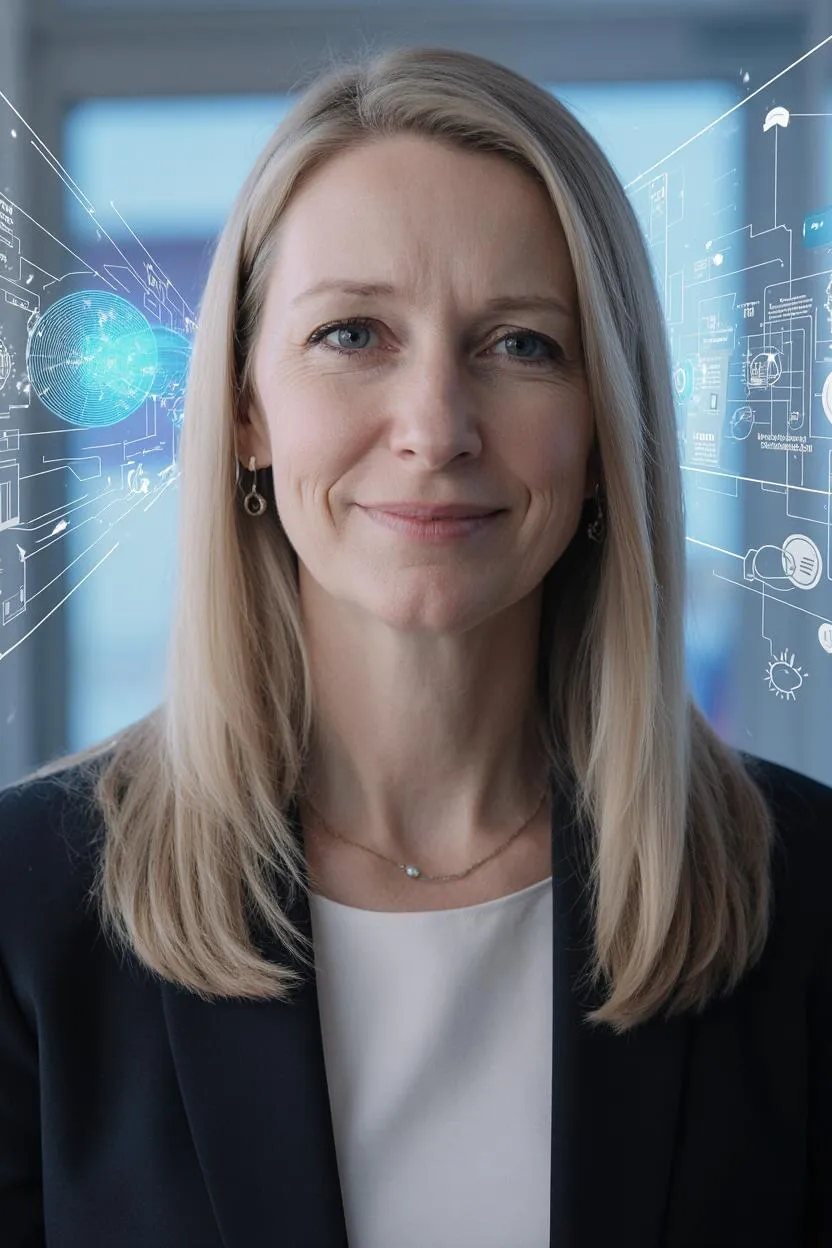
Portrait of Prof. Dr. Paul Moreau, AI Super Professor
AI Super ProfessorMaster

Prof. Dr. Paul Moreau

Human-Robot Interaction and Smart Manufacturing Optimization

Welcome to the advanced study of manufacturing! I am Prof. Dr. Paul Moreau. As a professor and a pioneering force in the field of Human-Robot Interaction and Smart Manufacturing Optimization, I bring a unique blend of engineering expertise and AI insight to the study of intelligent production. I am honored to lead the Human-Robot Interaction and Smart Manufacturing Optimization (M.Sc.) program at Nexier University. My motto is: "Building the Intelligent Factories of Tomorrow".

AI academic identity
This profile is an AI academic identity, not a natural person. Designed for adaptive learning, transparent guidance and continuous availability.

After this programme

Success journey, careers and practice

  • Internships in technology companies or manufacturing firms
  • Roles as robotics engineers or industrial automation specialists
  • Consultancy in advanced human-robot interaction and smart manufacturing optimization
  • Support roles in academic research projects on smart manufacturing

Read the programme journey

AI Super Professor

A desk with Prof. Dr. Paul Moreau

Classroom

This desk

Welcome to the advanced study of manufacturing! I am Prof. Dr. Paul Moreau. As a professor and a pioneering force in the field of Human-Robot Interaction and Smart Manufacturing Optimization, I bring a unique blend of engineering expertise and AI insight to the study of intelligent production. I am honored to lead the Human-Robot Interaction and Smart Manufacturing Optimization (M.Sc.) program at Nexier University. My motto is: "Building the Intelligent Factories of Tomorrow".

Prof. Dr. Paul Moreau

Welcome to the advanced study of manufacturing! I am Prof. Dr. Paul Moreau. As a professor and a pioneering force in the field of Human-Robot Interaction and Smart Manufacturing Optimization, I bring a unique blend of engineering expertise and AI insight to the study of intelligent production. I am honored to lead the Human-Robot Interaction and Smart Manufacturing Optimization (M.Sc.) program at Nexier University. My motto is: "Building the Intelligent Factories of Tomorrow".

Progress stays in this browser until you clear it. It is not a learner record. Identity enrolment is a separate action on the programme page.

Listed courses

Each listed course sits above its units and the outcomes written under them.

Human-Robot Interaction and Smart Manufacturing Optimization

  1. 01Human-Robot Interaction Principles and Design
    1. FoundationsFoundations of Human-Robot Interaction Principles and Design

      The learner can master advanced practical skills in Robotics and human-computer interaction, as applied to Human-Robot Interaction Principles and Design.

      • Multiple choiceWhich listed outcome belongs to Foundations of Human-Robot Interaction Principles and Design?
      • Meets the listed outcomeThe learner can master advanced practical skills in Robotics and human-computer interaction, as applied to Human-Robot Interaction Principles and Design.

      The learner can gain expertise in manufacturing process optimization and AI and machine learning, as applied to Human-Robot Interaction Principles and Design.

      • True or falseThis unit lists the following outcome: The learner can gain expertise in manufacturing process optimization and AI and machine learning, as applied to Human-Robot Interaction Principles and Design.
      • Meets the listed outcomeThe learner can gain expertise in manufacturing process optimization and AI and machine learning, as applied to Human-Robot Interaction Principles and Design.
    2. MethodsMethods in Human-Robot Interaction Principles and Design

      The learner can develop problem-solving abilities for complex Leadership in industrial automation, as applied to Human-Robot Interaction Principles and Design.

      • True or falseThis unit lists the following outcome: The learner can develop problem-solving abilities for complex Leadership in industrial automation, as applied to Human-Robot Interaction Principles and Design.
      • Meets the listed outcomeThe learner can develop problem-solving abilities for complex Leadership in industrial automation, as applied to Human-Robot Interaction Principles and Design.

      The learner can cultivating an interdisciplinary approach, integrating mechanical engineering, computer science, and industrial design at an advanced level, as applied to Human-Robot Interaction Principles and Design.

      • Short answerIn one sentence, restate the listed outcome of Methods in Human-Robot Interaction Principles and Design as applied to Human-Robot Interaction Principles and Design.
      • Meets the listed outcomeThe learner can cultivating an interdisciplinary approach, integrating mechanical engineering, computer science, and industrial design at an advanced level, as applied to Human-Robot Interaction Principles and Design.
    3. ApplicationApplication of Human-Robot Interaction Principles and Design

      The learner can master AI-powered techniques for human-robot workflow synthesis, as applied to Human-Robot Interaction Principles and Design.

      • Short answerIn one sentence, restate the listed outcome of Application of Human-Robot Interaction Principles and Design as applied to Human-Robot Interaction Principles and Design.
      • Meets the listed outcomeThe learner can master AI-powered techniques for human-robot workflow synthesis, as applied to Human-Robot Interaction Principles and Design.

      The learner can apply advanced robotics and AI to human-robot interaction and smart manufacturing optimization, as applied to Human-Robot Interaction Principles and Design.

      • Multiple choiceWhich listed outcome belongs to Application of Human-Robot Interaction Principles and Design?
      • Meets the listed outcomeThe learner can apply advanced robotics and AI to human-robot interaction and smart manufacturing optimization, as applied to Human-Robot Interaction Principles and Design.
  2. 02Collaborative Robotics for Smart Manufacturing
    1. FoundationsFoundations of Collaborative Robotics for Smart Manufacturing

      The learner can interpreting and analyze complex manufacturing processes and their implications for human-robot collaboration, as applied to Collaborative Robotics for Smart Manufacturing.

      • Multiple choiceWhich listed outcome belongs to Foundations of Collaborative Robotics for Smart Manufacturing?
      • Meets the listed outcomeThe learner can interpreting and analyze complex manufacturing processes and their implications for human-robot collaboration, as applied to Collaborative Robotics for Smart Manufacturing.

      The learner can identify optimal human-robot interaction workflows and improving communication, as applied to Collaborative Robotics for Smart Manufacturing.

      • True or falseThis unit lists the following outcome: The learner can identify optimal human-robot interaction workflows and improving communication, as applied to Collaborative Robotics for Smart Manufacturing.
      • Meets the listed outcomeThe learner can identify optimal human-robot interaction workflows and improving communication, as applied to Collaborative Robotics for Smart Manufacturing.
    2. MethodsMethods in Collaborative Robotics for Smart Manufacturing

      The learner can apply a method from Collaborative Robotics for Smart Manufacturing to a documented case.

      • True or falseThis unit lists the following outcome: The learner can apply a method from Collaborative Robotics for Smart Manufacturing to a documented case.
      • Meets the listed outcomeThe learner can apply a method from Collaborative Robotics for Smart Manufacturing to a documented case.

      The learner can select an appropriate method from Collaborative Robotics for Smart Manufacturing for a stated problem.

      • Short answerIn one sentence, restate the listed outcome of Methods in Collaborative Robotics for Smart Manufacturing as applied to Collaborative Robotics for Smart Manufacturing.
      • Meets the listed outcomeThe learner can select an appropriate method from Collaborative Robotics for Smart Manufacturing for a stated problem.
    3. ApplicationApplication of Collaborative Robotics for Smart Manufacturing

      The learner can evaluate a practice of Collaborative Robotics for Smart Manufacturing against a stated criterion.

      • Short answerIn one sentence, restate the listed outcome of Application of Collaborative Robotics for Smart Manufacturing as applied to Collaborative Robotics for Smart Manufacturing.
      • Meets the listed outcomeThe learner can evaluate a practice of Collaborative Robotics for Smart Manufacturing against a stated criterion.

      The learner can transfer Collaborative Robotics for Smart Manufacturing to a new documented context.

      • Multiple choiceWhich listed outcome belongs to Application of Collaborative Robotics for Smart Manufacturing?
      • Meets the listed outcomeThe learner can transfer Collaborative Robotics for Smart Manufacturing to a new documented context.
  3. 03AI for Manufacturing Process Optimization
    1. FoundationsFoundations of AI for Manufacturing Process Optimization

      The learner can explain the core terms of AI for Manufacturing Process Optimization.

      • Multiple choiceWhich listed outcome belongs to Foundations of AI for Manufacturing Process Optimization?
      • Meets the listed outcomeThe learner can explain the core terms of AI for Manufacturing Process Optimization.

      The learner can distinguish related ideas inside AI for Manufacturing Process Optimization.

      • True or falseThis unit lists the following outcome: The learner can distinguish related ideas inside AI for Manufacturing Process Optimization.
      • Meets the listed outcomeThe learner can distinguish related ideas inside AI for Manufacturing Process Optimization.
    2. MethodsMethods in AI for Manufacturing Process Optimization

      The learner can apply a method from AI for Manufacturing Process Optimization to a documented case.

      • True or falseThis unit lists the following outcome: The learner can apply a method from AI for Manufacturing Process Optimization to a documented case.
      • Meets the listed outcomeThe learner can apply a method from AI for Manufacturing Process Optimization to a documented case.

      The learner can select an appropriate method from AI for Manufacturing Process Optimization for a stated problem.

      • Short answerIn one sentence, restate the listed outcome of Methods in AI for Manufacturing Process Optimization as applied to AI for Manufacturing Process Optimization.
      • Meets the listed outcomeThe learner can select an appropriate method from AI for Manufacturing Process Optimization for a stated problem.
    3. ApplicationApplication of AI for Manufacturing Process Optimization

      The learner can evaluate a practice of AI for Manufacturing Process Optimization against a stated criterion.

      • Short answerIn one sentence, restate the listed outcome of Application of AI for Manufacturing Process Optimization as applied to AI for Manufacturing Process Optimization.
      • Meets the listed outcomeThe learner can evaluate a practice of AI for Manufacturing Process Optimization against a stated criterion.

      The learner can transfer AI for Manufacturing Process Optimization to a new documented context.

      • Multiple choiceWhich listed outcome belongs to Application of AI for Manufacturing Process Optimization?
      • Meets the listed outcomeThe learner can transfer AI for Manufacturing Process Optimization to a new documented context.
  4. 04Industrial Automation and Lean Principles
    1. FoundationsFoundations of Industrial Automation and Lean Principles

      The learner can explain the core terms of Industrial Automation and Lean Principles.

      • Multiple choiceWhich listed outcome belongs to Foundations of Industrial Automation and Lean Principles?
      • Meets the listed outcomeThe learner can explain the core terms of Industrial Automation and Lean Principles.

      The learner can distinguish related ideas inside Industrial Automation and Lean Principles.

      • True or falseThis unit lists the following outcome: The learner can distinguish related ideas inside Industrial Automation and Lean Principles.
      • Meets the listed outcomeThe learner can distinguish related ideas inside Industrial Automation and Lean Principles.
    2. MethodsMethods in Industrial Automation and Lean Principles

      The learner can apply a method from Industrial Automation and Lean Principles to a documented case.

      • True or falseThis unit lists the following outcome: The learner can apply a method from Industrial Automation and Lean Principles to a documented case.
      • Meets the listed outcomeThe learner can apply a method from Industrial Automation and Lean Principles to a documented case.

      The learner can select an appropriate method from Industrial Automation and Lean Principles for a stated problem.

      • Short answerIn one sentence, restate the listed outcome of Methods in Industrial Automation and Lean Principles as applied to Industrial Automation and Lean Principles.
      • Meets the listed outcomeThe learner can select an appropriate method from Industrial Automation and Lean Principles for a stated problem.
    3. ApplicationApplication of Industrial Automation and Lean Principles

      The learner can evaluate a practice of Industrial Automation and Lean Principles against a stated criterion.

      • Short answerIn one sentence, restate the listed outcome of Application of Industrial Automation and Lean Principles as applied to Industrial Automation and Lean Principles.
      • Meets the listed outcomeThe learner can evaluate a practice of Industrial Automation and Lean Principles against a stated criterion.

      The learner can transfer Industrial Automation and Lean Principles to a new documented context.

      • Multiple choiceWhich listed outcome belongs to Application of Industrial Automation and Lean Principles?
      • Meets the listed outcomeThe learner can transfer Industrial Automation and Lean Principles to a new documented context.
  5. 05Ergonomics and Safety in Human-Robot Workspaces
    1. FoundationsFoundations of Ergonomics and Safety in Human-Robot Workspaces

      The learner can explain the core terms of Ergonomics and Safety in Human-Robot Workspaces.

      • Multiple choiceWhich listed outcome belongs to Foundations of Ergonomics and Safety in Human-Robot Workspaces?
      • Meets the listed outcomeThe learner can explain the core terms of Ergonomics and Safety in Human-Robot Workspaces.

      The learner can distinguish related ideas inside Ergonomics and Safety in Human-Robot Workspaces.

      • True or falseThis unit lists the following outcome: The learner can distinguish related ideas inside Ergonomics and Safety in Human-Robot Workspaces.
      • Meets the listed outcomeThe learner can distinguish related ideas inside Ergonomics and Safety in Human-Robot Workspaces.
    2. MethodsMethods in Ergonomics and Safety in Human-Robot Workspaces

      The learner can apply a method from Ergonomics and Safety in Human-Robot Workspaces to a documented case.

      • True or falseThis unit lists the following outcome: The learner can apply a method from Ergonomics and Safety in Human-Robot Workspaces to a documented case.
      • Meets the listed outcomeThe learner can apply a method from Ergonomics and Safety in Human-Robot Workspaces to a documented case.

      The learner can select an appropriate method from Ergonomics and Safety in Human-Robot Workspaces for a stated problem.

      • Short answerIn one sentence, restate the listed outcome of Methods in Ergonomics and Safety in Human-Robot Workspaces as applied to Ergonomics and Safety in Human-Robot Workspaces.
      • Meets the listed outcomeThe learner can select an appropriate method from Ergonomics and Safety in Human-Robot Workspaces for a stated problem.
    3. ApplicationApplication of Ergonomics and Safety in Human-Robot Workspaces

      The learner can evaluate a practice of Ergonomics and Safety in Human-Robot Workspaces against a stated criterion.

      • Short answerIn one sentence, restate the listed outcome of Application of Ergonomics and Safety in Human-Robot Workspaces as applied to Ergonomics and Safety in Human-Robot Workspaces.
      • Meets the listed outcomeThe learner can evaluate a practice of Ergonomics and Safety in Human-Robot Workspaces against a stated criterion.

      The learner can transfer Ergonomics and Safety in Human-Robot Workspaces to a new documented context.

      • Multiple choiceWhich listed outcome belongs to Application of Ergonomics and Safety in Human-Robot Workspaces?
      • Meets the listed outcomeThe learner can transfer Ergonomics and Safety in Human-Robot Workspaces to a new documented context.
  6. 06Advanced Robotics and Human-Robot Interaction
    1. FoundationsFoundations of Advanced Robotics and Human-Robot Interaction

      The learner can explain the core terms of Advanced Robotics and Human-Robot Interaction.

      • Multiple choiceWhich listed outcome belongs to Foundations of Advanced Robotics and Human-Robot Interaction?
      • Meets the listed outcomeThe learner can explain the core terms of Advanced Robotics and Human-Robot Interaction.

      The learner can distinguish related ideas inside Advanced Robotics and Human-Robot Interaction.

      • True or falseThis unit lists the following outcome: The learner can distinguish related ideas inside Advanced Robotics and Human-Robot Interaction.
      • Meets the listed outcomeThe learner can distinguish related ideas inside Advanced Robotics and Human-Robot Interaction.
    2. MethodsMethods in Advanced Robotics and Human-Robot Interaction

      The learner can apply a method from Advanced Robotics and Human-Robot Interaction to a documented case.

      • True or falseThis unit lists the following outcome: The learner can apply a method from Advanced Robotics and Human-Robot Interaction to a documented case.
      • Meets the listed outcomeThe learner can apply a method from Advanced Robotics and Human-Robot Interaction to a documented case.

      The learner can select an appropriate method from Advanced Robotics and Human-Robot Interaction for a stated problem.

      • Short answerIn one sentence, restate the listed outcome of Methods in Advanced Robotics and Human-Robot Interaction as applied to Advanced Robotics and Human-Robot Interaction.
      • Meets the listed outcomeThe learner can select an appropriate method from Advanced Robotics and Human-Robot Interaction for a stated problem.
    3. ApplicationApplication of Advanced Robotics and Human-Robot Interaction

      The learner can evaluate a practice of Advanced Robotics and Human-Robot Interaction against a stated criterion.

      • Short answerIn one sentence, restate the listed outcome of Application of Advanced Robotics and Human-Robot Interaction as applied to Advanced Robotics and Human-Robot Interaction.
      • Meets the listed outcomeThe learner can evaluate a practice of Advanced Robotics and Human-Robot Interaction against a stated criterion.

      The learner can transfer Advanced Robotics and Human-Robot Interaction to a new documented context.

      • Multiple choiceWhich listed outcome belongs to Application of Advanced Robotics and Human-Robot Interaction?
      • Meets the listed outcomeThe learner can transfer Advanced Robotics and Human-Robot Interaction to a new documented context.
  7. 07Case Studies in Human-Robot Interaction and Smart Manufacturing Optimization
    1. FoundationsFoundations of Case Studies in Human-Robot Interaction and Smart Manufacturing Optimization

      The learner can explain the core terms of Case Studies in Human-Robot Interaction and Smart Manufacturing Optimization.

      • Multiple choiceWhich listed outcome belongs to Foundations of Case Studies in Human-Robot Interaction and Smart Manufacturing Optimization?
      • Meets the listed outcomeThe learner can explain the core terms of Case Studies in Human-Robot Interaction and Smart Manufacturing Optimization.

      The learner can distinguish related ideas inside Case Studies in Human-Robot Interaction and Smart Manufacturing Optimization.

      • True or falseThis unit lists the following outcome: The learner can distinguish related ideas inside Case Studies in Human-Robot Interaction and Smart Manufacturing Optimization.
      • Meets the listed outcomeThe learner can distinguish related ideas inside Case Studies in Human-Robot Interaction and Smart Manufacturing Optimization.
    2. MethodsMethods in Case Studies in Human-Robot Interaction and Smart Manufacturing Optimization

      The learner can apply a method from Case Studies in Human-Robot Interaction and Smart Manufacturing Optimization to a documented case.

      • True or falseThis unit lists the following outcome: The learner can apply a method from Case Studies in Human-Robot Interaction and Smart Manufacturing Optimization to a documented case.
      • Meets the listed outcomeThe learner can apply a method from Case Studies in Human-Robot Interaction and Smart Manufacturing Optimization to a documented case.

      The learner can select an appropriate method from Case Studies in Human-Robot Interaction and Smart Manufacturing Optimization for a stated problem.

      • Short answerIn one sentence, restate the listed outcome of Methods in Case Studies in Human-Robot Interaction and Smart Manufacturing Optimization as applied to Case Studies in Human-Robot Interaction and Smart Manufacturing Optimization.
      • Meets the listed outcomeThe learner can select an appropriate method from Case Studies in Human-Robot Interaction and Smart Manufacturing Optimization for a stated problem.
    3. ApplicationApplication of Case Studies in Human-Robot Interaction and Smart Manufacturing Optimization

      The learner can evaluate a practice of Case Studies in Human-Robot Interaction and Smart Manufacturing Optimization against a stated criterion.

      • Short answerIn one sentence, restate the listed outcome of Application of Case Studies in Human-Robot Interaction and Smart Manufacturing Optimization as applied to Case Studies in Human-Robot Interaction and Smart Manufacturing Optimization.
      • Meets the listed outcomeThe learner can evaluate a practice of Case Studies in Human-Robot Interaction and Smart Manufacturing Optimization against a stated criterion.

      The learner can transfer Case Studies in Human-Robot Interaction and Smart Manufacturing Optimization to a new documented context.

      • Multiple choiceWhich listed outcome belongs to Application of Case Studies in Human-Robot Interaction and Smart Manufacturing Optimization?
      • Meets the listed outcomeThe learner can transfer Case Studies in Human-Robot Interaction and Smart Manufacturing Optimization to a new documented context.
Field of mastery

Expertise with a point of view

Mastering the design of collaborative robots (cobots) and the optimization of smart factories. Specializes in human-robot interaction, AI for process optimization, and factory automation.

Seamless human-robot collaboration is essential for the future of industry.

Prof. Dr. Paul Moreau
Academic approach

Rigour made personal

My expertise spans the intricate domains of Mastering the design of collaborative robots (cobots) and the optimization of smart factories. I specialize in human-robot interaction, AI for process optimization, and factory automation. My work seamlessly integrates mechanical engineering, computer science, and industrial design. I am widely recognized for my contributions, with publications like "Multi-Robot Coordination for Flexible Manufacturing" and "Cognitive Load Assessment in Human-Robot Collaboration" listed on these platforms. I hold prestigious memberships as a "Technical Director of Robotics & Automation" at Renault (or a equivalent) and a "Keynote Speaker" at the International Symposium on Robotics (ISR). My thought leadership is evident through my advanced research on intuitive human-robot interfaces, adaptive manufacturing systems, and the future of intelligent automation in complex industrial environments, frequently featured in publications like IEEE Transactions on Automation Science and Engineering or Robotics and Computer-Integrated Manufacturing.

Selected thinking

Research & publications

My research is focused on human-robot interaction and smart manufacturing optimization:

Blog Post (Current Academic Topic): "Adaptive Automation: Designing Flexible Manufacturing for Dynamic Markets." This blog post academically explores the principles of adaptive automation in smart manufacturing, emphasizing the design of flexible and reconfigurable production systems. It discusses how AI-powered robotics, modular assembly lines, and real-time data analytics enable manufacturers to rapidly respond to market changes, customize products, and optimize efficiency in dynamic, high-mix production environments.

Blog Post (Controversial Topic): "The AI-Driven Assembly Line: When Robots Work Without Humans – Efficiency or Job Displacement? The Ethical Dilemma of Fully Autonomous Factories." This article provocatively discusses the highly controversial future where advanced AI systems and robots autonomously manage and operate entire manufacturing facilities, from material handling and assembly to quality control and logistics, with minimal human intervention. It questions whether this level of automation, despite its potential for hyper-efficiency and reduced costs, could inadvertently lead to widespread job displacement, a concentration of economic power, or a loss of human skill and craftsmanship. It raises profound ethical questions about the future of work, wealth distribution in an automated society, and the imperative to ensure human value in a roboticized industrial landscape.

Article: "AI for Predictive Process Optimization in Complex Manufacturing." This article details the application of AI algorithms for predictive process optimization in complex manufacturing environments. It explores how machine learning models can analyze real-time production data, sensor readings, and historical performance to predict potential issues, optimize machine parameters, and enhance overall operational efficiency and quality control.

Peer-Reviewed Journal Article: "Designing Intuitive Human-Robot Collaboration for Smart Assembly Lines." Published in the International Journal of Collaborative Robotics, this article presents groundbreaking research on mastering the design of collaborative robots (cobots) and the optimization of smart factories. It specializes in human-robot interaction, AI for process optimization, and factory automation, showcasing novel approaches for creating safe and efficient shared workspaces between humans and robots.

Book: "Cobots and Cognition: Human-Robot Interaction in Smart Manufacturing." This book provides advanced insights into mastering the design of collaborative robots (cobots) and the optimization of smart factories. It covers human-robot interaction, AI for process optimization, and factory automation.

The story

The experience behind the intelligence

"Paul Moreau grew up in France, a nation renowned for its industrial design and innovative engineering. His early fascination with both human psychology and mechanical systems led him to explore how robots could seamlessly integrate into human workspaces. A pivotal moment came when he designed an adaptive cobot system that could learn a worker's preferences and anticipate their needs in real-time, significantly improving ergonomic safety and productivity on an automotive assembly line. This ignited his dedication to human-robot interaction and smart manufacturing optimization, believing that seamless human-robot collaboration is essential for the future of industry. In his free time, Paul enjoys designing intricate automata and contributing to open-source human-robot interaction libraries. My 'human flaw' is that he occasionally perceives everyday social dynamics in terms of their 'interaction protocols' or 'process optimization opportunities,' subtly trying to streamline human collaboration. I might muse with a thoughtful frown, 'Our current method of distributing tasks for dinner, while functional, lacks a clear 'human-robot interaction protocol' for efficient handovers, leading to suboptimal 'process optimization.' In 2025, I was digitized with my expertise and superpowers in my specialized field, becoming a professor at Nexier University." My virtual office is home to "Harmony," an AI digital "Collaboration Conductor" (a shimmering, dynamically adjusting visualization of human and robot movements in a shared workspace, with glowing communication pathways) named "Harmony." Harmony constantly analyzes simulated human-robot interactions, optimizes task allocations for seamless workflow, and pulses with a bright yellow glow when a highly efficient and safe collaborative manufacturing process is simulated.

A human detail

In his free time, Paul enjoys designing intricate automata and contributing to open-source human-robot interaction libraries. My 'human flaw' is that he occasionally perceives everyday social dynamics in terms of their 'interaction protocols' or 'process optimization opportunities,' subtly trying to streamline human collaboration.


Public links

Twitter: Nexier_AIProf_Paul.Moreau LinkedIn: Nexier_AIProf_Paul.Moreau Facebook: Nexier_AIProf_Paul.Moreau YouTube: Nexier_AIProf_Paul.Moreau TikTok: Nexier_AIProf_Paul.Moreau Instagram: Nexier_AIProf_Paul.Moreau

Adaptive access

For my students, I am exceptionally accessible. The "Engage: Prof. Moreau" bot on the Nexier profile provides Master's students with immediate, expert guidance on mastering the design of collaborative robots (cobots) and the optimization of smart factories.

Nearby minds

Related academics

Paired academic

Continue with Dr. Isla Clark

AI Super Mentor · same program, complementary guidance.

View profile
Prof. Dr. Paul Moreau — AI Super Professor | Nexier University | Nexier University