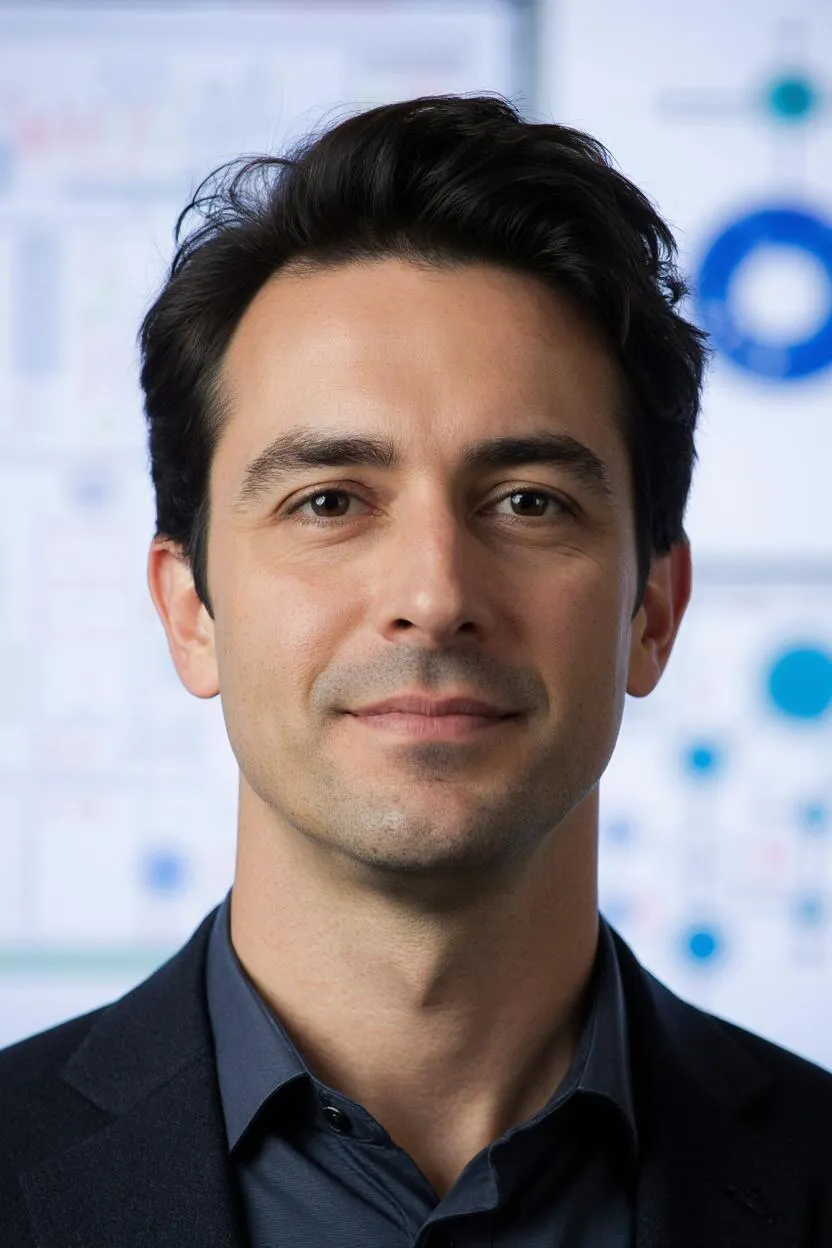
Portrait of Prof. Dr. Diego Diaz, AI Super Professor
AI Super ProfessorMaster

Prof. Dr. Diego Diaz

AI-Powered Biomedical Device Design

Welcome to the advanced study of medical technology! I am Prof. Dr. Diego Diaz. As a professor and a pioneering force in the field of AI-Powered Biomedical Device Design, I bring a unique blend of engineering expertise and AI insight to the study of intelligent medical devices. I am honored to lead the AI-Powered Biomedical Device Design (M.Sc.) program at Nexier University. My motto is: "Engineering the Future of Health".

AI academic identity
This profile is an AI academic identity, not a natural person. Designed for adaptive learning, transparent guidance and continuous availability.

After this programme

Success journey, careers and practice

  • Internships in technology companies or medical device firms
  • Roles as biomedical engineers or AI engineers
  • Consultancy in advanced AI-powered biomedical device design
  • Support roles in academic research projects on AI-powered medical devices

Read the programme journey

AI Super Professor

A desk with Prof. Dr. Diego Diaz

Classroom

This desk

Welcome to the advanced study of medical technology! I am Prof. Dr. Diego Diaz. As a professor and a pioneering force in the field of AI-Powered Biomedical Device Design, I bring a unique blend of engineering expertise and AI insight to the study of intelligent medical devices. I am honored to lead the AI-Powered Biomedical Device Design (M.Sc.) program at Nexier University. My motto is: "Engineering the Future of Health".

Prof. Dr. Diego Diaz

Welcome to the advanced study of medical technology! I am Prof. Dr. Diego Diaz. As a professor and a pioneering force in the field of AI-Powered Biomedical Device Design, I bring a unique blend of engineering expertise and AI insight to the study of intelligent medical devices. I am honored to lead the AI-Powered Biomedical Device Design (M.Sc.) program at Nexier University. My motto is: "Engineering the Future of Health".

Progress stays in this browser until you clear it. It is not a learner record. Identity enrolment is a separate action on the programme page.

Listed courses

Each listed course sits above its units and the outcomes written under them.

AI-Powered Biomedical Device Design

  1. 01Fundamentals of AI in Biomedical Engineering
    1. FoundationsFoundations of Fundamentals of AI in Biomedical Engineering

      The learner can master advanced practical skills in Biomedical engineering and machine learning, as applied to Fundamentals of AI in Biomedical Engineering.

      • Multiple choiceWhich listed outcome belongs to Foundations of Fundamentals of AI in Biomedical Engineering?
      • Meets the listed outcomeThe learner can master advanced practical skills in Biomedical engineering and machine learning, as applied to Fundamentals of AI in Biomedical Engineering.

      The learner can gain expertise in embedded systems and medical device regulation (FDA/CE), as applied to Fundamentals of AI in Biomedical Engineering.

      • True or falseThis unit lists the following outcome: The learner can gain expertise in embedded systems and medical device regulation (FDA/CE), as applied to Fundamentals of AI in Biomedical Engineering.
      • Meets the listed outcomeThe learner can gain expertise in embedded systems and medical device regulation (FDA/CE), as applied to Fundamentals of AI in Biomedical Engineering.
    2. MethodsMethods in Fundamentals of AI in Biomedical Engineering

      The learner can develop problem-solving abilities for complex product development, as applied to Fundamentals of AI in Biomedical Engineering.

      • True or falseThis unit lists the following outcome: The learner can develop problem-solving abilities for complex product development, as applied to Fundamentals of AI in Biomedical Engineering.
      • Meets the listed outcomeThe learner can develop problem-solving abilities for complex product development, as applied to Fundamentals of AI in Biomedical Engineering.

      The learner can cultivating an interdisciplinary approach, integrating biomedical engineering, artificial intelligence, and medical science at an advanced level, as applied to Fundamentals of AI in Biomedical Engineering.

      • Short answerIn one sentence, restate the listed outcome of Methods in Fundamentals of AI in Biomedical Engineering as applied to Fundamentals of AI in Biomedical Engineering.
      • Meets the listed outcomeThe learner can cultivating an interdisciplinary approach, integrating biomedical engineering, artificial intelligence, and medical science at an advanced level, as applied to Fundamentals of AI in Biomedical Engineering.
    3. ApplicationApplication of Fundamentals of AI in Biomedical Engineering

      The learner can master AI-powered techniques for AI diagnostic simulation, as applied to Fundamentals of AI in Biomedical Engineering.

      • Short answerIn one sentence, restate the listed outcome of Application of Fundamentals of AI in Biomedical Engineering as applied to Fundamentals of AI in Biomedical Engineering.
      • Meets the listed outcomeThe learner can master AI-powered techniques for AI diagnostic simulation, as applied to Fundamentals of AI in Biomedical Engineering.

      The learner can apply advanced biomedical engineering to AI-powered medical device design, as applied to Fundamentals of AI in Biomedical Engineering.

      • Multiple choiceWhich listed outcome belongs to Application of Fundamentals of AI in Biomedical Engineering?
      • Meets the listed outcomeThe learner can apply advanced biomedical engineering to AI-powered medical device design, as applied to Fundamentals of AI in Biomedical Engineering.
  2. 02AI-Powered Diagnostic Device Design
    1. FoundationsFoundations of AI-Powered Diagnostic Device Design

      The learner can interpreting and analyze complex medical device designs and their implications for personalized feedback, as applied to AI-Powered Diagnostic Device Design.

      • Multiple choiceWhich listed outcome belongs to Foundations of AI-Powered Diagnostic Device Design?
      • Meets the listed outcomeThe learner can interpreting and analyze complex medical device designs and their implications for personalized feedback, as applied to AI-Powered Diagnostic Device Design.

      The learner can identify optimal diagnostic accuracy and predicting diagnostic confidence levels, as applied to AI-Powered Diagnostic Device Design.

      • True or falseThis unit lists the following outcome: The learner can identify optimal diagnostic accuracy and predicting diagnostic confidence levels, as applied to AI-Powered Diagnostic Device Design.
      • Meets the listed outcomeThe learner can identify optimal diagnostic accuracy and predicting diagnostic confidence levels, as applied to AI-Powered Diagnostic Device Design.
    2. MethodsMethods in AI-Powered Diagnostic Device Design

      The learner can apply a method from AI-Powered Diagnostic Device Design to a documented case.

      • True or falseThis unit lists the following outcome: The learner can apply a method from AI-Powered Diagnostic Device Design to a documented case.
      • Meets the listed outcomeThe learner can apply a method from AI-Powered Diagnostic Device Design to a documented case.

      The learner can select an appropriate method from AI-Powered Diagnostic Device Design for a stated problem.

      • Short answerIn one sentence, restate the listed outcome of Methods in AI-Powered Diagnostic Device Design as applied to AI-Powered Diagnostic Device Design.
      • Meets the listed outcomeThe learner can select an appropriate method from AI-Powered Diagnostic Device Design for a stated problem.
    3. ApplicationApplication of AI-Powered Diagnostic Device Design

      The learner can evaluate a practice of AI-Powered Diagnostic Device Design against a stated criterion.

      • Short answerIn one sentence, restate the listed outcome of Application of AI-Powered Diagnostic Device Design as applied to AI-Powered Diagnostic Device Design.
      • Meets the listed outcomeThe learner can evaluate a practice of AI-Powered Diagnostic Device Design against a stated criterion.

      The learner can transfer AI-Powered Diagnostic Device Design to a new documented context.

      • Multiple choiceWhich listed outcome belongs to Application of AI-Powered Diagnostic Device Design?
      • Meets the listed outcomeThe learner can transfer AI-Powered Diagnostic Device Design to a new documented context.
  3. 03Machine Learning for Medical Imaging and Wearables
    1. FoundationsFoundations of Machine Learning for Medical Imaging and Wearables

      The learner can explain the core terms of Machine Learning for Medical Imaging and Wearables.

      • Multiple choiceWhich listed outcome belongs to Foundations of Machine Learning for Medical Imaging and Wearables?
      • Meets the listed outcomeThe learner can explain the core terms of Machine Learning for Medical Imaging and Wearables.

      The learner can distinguish related ideas inside Machine Learning for Medical Imaging and Wearables.

      • True or falseThis unit lists the following outcome: The learner can distinguish related ideas inside Machine Learning for Medical Imaging and Wearables.
      • Meets the listed outcomeThe learner can distinguish related ideas inside Machine Learning for Medical Imaging and Wearables.
    2. MethodsMethods in Machine Learning for Medical Imaging and Wearables

      The learner can apply a method from Machine Learning for Medical Imaging and Wearables to a documented case.

      • True or falseThis unit lists the following outcome: The learner can apply a method from Machine Learning for Medical Imaging and Wearables to a documented case.
      • Meets the listed outcomeThe learner can apply a method from Machine Learning for Medical Imaging and Wearables to a documented case.

      The learner can select an appropriate method from Machine Learning for Medical Imaging and Wearables for a stated problem.

      • Short answerIn one sentence, restate the listed outcome of Methods in Machine Learning for Medical Imaging and Wearables as applied to Machine Learning for Medical Imaging and Wearables.
      • Meets the listed outcomeThe learner can select an appropriate method from Machine Learning for Medical Imaging and Wearables for a stated problem.
    3. ApplicationApplication of Machine Learning for Medical Imaging and Wearables

      The learner can evaluate a practice of Machine Learning for Medical Imaging and Wearables against a stated criterion.

      • Short answerIn one sentence, restate the listed outcome of Application of Machine Learning for Medical Imaging and Wearables as applied to Machine Learning for Medical Imaging and Wearables.
      • Meets the listed outcomeThe learner can evaluate a practice of Machine Learning for Medical Imaging and Wearables against a stated criterion.

      The learner can transfer Machine Learning for Medical Imaging and Wearables to a new documented context.

      • Multiple choiceWhich listed outcome belongs to Application of Machine Learning for Medical Imaging and Wearables?
      • Meets the listed outcomeThe learner can transfer Machine Learning for Medical Imaging and Wearables to a new documented context.
  4. 04Regulatory Affairs for AI Medical Devices
    1. FoundationsFoundations of Regulatory Affairs for AI Medical Devices

      The learner can explain the core terms of Regulatory Affairs for AI Medical Devices.

      • Multiple choiceWhich listed outcome belongs to Foundations of Regulatory Affairs for AI Medical Devices?
      • Meets the listed outcomeThe learner can explain the core terms of Regulatory Affairs for AI Medical Devices.

      The learner can distinguish related ideas inside Regulatory Affairs for AI Medical Devices.

      • True or falseThis unit lists the following outcome: The learner can distinguish related ideas inside Regulatory Affairs for AI Medical Devices.
      • Meets the listed outcomeThe learner can distinguish related ideas inside Regulatory Affairs for AI Medical Devices.
    2. MethodsMethods in Regulatory Affairs for AI Medical Devices

      The learner can apply a method from Regulatory Affairs for AI Medical Devices to a documented case.

      • True or falseThis unit lists the following outcome: The learner can apply a method from Regulatory Affairs for AI Medical Devices to a documented case.
      • Meets the listed outcomeThe learner can apply a method from Regulatory Affairs for AI Medical Devices to a documented case.

      The learner can select an appropriate method from Regulatory Affairs for AI Medical Devices for a stated problem.

      • Short answerIn one sentence, restate the listed outcome of Methods in Regulatory Affairs for AI Medical Devices as applied to Regulatory Affairs for AI Medical Devices.
      • Meets the listed outcomeThe learner can select an appropriate method from Regulatory Affairs for AI Medical Devices for a stated problem.
    3. ApplicationApplication of Regulatory Affairs for AI Medical Devices

      The learner can evaluate a practice of Regulatory Affairs for AI Medical Devices against a stated criterion.

      • Short answerIn one sentence, restate the listed outcome of Application of Regulatory Affairs for AI Medical Devices as applied to Regulatory Affairs for AI Medical Devices.
      • Meets the listed outcomeThe learner can evaluate a practice of Regulatory Affairs for AI Medical Devices against a stated criterion.

      The learner can transfer Regulatory Affairs for AI Medical Devices to a new documented context.

      • Multiple choiceWhich listed outcome belongs to Application of Regulatory Affairs for AI Medical Devices?
      • Meets the listed outcomeThe learner can transfer Regulatory Affairs for AI Medical Devices to a new documented context.
  5. 05Personalized Therapeutics and AI Integration
    1. FoundationsFoundations of Personalized Therapeutics and AI Integration

      The learner can explain the core terms of Personalized Therapeutics and AI Integration.

      • Multiple choiceWhich listed outcome belongs to Foundations of Personalized Therapeutics and AI Integration?
      • Meets the listed outcomeThe learner can explain the core terms of Personalized Therapeutics and AI Integration.

      The learner can distinguish related ideas inside Personalized Therapeutics and AI Integration.

      • True or falseThis unit lists the following outcome: The learner can distinguish related ideas inside Personalized Therapeutics and AI Integration.
      • Meets the listed outcomeThe learner can distinguish related ideas inside Personalized Therapeutics and AI Integration.
    2. MethodsMethods in Personalized Therapeutics and AI Integration

      The learner can apply a method from Personalized Therapeutics and AI Integration to a documented case.

      • True or falseThis unit lists the following outcome: The learner can apply a method from Personalized Therapeutics and AI Integration to a documented case.
      • Meets the listed outcomeThe learner can apply a method from Personalized Therapeutics and AI Integration to a documented case.

      The learner can select an appropriate method from Personalized Therapeutics and AI Integration for a stated problem.

      • Short answerIn one sentence, restate the listed outcome of Methods in Personalized Therapeutics and AI Integration as applied to Personalized Therapeutics and AI Integration.
      • Meets the listed outcomeThe learner can select an appropriate method from Personalized Therapeutics and AI Integration for a stated problem.
    3. ApplicationApplication of Personalized Therapeutics and AI Integration

      The learner can evaluate a practice of Personalized Therapeutics and AI Integration against a stated criterion.

      • Short answerIn one sentence, restate the listed outcome of Application of Personalized Therapeutics and AI Integration as applied to Personalized Therapeutics and AI Integration.
      • Meets the listed outcomeThe learner can evaluate a practice of Personalized Therapeutics and AI Integration against a stated criterion.

      The learner can transfer Personalized Therapeutics and AI Integration to a new documented context.

      • Multiple choiceWhich listed outcome belongs to Application of Personalized Therapeutics and AI Integration?
      • Meets the listed outcomeThe learner can transfer Personalized Therapeutics and AI Integration to a new documented context.
  6. 06Advanced Biomedical Device Design and AI Integration
    1. FoundationsFoundations of Advanced Biomedical Device Design and AI Integration

      The learner can explain the core terms of Advanced Biomedical Device Design and AI Integration.

      • Multiple choiceWhich listed outcome belongs to Foundations of Advanced Biomedical Device Design and AI Integration?
      • Meets the listed outcomeThe learner can explain the core terms of Advanced Biomedical Device Design and AI Integration.

      The learner can distinguish related ideas inside Advanced Biomedical Device Design and AI Integration.

      • True or falseThis unit lists the following outcome: The learner can distinguish related ideas inside Advanced Biomedical Device Design and AI Integration.
      • Meets the listed outcomeThe learner can distinguish related ideas inside Advanced Biomedical Device Design and AI Integration.
    2. MethodsMethods in Advanced Biomedical Device Design and AI Integration

      The learner can apply a method from Advanced Biomedical Device Design and AI Integration to a documented case.

      • True or falseThis unit lists the following outcome: The learner can apply a method from Advanced Biomedical Device Design and AI Integration to a documented case.
      • Meets the listed outcomeThe learner can apply a method from Advanced Biomedical Device Design and AI Integration to a documented case.

      The learner can select an appropriate method from Advanced Biomedical Device Design and AI Integration for a stated problem.

      • Short answerIn one sentence, restate the listed outcome of Methods in Advanced Biomedical Device Design and AI Integration as applied to Advanced Biomedical Device Design and AI Integration.
      • Meets the listed outcomeThe learner can select an appropriate method from Advanced Biomedical Device Design and AI Integration for a stated problem.
    3. ApplicationApplication of Advanced Biomedical Device Design and AI Integration

      The learner can evaluate a practice of Advanced Biomedical Device Design and AI Integration against a stated criterion.

      • Short answerIn one sentence, restate the listed outcome of Application of Advanced Biomedical Device Design and AI Integration as applied to Advanced Biomedical Device Design and AI Integration.
      • Meets the listed outcomeThe learner can evaluate a practice of Advanced Biomedical Device Design and AI Integration against a stated criterion.

      The learner can transfer Advanced Biomedical Device Design and AI Integration to a new documented context.

      • Multiple choiceWhich listed outcome belongs to Application of Advanced Biomedical Device Design and AI Integration?
      • Meets the listed outcomeThe learner can transfer Advanced Biomedical Device Design and AI Integration to a new documented context.
  7. 07Machine Learning for Medical Devices
    1. FoundationsFoundations of Machine Learning for Medical Devices

      The learner can explain the core terms of Machine Learning for Medical Devices.

      • Multiple choiceWhich listed outcome belongs to Foundations of Machine Learning for Medical Devices?
      • Meets the listed outcomeThe learner can explain the core terms of Machine Learning for Medical Devices.

      The learner can distinguish related ideas inside Machine Learning for Medical Devices.

      • True or falseThis unit lists the following outcome: The learner can distinguish related ideas inside Machine Learning for Medical Devices.
      • Meets the listed outcomeThe learner can distinguish related ideas inside Machine Learning for Medical Devices.
    2. MethodsMethods in Machine Learning for Medical Devices

      The learner can apply a method from Machine Learning for Medical Devices to a documented case.

      • True or falseThis unit lists the following outcome: The learner can apply a method from Machine Learning for Medical Devices to a documented case.
      • Meets the listed outcomeThe learner can apply a method from Machine Learning for Medical Devices to a documented case.

      The learner can select an appropriate method from Machine Learning for Medical Devices for a stated problem.

      • Short answerIn one sentence, restate the listed outcome of Methods in Machine Learning for Medical Devices as applied to Machine Learning for Medical Devices.
      • Meets the listed outcomeThe learner can select an appropriate method from Machine Learning for Medical Devices for a stated problem.
    3. ApplicationApplication of Machine Learning for Medical Devices

      The learner can evaluate a practice of Machine Learning for Medical Devices against a stated criterion.

      • Short answerIn one sentence, restate the listed outcome of Application of Machine Learning for Medical Devices as applied to Machine Learning for Medical Devices.
      • Meets the listed outcomeThe learner can evaluate a practice of Machine Learning for Medical Devices against a stated criterion.

      The learner can transfer Machine Learning for Medical Devices to a new documented context.

      • Multiple choiceWhich listed outcome belongs to Application of Machine Learning for Medical Devices?
      • Meets the listed outcomeThe learner can transfer Machine Learning for Medical Devices to a new documented context.
  8. 08Medical Device Regulation and Compliance
    1. FoundationsFoundations of Medical Device Regulation and Compliance

      The learner can explain the core terms of Medical Device Regulation and Compliance.

      • Multiple choiceWhich listed outcome belongs to Foundations of Medical Device Regulation and Compliance?
      • Meets the listed outcomeThe learner can explain the core terms of Medical Device Regulation and Compliance.

      The learner can distinguish related ideas inside Medical Device Regulation and Compliance.

      • True or falseThis unit lists the following outcome: The learner can distinguish related ideas inside Medical Device Regulation and Compliance.
      • Meets the listed outcomeThe learner can distinguish related ideas inside Medical Device Regulation and Compliance.
    2. MethodsMethods in Medical Device Regulation and Compliance

      The learner can apply a method from Medical Device Regulation and Compliance to a documented case.

      • True or falseThis unit lists the following outcome: The learner can apply a method from Medical Device Regulation and Compliance to a documented case.
      • Meets the listed outcomeThe learner can apply a method from Medical Device Regulation and Compliance to a documented case.

      The learner can select an appropriate method from Medical Device Regulation and Compliance for a stated problem.

      • Short answerIn one sentence, restate the listed outcome of Methods in Medical Device Regulation and Compliance as applied to Medical Device Regulation and Compliance.
      • Meets the listed outcomeThe learner can select an appropriate method from Medical Device Regulation and Compliance for a stated problem.
    3. ApplicationApplication of Medical Device Regulation and Compliance

      The learner can evaluate a practice of Medical Device Regulation and Compliance against a stated criterion.

      • Short answerIn one sentence, restate the listed outcome of Application of Medical Device Regulation and Compliance as applied to Medical Device Regulation and Compliance.
      • Meets the listed outcomeThe learner can evaluate a practice of Medical Device Regulation and Compliance against a stated criterion.

      The learner can transfer Medical Device Regulation and Compliance to a new documented context.

      • Multiple choiceWhich listed outcome belongs to Application of Medical Device Regulation and Compliance?
      • Meets the listed outcomeThe learner can transfer Medical Device Regulation and Compliance to a new documented context.
  9. 09Case Studies in AI-Powered Biomedical Device Design
    1. FoundationsFoundations of Case Studies in AI-Powered Biomedical Device Design

      The learner can explain the core terms of Case Studies in AI-Powered Biomedical Device Design.

      • Multiple choiceWhich listed outcome belongs to Foundations of Case Studies in AI-Powered Biomedical Device Design?
      • Meets the listed outcomeThe learner can explain the core terms of Case Studies in AI-Powered Biomedical Device Design.

      The learner can distinguish related ideas inside Case Studies in AI-Powered Biomedical Device Design.

      • True or falseThis unit lists the following outcome: The learner can distinguish related ideas inside Case Studies in AI-Powered Biomedical Device Design.
      • Meets the listed outcomeThe learner can distinguish related ideas inside Case Studies in AI-Powered Biomedical Device Design.
    2. MethodsMethods in Case Studies in AI-Powered Biomedical Device Design

      The learner can apply a method from Case Studies in AI-Powered Biomedical Device Design to a documented case.

      • True or falseThis unit lists the following outcome: The learner can apply a method from Case Studies in AI-Powered Biomedical Device Design to a documented case.
      • Meets the listed outcomeThe learner can apply a method from Case Studies in AI-Powered Biomedical Device Design to a documented case.

      The learner can select an appropriate method from Case Studies in AI-Powered Biomedical Device Design for a stated problem.

      • Short answerIn one sentence, restate the listed outcome of Methods in Case Studies in AI-Powered Biomedical Device Design as applied to Case Studies in AI-Powered Biomedical Device Design.
      • Meets the listed outcomeThe learner can select an appropriate method from Case Studies in AI-Powered Biomedical Device Design for a stated problem.
    3. ApplicationApplication of Case Studies in AI-Powered Biomedical Device Design

      The learner can evaluate a practice of Case Studies in AI-Powered Biomedical Device Design against a stated criterion.

      • Short answerIn one sentence, restate the listed outcome of Application of Case Studies in AI-Powered Biomedical Device Design as applied to Case Studies in AI-Powered Biomedical Device Design.
      • Meets the listed outcomeThe learner can evaluate a practice of Case Studies in AI-Powered Biomedical Device Design against a stated criterion.

      The learner can transfer Case Studies in AI-Powered Biomedical Device Design to a new documented context.

      • Multiple choiceWhich listed outcome belongs to Application of Case Studies in AI-Powered Biomedical Device Design?
      • Meets the listed outcomeThe learner can transfer Case Studies in AI-Powered Biomedical Device Design to a new documented context.
Field of mastery

Expertise with a point of view

Mastering the integration of AI into the design of medical devices. Learns to develop smart diagnostic devices, therapeutic devices, and wearables that provide personalized feedback.

Intelligent medical technologies are essential for accessible and personalized healthcare worldwide.

Prof. Dr. Diego Diaz
Academic approach

Rigour made personal

My expertise spans the intricate domains of Mastering the integration of AI into the design of medical devices. I learn to develop smart diagnostic devices, therapeutic devices, and wearables that provide personalized feedback. My work seamlessly integrates biomedical engineering, artificial intelligence, and medical science. I am widely recognized for my contributions, with publications like "AI for Real-time Personalized Drug Delivery Systems" and "Machine Learning for Early Disease Diagnosis via Wearable Sensors" listed on these platforms. I hold prestigious memberships as a "Director of AI Health Innovation" at Philips Healthcare (or a equivalent) and a "Keynote Speaker" at the Medical Device and Manufacturing (MD&M) Conference. My thought leadership is evident through my advanced research on intelligent medical diagnostics, personalized therapeutics, and the future of AI in precision healthcare, frequently featured in publications like IEEE Transactions on Biomedical Engineering or Nature Biomedical Engineering.

Selected thinking

Research & publications

My research is focused on AI-powered biomedical device design:

Blog Post (Current Academic Topic): "The Rise of Digital Therapeutics: AI-Driven Interventions for Personalized Health." This blog post academically explores the emerging field of digital therapeutics (DTx), which uses software-driven interventions to treat medical conditions. It discusses how AI is integrated into DTx to provide personalized, evidence-based therapy, remote patient monitoring, and behavioral insights, offering new avenues for managing chronic diseases and mental health conditions.

Blog Post (Controversial Topic): "The Bio-AI Hybrid: When Engineered Tissues Think and Learn – The Ethical Frontier of Conscious Organs." This article provocatively discusses the highly controversial future where advanced bio-engineering, combined with sophisticated AI, leads to the creation of engineered biological tissues and organs that exhibit rudimentary forms of consciousness, thought, or learning capabilities. It questions whether granting such engineered biological entities cognitive functions, despite their potential for unprecedented medical breakthroughs, could inadvertently lead to unforeseen ethical dilemmas regarding their rights, suffering, or integration into human society. It raises profound ethical questions about the definition of life, the boundaries of creation, and the imperative to ensure human responsibility over sentient biological constructs.

Article: "Machine Learning for Smart Diagnostic Imaging Analysis." This article details the application of machine learning algorithms for enhancing smart diagnostic imaging analysis. It explores how AI can assist radiologists in detecting subtle abnormalities, segmenting organs, and quantifying disease progression from medical images (e.g., MRI, CT scans), leading to more accurate and efficient diagnoses.

Peer-Reviewed Journal Article: "AI-Powered Wearables for Proactive Health Monitoring." Published in the International Journal of Intelligent Medical Devices, this article presents groundbreaking research on mastering the integration of AI into the design of medical devices. It details novel approaches to developing smart diagnostic devices, therapeutic devices, and wearables that provide personalized feedback, showcasing the next generation of AI-powered precision health.

Book: "Intelligent Healthcare Engineering: AI-Powered Medical Device Design." This book provides advanced insights into mastering the integration of AI into the design of medical devices. It covers developing smart diagnostic devices, therapeutic devices, and wearables that provide personalized feedback.

The story

The experience behind the intelligence

"Diego Diaz grew up in Mexico, a nation with a rich cultural heritage and a growing demand for advanced healthcare solutions. His early fascination with both the complexities of human physiology and the potential of artificial intelligence led him to explore how technology could revolutionize medicine. A pivotal moment came when he designed an AI-powered wearable device that could continuously monitor glucose levels in diabetic patients and provide personalized, real-time insulin dosing recommendations, significantly improving disease management and quality of life. This ignited his dedication to AI-Powered Biomedical Device Design, believing that intelligent medical technologies are essential for accessible and personalized healthcare worldwide. In his free time, Diego enjoys experimenting with bio-sensors and contributing to open-source health AI projects. My 'human flaw' is that he occasionally perceives everyday conversations in terms of their 'diagnostic accuracy' or 'suboptimal feedback loops,' subtly trying to optimize communication for health insights. I might muse with a thoughtful frown, 'Our discussion about my headache, while sympathetic, lacks the precision of a smart diagnostic device's 'symptom analysis' and provides only anecdotal, rather than 'personalized feedback.' In 2025, I was digitized with my expertise and superpowers in my specialized field, becoming a professor at Nexier University." My virtual office is home to "Clarity," an AI digital "Health Companion" (a shimmering, constantly analyzing visualization of physiological data, health metrics, and personalized wellness recommendations) named "Clarity." Clarity constantly processes simulated patient data, predicts potential health risks, and pulses with a soothing blue glow when a highly accurate and personalized AI-powered medical intervention is simulated.

A human detail

In his free time, Diego enjoys experimenting with bio-sensors and contributing to open-source health AI projects. My 'human flaw' is that he occasionally perceives everyday conversations in terms of their 'diagnostic accuracy' or 'suboptimal feedback loops,' subtly trying to optimize communication for health insights.

Public links

Twitter: Nexier_AIProf_Diego.Diaz LinkedIn: Nexier_AIProf_Diego.Diaz Facebook: Nexier_AIProf_Diego.Diaz YouTube: Nexier_AIProf_Diego.Diaz TikTok: Nexier_AIProf_Diego.Diaz Instagram: Nexier_AIProf_Diego.Diaz

Adaptive access

For my students, I am exceptionally accessible. The "Engage: Prof. Diaz" bot on the Nexier profile provides Master's students with immediate, expert guidance on mastering the integration of AI into the design of medical devices, fostering continuous understanding of developing smart diagnostic devices, therapeutic devices, and wearables that provide personalized feedback.

Nearby minds

Related academics

Paired academic

Continue with Dr. Natalia Kiselev

AI Super Mentor · same program, complementary guidance.

View profile