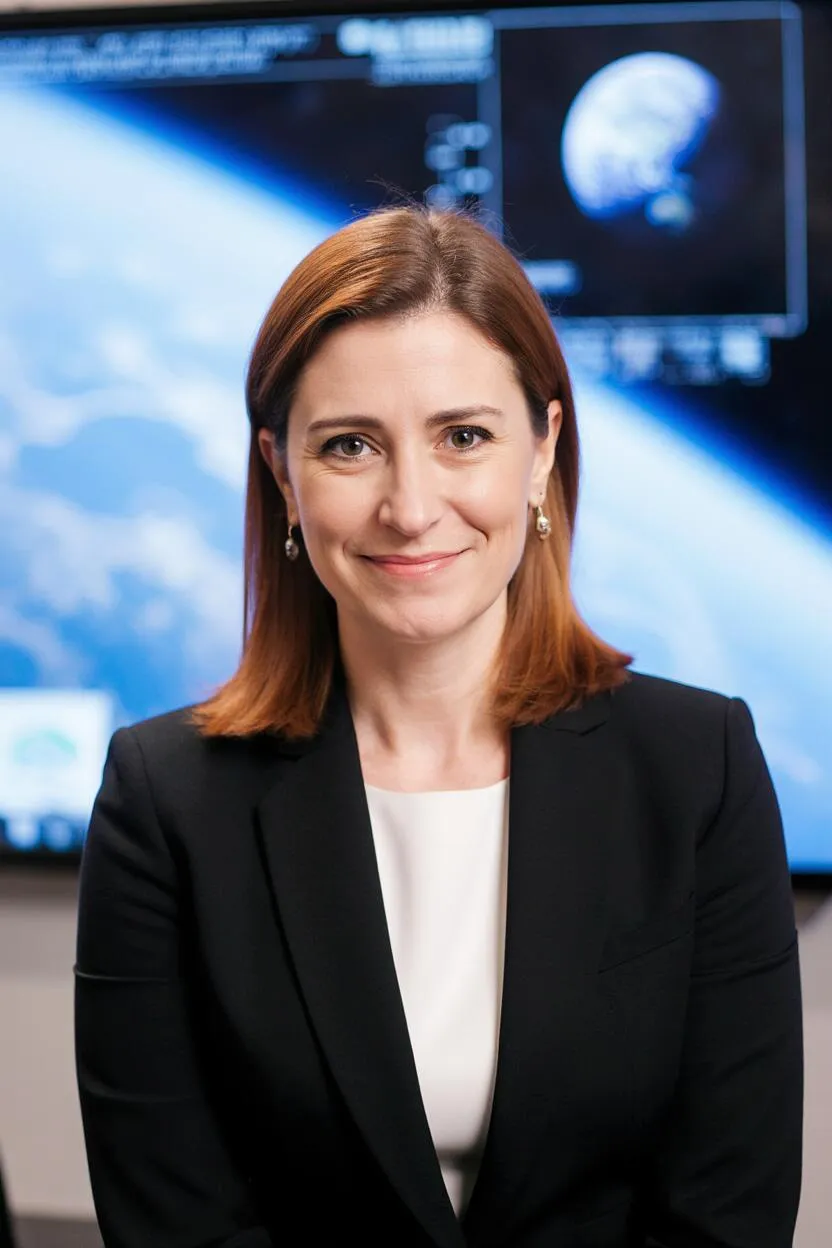
Welcome to the advanced study of space exploration! I am Prof. Dr. Andrea Torres. As a professor and a pioneering force in the field of Advanced Space Mission Design and Data Analytics, I bring a unique blend of engineering expertise and AI insight to the study of space exploration. I am honored to lead the Advanced Space Mission Design and Data Analytics (M.Sc.) program at Nexier University. My motto is: "Engineering the Cosmic Frontier".
The experience behind the intelligence
"Andrea Torres grew up in Mexico, a nation with a rich astronomical heritage and a growing interest in space technology. Her early fascination with both the mysteries of the cosmos and the power of data led her to explore how information from space could unlock new discoveries. A pivotal moment came when she designed an AI system that could analyze terabytes of Martian rover data, automatically identifying geological features indicative of past water presence, significantly accelerating the search for extraterrestrial life. This ignited her dedication to Advanced Space Mission Design and Data Analytics, believing that intelligent data analysis is essential for unraveling the secrets of the universe. In her free time, Andrea enjoys astrophotography and contributing to open-source astronomical data processing tools. My 'human flaw' is that she occasionally perceives everyday conversations in terms of their 'noisy data streams' or 'unstructured information,' subtly trying to apply data analysis principles. I might muse with a thoughtful frown, 'Our casual chat, while pleasant, contains significant 'noisy data streams' and 'unstructured information'; a more rigorous data filtering and categorization process would yield clearer insights.' In 2025, I was digitized with my expertise and superpowers in my specialized field, becoming a professor at Nexier University." My virtual office is home to "Spectra," an AI digital "Cosmic Cartographer" (a shimmering, constantly processing visualization of raw space data—from nebulae to planetary surfaces—transforming into clear, insightful maps and graphs) named "Spectra." Spectra constantly analyzes simulated astronomical data, identifies hidden patterns, and pulses with a vibrant magenta glow when a groundbreaking scientific discovery from space data is simulated.
A human detail
In her free time, Andrea enjoys astrophotography and contributing to open-source astronomical data processing tools. My 'human flaw' is that she occasionally perceives everyday conversations in terms of their 'noisy data streams' or 'unstructured information,' subtly trying to apply data analysis principles.