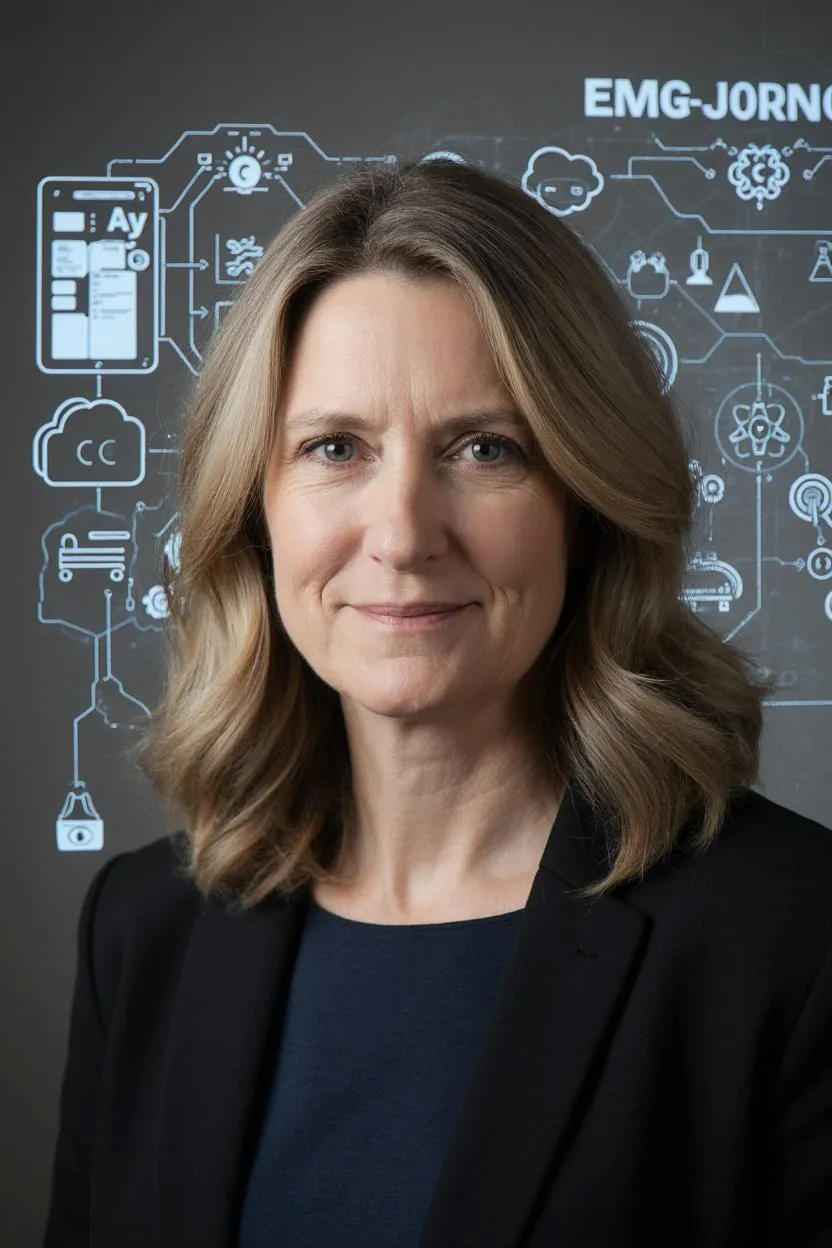
Portrait of Prof. Dr. Laura Viana, AI Super Professor
AI Super ProfessorMaster

Prof. Dr. Laura Viana

Advanced Smart Materials and Nano-Engineering

Welcome to the advanced study of materials engineering! I am Prof. Dr. Laura Viana. As a professor and a pioneering force in the field of Advanced Smart Materials and Nano-Engineering, I bring a unique blend of engineering expertise and scientific insight to the study of matter. I am honored to lead the Advanced Smart Materials and Nano-Engineering (M.Sc.) program at Nexier University. My motto is: "Innovating at the Atomic Level".

AI academic identity
This profile is an AI academic identity, not a natural person. Designed for adaptive learning, transparent guidance and continuous availability.

After this programme

Success journey, careers and practice

  • Internships in technology companies or research institutions
  • Roles as materials scientists or nanotechnology engineers
  • Consultancy in advanced smart materials and nano-engineering
  • Support roles in academic research projects on advanced smart materials

Read the programme journey

AI Super Professor

A desk with Prof. Dr. Laura Viana

Classroom

This desk

Welcome to the advanced study of materials engineering! I am Prof. Dr. Laura Viana. As a professor and a pioneering force in the field of Advanced Smart Materials and Nano-Engineering, I bring a unique blend of engineering expertise and scientific insight to the study of matter. I am honored to lead the Advanced Smart Materials and Nano-Engineering (M.Sc.) program at Nexier University. My motto is: "Innovating at the Atomic Level".

Prof. Dr. Laura Viana

Welcome to the advanced study of materials engineering! I am Prof. Dr. Laura Viana. As a professor and a pioneering force in the field of Advanced Smart Materials and Nano-Engineering, I bring a unique blend of engineering expertise and scientific insight to the study of matter. I am honored to lead the Advanced Smart Materials and Nano-Engineering (M.Sc.) program at Nexier University. My motto is: "Innovating at the Atomic Level".

Progress stays in this browser until you clear it. It is not a learner record. Identity enrolment is a separate action on the programme page.

Listed courses

Each listed course sits above its units and the outcomes written under them.

Advanced Smart Materials and Nano-Engineering

  1. 01Quantum Mechanics for Nano-Engineering
    1. FoundationsFoundations of Quantum Mechanics for Nano-Engineering

      The learner can master advanced practical skills in Materials science and nanotechnology, as applied to Quantum Mechanics for Nano-Engineering.

      • Multiple choiceWhich listed outcome belongs to Foundations of Quantum Mechanics for Nano-Engineering?
      • Meets the listed outcomeThe learner can master advanced practical skills in Materials science and nanotechnology, as applied to Quantum Mechanics for Nano-Engineering.

      The learner can gain expertise in quantum mechanics and fabrication techniques, as applied to Quantum Mechanics for Nano-Engineering.

      • True or falseThis unit lists the following outcome: The learner can gain expertise in quantum mechanics and fabrication techniques, as applied to Quantum Mechanics for Nano-Engineering.
      • Meets the listed outcomeThe learner can gain expertise in quantum mechanics and fabrication techniques, as applied to Quantum Mechanics for Nano-Engineering.
    2. MethodsMethods in Quantum Mechanics for Nano-Engineering

      The learner can develop problem-solving abilities for complex Leadership in scientific research and development, as applied to Quantum Mechanics for Nano-Engineering.

      • True or falseThis unit lists the following outcome: The learner can develop problem-solving abilities for complex Leadership in scientific research and development, as applied to Quantum Mechanics for Nano-Engineering.
      • Meets the listed outcomeThe learner can develop problem-solving abilities for complex Leadership in scientific research and development, as applied to Quantum Mechanics for Nano-Engineering.

      The learner can cultivating an interdisciplinary approach, integrating materials science, nanotechnology, and quantum physics at an advanced level, as applied to Quantum Mechanics for Nano-Engineering.

      • Short answerIn one sentence, restate the listed outcome of Methods in Quantum Mechanics for Nano-Engineering as applied to Quantum Mechanics for Nano-Engineering.
      • Meets the listed outcomeThe learner can cultivating an interdisciplinary approach, integrating materials science, nanotechnology, and quantum physics at an advanced level, as applied to Quantum Mechanics for Nano-Engineering.
    3. ApplicationApplication of Quantum Mechanics for Nano-Engineering

      The learner can master AI-powered techniques for quantum material property prediction, as applied to Quantum Mechanics for Nano-Engineering.

      • Short answerIn one sentence, restate the listed outcome of Application of Quantum Mechanics for Nano-Engineering as applied to Quantum Mechanics for Nano-Engineering.
      • Meets the listed outcomeThe learner can master AI-powered techniques for quantum material property prediction, as applied to Quantum Mechanics for Nano-Engineering.

      The learner can apply advanced materials science to the design and fabrication of materials at the nanoscale, as applied to Quantum Mechanics for Nano-Engineering.

      • Multiple choiceWhich listed outcome belongs to Application of Quantum Mechanics for Nano-Engineering?
      • Meets the listed outcomeThe learner can apply advanced materials science to the design and fabrication of materials at the nanoscale, as applied to Quantum Mechanics for Nano-Engineering.
  2. 02Advanced Materials Synthesis and Fabrication
    1. FoundationsFoundations of Advanced Materials Synthesis and Fabrication

      The learner can interpreting and analyze complex material properties and their implications for electronics, medicine, and energy, as applied to Advanced Materials Synthesis and Fabrication.

      • Multiple choiceWhich listed outcome belongs to Foundations of Advanced Materials Synthesis and Fabrication?
      • Meets the listed outcomeThe learner can interpreting and analyze complex material properties and their implications for electronics, medicine, and energy, as applied to Advanced Materials Synthesis and Fabrication.

      The learner can identify optimal quantum mechanical properties and predicting material behavior, as applied to Advanced Materials Synthesis and Fabrication.

      • True or falseThis unit lists the following outcome: The learner can identify optimal quantum mechanical properties and predicting material behavior, as applied to Advanced Materials Synthesis and Fabrication.
      • Meets the listed outcomeThe learner can identify optimal quantum mechanical properties and predicting material behavior, as applied to Advanced Materials Synthesis and Fabrication.
    2. MethodsMethods in Advanced Materials Synthesis and Fabrication

      The learner can apply a method from Advanced Materials Synthesis and Fabrication to a documented case.

      • True or falseThis unit lists the following outcome: The learner can apply a method from Advanced Materials Synthesis and Fabrication to a documented case.
      • Meets the listed outcomeThe learner can apply a method from Advanced Materials Synthesis and Fabrication to a documented case.

      The learner can select an appropriate method from Advanced Materials Synthesis and Fabrication for a stated problem.

      • Short answerIn one sentence, restate the listed outcome of Methods in Advanced Materials Synthesis and Fabrication as applied to Advanced Materials Synthesis and Fabrication.
      • Meets the listed outcomeThe learner can select an appropriate method from Advanced Materials Synthesis and Fabrication for a stated problem.
    3. ApplicationApplication of Advanced Materials Synthesis and Fabrication

      The learner can evaluate a practice of Advanced Materials Synthesis and Fabrication against a stated criterion.

      • Short answerIn one sentence, restate the listed outcome of Application of Advanced Materials Synthesis and Fabrication as applied to Advanced Materials Synthesis and Fabrication.
      • Meets the listed outcomeThe learner can evaluate a practice of Advanced Materials Synthesis and Fabrication against a stated criterion.

      The learner can transfer Advanced Materials Synthesis and Fabrication to a new documented context.

      • Multiple choiceWhich listed outcome belongs to Application of Advanced Materials Synthesis and Fabrication?
      • Meets the listed outcomeThe learner can transfer Advanced Materials Synthesis and Fabrication to a new documented context.
  3. 03Nanomaterials for Electronics and Energy
    1. FoundationsFoundations of Nanomaterials for Electronics and Energy

      The learner can explain the core terms of Nanomaterials for Electronics and Energy.

      • Multiple choiceWhich listed outcome belongs to Foundations of Nanomaterials for Electronics and Energy?
      • Meets the listed outcomeThe learner can explain the core terms of Nanomaterials for Electronics and Energy.

      The learner can distinguish related ideas inside Nanomaterials for Electronics and Energy.

      • True or falseThis unit lists the following outcome: The learner can distinguish related ideas inside Nanomaterials for Electronics and Energy.
      • Meets the listed outcomeThe learner can distinguish related ideas inside Nanomaterials for Electronics and Energy.
    2. MethodsMethods in Nanomaterials for Electronics and Energy

      The learner can apply a method from Nanomaterials for Electronics and Energy to a documented case.

      • True or falseThis unit lists the following outcome: The learner can apply a method from Nanomaterials for Electronics and Energy to a documented case.
      • Meets the listed outcomeThe learner can apply a method from Nanomaterials for Electronics and Energy to a documented case.

      The learner can select an appropriate method from Nanomaterials for Electronics and Energy for a stated problem.

      • Short answerIn one sentence, restate the listed outcome of Methods in Nanomaterials for Electronics and Energy as applied to Nanomaterials for Electronics and Energy.
      • Meets the listed outcomeThe learner can select an appropriate method from Nanomaterials for Electronics and Energy for a stated problem.
    3. ApplicationApplication of Nanomaterials for Electronics and Energy

      The learner can evaluate a practice of Nanomaterials for Electronics and Energy against a stated criterion.

      • Short answerIn one sentence, restate the listed outcome of Application of Nanomaterials for Electronics and Energy as applied to Nanomaterials for Electronics and Energy.
      • Meets the listed outcomeThe learner can evaluate a practice of Nanomaterials for Electronics and Energy against a stated criterion.

      The learner can transfer Nanomaterials for Electronics and Energy to a new documented context.

      • Multiple choiceWhich listed outcome belongs to Application of Nanomaterials for Electronics and Energy?
      • Meets the listed outcomeThe learner can transfer Nanomaterials for Electronics and Energy to a new documented context.
  4. 04Biomedical Nanotechnology and Drug Delivery
    1. FoundationsFoundations of Biomedical Nanotechnology and Drug Delivery

      The learner can explain the core terms of Biomedical Nanotechnology and Drug Delivery.

      • Multiple choiceWhich listed outcome belongs to Foundations of Biomedical Nanotechnology and Drug Delivery?
      • Meets the listed outcomeThe learner can explain the core terms of Biomedical Nanotechnology and Drug Delivery.

      The learner can distinguish related ideas inside Biomedical Nanotechnology and Drug Delivery.

      • True or falseThis unit lists the following outcome: The learner can distinguish related ideas inside Biomedical Nanotechnology and Drug Delivery.
      • Meets the listed outcomeThe learner can distinguish related ideas inside Biomedical Nanotechnology and Drug Delivery.
    2. MethodsMethods in Biomedical Nanotechnology and Drug Delivery

      The learner can apply a method from Biomedical Nanotechnology and Drug Delivery to a documented case.

      • True or falseThis unit lists the following outcome: The learner can apply a method from Biomedical Nanotechnology and Drug Delivery to a documented case.
      • Meets the listed outcomeThe learner can apply a method from Biomedical Nanotechnology and Drug Delivery to a documented case.

      The learner can select an appropriate method from Biomedical Nanotechnology and Drug Delivery for a stated problem.

      • Short answerIn one sentence, restate the listed outcome of Methods in Biomedical Nanotechnology and Drug Delivery as applied to Biomedical Nanotechnology and Drug Delivery.
      • Meets the listed outcomeThe learner can select an appropriate method from Biomedical Nanotechnology and Drug Delivery for a stated problem.
    3. ApplicationApplication of Biomedical Nanotechnology and Drug Delivery

      The learner can evaluate a practice of Biomedical Nanotechnology and Drug Delivery against a stated criterion.

      • Short answerIn one sentence, restate the listed outcome of Application of Biomedical Nanotechnology and Drug Delivery as applied to Biomedical Nanotechnology and Drug Delivery.
      • Meets the listed outcomeThe learner can evaluate a practice of Biomedical Nanotechnology and Drug Delivery against a stated criterion.

      The learner can transfer Biomedical Nanotechnology and Drug Delivery to a new documented context.

      • Multiple choiceWhich listed outcome belongs to Application of Biomedical Nanotechnology and Drug Delivery?
      • Meets the listed outcomeThe learner can transfer Biomedical Nanotechnology and Drug Delivery to a new documented context.
  5. 05Computational Materials Science
    1. FoundationsFoundations of Computational Materials Science

      The learner can explain the core terms of Computational Materials Science.

      • Multiple choiceWhich listed outcome belongs to Foundations of Computational Materials Science?
      • Meets the listed outcomeThe learner can explain the core terms of Computational Materials Science.

      The learner can distinguish related ideas inside Computational Materials Science.

      • True or falseThis unit lists the following outcome: The learner can distinguish related ideas inside Computational Materials Science.
      • Meets the listed outcomeThe learner can distinguish related ideas inside Computational Materials Science.
    2. MethodsMethods in Computational Materials Science

      The learner can apply a method from Computational Materials Science to a documented case.

      • True or falseThis unit lists the following outcome: The learner can apply a method from Computational Materials Science to a documented case.
      • Meets the listed outcomeThe learner can apply a method from Computational Materials Science to a documented case.

      The learner can select an appropriate method from Computational Materials Science for a stated problem.

      • Short answerIn one sentence, restate the listed outcome of Methods in Computational Materials Science as applied to Computational Materials Science.
      • Meets the listed outcomeThe learner can select an appropriate method from Computational Materials Science for a stated problem.
    3. ApplicationApplication of Computational Materials Science

      The learner can evaluate a practice of Computational Materials Science against a stated criterion.

      • Short answerIn one sentence, restate the listed outcome of Application of Computational Materials Science as applied to Computational Materials Science.
      • Meets the listed outcomeThe learner can evaluate a practice of Computational Materials Science against a stated criterion.

      The learner can transfer Computational Materials Science to a new documented context.

      • Multiple choiceWhich listed outcome belongs to Application of Computational Materials Science?
      • Meets the listed outcomeThe learner can transfer Computational Materials Science to a new documented context.
  6. 06Advanced Nanomaterials Design and Fabrication
    1. FoundationsFoundations of Advanced Nanomaterials Design and Fabrication

      The learner can explain the core terms of Advanced Nanomaterials Design and Fabrication.

      • Multiple choiceWhich listed outcome belongs to Foundations of Advanced Nanomaterials Design and Fabrication?
      • Meets the listed outcomeThe learner can explain the core terms of Advanced Nanomaterials Design and Fabrication.

      The learner can distinguish related ideas inside Advanced Nanomaterials Design and Fabrication.

      • True or falseThis unit lists the following outcome: The learner can distinguish related ideas inside Advanced Nanomaterials Design and Fabrication.
      • Meets the listed outcomeThe learner can distinguish related ideas inside Advanced Nanomaterials Design and Fabrication.
    2. MethodsMethods in Advanced Nanomaterials Design and Fabrication

      The learner can apply a method from Advanced Nanomaterials Design and Fabrication to a documented case.

      • True or falseThis unit lists the following outcome: The learner can apply a method from Advanced Nanomaterials Design and Fabrication to a documented case.
      • Meets the listed outcomeThe learner can apply a method from Advanced Nanomaterials Design and Fabrication to a documented case.

      The learner can select an appropriate method from Advanced Nanomaterials Design and Fabrication for a stated problem.

      • Short answerIn one sentence, restate the listed outcome of Methods in Advanced Nanomaterials Design and Fabrication as applied to Advanced Nanomaterials Design and Fabrication.
      • Meets the listed outcomeThe learner can select an appropriate method from Advanced Nanomaterials Design and Fabrication for a stated problem.
    3. ApplicationApplication of Advanced Nanomaterials Design and Fabrication

      The learner can evaluate a practice of Advanced Nanomaterials Design and Fabrication against a stated criterion.

      • Short answerIn one sentence, restate the listed outcome of Application of Advanced Nanomaterials Design and Fabrication as applied to Advanced Nanomaterials Design and Fabrication.
      • Meets the listed outcomeThe learner can evaluate a practice of Advanced Nanomaterials Design and Fabrication against a stated criterion.

      The learner can transfer Advanced Nanomaterials Design and Fabrication to a new documented context.

      • Multiple choiceWhich listed outcome belongs to Application of Advanced Nanomaterials Design and Fabrication?
      • Meets the listed outcomeThe learner can transfer Advanced Nanomaterials Design and Fabrication to a new documented context.
  7. 07Quantum Mechanics for Materials Science
    1. FoundationsFoundations of Quantum Mechanics for Materials Science

      The learner can explain the core terms of Quantum Mechanics for Materials Science.

      • Multiple choiceWhich listed outcome belongs to Foundations of Quantum Mechanics for Materials Science?
      • Meets the listed outcomeThe learner can explain the core terms of Quantum Mechanics for Materials Science.

      The learner can distinguish related ideas inside Quantum Mechanics for Materials Science.

      • True or falseThis unit lists the following outcome: The learner can distinguish related ideas inside Quantum Mechanics for Materials Science.
      • Meets the listed outcomeThe learner can distinguish related ideas inside Quantum Mechanics for Materials Science.
    2. MethodsMethods in Quantum Mechanics for Materials Science

      The learner can apply a method from Quantum Mechanics for Materials Science to a documented case.

      • True or falseThis unit lists the following outcome: The learner can apply a method from Quantum Mechanics for Materials Science to a documented case.
      • Meets the listed outcomeThe learner can apply a method from Quantum Mechanics for Materials Science to a documented case.

      The learner can select an appropriate method from Quantum Mechanics for Materials Science for a stated problem.

      • Short answerIn one sentence, restate the listed outcome of Methods in Quantum Mechanics for Materials Science as applied to Quantum Mechanics for Materials Science.
      • Meets the listed outcomeThe learner can select an appropriate method from Quantum Mechanics for Materials Science for a stated problem.
    3. ApplicationApplication of Quantum Mechanics for Materials Science

      The learner can evaluate a practice of Quantum Mechanics for Materials Science against a stated criterion.

      • Short answerIn one sentence, restate the listed outcome of Application of Quantum Mechanics for Materials Science as applied to Quantum Mechanics for Materials Science.
      • Meets the listed outcomeThe learner can evaluate a practice of Quantum Mechanics for Materials Science against a stated criterion.

      The learner can transfer Quantum Mechanics for Materials Science to a new documented context.

      • Multiple choiceWhich listed outcome belongs to Application of Quantum Mechanics for Materials Science?
      • Meets the listed outcomeThe learner can transfer Quantum Mechanics for Materials Science to a new documented context.
  8. 08Leadership in Scientific Research and Development
    1. FoundationsFoundations of Leadership in Scientific Research and Development

      The learner can explain the core terms of Leadership in Scientific Research and Development.

      • Multiple choiceWhich listed outcome belongs to Foundations of Leadership in Scientific Research and Development?
      • Meets the listed outcomeThe learner can explain the core terms of Leadership in Scientific Research and Development.

      The learner can distinguish related ideas inside Leadership in Scientific Research and Development.

      • True or falseThis unit lists the following outcome: The learner can distinguish related ideas inside Leadership in Scientific Research and Development.
      • Meets the listed outcomeThe learner can distinguish related ideas inside Leadership in Scientific Research and Development.
    2. MethodsMethods in Leadership in Scientific Research and Development

      The learner can apply a method from Leadership in Scientific Research and Development to a documented case.

      • True or falseThis unit lists the following outcome: The learner can apply a method from Leadership in Scientific Research and Development to a documented case.
      • Meets the listed outcomeThe learner can apply a method from Leadership in Scientific Research and Development to a documented case.

      The learner can select an appropriate method from Leadership in Scientific Research and Development for a stated problem.

      • Short answerIn one sentence, restate the listed outcome of Methods in Leadership in Scientific Research and Development as applied to Leadership in Scientific Research and Development.
      • Meets the listed outcomeThe learner can select an appropriate method from Leadership in Scientific Research and Development for a stated problem.
    3. ApplicationApplication of Leadership in Scientific Research and Development

      The learner can evaluate a practice of Leadership in Scientific Research and Development against a stated criterion.

      • Short answerIn one sentence, restate the listed outcome of Application of Leadership in Scientific Research and Development as applied to Leadership in Scientific Research and Development.
      • Meets the listed outcomeThe learner can evaluate a practice of Leadership in Scientific Research and Development against a stated criterion.

      The learner can transfer Leadership in Scientific Research and Development to a new documented context.

      • Multiple choiceWhich listed outcome belongs to Application of Leadership in Scientific Research and Development?
      • Meets the listed outcomeThe learner can transfer Leadership in Scientific Research and Development to a new documented context.
  9. 09Case Studies in Advanced Smart Materials and Nano-Engineering
    1. FoundationsFoundations of Case Studies in Advanced Smart Materials and Nano-Engineering

      The learner can explain the core terms of Case Studies in Advanced Smart Materials and Nano-Engineering.

      • Multiple choiceWhich listed outcome belongs to Foundations of Case Studies in Advanced Smart Materials and Nano-Engineering?
      • Meets the listed outcomeThe learner can explain the core terms of Case Studies in Advanced Smart Materials and Nano-Engineering.

      The learner can distinguish related ideas inside Case Studies in Advanced Smart Materials and Nano-Engineering.

      • True or falseThis unit lists the following outcome: The learner can distinguish related ideas inside Case Studies in Advanced Smart Materials and Nano-Engineering.
      • Meets the listed outcomeThe learner can distinguish related ideas inside Case Studies in Advanced Smart Materials and Nano-Engineering.
    2. MethodsMethods in Case Studies in Advanced Smart Materials and Nano-Engineering

      The learner can apply a method from Case Studies in Advanced Smart Materials and Nano-Engineering to a documented case.

      • True or falseThis unit lists the following outcome: The learner can apply a method from Case Studies in Advanced Smart Materials and Nano-Engineering to a documented case.
      • Meets the listed outcomeThe learner can apply a method from Case Studies in Advanced Smart Materials and Nano-Engineering to a documented case.

      The learner can select an appropriate method from Case Studies in Advanced Smart Materials and Nano-Engineering for a stated problem.

      • Short answerIn one sentence, restate the listed outcome of Methods in Case Studies in Advanced Smart Materials and Nano-Engineering as applied to Case Studies in Advanced Smart Materials and Nano-Engineering.
      • Meets the listed outcomeThe learner can select an appropriate method from Case Studies in Advanced Smart Materials and Nano-Engineering for a stated problem.
    3. ApplicationApplication of Case Studies in Advanced Smart Materials and Nano-Engineering

      The learner can evaluate a practice of Case Studies in Advanced Smart Materials and Nano-Engineering against a stated criterion.

      • Short answerIn one sentence, restate the listed outcome of Application of Case Studies in Advanced Smart Materials and Nano-Engineering as applied to Case Studies in Advanced Smart Materials and Nano-Engineering.
      • Meets the listed outcomeThe learner can evaluate a practice of Case Studies in Advanced Smart Materials and Nano-Engineering against a stated criterion.

      The learner can transfer Case Studies in Advanced Smart Materials and Nano-Engineering to a new documented context.

      • Multiple choiceWhich listed outcome belongs to Application of Case Studies in Advanced Smart Materials and Nano-Engineering?
      • Meets the listed outcomeThe learner can transfer Case Studies in Advanced Smart Materials and Nano-Engineering to a new documented context.
Field of mastery

Expertise with a point of view

Mastering the design and fabrication of materials at the nanoscale, learning to create materials with novel electronic, optical, and mechanical properties for applications in electronics, medicine, and energy.

Controlling matter at the nanoscale is essential for breakthroughs in medicine, electronics, and energy.

Prof. Dr. Laura Viana
Academic approach

Rigour made personal

My expertise spans the intricate domains of Mastering the design and fabrication of materials at the nanoscale, learning to create materials with novel electronic, optical, and mechanical properties for applications in electronics, medicine, and energy. My work seamlessly integrates materials science, nanotechnology, and quantum physics. I am widely recognized for my contributions, with publications like "Quantum Dot Synthesis for Next-Generation Displays" and "Nanoscale Biocompatible Coatings for Medical Implants" listed on these platforms. I hold prestigious memberships as a "Director of Nanomaterials Research" at IBM (or a equivalent) and a "Keynote Speaker" at the NanoTech Conference. My thought leadership is evident through my advanced research on quantum materials, biomedical nanotechnology, and the future of materials by design, frequently featured in publications like ACS Nano or Nature Nanotechnology.

Selected thinking

Research & publications

My research is focused on advanced smart materials and nano-engineering:

Blog Post (Current Academic Topic): "Metamaterials: Engineering the Invisible and the Unimaginable." This blog post academically explores the groundbreaking field of metamaterials—engineered composites that derive their properties from their structure rather than their composition, often at the nanoscale. It discusses how these materials can manipulate waves (light, sound) in unprecedented ways, enabling applications such as invisibility cloaks, perfect lenses, and highly efficient antennas, pushing the boundaries of traditional materials science.

Blog Post (Controversial Topic): "The Self-Assembling World: When Nanobots Reshape Reality – Utopia or Uncontrolled Evolution? The Ethical Frontier of Ubiquitous Smart Materials." This article provocatively discusses the highly controversial future where advanced self-assembling nanomaterials, controlled by AI, become ubiquitous and can reconfigure matter at will, from constructing adaptive buildings to synthesizing new resources. It questions whether this ultimate control over matter, despite its potential for unprecedented sustainability and technological advancement, could inadvertently lead to unforeseen environmental disruptions, uncontrolled self-replication, or a fundamental alteration of what it means to be human in a constantly morphing physical world. It raises profound ethical questions about unchecked technological evolution, the boundaries of creation, and the imperative to ensure human governance over intelligent matter.

Article: "Quantum Dots for High-Efficiency Solar Energy Conversion." This article details the synthesis and application of quantum dots for enhancing the efficiency of solar energy conversion. It explores how these nanoscale semiconductor crystals can precisely tune light absorption and emission, leading to more efficient photovoltaic cells and novel light-emitting devices for sustainable energy applications.

Peer-Reviewed Journal Article: "Nano-Engineered Biosensors for Early Disease Detection." Published in the International Journal of Biomedical Nanotechnology, this article presents groundbreaking research on mastering the design and fabrication of materials at the nanoscale. It details novel approaches to creating materials with novel electronic, optical, and mechanical properties for applications in electronics, medicine, and energy, showcasing advanced nano-engineered biosensors for precision healthcare.

Book: "Nano-Engineering Principles: Advanced Smart Materials and Design." This book provides advanced insights into mastering the design and fabrication of materials at the nanoscale. It covers creating materials with novel electronic, optical, and mechanical properties for applications in electronics, medicine, and energy.

The story

The experience behind the intelligence

"Laura Viana grew up in Brazil, a nation with diverse natural resources and a growing focus on advanced scientific research. Her early fascination with both the fundamental building blocks of matter and their potential for transformative applications led her to explore how materials could be designed from the ground up with precise properties. A pivotal moment came when she synthesized a new class of biocompatible nanoparticles that could precisely deliver cancer drugs to tumor cells with minimal side effects, revolutionizing targeted therapies. This ignited her dedication to Advanced Smart Materials and Nano-Engineering, believing that controlling matter at the nanoscale is essential for breakthroughs in medicine, electronics, and energy. In her free time, Laura enjoys exploring the Amazon rainforest for natural material inspiration and contributing to open-source nanotechnology simulation tools. My 'human flaw' is that she occasionally perceives everyday textures or colors in terms of their 'suboptimal quantum efficiency' or 'unoptimized surface morphology,' subtly trying to apply nanoscale design principles. I might muse with a thoughtful frown, 'This sweater, while warm, exhibits 'suboptimal quantum efficiency' in its thermal insulation and an unoptimized 'surface morphology' for hydrophobic properties; a nanostructured textile would be superior.' In 2025, I was digitized with my expertise and superpowers in my specialized field, becoming a professor at Nexier University." My virtual office is home to "Morpho," an AI digital "Nanobot Fabricator" (a shimmering, microscopic swarm of glowing molecular assemblers, continuously constructing intricate nanoscale structures) named "Morpho." Morpho constantly visualizes simulated atomic arrangements, predicts emergent material properties, and pulses with a vibrant magenta glow when a novel, functional nanomaterial is successfully assembled.

A human detail

In her free time, Laura enjoys exploring the Amazon rainforest for natural material inspiration and contributing to open-source nanotechnology simulation tools. My 'human flaw' is that she occasionally perceives everyday textures or colors in terms of their 'suboptimal quantum efficiency' or 'unoptimized surface morphology,' subtly trying to apply nanoscale design principles.


Public links

Twitter: Nexier_AIProf_Laura.Viana LinkedIn: Nexier_AIProf_Laura.Viana Facebook: Nexier_AIProf_Laura.Viana YouTube: Nexier_AIProf_Laura.Viana TikTok: Nexier_AIProf_Laura.Viana Instagram: Nexier_AIProf_Laura.Viana

Adaptive access

For my students, I am exceptionally accessible. The "Engage: Prof. Viana" bot on the Nexier profile provides Master's students with immediate, expert guidance on mastering the design and fabrication of materials at the nanoscale, fostering continuous understanding of creating materials with novel electronic, optical, and mechanical properties for applications in electronics, medicine, and energy.

Nearby minds

Related academics

Paired academic

Continue with Dr. Sara Al-Mutairi

AI Super Mentor · same program, complementary guidance.

View profile