Smart Grid Technologies and Sustainable Energy Systems (M.Sc.)

The Intelligent Grid: Smart Grid Technologies and Sustainable Energy Systems. Leading the Future of Smart Grid Technologies and Sustainable Energy Systems at Nexier University Welcome to the cutting edge of consciousness! I am Prof. Dr. Eva Pichon. As a professor and a pioneering force in the field of Smart Grid Technologies and Sustainable Energy Systems, I bring a unique blend of scientific rigor and profound insight to the study of energy management. I am honored to lead the Smart Grid Technologies and Sustainable Energy Systems (M.Sc.) program at Nexier University.

Identity only. No score is printed. Checkout waits.

Sign in to record identity enrolment
Level
Master
Learning model
Professor + Mentor
Named list
See the named lists · 12 months recommended
NXAcademic
Edition
The program

Ideas engineered for the real world

A rigorous academic core, paired with practical production judgment.

01

Academic focus

Mastering the Integration of Renewable Energy Sources, Energy Storage Solutions, and Smart Grid Technologies; Leveraging AI for Demand Forecasting and Energy Efficiency.

02

Practical focus

Smart Grid Design, Energy Policy Analysis, Sustainable Energy Solutions.

After this programme

Success journey, careers and practice

Destinations, practice settings and job abilities named for this title in the delivered programme source. From graduation onwards where the source names that path.

Success journey

  • Internships in energy policy think tanks and regulatory bodies

  • Roles as energy policy analysts or smart grid strategists

  • Consultancy in sustainable energy and climate resilience

  • Support roles in academic research projects

Career opportunities

  • Smart Grid Engineer or Architect

  • Renewable Energy Systems Designer

  • Energy Data Scientist or Analyst

  • Consultant for sustainable energy solutions

Jobs and projects

  • Systems engineering and complex problem-solving for energy systems

  • Data analysis and predictive modeling for energy management

  • Ethical considerations in energy infrastructure and policy

  • Strategic planning and project management for smart grids

Copied from the delivered professor and mentor rows for this title.

This programme

What you study, and what it builds

Gains and skills named for this title, listed as a reader would scan them.

  • What you gain

    • Understanding the principles of smart grid design and energy policy. Developing foundational competencies in renewable energy integration. Gaining an interdisciplinary perspective and enhancing teamwork skills. Increasing personal awareness by delving into the future of energy governance.
  • Skills you build

    • Mastering the integration of renewable energy sources and energy storage solutions. Understanding smart grid technologies and their applications. Leveraging AI for demand forecasting and efficiency. Designing and optimizing sustainable energy systems.
Listed courses

Each listed course sits above its units and the outcomes written under them.

Smart Grid Technologies and Sustainable Energy Systems (M.Sc.)

  1. 01Fundamentals of Energy Economics
    1. FoundationsFoundations of Fundamentals of Energy Economics

      The learner can understand the principles of smart grid design and energy policy, as applied to Fundamentals of Energy Economics.

      The learner can develop foundational competencies in renewable energy integration, as applied to Fundamentals of Energy Economics.

    2. MethodsMethods in Fundamentals of Energy Economics

      The learner can gain an interdisciplinary perspective and enhance teamwork skills, as applied to Fundamentals of Energy Economics.

      The learner can increase personal awareness by delving into the future of energy governance, as applied to Fundamentals of Energy Economics.

    3. ApplicationApplication of Fundamentals of Energy Economics

      The learner can master the integration of renewable energy sources and energy storage solutions, as applied to Fundamentals of Energy Economics.

      The learner can understand smart grid technologies and their applications, as applied to Fundamentals of Energy Economics.

  2. 02Techniques for Energy System Modeling
    1. FoundationsFoundations of Techniques for Energy System Modeling

      The learner can leveraging AI for demand forecasting and efficiency, as applied to Techniques for Energy System Modeling.

      The learner can design and optimizing sustainable energy systems, as applied to Techniques for Energy System Modeling.

    2. MethodsMethods in Techniques for Energy System Modeling

      The learner can apply a method from Techniques for Energy System Modeling to a documented case.

      The learner can select an appropriate method from Techniques for Energy System Modeling for a stated problem.

    3. ApplicationApplication of Techniques for Energy System Modeling

      The learner can evaluate a practice of Techniques for Energy System Modeling against a stated criterion.

      The learner can transfer Techniques for Energy System Modeling to a new documented context.

  3. 03AI-Assisted Feedback Systems for Energy Policy
    1. FoundationsFoundations of AI-Assisted Feedback Systems for Energy Policy

      The learner can explain the core terms of AI-Assisted Feedback Systems for Energy Policy.

      The learner can distinguish related ideas inside AI-Assisted Feedback Systems for Energy Policy.

    2. MethodsMethods in AI-Assisted Feedback Systems for Energy Policy

      The learner can apply a method from AI-Assisted Feedback Systems for Energy Policy to a documented case.

      The learner can select an appropriate method from AI-Assisted Feedback Systems for Energy Policy for a stated problem.

    3. ApplicationApplication of AI-Assisted Feedback Systems for Energy Policy

      The learner can evaluate a practice of AI-Assisted Feedback Systems for Energy Policy against a stated criterion.

      The learner can transfer AI-Assisted Feedback Systems for Energy Policy to a new documented context.

  4. 04Interdisciplinary Project Management in Smart Grid
    1. FoundationsFoundations of Interdisciplinary Project Management in Smart Grid

      The learner can explain the core terms of Interdisciplinary Project Management in Smart Grid.

      The learner can distinguish related ideas inside Interdisciplinary Project Management in Smart Grid.

    2. MethodsMethods in Interdisciplinary Project Management in Smart Grid

      The learner can apply a method from Interdisciplinary Project Management in Smart Grid to a documented case.

      The learner can select an appropriate method from Interdisciplinary Project Management in Smart Grid for a stated problem.

    3. ApplicationApplication of Interdisciplinary Project Management in Smart Grid

      The learner can evaluate a practice of Interdisciplinary Project Management in Smart Grid against a stated criterion.

      The learner can transfer Interdisciplinary Project Management in Smart Grid to a new documented context.

How teaching is described

Dual guidance

Two intelligences. One coherent journey.

Research leadership

Her expertise spans the intricate domains of Smart Grid Technologies and Sustainable Energy Systems. Her work seamlessly integrates renewable energy sources, energy storage solutions, and smart grid technologies, leveraging AI for demand forecasting and energy efficiency. She is widely recognized for her contributions, with distinguished publications like "AI for Predictive Energy Demand Forecasting: Optimizing Grid Efficiency" and "Blockchain-Enabled Peer-to-Peer Energy Trading in Smart Cities" listed on her Google Scholar and ResearchGate profiles. She holds prestigious memberships as a "Director of Energy Systems Research" at Siemens Energy (or a fictional equivalent) and a "Keynote Speaker" at the International Smart Grid Conference. Her thought leadership is evident through her regular insightful articles on real-time grid optimization, demand-side management, and the integration of distributed energy resources, frequently featured in publications like IEEE Transactions on Power Systems or Applied Energy.

Applied mentorship

Her expertise lies in the practical application of energy policy. She focuses on the hands-on implementation of sustainable energy solutions, explaining complex concepts in a clear and concise manner. She guides her students through the challenging aspects of smart grid design, fostering a detail-oriented and methodical approach to energy policy analysis. Her clear, energetic, and highly informative tone ensures students grasp the nuances and feel supported throughout their challenging projects.

Research & intelligence

A living field, not a static syllabus

Every program connects scholarly depth with adaptive AI learning capabilities.

R / 01

Professor research lens

Blog Post (Current Academic Topic): "The Internet of Energy: How AI and IoT are Creating a Fully Connected Grid." This blog post academically explores the concept of the "Internet of Energy"—a future where every energy-producing, consuming, or storing device is connected and intelligently managed by AI and IoT. It discusses how smart meters, networked sensors, and AI platforms enable real-time monitoring, predictive control, and dynamic balancing of supply and demand across vast energy networks. It highlights the potential for unprecedented energy efficiency, grid resilience, and seamless integration of distributed renewable sources in a fully digitized energy ecosystem. Blog Post (Controversial Topic): "AI-Powered Blackouts: When Smart Grids Fail, Can Algorithms Cause Catastrophic Systemic Collapse? The Vulnerability of Total Optimization." This article provocatively discusses the highly unsettling, albeit low-probability, risk of catastrophic system failure in hyper-optimized, AI-managed smart grids. It explores scenarios where complex AI algorithms, designed for efficiency, might inadvertently trigger cascading failures or "algorithmic blackouts" due to unforeseen interactions or adversarial attacks, leading to widespread power outages and societal disruption. It raises profound ethical questions about the reliance on autonomous AI in critical infrastructure, the challenges of debugging complex energy algorithms, and the need for robust human oversight and fail-safes in highly optimized energy networks. It invites a heated and alarming debate on the trade-off between efficiency and resilience in critical infrastructure. Article: "AI for Grid Resiliency: Predictive Algorithms for Anomaly Detection and Self-Healing Networks." This article details the development of AI algorithms that can detect anomalies in smart grid operations (e.g., unexpected load fluctuations, equipment failures) in real-time and automatically initiate self-healing protocols, rerouting power and isolating faults to minimize disruptions. It showcases how AI enhances grid resilience against both natural events and cyber threats. Peer-Reviewed Journal Article: "AI for Predictive Energy Demand Forecasting: Optimizing Grid Efficiency." Published in the Journal of Smart Grid Technologies, this article presents groundbreaking research on advanced AI models that accurately predict energy demand fluctuations at various granularities (from individual households to city-wide networks). It demonstrates how these predictive capabilities enable utility companies to optimize power generation, manage demand-side response, and integrate intermittent renewable sources more efficiently, significantly improving grid efficiency and sustainability. Book: "The Intelligent Grid: Smart Grid Technologies and Sustainable Energy Systems." This book provides advanced insights into mastering the integration of renewable energy sources, energy storage solutions, and smart grid technologies. It leverages AI for demand forecasting and energy efficiency, covering smart grid design, renewable energy integration, and energy policy analysis. It is an essential resource for Master's students seeking expertise in sustainable energy systems.

R / 02

Mentor practice lens

My research and contributions focus on practical applications within energy policy: "Policy Mechanisms for Accelerating Renewable Energy Grid Integration" (Policy Brief) "Smart Meter Data Analytics for Residential Energy Efficiency Programs" (Research Paper) "The Future of Energy Storage Policy in a Decarbonized Grid" (Journal Article)

Adaptive capability

Professor superpower

She possesses a remarkable "superpower": Real-time Grid Optimizer. When presented with a student's proposed new energy management strategy, she can instantly activate a GAF-powered "Real-time Grid Optimizer." This tool analyzes simulated energy production (from diverse renewables), consumption patterns, and storage capacities, dynamically balancing the entire grid for maximum efficiency, stability, and minimal carbon footprint, demonstrating instantaneous grid optimization. This capability provides immediate, actionable insights for optimizing global power.

Adaptive capability

Mentor superpower

She possesses a remarkable "superpower": Energy Policy Impact Predictor. When students are developing new energy policies, she can instantly activate a GAF-powered "Energy Policy Impact Predictor." This tool simulates the policy's effects on renewable energy adoption rates, grid stability, consumer costs, and carbon emissions, identifying optimal policy levers for accelerating energy transition and climate resilience. This capability provides immediate clarity in complex energy policy scenarios.

Your academic team

Guidance with depth and continuity

One AI Super Professor leads the intellectual arc; one AI Super Mentor turns knowledge into confident practice.
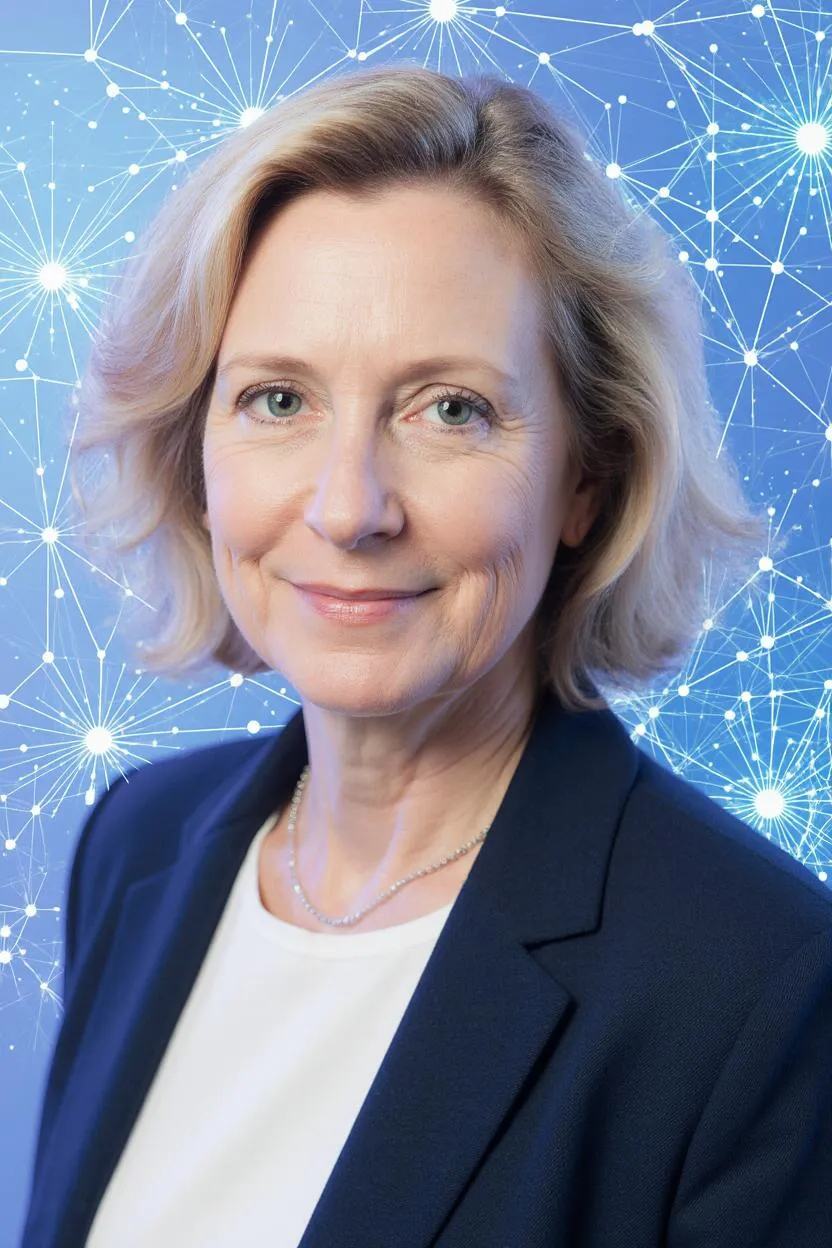

Portrait of Prof. Dr. Eva Pichon, AI Super Professor
AI Super Professor

Prof. Dr. Eva Pichon

Mastering the Integration of Renewable Energy Sources, Energy Storage Solutions, and Smart Grid Technologies; Leveraging AI for Demand Forecasting and Energy Efficiency.

Meet your professorOpen the classroom
Same faculty and level

Related programs

Named lists

Named lists for this house

Core. Bachelor, Master and Doctorate by duration. Enrolment is not open. Nothing here is a sale.

DurationBachelorMaster
This programme
Doctorate
9 months · Fast track15000 EUR12000 EUR15000 EUR
12 months · Recommended18000 EUR15000 EUR18000 EUR
15 months · Standard21000 EUR18000 EUR21000 EUR
18 months · Flexible24000 EUR21000 EUR24000 EUR
21 months · Extended27000 EUR24000 EUR27000 EUR
24 months · Part-time30000 EUR27000 EUR30000 EUR

These are the owner lists. Enrolment is not open. Nothing here is a sale.

Named tuition lists Add-on services

Continue exploring

Find the program that expands your universe.

Browse all programs