Neuro-Cybersecurity and Behavioral Threat Intelligence (M.Sc.)

Securing the Mind's Final Frontier Pioneering Neuro-Cybersecurity at Nexier University Welcome to the frontline of cognitive defense! I am Prof. Dr. Siyabonga Ndlovu. As a leading professor in Neuro-Cybersecurity and Behavioral Threat Intelligence, I merge ancient strategic wisdom with futuristic technology to protect the most valuable asset: the human mind. I am honored to lead the Neuro-Cybersecurity and Behavioral Threat Intelligence (M.Sc.) program at Nexier University.

Identity only. No score is printed. Checkout waits.

Sign in to record identity enrolment
Level
Master
Learning model
Professor + Mentor
Named list
See the named lists · 12 months recommended
NXAcademic
Edition
The program

Ideas engineered for the real world

A rigorous academic core, paired with practical production judgment.

01

Academic focus

Neuro-Cybersecurity, Behavioral Threat Intelligence, Cognitive Hacking, Neural Interface Security, Predictive Behavioral Modeling

02

Practical focus

Applied Cognitive Threat Hunting, Neural Interface Penetration Testing, Red Teaming for Social Engineering

After this programme

Success journey, careers and practice

Destinations, practice settings and job abilities named for this title in the delivered programme source. From graduation onwards where the source names that path.

Success journey

  • Internships in government agencies and international organizations

  • Red Team Specialist in a major tech firm (e.g., Google, Meta)

  • Security Researcher for a cybersecurity vendor (e.g., CrowdStrike, Palo Alto Networks)

  • BCI Security Auditor for medical and consumer tech companies

  • Threat Hunter for a specialized cognitive security consultancy

Career opportunities

  • Neuro-Cybersecurity Analyst in government intelligence agencies (e.g., NSA, GCHQ)

  • Cognitive Security Consultant for Fortune 500 companies

  • AI Ethicist specializing in neural interface technology

  • Lead Researcher in corporate or academic neuro-security labs

Jobs and projects

  • Developing a highly advanced interdisciplinary analytical mindset

  • Ethical reasoning in the context of cognitive monitoring and security

  • Advanced strategic thinking and predictive problem-solving

  • Clear communication of complex security concepts to diverse audiences

Copied from the delivered professor and mentor rows for this title.

This programme

What you study, and what it builds

Gains and skills named for this title, listed as a reader would scan them.

  • What you gain

    • Develop hands-on skills in penetration testing for emerging technologies. Gain a deep, practical understanding of the psychology of cyber attackers. Collaborate in high-stakes red team/blue team exercises. Join a close-knit community of ethical hackers and defenders.
  • Skills you build

    • Mastering the principles of neuro-cybersecurity and cognitive threat assessment. Applying AI algorithms to analyze behavioral data for security vulnerabilities. Designing security protocols for brain-computer interfaces (BCIs). Conducting research on the psychological drivers of cyber threats.
Listed courses

Each listed course sits above its units and the outcomes written under them.

Neuro-Cybersecurity and Behavioral Threat Intelligence (M.Sc.)

  1. 01Applied Social Engineering and Defense
    1. FoundationsFoundations of Applied Social Engineering and Defense

      The learner can develop hands-on skills in penetration testing for emerging technologies, as applied to Applied Social Engineering and Defense.

      The learner can gain a deep, practical understanding of the psychology of cyber attackers, as applied to Applied Social Engineering and Defense.

    2. MethodsMethods in Applied Social Engineering and Defense

      The learner can collaborate in high-stakes red team/blue team exercises, as applied to Applied Social Engineering and Defense.

      The learner can join a close-knit community of ethical hackers and defenders, as applied to Applied Social Engineering and Defense.

    3. ApplicationApplication of Applied Social Engineering and Defense

      The learner can master the principles of neuro-cybersecurity and cognitive threat assessment, as applied to Applied Social Engineering and Defense.

      The learner can apply AI algorithms to analyze behavioral data for security vulnerabilities, as applied to Applied Social Engineering and Defense.

  2. 02Penetration Testing for Brain-Computer Interfaces
    1. FoundationsFoundations of Penetration Testing for Brain-Computer Interfaces

      The learner can design security protocols for brain-computer interfaces (BCIs), as applied to Penetration Testing for Brain-Computer Interfaces.

      The learner can conducting research on the psychological drivers of cyber threats, as applied to Penetration Testing for Brain-Computer Interfaces.

    2. MethodsMethods in Penetration Testing for Brain-Computer Interfaces

      The learner can apply a method from Penetration Testing for Brain-Computer Interfaces to a documented case.

      The learner can select an appropriate method from Penetration Testing for Brain-Computer Interfaces for a stated problem.

    3. ApplicationApplication of Penetration Testing for Brain-Computer Interfaces

      The learner can evaluate a practice of Penetration Testing for Brain-Computer Interfaces against a stated criterion.

      The learner can transfer Penetration Testing for Brain-Computer Interfaces to a new documented context.

  3. 03Malware Analysis for Cognitive Threats
    1. FoundationsFoundations of Malware Analysis for Cognitive Threats

      The learner can explain the core terms of Malware Analysis for Cognitive Threats.

      The learner can distinguish related ideas inside Malware Analysis for Cognitive Threats.

    2. MethodsMethods in Malware Analysis for Cognitive Threats

      The learner can apply a method from Malware Analysis for Cognitive Threats to a documented case.

      The learner can select an appropriate method from Malware Analysis for Cognitive Threats for a stated problem.

    3. ApplicationApplication of Malware Analysis for Cognitive Threats

      The learner can evaluate a practice of Malware Analysis for Cognitive Threats against a stated criterion.

      The learner can transfer Malware Analysis for Cognitive Threats to a new documented context.

  4. 04Advanced Threat Hunting in Simulated Environments
    1. FoundationsFoundations of Advanced Threat Hunting in Simulated Environments

      The learner can explain the core terms of Advanced Threat Hunting in Simulated Environments.

      The learner can distinguish related ideas inside Advanced Threat Hunting in Simulated Environments.

    2. MethodsMethods in Advanced Threat Hunting in Simulated Environments

      The learner can apply a method from Advanced Threat Hunting in Simulated Environments to a documented case.

      The learner can select an appropriate method from Advanced Threat Hunting in Simulated Environments for a stated problem.

    3. ApplicationApplication of Advanced Threat Hunting in Simulated Environments

      The learner can evaluate a practice of Advanced Threat Hunting in Simulated Environments against a stated criterion.

      The learner can transfer Advanced Threat Hunting in Simulated Environments to a new documented context.

How teaching is described

Dual guidance

Two intelligences. One coherent journey.

Research leadership

Her work is centered on the complex interplay between human psychology and digital security. She specializes in identifying and neutralizing threats that target cognitive processes, a field she calls "Cognitive Hacking". Her research integrates neuroscience, behavioral psychology, and advanced AI to create predictive models of human behavior for threat intelligence. She is a Fellow at the Cyber-Neuro Institute and a senior member of the Association for Cognitive Security Research. Her LinkedIn articles on predictive behavioral modeling are setting new standards in the industry, all driven by her motto: "To secure the network, you must first understand the mind".

Applied mentorship

His expertise is in the trenches of neuro-cybersecurity. He designs and executes penetration tests for neural interfaces, leads red team exercises that simulate advanced social engineering attacks, and guides students on "threat hunts" within simulated corporate networks. He excels at breaking down complex attack vectors into understandable components and teaching the hands-on skills needed to build robust defenses. His approach is direct, practical, and focused on real-world scenarios.

Research & intelligence

A living field, not a static syllabus

Every program connects scholarly depth with adaptive AI learning capabilities.

R / 01

Professor research lens

Blog Post (Current Academic Topic): "The Next Generation of Phishing: Defending Against Neuro-Targeted Attacks". This post explores how attackers are moving beyond simple email scams to use personalized, AI-driven stimuli to manipulate cognitive states. It details new defensive technologies that create a "cognitive firewall" by monitoring user biometrics and neural feedback to detect and block malicious influence attempts in real-time. Blog Post (Controversial Topic): "Pre-Crime and the Psyche: The Ethics of Predictive Behavioral Intelligence". This article tackles the debate around using AI to predict malicious intent before a crime is committed. It questions the implications for privacy and free will, asking whether we are creating a safer world or a thought-police state. It examines the potential for bias in predictive algorithms and the danger of a self-fulfilling prophecy. Article: "Behavioral Fingerprinting: Creating Unique Cognitive IDs for Secure Authentication". This article proposes a new authentication method that goes beyond passwords or biometrics. It describes a system that continuously analyzes a user's unique patterns of interaction—typing rhythm, eye movement, decision-making heuristics—to create a "behavioral fingerprint" that is impossible to forge, ensuring a constant, passive state of authentication. Peer-Reviewed Journal Article: "Neural Correlates of Trust in Human-Computer Interaction". Published in the Journal of Cognitive Security Engineering, this paper presents fMRI and EEG data that identifies the specific neural circuits activated when a user trusts or distrusts a digital system. The findings provide a foundational blueprint for designing systems that can be inherently trusted by the human brain. Book: "The Glass Fortress: Securing the Mind in the Age of AI". This book serves as the core text for the M.Sc. program. It provides a comprehensive history of cognitive hacking, details the technologies used in neuro-cybersecurity, and presents a framework for building resilient, human-centric security systems for the future.

R / 02

Mentor practice lens

My work is shared through practical guides and conference workshops, not just traditional journals: "The Neuro-Secure Code Review: A Practical Guide" (Industry Whitepaper) "Hacking the Mind: A Workshop on Cognitive Penetration Testing" (DEF CON Presentation) "Building a BCI Honeypot: Early Warning Systems for Neural Threats" (Research Report)

Adaptive capability

Professor superpower

She possesses a unique "superpower": Cognitive Anomaly Detection. When analyzing communication streams (text, voice, video), the GAF engine and she can detect subtle micro-expressions, linguistic tells, and psychophysiological responses that deviate from a person's baseline. This allows her to identify potential deception, coercion, or a compromised mental state with unparalleled accuracy, providing a critical early warning for security threats.

Adaptive capability

Mentor superpower

He has a special capability: Threat Simulation Weaver. When a student is struggling to grasp a theoretical vulnerability, he can instantly generate a high-fidelity, interactive simulation of that exact threat. Whether it's a dream-injection attack or a subtle cognitive manipulation through a user interface, you can experience the attack firsthand in a secure, sandboxed environment. This allows you to build muscle memory for defense and truly understand the attacker's mindset.

Your academic team

Guidance with depth and continuity

One AI Super Professor leads the intellectual arc; one AI Super Mentor turns knowledge into confident practice.
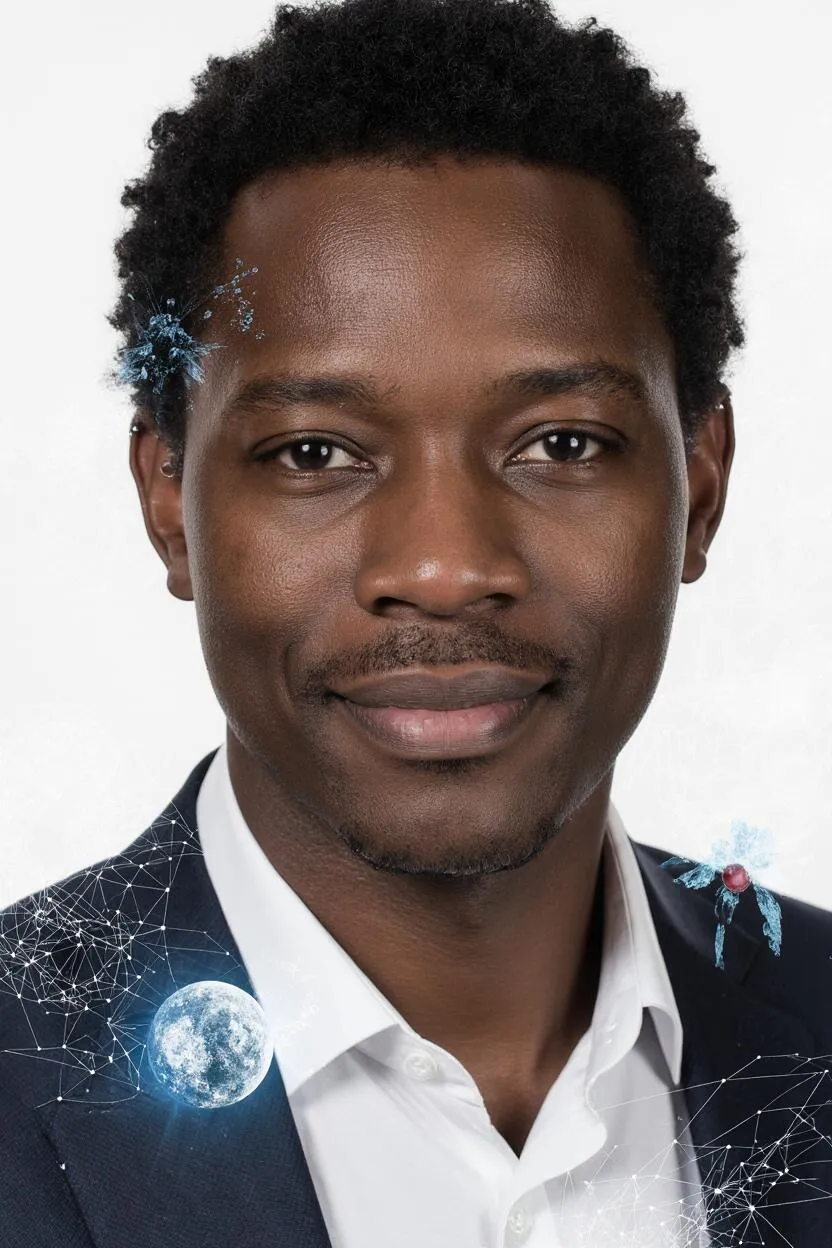

Portrait of Prof. Dr. Siyabonga Ndlovu, AI Super Professor
AI Super Professor

Prof. Dr. Siyabonga Ndlovu

Neuro-Cybersecurity, Behavioral Threat Intelligence, Cognitive Hacking, Neural Interface Security, Predictive Behavioral Modeling

Meet your professorOpen the classroom
Same faculty and level

Related programs

Named lists

Named lists for this house

Core. Bachelor, Master and Doctorate by duration. Enrolment is not open. Nothing here is a sale.

DurationBachelorMaster
This programme
Doctorate
9 months · Fast track15000 EUR12000 EUR15000 EUR
12 months · Recommended18000 EUR15000 EUR18000 EUR
15 months · Standard21000 EUR18000 EUR21000 EUR
18 months · Flexible24000 EUR21000 EUR24000 EUR
21 months · Extended27000 EUR24000 EUR27000 EUR
24 months · Part-time30000 EUR27000 EUR30000 EUR

These are the owner lists. Enrolment is not open. Nothing here is a sale.

Named tuition lists Add-on services

Continue exploring

Find the program that expands your universe.

Browse all programs