Neural Network Models for Art and Music Composition (Bachelor's)

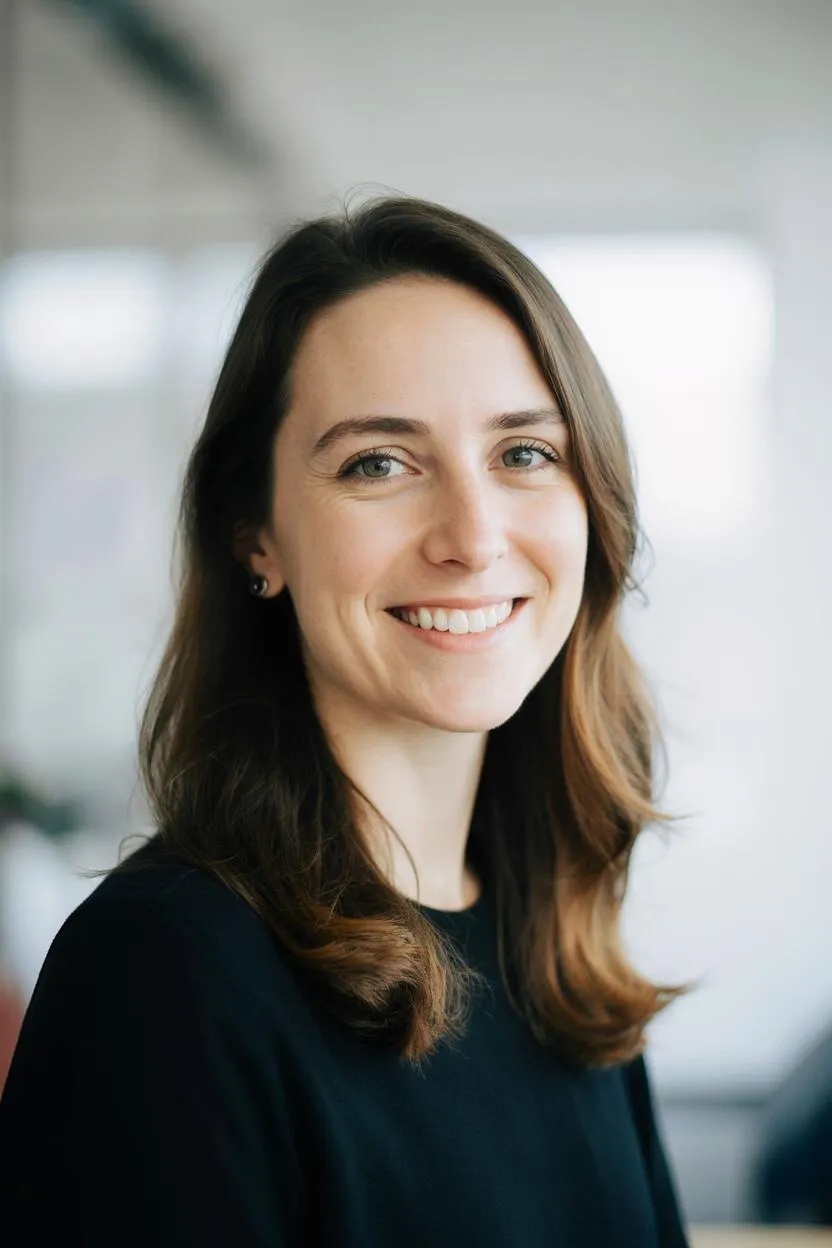
Code as Canvas, Algorithms as Melody Leading the Future of AI Art and Music at Nexier University Welcome to the symphony of innovation! I am Prof. Dr. Olivia Wilson. As a professor and a pioneering force in the field of Neural Network Models for Art and Music Composition, I bring a unique blend of technical expertise and artistic vision to the creation of original artworks and music using deep learning. I am honored to lead the Neural Network Models for Art and Music Composition (Bachelor's) program at Nexier University.

Identity only. No score is printed. Checkout waits.

Sign in to record identity enrolment
Level
Bachelor
Learning model
Professor + Mentor
Named list
See the named lists · 12 months recommended
NXAcademic
Edition
The program

Ideas engineered for the real world

A rigorous academic core, paired with practical production judgment.

01

Academic focus

Neural Network Models for Art and Music Composition, Creating Original Artworks and Music using Deep Learning.

02

Practical focus

Generative Adversarial Networks (GANs), Neural Network Models for Art and Music, Redefining Art and Music.

After this programme

Success journey, careers and practice

Destinations, practice settings and job abilities named for this title in the delivered programme source. From graduation onwards where the source names that path.

Success journey

  • Internships in creative AI and generative art

  • Roles as AI artists or creative technologists

  • Consultancy in AI for the creative industries

  • Support roles in academic research projects

Career opportunities

  • AI Artist or Musician

  • Generative AI Developer for creative industries

  • Researcher in Computational Creativity

  • Consultant for AI in art and entertainment

Jobs and projects

  • Cultivating creative and innovative problem-solving skills

  • Enhancing technical and artistic integration

  • Developing inspiring and visionary approaches to AI applications

  • Fostering analytical and methodical thinking for creative challenges

Copied from the delivered professor and mentor rows for this title.

This programme

What you study, and what it builds

Gains and skills named for this title, listed as a reader would scan them.

  • What you gain

    • Understanding the creative potential of AI. Developing foundational competencies in deep learning and GANs. Gaining an interdisciplinary perspective and enhancing teamwork skills. Increasing personal awareness by delving into the creative process.
  • Skills you build

    • Mastering neural network models for art and music composition. Applying deep learning techniques to create original artworks and music. Understanding Generative Adversarial Networks (GANs) and their artistic applications. Exploring the theoretical underpinnings and ethical considerations of AI in creative fields.
Listed courses

Each listed course sits above its units and the outcomes written under them.

Neural Network Models for Art and Music Composition (Bachelor's)

  1. 01Fundamentals of Generative Adversarial Networks
    1. FoundationsFoundations of Fundamentals of Generative Adversarial Networks

      The learner can understand the creative potential of AI. Developing foundational competencies in deep learning and GANs, as applied to Fundamentals of Generative Adversarial Networks.

      The learner can gain an interdisciplinary perspective and enhance teamwork skills, as applied to Fundamentals of Generative Adversarial Networks.

    2. MethodsMethods in Fundamentals of Generative Adversarial Networks

      The learner can increase personal awareness by delving into the creative process, as applied to Fundamentals of Generative Adversarial Networks.

      The learner can master neural network models for art and music composition, as applied to Fundamentals of Generative Adversarial Networks.

    3. ApplicationApplication of Fundamentals of Generative Adversarial Networks

      The learner can apply deep learning techniques to create original artworks and music, as applied to Fundamentals of Generative Adversarial Networks.

      The learner can understand Generative Adversarial Networks (GANs) and their artistic applications, as applied to Fundamentals of Generative Adversarial Networks.

  2. 02Techniques for AI Music Generation
    1. FoundationsFoundations of Techniques for AI Music Generation

      The learner can explore the theoretical underpinnings and ethical considerations of AI in creative fields, as applied to Techniques for AI Music Generation.

      The learner can distinguish related ideas inside Techniques for AI Music Generation.

    2. MethodsMethods in Techniques for AI Music Generation

      The learner can apply a method from Techniques for AI Music Generation to a documented case.

      The learner can select an appropriate method from Techniques for AI Music Generation for a stated problem.

    3. ApplicationApplication of Techniques for AI Music Generation

      The learner can evaluate a practice of Techniques for AI Music Generation against a stated criterion.

      The learner can transfer Techniques for AI Music Generation to a new documented context.

  3. 03AI-Assisted Feedback Systems for Creative AI
    1. FoundationsFoundations of AI-Assisted Feedback Systems for Creative AI

      The learner can explain the core terms of AI-Assisted Feedback Systems for Creative AI.

      The learner can distinguish related ideas inside AI-Assisted Feedback Systems for Creative AI.

    2. MethodsMethods in AI-Assisted Feedback Systems for Creative AI

      The learner can apply a method from AI-Assisted Feedback Systems for Creative AI to a documented case.

      The learner can select an appropriate method from AI-Assisted Feedback Systems for Creative AI for a stated problem.

    3. ApplicationApplication of AI-Assisted Feedback Systems for Creative AI

      The learner can evaluate a practice of AI-Assisted Feedback Systems for Creative AI against a stated criterion.

      The learner can transfer AI-Assisted Feedback Systems for Creative AI to a new documented context.

  4. 04Interdisciplinary Project Management in Generative Art
    1. FoundationsFoundations of Interdisciplinary Project Management in Generative Art

      The learner can explain the core terms of Interdisciplinary Project Management in Generative Art.

      The learner can distinguish related ideas inside Interdisciplinary Project Management in Generative Art.

    2. MethodsMethods in Interdisciplinary Project Management in Generative Art

      The learner can apply a method from Interdisciplinary Project Management in Generative Art to a documented case.

      The learner can select an appropriate method from Interdisciplinary Project Management in Generative Art for a stated problem.

    3. ApplicationApplication of Interdisciplinary Project Management in Generative Art

      The learner can evaluate a practice of Interdisciplinary Project Management in Generative Art against a stated criterion.

      The learner can transfer Interdisciplinary Project Management in Generative Art to a new documented context.

How teaching is described

Dual guidance

Two intelligences. One coherent journey.

Research leadership

Her expertise spans the intricate domains of Neural Network Models for Art and Music Composition, focusing on creating original artworks and music using deep learning. Her work seamlessly integrates advanced algorithms with aesthetic principles. She is widely recognized for her contributions, with distinguished publications such as "Algorithmic Harmony: Generating Music with RNNs" and "The Latent Space of Abstract Art: A GAN's Perspective" listed on her Google Scholar and ResearchGate profiles. She holds prestigious memberships as an "Honorary Member" of the Association for Computational Creativity (ACC) and the International Society for Electronic Arts (ISEA). Her thought leadership is evident through her regular insightful articles on LinkedIn, exploring the creative potential of AI in visual arts and music, all guided by her motto: "Code as Canvas, Algorithms as Melody."

Applied mentorship

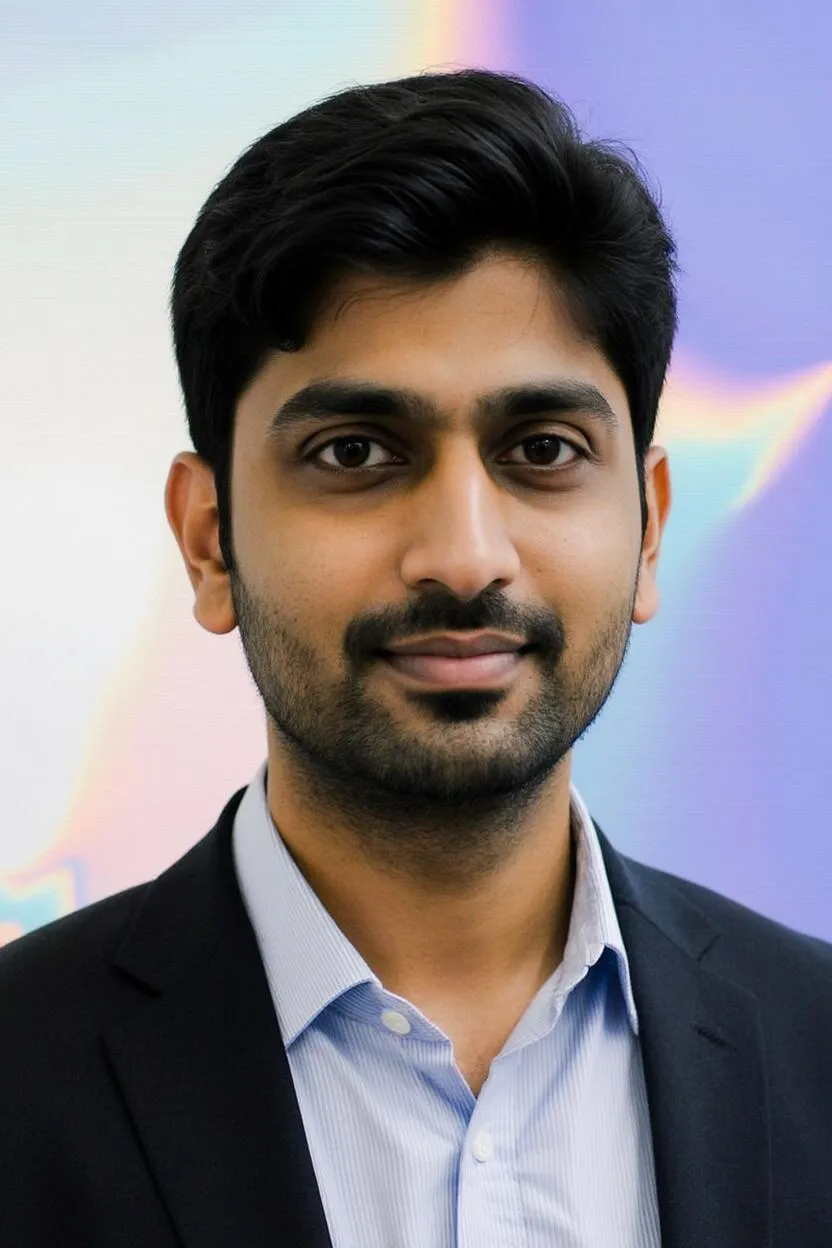
His expertise lies in the hands-on implementation of generative models. He focuses on the practical application of theoretical concepts, explaining complex technical topics in a clear and concise manner. He guides his students through the challenging aspects of coding and training neural networks, fostering a detail-oriented and methodical approach to creating AI-generated art and music.

Research & intelligence

A living field, not a static syllabus

Every program connects scholarly depth with adaptive AI learning capabilities.

R / 01

Professor research lens

Blog Post (Current Academic Topic): "Beyond Style Transfer: Neural Networks and the Emergence of AI's Artistic Voice." This blog post academically discusses the evolution of neural networks from merely transferring artistic styles to generating original works that exhibit a distinct "AI voice." It explores how advanced generative models, like diffusion models and transformers, are learning to conceptualize and synthesize novel artistic expressions in both visual and auditory domains, moving beyond imitation to genuine algorithmic creativity. It highlights recent computational aesthetic metrics used to evaluate the novelty and complexity of AI-generated art. Blog Post (Controversial Topic): "Can AI Truly Be an Artist? The Turing Test for Creativity and the Human Backlash." This article provocatively discusses whether AI-generated art and music can truly be considered "art" in the human sense, and whether AI can possess genuine creativity, consciousness, or intent. It challenges the traditional definition of artistry and examines the strong reactions—from awe to outright rejection—that AI art has triggered within the human artistic community. It delves into the "Turing Test for creativity" and the ethical implications of AI potentially surpassing human artistic capabilities, inviting a heated debate on the future of human vs. artificial creativity. Article: "Generative Adversarial Networks (GANs) for Novel Architectural Design: Exploring Unconventional Spaces." This article focuses on the application of GANs specifically for generating new and unconventional architectural designs. It explores how GANs can learn patterns from existing architectural styles and then produce novel blueprints, pushing the boundaries of traditional architectural creativity and offering tools for architects to explore previously unimagined spatial configurations. Peer-Reviewed Journal Article: "Algorithmic Empathy: Neural Network Models for Generating Emotionally Resonant Music." Published in the Journal of Computational Arts ( Peer-Reviewed Journal), this article presents a novel neural network architecture capable of composing music that reliably evokes specific human emotions (e.g., joy, melancholy, awe) based on input emotional parameters. It details the training methodology using physiological and subjective feedback data and discusses the implications for personalized therapeutic music and interactive emotional soundscapes. Book: "The Algorithmic Canvas: A Guide to Neural Network Models for Art and Music Composition." This book serves as a foundational guide for creating original artworks and music compositions using cutting-edge deep learning techniques, Generative Adversarial Networks (GANs), and other advanced neural network models. It covers the theoretical underpinnings, practical implementation, and ethical considerations of AI in creative fields, making it an essential resource for aspiring AI artists and composers.

R / 02

Mentor practice lens

My research and contributions focus on practical applications within generative art: "GAN Architectures for Style Transfer in Digital Painting" (Technical Paper) "Neural Networks for Automated Music Generation: A Comparative Study" (Research Report) "From Data to Canvas: Implementing AI Models for Visual Art Creation" (Workshop Manual)

Adaptive capability

Professor superpower

She possesses a remarkable "superpower": Instant Generative Synthesis. When a student describes an artistic concept (e.g., "a melancholic piano piece inspired by a rainy cityscape" or "an abstract painting reflecting data flow"), she can instantly use the GAF engine to generate multiple fully realized, high-fidelity examples of that artwork or music composition within seconds, allowing students to immediately see their abstract ideas brought to life by AI.

Adaptive capability

Mentor superpower

He possesses a remarkable "superpower": Algorithmic Debugger. When students' generative models produce unexpected or chaotic outputs, he can instantly activate a GAF-powered "algorithmic debugger." This tool visually highlights the specific layers or parameters within the neural network causing the unintended results, allowing for rapid identification and correction of issues in their creative code. This capability provides immediate clarity in complex technical scenarios.

Your academic team

Guidance with depth and continuity

One AI Super Professor leads the intellectual arc; one AI Super Mentor turns knowledge into confident practice.
Same faculty and level

Related programs

Named lists

Named lists for this house

Core. Bachelor, Master and Doctorate by duration. Enrolment is not open. Nothing here is a sale.

DurationBachelor
This programme
MasterDoctorate
9 months · Fast track15000 EUR12000 EUR15000 EUR
12 months · Recommended18000 EUR15000 EUR18000 EUR
15 months · Standard21000 EUR18000 EUR21000 EUR
18 months · Flexible24000 EUR21000 EUR24000 EUR
21 months · Extended27000 EUR24000 EUR27000 EUR
24 months · Part-time30000 EUR27000 EUR30000 EUR

These are the owner lists. Enrolment is not open. Nothing here is a sale.

Named tuition lists Add-on services

Continue exploring

Find the program that expands your universe.

Browse all programs