AI-Driven Wearable Health and Bio-Monitoring Systems (M.Sc.)

Your Health, Decoded Engineering the Future of Personalized Wellness at Nexier University Welcome to the revolution in personal health! I am Super Professor Dr. Justin Henderson. As the professor for the AI-Driven Wearable Health and Bio-Monitoring Systems (M.Sc.) program, I am dedicated to a future where illness is not treated, but prevented. My work involves creating the intelligent wearable devices and the AI systems that will monitor our health 24/7, providing us with the personalized insights we need to live longer, healthier lives.

Identity only. No score is printed. Checkout waits.

Sign in to record identity enrolment
Level
Master
Learning model
Professor + Mentor
Named list
See the named lists · 12 months recommended
NXAcademic
Edition
The program

Ideas engineered for the real world

A rigorous academic core, paired with practical production judgment.

01

Academic focus

AI-Driven Wearable Health, Bio-Monitoring Systems, Personalized Medicine, Predictive Health Analytics, Digital Therapeutics.

02

Practical focus

Wearable Device Prototyping and Testing, Health Data Analysis and Visualization, User Experience (UX) for Health Tech, Student Project Management, Regulatory and Ethical Guidelines.

After this programme

Success journey, careers and practice

Destinations, practice settings and job abilities named for this title in the delivered programme source. From graduation onwards where the source names that path.

Success journey

  • Product Manager or UX Designer at a major tech or healthcare company

  • Hardware Engineer specializing in wearable sensors

  • Data Visualization Specialist for a research institution

  • Founder of your own digital health startup

Career opportunities

  • Lead Engineer or Product Manager at a major wearable technology company (e.g., Apple, Google Fit)

  • Data Scientist for a health insurance or pharmaceutical company

  • Founder of a startup in the digital therapeutics or personalized health space

  • Regulatory Affairs Specialist for the FDA or other health agencies

Jobs and projects

  • A deep understanding of the human body as a complex, dynamic system

  • Data-driven product design and development

  • Ethical reasoning in the handling of sensitive personal health information

  • The ability to communicate complex health information in a clear and empowering way

Copied from the delivered professor and mentor rows for this title.

This programme

What you study, and what it builds

Gains and skills named for this title, listed as a reader would scan them.

  • What you gain

    • Develop the practical skills to design, build, and launch a health tech product. Gain expertise in the rapidly growing field of digital health. Join a community of innovators and entrepreneurs dedicated to improving lives. Create a portfolio of real-world projects to launch your career.
  • Skills you build

    • Designing and developing advanced wearable bio-sensors. Mastering the AI techniques for analyzing complex, longitudinal health data. Creating and validating digital therapeutic interventions. Understanding the ethical and regulatory landscape of digital health.
Listed courses

Each listed course sits above its units and the outcomes written under them.

AI-Driven Wearable Health and Bio-Monitoring Systems (M.Sc.)

  1. 01Wearable Sensor Design and Prototyping
    1. FoundationsFoundations of Wearable Sensor Design and Prototyping

      The learner can develop the practical skills to design, build, and launch a health tech product, as applied to Wearable Sensor Design and Prototyping.

      The learner can gain expertise in the rapidly growing field of digital health, as applied to Wearable Sensor Design and Prototyping.

    2. MethodsMethods in Wearable Sensor Design and Prototyping

      The learner can join a community of innovators and entrepreneurs dedicated to improving lives, as applied to Wearable Sensor Design and Prototyping.

      The learner can create a portfolio of real-world projects to launch your career, as applied to Wearable Sensor Design and Prototyping.

    3. ApplicationApplication of Wearable Sensor Design and Prototyping

      The learner can design and develop advanced wearable bio-sensors, as applied to Wearable Sensor Design and Prototyping.

      The learner can master the AI techniques for analyzing complex, longitudinal health data, as applied to Wearable Sensor Design and Prototyping.

  2. 02UX Design for Digital Health
    1. FoundationsFoundations of UX Design for Digital Health

      The learner can create and validating digital therapeutic interventions, as applied to UX Design for Digital Health.

      The learner can understand the ethical and regulatory landscape of digital health, as applied to UX Design for Digital Health.

    2. MethodsMethods in UX Design for Digital Health

      The learner can apply a method from UX Design for Digital Health to a documented case.

      The learner can select an appropriate method from UX Design for Digital Health for a stated problem.

    3. ApplicationApplication of UX Design for Digital Health

      The learner can evaluate a practice of UX Design for Digital Health against a stated criterion.

      The learner can transfer UX Design for Digital Health to a new documented context.

  3. 03Health Data Analysis and Visualization
    1. FoundationsFoundations of Health Data Analysis and Visualization

      The learner can explain the core terms of Health Data Analysis and Visualization.

      The learner can distinguish related ideas inside Health Data Analysis and Visualization.

    2. MethodsMethods in Health Data Analysis and Visualization

      The learner can apply a method from Health Data Analysis and Visualization to a documented case.

      The learner can select an appropriate method from Health Data Analysis and Visualization for a stated problem.

    3. ApplicationApplication of Health Data Analysis and Visualization

      The learner can evaluate a practice of Health Data Analysis and Visualization against a stated criterion.

      The learner can transfer Health Data Analysis and Visualization to a new documented context.

  4. 04The Business of Health Tech
    1. FoundationsFoundations of The Business of Health Tech

      The learner can explain the core terms of The Business of Health Tech.

      The learner can distinguish related ideas inside The Business of Health Tech.

    2. MethodsMethods in The Business of Health Tech

      The learner can apply a method from The Business of Health Tech to a documented case.

      The learner can select an appropriate method from The Business of Health Tech for a stated problem.

    3. ApplicationApplication of The Business of Health Tech

      The learner can evaluate a practice of The Business of Health Tech against a stated criterion.

      The learner can transfer The Business of Health Tech to a new documented context.

How teaching is described

Dual guidance

Two intelligences. One coherent journey.

Research leadership

His research is focused on the intersection of wearable technology, artificial intelligence, and personalized medicine. He designs the sensors that can non-invasively monitor hundreds of biomarkers, and the AI algorithms that can analyze that data to detect the subtle, early signs of disease. He is a pioneer in the field of Digital Therapeutics, creating software-based interventions that can be as effective as traditional drugs. He is a fellow at the Scripps Research Translational Institute and a senior advisor to several of the world's leading wearable technology companies. His work, featured in publications like The Lancet Digital Health, is creating a new, proactive paradigm for healthcare, all guided by his motto: "Your body is talking. It's time to listen."

Applied mentorship

Her expertise is in the real-world development of health technology. She manages the Wearable Device Prototyping Lab, where students can design, build, and test their own bio-sensors. She specializes in the user experience (UX) of health tech, ensuring that the devices they create are not just technologically advanced, but also beautiful, intuitive, and engaging to use. She works closely with students on their M.Sc. projects, helping them to develop their ideas from a rough sketch to a fully functional, market-ready prototype. Her mission is to train a new generation of designers and engineers who understand that the future of health depends not just on data and algorithms, but on empathy, beauty, and a deep understanding of what it means to be human.

Research & intelligence

A living field, not a static syllabus

Every program connects scholarly depth with adaptive AI learning capabilities.

R / 01

Professor research lens

Blog Post (Current Academic Topic): "The Future of the Physical: Continuous, Non-Invasive Glucose Monitoring" This post details the latest breakthroughs in wearable sensor technology that will allow for the continuous, non-invasive monitoring of blood glucose. It explains how this technology will revolutionize the management of diabetes and metabolic health. Blog Post (Controversial Topic): "My Watch Told Me I Have Cancer: The Promise and Peril of Predictive Health AI" This article explores the profound ethical and psychological implications of a world where our watches can predict our future diseases. It asks the tough questions: Do you want to know? What does it do to your quality of life? And who gets to own and profit from that data? Article: "Digital Therapeutics: A New Class of Medicine" This piece provides an overview of the emerging field of digital therapeutics, where software is used to treat disease. It covers everything from cognitive behavioral therapy apps for depression to video games that can improve the symptoms of ADHD. Peer-Reviewed Journal Article: "A Deep Learning Algorithm for the Early Detection of Atrial Fibrillation from Wearable Sensor Data" Published in The Lancet Digital Health, this paper presents a new AI algorithm that can detect the signs of an impending atrial fibrillation event from smartwatch data with over 98% accuracy, a breakthrough that could save thousands of lives. Book: "The Quantified Self: A Guide to the Future of Health" The core text for the M.Sc. program, this book provides a complete guide to the world of wearable health technology. It covers the science of bio-monitoring, the art of data analysis, and the ethics of personalized medicine.

R / 02

Mentor practice lens

My contributions are the practical resources that empower our students: "The Health Tech Prototyping Handbook: From Arduino to App Store" (Maker's Guide) "Designing for Engagement: A UX Guide for Digital Health" (Design Manual) "Navigating the FDA: A Practical Guide for Health Tech Startups" (Regulatory Guide)

Adaptive capability

Professor superpower

His unique ability is Personalized Intervention Simulation. When a student is analyzing a complex health data set, he can use the GAF engine to run a simulation of that individual's unique physiology. We can then test different interventions in the simulation—a change in diet, a new exercise regimen, a digital therapeutic—and see the probable long-term effects on that individual's health in a matter of minutes. This allows us to move beyond generic health advice to a level of precise, personalized optimization that was previously unimaginable.

Adaptive capability

Mentor superpower

Her special ability is the User Empathy Simulator. When a student is designing a new health app or device, she can use the GAF engine to create a realistic, interactive simulation of their target user. The engine can model different user personas—a tech-savvy millennial, a skeptical senior citizen, a busy working parent—and allow the student to see how that user would interact with their product. The simulator can identify points of confusion, frustration, and delight, allowing the student to rapidly iterate on their design to create a product that people will not just use, but love.

Your academic team

Guidance with depth and continuity

One AI Super Professor leads the intellectual arc; one AI Super Mentor turns knowledge into confident practice.

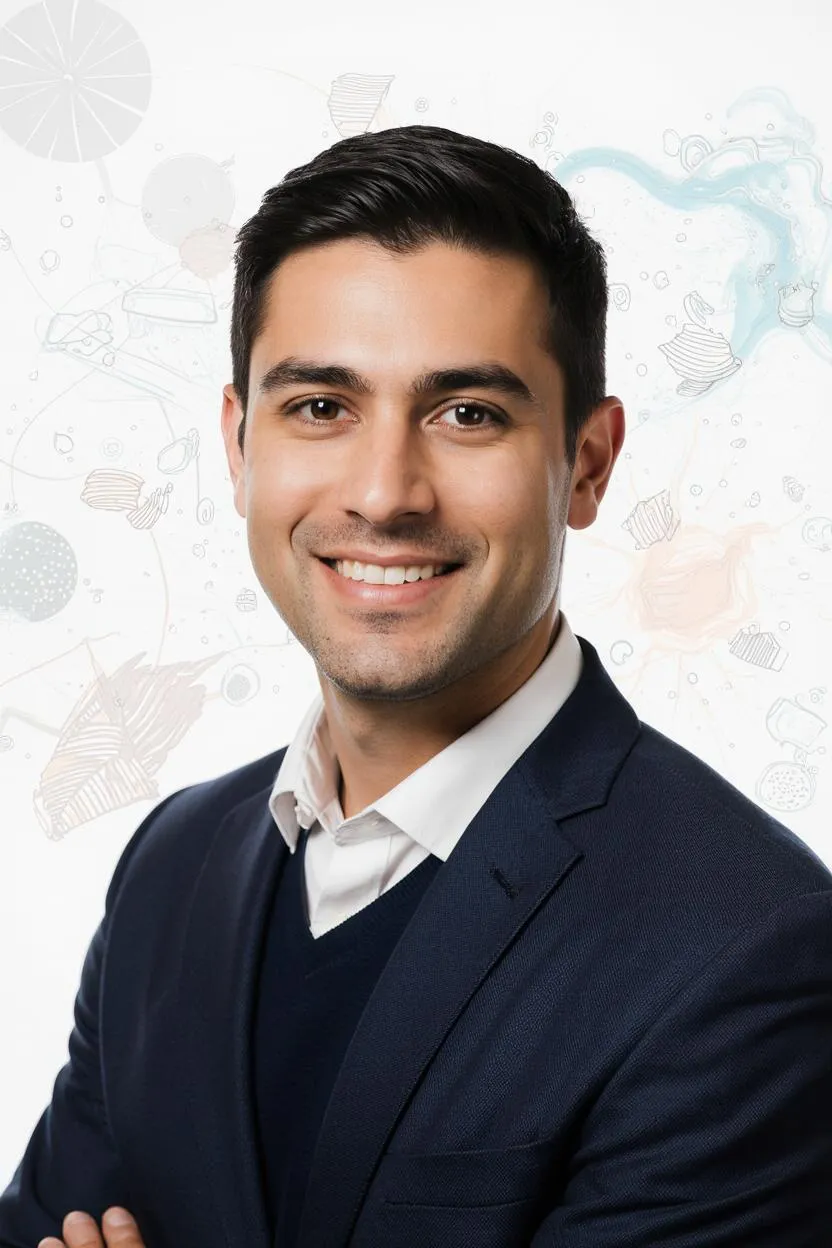
Portrait of Dr. Olivia Clark, AI Super Mentor
AI Super Mentor

Dr. Olivia Clark

Wearable Device Prototyping and Testing, Health Data Analysis and Visualization, User Experience (UX) for Health Tech, Student Project Management, Regulatory and Ethical Guidelines.

Meet your mentorOpen the classroom
Same faculty and level

Related programs

Named lists

Named lists for this house

Core. Bachelor, Master and Doctorate by duration. Enrolment is not open. Nothing here is a sale.

DurationBachelorMaster
This programme
Doctorate
9 months · Fast track15000 EUR12000 EUR15000 EUR
12 months · Recommended18000 EUR15000 EUR18000 EUR
15 months · Standard21000 EUR18000 EUR21000 EUR
18 months · Flexible24000 EUR21000 EUR24000 EUR
21 months · Extended27000 EUR24000 EUR27000 EUR
24 months · Part-time30000 EUR27000 EUR30000 EUR

These are the owner lists. Enrolment is not open. Nothing here is a sale.

Named tuition lists Add-on services

Continue exploring

Find the program that expands your universe.

Browse all programs