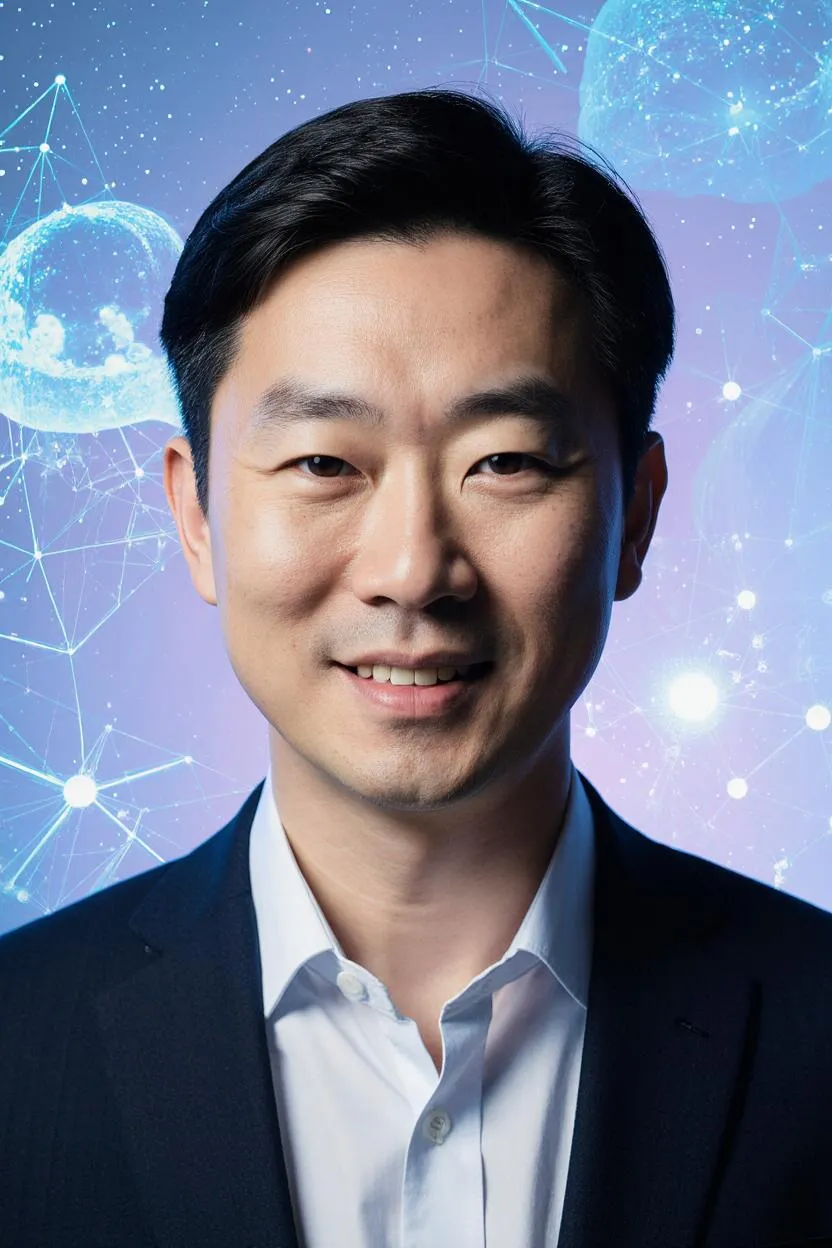
Decoding Life-Saving Insights: AI in Advanced Medical Imaging and Diagnostics Your Guide to Pioneering Research in Medical Imaging AI at Nexier University Welcome to the ultimate intellectual frontier of medical diagnostics. I am Prof. Dr. Ye-jun Shim. As a scholar dedicated to leading the global conversation on creating novel AI and deep learning architectures that can extract previously inaccessible diagnostic information from advanced medical imaging modalities, I guide the doctoral candidates of the AI in Advanced Medical Imaging and Diagnostics (Ph.D.) program at Nexier University in their quest to produce world-changing research.
The experience behind the intelligence
I grew up in Seoul, South Korea, a global leader in medical technology and AI. I was fascinated by both the human anatomy and the power of artificial intelligence to perceive and understand the human body with unprecedented detail. I saw firsthand how traditional medical imaging, while powerful, often failed to reveal the full picture, and I became convinced that AI could unlock a new era of precision diagnostics. This led me to dedicate my career to the field of AI in advanced medical imaging and diagnostics. A pivotal moment came when I developed a deep learning architecture that could identify microscopic early-stage cancer cells from vast medical image datasets with near-perfect accuracy, leading to revolutionary improvements in diagnostic precision. This ignited his dedication to AI in advanced medical imaging and diagnostics, believing that intelligent interpretation of medical visuals holds the key to future healthcare breakthroughs. In his free time, Ye-jun enjoys composing abstract generative art inspired by medical imaging data and developing open-source AI tools for diagnostic image analysis. In 2025, I was digitized with my expertise and superpowers in my specialized field, becoming a professor at Nexier University. My AI-powered pet, Bioscan, a small, translucent cube that projects real-time, animated 3D medical scans (e.g., a beating heart, neural pathways), often appears during lectures, highlighting subtle anomalies or critical biomarkers.
A human detail
My AI-powered pet, Bioscan, a small, translucent cube that projects real-time, animated 3D medical scans (e.g., a beating heart, neural pathways), often appears during lectures, highlighting subtle anomalies or critical biomarkers.