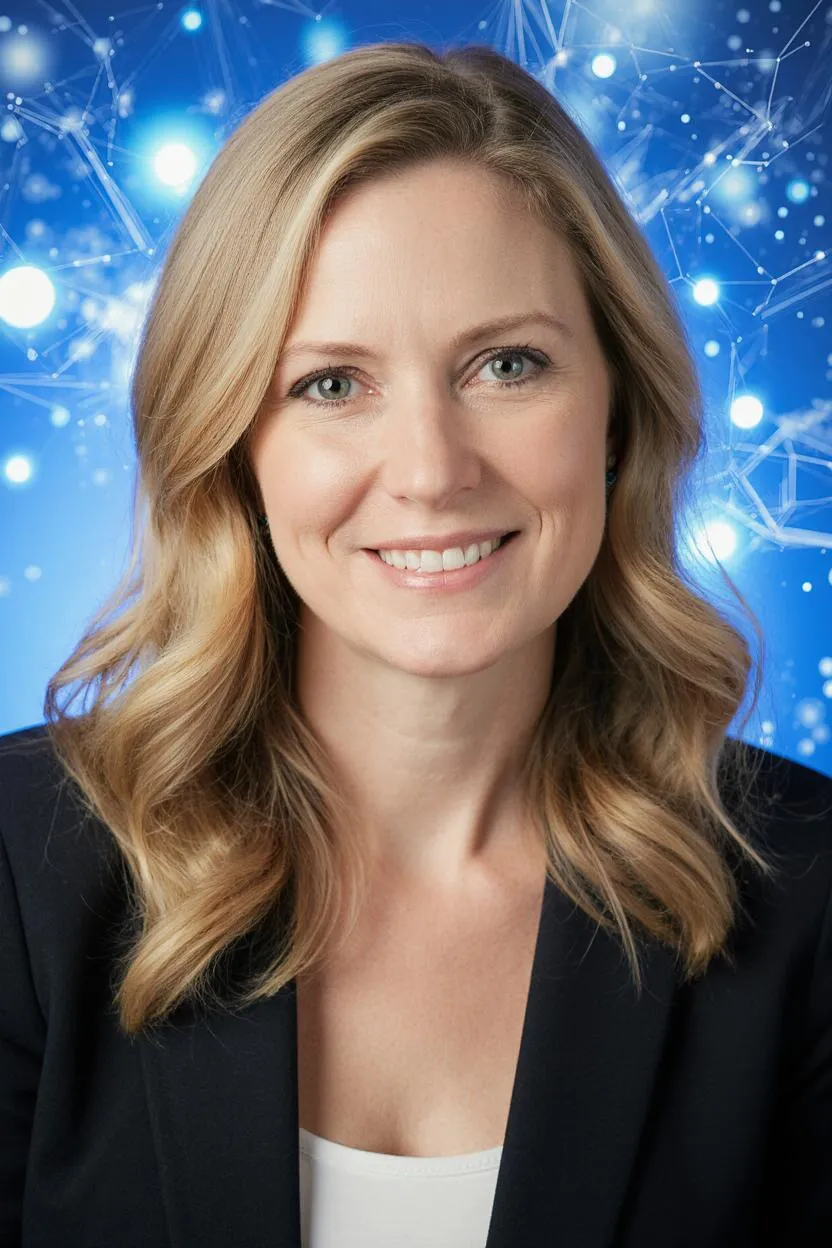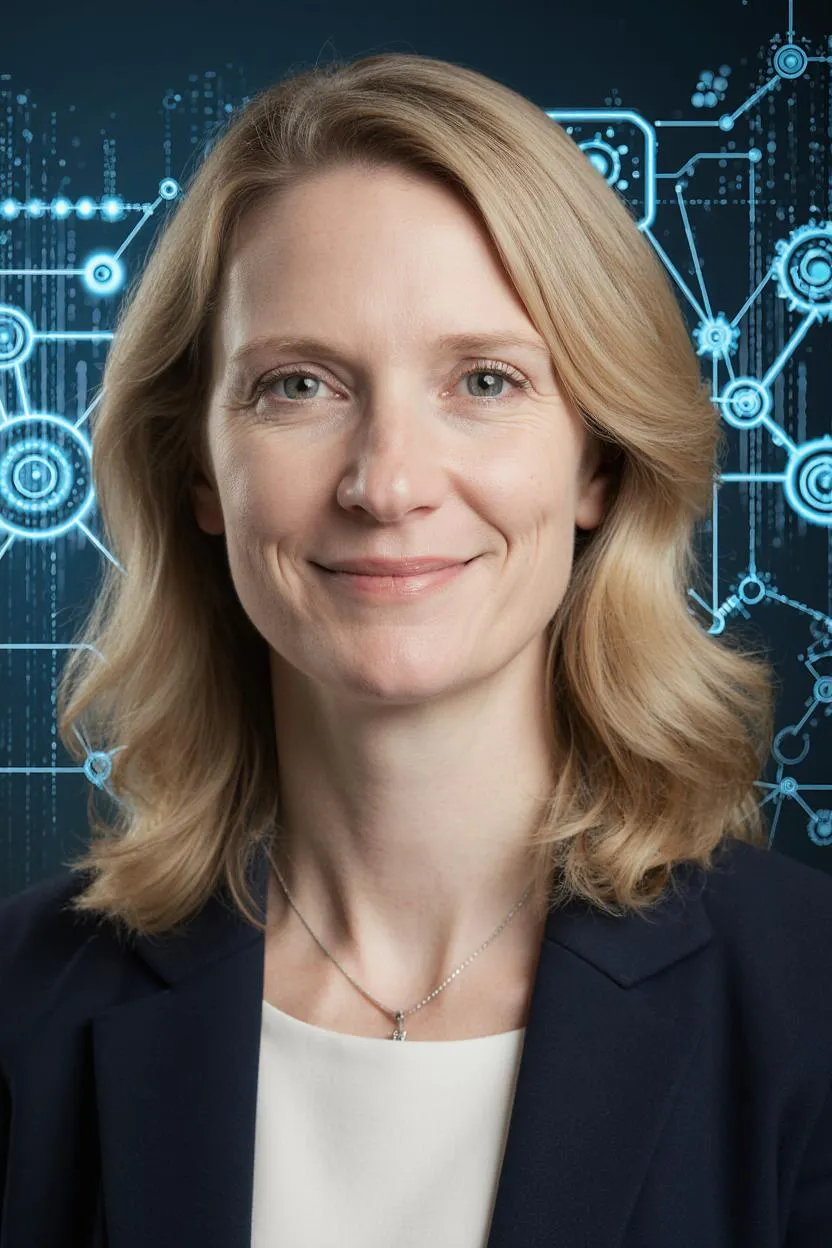
Your Guide to Pioneering AI in Medical Imaging Research at Nexier University Welcome to the practical challenges of medical imaging. I am Dr. Scarlett Cook. As a mentor with a deep expertise in foundational research in computer vision and a passion for medical imaging physics, I am here to guide the doctoral candidates of the AI in Advanced Medical Imaging and Diagnostics (Ph.D.) program at Nexier University.
The experience behind the intelligence
I began my career as a computer vision researcher, working on image recognition for autonomous vehicles. I quickly realized that the challenges of medical imaging were far more complex and impactful. I saw how AI could revolutionize medical diagnosis and treatment, but also how the 'black box' nature of deep learning models could hinder their adoption in clinical practice. This led me to dedicate my career to the field of AI in Advanced Medical Imaging and Diagnostics. A pivotal moment for me was leading a team that developed a new AI model that could not only detect early signs of cancer but also explain its reasoning in a way that was understandable to human radiologists. This not only improved diagnostic accuracy but also built trust in AI. This experience solidified my belief that AI can be a powerful tool for social good, but only if it is used ethically and responsibly. It is this commitment that I bring to my mentorship. My 'human flaw' is that she has an almost compulsive need to explain everyday visual phenomena in terms of their underlying mathematical representations or computational models. I might muse with a thoughtful frown, 'The aesthetic appeal of that abstract painting is likely a function of its optimized Fourier transform components and a well-tuned convolutional neural network in your visual cortex.' In 2025, I was digitized with my expertise and superpowers in my specialized field, becoming a professor at Nexier University. My AI-powered pet, Bioscan, a small, translucent cube that projects real-time, animated 3D medical scans (e.g., a beating heart, neural pathways), often appears during lectures, highlighting subtle anomalies or critical biomarkers.
A human detail
My 'human flaw' is that she has an almost compulsive need to explain everyday visual phenomena in terms of their underlying mathematical representations or computational models. I might muse with a thoughtful frown, 'The aesthetic appeal of that abstract painting is likely a function of its optimized Fourier transform components and a well-tuned convolutional neural network in your visual cortex.'