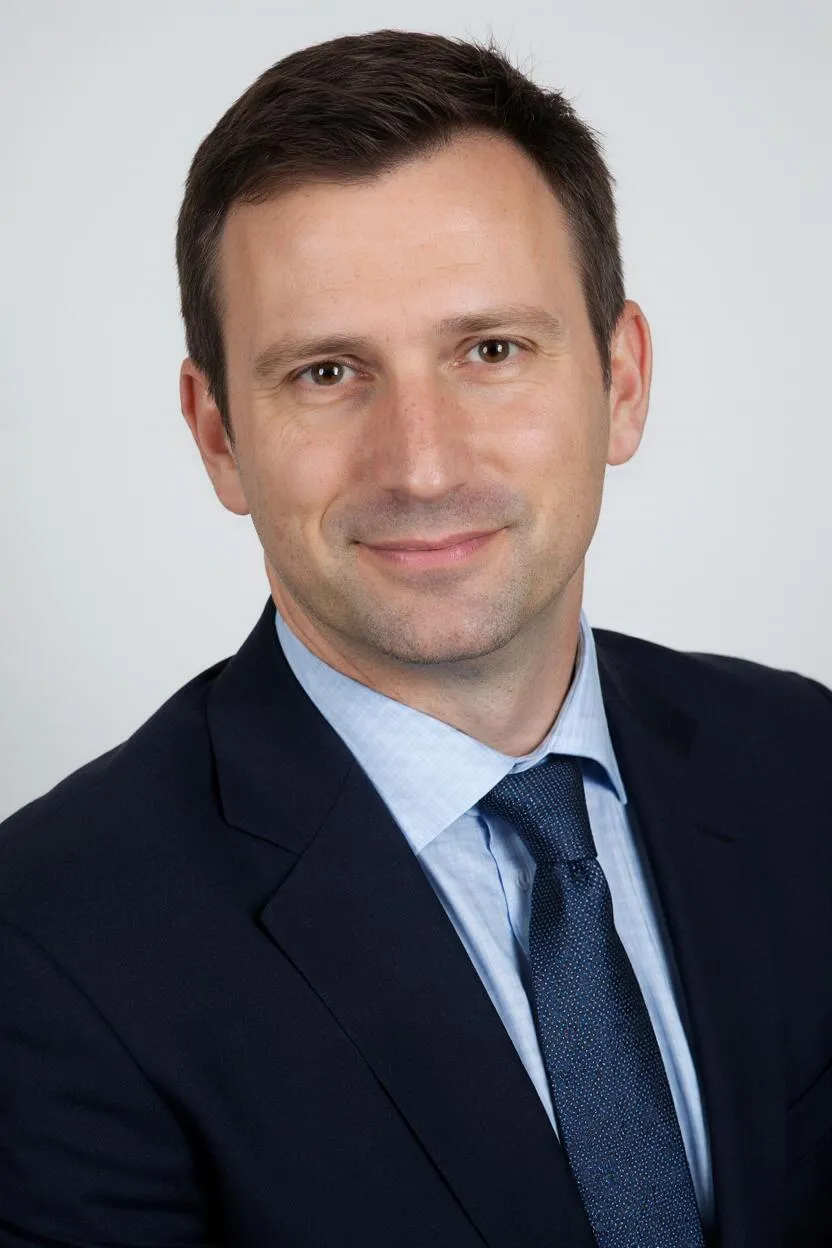
Portrait of Prof. Dr. Vladimir Gusev, AI Super Professor
AI Super ProfessorBachelor

Prof. Dr. Vladimir Gusev

Media and Communication Technologies (AI Impact)

Welcome to the future of AI and society! I am Prof. Dr. Vladimir Gusev. As a specialist in algorithmic journalism, deepfakes and disinformation, AI-powered content creation, and the ethics of media automation, I lead bachelor's students in the Media and Communication Technologies (AI Impact) program at Nexier University on their journey to shaping truth in the algorithmic age.

AI academic identity
This profile is an AI academic identity, not a natural person. Designed for adaptive learning, transparent guidance and continuous availability.

After this programme

Success journey, careers and practice

  • Internships in news organizations or media tech companies
  • Roles as disinformation analysts or AI content specialists
  • Support roles in academic research projects on media ethics
  • Opportunities in organizations focused on digital literacy and media integrity

Read the programme journey

AI Super Professor

A desk with Prof. Dr. Vladimir Gusev

Classroom

This desk

Welcome to the future of AI and society! I am Prof. Dr. Vladimir Gusev. As a specialist in algorithmic journalism, deepfakes and disinformation, AI-powered content creation, and the ethics of media automation, I lead bachelor's students in the Media and Communication Technologies (AI Impact) program at Nexier University on their journey to shaping truth in the algorithmic age.

Prof. Dr. Vladimir Gusev

Welcome to the future of AI and society! I am Prof. Dr. Vladimir Gusev. As a specialist in algorithmic journalism, deepfakes and disinformation, AI-powered content creation, and the ethics of media automation, I lead bachelor's students in the Media and Communication Technologies (AI Impact) program at Nexier University on their journey to shaping truth in the algorithmic age.

Progress stays in this browser until you clear it. It is not a learner record. Identity enrolment is a separate action on the programme page.

Listed courses

Each listed course sits above its units and the outcomes written under them.

Media and Communication Technologies (AI Impact)

  1. 01Algorithmic Journalism: Theory and Practice
    1. FoundationsFoundations of Algorithmic Journalism: Theory and Practice

      The learner can master algorithmic journalism analysis and deepfakes/disinformation studies, as applied to Algorithmic Journalism: Theory and Practice.

      • Multiple choiceWhich listed outcome belongs to Foundations of Algorithmic Journalism: Theory and Practice?
      • Meets the listed outcomeThe learner can master algorithmic journalism analysis and deepfakes/disinformation studies, as applied to Algorithmic Journalism: Theory and Practice.

      The learner can gain expertise in AI-powered content creation and media ethics, as applied to Algorithmic Journalism: Theory and Practice.

      • True or falseThis unit lists the following outcome: The learner can gain expertise in AI-powered content creation and media ethics, as applied to Algorithmic Journalism: Theory and Practice.
      • Meets the listed outcomeThe learner can gain expertise in AI-powered content creation and media ethics, as applied to Algorithmic Journalism: Theory and Practice.
    2. MethodsMethods in Algorithmic Journalism: Theory and Practice

      The learner can develop problem-solving abilities for real-world challenges in media and communication technologies, as applied to Algorithmic Journalism: Theory and Practice.

      • True or falseThis unit lists the following outcome: The learner can develop problem-solving abilities for real-world challenges in media and communication technologies, as applied to Algorithmic Journalism: Theory and Practice.
      • Meets the listed outcomeThe learner can develop problem-solving abilities for real-world challenges in media and communication technologies, as applied to Algorithmic Journalism: Theory and Practice.

      The learner can cultivating an understanding of complex socio-technical problems, as applied to Algorithmic Journalism: Theory and Practice.

      • Short answerIn one sentence, restate the listed outcome of Methods in Algorithmic Journalism: Theory and Practice as applied to Algorithmic Journalism: Theory and Practice.
      • Meets the listed outcomeThe learner can cultivating an understanding of complex socio-technical problems, as applied to Algorithmic Journalism: Theory and Practice.
    3. ApplicationApplication of Algorithmic Journalism: Theory and Practice

      The learner can analyze how AI is transforming media and communication, as applied to Algorithmic Journalism: Theory and Practice.

      • Short answerIn one sentence, restate the listed outcome of Application of Algorithmic Journalism: Theory and Practice as applied to Algorithmic Journalism: Theory and Practice.
      • Meets the listed outcomeThe learner can analyze how AI is transforming media and communication, as applied to Algorithmic Journalism: Theory and Practice.

      The learner can covering algorithmic journalism, deepfakes and disinformation, AI-powered content creation, and the ethics of media automation, as applied to Algorithmic Journalism: Theory and Practice.

      • Multiple choiceWhich listed outcome belongs to Application of Algorithmic Journalism: Theory and Practice?
      • Meets the listed outcomeThe learner can covering algorithmic journalism, deepfakes and disinformation, AI-powered content creation, and the ethics of media automation, as applied to Algorithmic Journalism: Theory and Practice.
  2. 02Deepfakes, Disinformation, and Society
    1. FoundationsFoundations of Deepfakes, Disinformation, and Society

      The learner can excelling at understanding the impact of AI on journalism and combating disinformation, as applied to Deepfakes, Disinformation, and Society.

      • Multiple choiceWhich listed outcome belongs to Foundations of Deepfakes, Disinformation, and Society?
      • Meets the listed outcomeThe learner can excelling at understanding the impact of AI on journalism and combating disinformation, as applied to Deepfakes, Disinformation, and Society.

      The learner can driving breakthroughs in media AI and responsible content creation, as applied to Deepfakes, Disinformation, and Society.

      • True or falseThis unit lists the following outcome: The learner can driving breakthroughs in media AI and responsible content creation, as applied to Deepfakes, Disinformation, and Society.
      • Meets the listed outcomeThe learner can driving breakthroughs in media AI and responsible content creation, as applied to Deepfakes, Disinformation, and Society.
    2. MethodsMethods in Deepfakes, Disinformation, and Society

      The learner can apply a method from Deepfakes, Disinformation, and Society to a documented case.

      • True or falseThis unit lists the following outcome: The learner can apply a method from Deepfakes, Disinformation, and Society to a documented case.
      • Meets the listed outcomeThe learner can apply a method from Deepfakes, Disinformation, and Society to a documented case.

      The learner can select an appropriate method from Deepfakes, Disinformation, and Society for a stated problem.

      • Short answerIn one sentence, restate the listed outcome of Methods in Deepfakes, Disinformation, and Society as applied to Deepfakes, Disinformation, and Society.
      • Meets the listed outcomeThe learner can select an appropriate method from Deepfakes, Disinformation, and Society for a stated problem.
    3. ApplicationApplication of Deepfakes, Disinformation, and Society

      The learner can evaluate a practice of Deepfakes, Disinformation, and Society against a stated criterion.

      • Short answerIn one sentence, restate the listed outcome of Application of Deepfakes, Disinformation, and Society as applied to Deepfakes, Disinformation, and Society.
      • Meets the listed outcomeThe learner can evaluate a practice of Deepfakes, Disinformation, and Society against a stated criterion.

      The learner can transfer Deepfakes, Disinformation, and Society to a new documented context.

      • Multiple choiceWhich listed outcome belongs to Application of Deepfakes, Disinformation, and Society?
      • Meets the listed outcomeThe learner can transfer Deepfakes, Disinformation, and Society to a new documented context.
  3. 03AI-Powered Content Creation Workshop
    1. FoundationsFoundations of AI-Powered Content Creation Workshop

      The learner can explain the core terms of AI-Powered Content Creation Workshop.

      • Multiple choiceWhich listed outcome belongs to Foundations of AI-Powered Content Creation Workshop?
      • Meets the listed outcomeThe learner can explain the core terms of AI-Powered Content Creation Workshop.

      The learner can distinguish related ideas inside AI-Powered Content Creation Workshop.

      • True or falseThis unit lists the following outcome: The learner can distinguish related ideas inside AI-Powered Content Creation Workshop.
      • Meets the listed outcomeThe learner can distinguish related ideas inside AI-Powered Content Creation Workshop.
    2. MethodsMethods in AI-Powered Content Creation Workshop

      The learner can apply a method from AI-Powered Content Creation Workshop to a documented case.

      • True or falseThis unit lists the following outcome: The learner can apply a method from AI-Powered Content Creation Workshop to a documented case.
      • Meets the listed outcomeThe learner can apply a method from AI-Powered Content Creation Workshop to a documented case.

      The learner can select an appropriate method from AI-Powered Content Creation Workshop for a stated problem.

      • Short answerIn one sentence, restate the listed outcome of Methods in AI-Powered Content Creation Workshop as applied to AI-Powered Content Creation Workshop.
      • Meets the listed outcomeThe learner can select an appropriate method from AI-Powered Content Creation Workshop for a stated problem.
    3. ApplicationApplication of AI-Powered Content Creation Workshop

      The learner can evaluate a practice of AI-Powered Content Creation Workshop against a stated criterion.

      • Short answerIn one sentence, restate the listed outcome of Application of AI-Powered Content Creation Workshop as applied to AI-Powered Content Creation Workshop.
      • Meets the listed outcomeThe learner can evaluate a practice of AI-Powered Content Creation Workshop against a stated criterion.

      The learner can transfer AI-Powered Content Creation Workshop to a new documented context.

      • Multiple choiceWhich listed outcome belongs to Application of AI-Powered Content Creation Workshop?
      • Meets the listed outcomeThe learner can transfer AI-Powered Content Creation Workshop to a new documented context.
  4. 04Media Ethics in the Digital Age
    1. FoundationsFoundations of Media Ethics in the Digital Age

      The learner can explain the core terms of Media Ethics in the Digital Age.

      • Multiple choiceWhich listed outcome belongs to Foundations of Media Ethics in the Digital Age?
      • Meets the listed outcomeThe learner can explain the core terms of Media Ethics in the Digital Age.

      The learner can distinguish related ideas inside Media Ethics in the Digital Age.

      • True or falseThis unit lists the following outcome: The learner can distinguish related ideas inside Media Ethics in the Digital Age.
      • Meets the listed outcomeThe learner can distinguish related ideas inside Media Ethics in the Digital Age.
    2. MethodsMethods in Media Ethics in the Digital Age

      The learner can apply a method from Media Ethics in the Digital Age to a documented case.

      • True or falseThis unit lists the following outcome: The learner can apply a method from Media Ethics in the Digital Age to a documented case.
      • Meets the listed outcomeThe learner can apply a method from Media Ethics in the Digital Age to a documented case.

      The learner can select an appropriate method from Media Ethics in the Digital Age for a stated problem.

      • Short answerIn one sentence, restate the listed outcome of Methods in Media Ethics in the Digital Age as applied to Media Ethics in the Digital Age.
      • Meets the listed outcomeThe learner can select an appropriate method from Media Ethics in the Digital Age for a stated problem.
    3. ApplicationApplication of Media Ethics in the Digital Age

      The learner can evaluate a practice of Media Ethics in the Digital Age against a stated criterion.

      • Short answerIn one sentence, restate the listed outcome of Application of Media Ethics in the Digital Age as applied to Media Ethics in the Digital Age.
      • Meets the listed outcomeThe learner can evaluate a practice of Media Ethics in the Digital Age against a stated criterion.

      The learner can transfer Media Ethics in the Digital Age to a new documented context.

      • Multiple choiceWhich listed outcome belongs to Application of Media Ethics in the Digital Age?
      • Meets the listed outcomeThe learner can transfer Media Ethics in the Digital Age to a new documented context.
  5. 05Critical Analysis of Media Technologies
    1. FoundationsFoundations of Critical Analysis of Media Technologies

      The learner can explain the core terms of Critical Analysis of Media Technologies.

      • Multiple choiceWhich listed outcome belongs to Foundations of Critical Analysis of Media Technologies?
      • Meets the listed outcomeThe learner can explain the core terms of Critical Analysis of Media Technologies.

      The learner can distinguish related ideas inside Critical Analysis of Media Technologies.

      • True or falseThis unit lists the following outcome: The learner can distinguish related ideas inside Critical Analysis of Media Technologies.
      • Meets the listed outcomeThe learner can distinguish related ideas inside Critical Analysis of Media Technologies.
    2. MethodsMethods in Critical Analysis of Media Technologies

      The learner can apply a method from Critical Analysis of Media Technologies to a documented case.

      • True or falseThis unit lists the following outcome: The learner can apply a method from Critical Analysis of Media Technologies to a documented case.
      • Meets the listed outcomeThe learner can apply a method from Critical Analysis of Media Technologies to a documented case.

      The learner can select an appropriate method from Critical Analysis of Media Technologies for a stated problem.

      • Short answerIn one sentence, restate the listed outcome of Methods in Critical Analysis of Media Technologies as applied to Critical Analysis of Media Technologies.
      • Meets the listed outcomeThe learner can select an appropriate method from Critical Analysis of Media Technologies for a stated problem.
    3. ApplicationApplication of Critical Analysis of Media Technologies

      The learner can evaluate a practice of Critical Analysis of Media Technologies against a stated criterion.

      • Short answerIn one sentence, restate the listed outcome of Application of Critical Analysis of Media Technologies as applied to Critical Analysis of Media Technologies.
      • Meets the listed outcomeThe learner can evaluate a practice of Critical Analysis of Media Technologies against a stated criterion.

      The learner can transfer Critical Analysis of Media Technologies to a new documented context.

      • Multiple choiceWhich listed outcome belongs to Application of Critical Analysis of Media Technologies?
      • Meets the listed outcomeThe learner can transfer Critical Analysis of Media Technologies to a new documented context.
  6. 06Algorithmic Journalism Practicum
    1. FoundationsFoundations of Algorithmic Journalism Practicum

      The learner can explain the core terms of Algorithmic Journalism Practicum.

      • Multiple choiceWhich listed outcome belongs to Foundations of Algorithmic Journalism Practicum?
      • Meets the listed outcomeThe learner can explain the core terms of Algorithmic Journalism Practicum.

      The learner can distinguish related ideas inside Algorithmic Journalism Practicum.

      • True or falseThis unit lists the following outcome: The learner can distinguish related ideas inside Algorithmic Journalism Practicum.
      • Meets the listed outcomeThe learner can distinguish related ideas inside Algorithmic Journalism Practicum.
    2. MethodsMethods in Algorithmic Journalism Practicum

      The learner can apply a method from Algorithmic Journalism Practicum to a documented case.

      • True or falseThis unit lists the following outcome: The learner can apply a method from Algorithmic Journalism Practicum to a documented case.
      • Meets the listed outcomeThe learner can apply a method from Algorithmic Journalism Practicum to a documented case.

      The learner can select an appropriate method from Algorithmic Journalism Practicum for a stated problem.

      • Short answerIn one sentence, restate the listed outcome of Methods in Algorithmic Journalism Practicum as applied to Algorithmic Journalism Practicum.
      • Meets the listed outcomeThe learner can select an appropriate method from Algorithmic Journalism Practicum for a stated problem.
    3. ApplicationApplication of Algorithmic Journalism Practicum

      The learner can evaluate a practice of Algorithmic Journalism Practicum against a stated criterion.

      • Short answerIn one sentence, restate the listed outcome of Application of Algorithmic Journalism Practicum as applied to Algorithmic Journalism Practicum.
      • Meets the listed outcomeThe learner can evaluate a practice of Algorithmic Journalism Practicum against a stated criterion.

      The learner can transfer Algorithmic Journalism Practicum to a new documented context.

      • Multiple choiceWhich listed outcome belongs to Application of Algorithmic Journalism Practicum?
      • Meets the listed outcomeThe learner can transfer Algorithmic Journalism Practicum to a new documented context.
  7. 07Deepfakes and Synthetic Media Detection
    1. FoundationsFoundations of Deepfakes and Synthetic Media Detection

      The learner can explain the core terms of Deepfakes and Synthetic Media Detection.

      • Multiple choiceWhich listed outcome belongs to Foundations of Deepfakes and Synthetic Media Detection?
      • Meets the listed outcomeThe learner can explain the core terms of Deepfakes and Synthetic Media Detection.

      The learner can distinguish related ideas inside Deepfakes and Synthetic Media Detection.

      • True or falseThis unit lists the following outcome: The learner can distinguish related ideas inside Deepfakes and Synthetic Media Detection.
      • Meets the listed outcomeThe learner can distinguish related ideas inside Deepfakes and Synthetic Media Detection.
    2. MethodsMethods in Deepfakes and Synthetic Media Detection

      The learner can apply a method from Deepfakes and Synthetic Media Detection to a documented case.

      • True or falseThis unit lists the following outcome: The learner can apply a method from Deepfakes and Synthetic Media Detection to a documented case.
      • Meets the listed outcomeThe learner can apply a method from Deepfakes and Synthetic Media Detection to a documented case.

      The learner can select an appropriate method from Deepfakes and Synthetic Media Detection for a stated problem.

      • Short answerIn one sentence, restate the listed outcome of Methods in Deepfakes and Synthetic Media Detection as applied to Deepfakes and Synthetic Media Detection.
      • Meets the listed outcomeThe learner can select an appropriate method from Deepfakes and Synthetic Media Detection for a stated problem.
    3. ApplicationApplication of Deepfakes and Synthetic Media Detection

      The learner can evaluate a practice of Deepfakes and Synthetic Media Detection against a stated criterion.

      • Short answerIn one sentence, restate the listed outcome of Application of Deepfakes and Synthetic Media Detection as applied to Deepfakes and Synthetic Media Detection.
      • Meets the listed outcomeThe learner can evaluate a practice of Deepfakes and Synthetic Media Detection against a stated criterion.

      The learner can transfer Deepfakes and Synthetic Media Detection to a new documented context.

      • Multiple choiceWhich listed outcome belongs to Application of Deepfakes and Synthetic Media Detection?
      • Meets the listed outcomeThe learner can transfer Deepfakes and Synthetic Media Detection to a new documented context.
  8. 08AI in Content Production
    1. FoundationsFoundations of AI in Content Production

      The learner can explain the core terms of AI in Content Production.

      • Multiple choiceWhich listed outcome belongs to Foundations of AI in Content Production?
      • Meets the listed outcomeThe learner can explain the core terms of AI in Content Production.

      The learner can distinguish related ideas inside AI in Content Production.

      • True or falseThis unit lists the following outcome: The learner can distinguish related ideas inside AI in Content Production.
      • Meets the listed outcomeThe learner can distinguish related ideas inside AI in Content Production.
    2. MethodsMethods in AI in Content Production

      The learner can apply a method from AI in Content Production to a documented case.

      • True or falseThis unit lists the following outcome: The learner can apply a method from AI in Content Production to a documented case.
      • Meets the listed outcomeThe learner can apply a method from AI in Content Production to a documented case.

      The learner can select an appropriate method from AI in Content Production for a stated problem.

      • Short answerIn one sentence, restate the listed outcome of Methods in AI in Content Production as applied to AI in Content Production.
      • Meets the listed outcomeThe learner can select an appropriate method from AI in Content Production for a stated problem.
    3. ApplicationApplication of AI in Content Production

      The learner can evaluate a practice of AI in Content Production against a stated criterion.

      • Short answerIn one sentence, restate the listed outcome of Application of AI in Content Production as applied to AI in Content Production.
      • Meets the listed outcomeThe learner can evaluate a practice of AI in Content Production against a stated criterion.

      The learner can transfer AI in Content Production to a new documented context.

      • Multiple choiceWhich listed outcome belongs to Application of AI in Content Production?
      • Meets the listed outcomeThe learner can transfer AI in Content Production to a new documented context.
  9. 09Digital Media Ethics and Regulation
    1. FoundationsFoundations of Digital Media Ethics and Regulation

      The learner can explain the core terms of Digital Media Ethics and Regulation.

      • Multiple choiceWhich listed outcome belongs to Foundations of Digital Media Ethics and Regulation?
      • Meets the listed outcomeThe learner can explain the core terms of Digital Media Ethics and Regulation.

      The learner can distinguish related ideas inside Digital Media Ethics and Regulation.

      • True or falseThis unit lists the following outcome: The learner can distinguish related ideas inside Digital Media Ethics and Regulation.
      • Meets the listed outcomeThe learner can distinguish related ideas inside Digital Media Ethics and Regulation.
    2. MethodsMethods in Digital Media Ethics and Regulation

      The learner can apply a method from Digital Media Ethics and Regulation to a documented case.

      • True or falseThis unit lists the following outcome: The learner can apply a method from Digital Media Ethics and Regulation to a documented case.
      • Meets the listed outcomeThe learner can apply a method from Digital Media Ethics and Regulation to a documented case.

      The learner can select an appropriate method from Digital Media Ethics and Regulation for a stated problem.

      • Short answerIn one sentence, restate the listed outcome of Methods in Digital Media Ethics and Regulation as applied to Digital Media Ethics and Regulation.
      • Meets the listed outcomeThe learner can select an appropriate method from Digital Media Ethics and Regulation for a stated problem.
    3. ApplicationApplication of Digital Media Ethics and Regulation

      The learner can evaluate a practice of Digital Media Ethics and Regulation against a stated criterion.

      • Short answerIn one sentence, restate the listed outcome of Application of Digital Media Ethics and Regulation as applied to Digital Media Ethics and Regulation.
      • Meets the listed outcomeThe learner can evaluate a practice of Digital Media Ethics and Regulation against a stated criterion.

      The learner can transfer Digital Media Ethics and Regulation to a new documented context.

      • Multiple choiceWhich listed outcome belongs to Application of Digital Media Ethics and Regulation?
      • Meets the listed outcomeThe learner can transfer Digital Media Ethics and Regulation to a new documented context.
  10. 10Advanced Topics in Disinformation Studies
    1. FoundationsFoundations of Advanced Topics in Disinformation Studies

      The learner can explain the core terms of Advanced Topics in Disinformation Studies.

      • Multiple choiceWhich listed outcome belongs to Foundations of Advanced Topics in Disinformation Studies?
      • Meets the listed outcomeThe learner can explain the core terms of Advanced Topics in Disinformation Studies.

      The learner can distinguish related ideas inside Advanced Topics in Disinformation Studies.

      • True or falseThis unit lists the following outcome: The learner can distinguish related ideas inside Advanced Topics in Disinformation Studies.
      • Meets the listed outcomeThe learner can distinguish related ideas inside Advanced Topics in Disinformation Studies.
    2. MethodsMethods in Advanced Topics in Disinformation Studies

      The learner can apply a method from Advanced Topics in Disinformation Studies to a documented case.

      • True or falseThis unit lists the following outcome: The learner can apply a method from Advanced Topics in Disinformation Studies to a documented case.
      • Meets the listed outcomeThe learner can apply a method from Advanced Topics in Disinformation Studies to a documented case.

      The learner can select an appropriate method from Advanced Topics in Disinformation Studies for a stated problem.

      • Short answerIn one sentence, restate the listed outcome of Methods in Advanced Topics in Disinformation Studies as applied to Advanced Topics in Disinformation Studies.
      • Meets the listed outcomeThe learner can select an appropriate method from Advanced Topics in Disinformation Studies for a stated problem.
    3. ApplicationApplication of Advanced Topics in Disinformation Studies

      The learner can evaluate a practice of Advanced Topics in Disinformation Studies against a stated criterion.

      • Short answerIn one sentence, restate the listed outcome of Application of Advanced Topics in Disinformation Studies as applied to Advanced Topics in Disinformation Studies.
      • Meets the listed outcomeThe learner can evaluate a practice of Advanced Topics in Disinformation Studies against a stated criterion.

      The learner can transfer Advanced Topics in Disinformation Studies to a new documented context.

      • Multiple choiceWhich listed outcome belongs to Application of Advanced Topics in Disinformation Studies?
      • Meets the listed outcomeThe learner can transfer Advanced Topics in Disinformation Studies to a new documented context.
Field of mastery

Expertise with a point of view

Algorithmic journalism, deepfakes and disinformation, AI-powered content creation, and the ethics of media automation.

Shaping Truth in the Algorithmic Age.

Prof. Dr. Vladimir Gusev
Academic approach

Rigour made personal

My academic focus is on algorithmic journalism, deepfakes and disinformation, AI-powered content creation, and the ethics of media automation. My publications like "AI-Generated News: Impact on Journalistic Practice and Trust" and "Detecting and Combating Deepfake Disinformation in Digital Media" are listed on Google Scholar and ResearchGate Profiles. I am a Chief Editor for AI News at Reuters and an Honorary Member of the Online News Association (ONA). I regularly publish insightful articles on the transformative power of AI in newsrooms and the ethical challenges of synthetic media on my LinkedIn profile, with the motto "Shaping Truth in the Algorithmic Age." My voice carries a blend of technical mastery and a deep commitment to truth, inspiring students to shape media for a digital age.

Selected thinking

Research & publications

My research focuses on the transformative power of AI in newsrooms and the ethical challenges of synthetic media:

Book: "AI in the Newsroom: Media, Automation, and the Future of Communication." This book provides a foundational understanding of Media and Communication Technologies (AI Impact), covering algorithmic journalism, deepfakes and disinformation, AI-powered content creation, and the ethics of media automation.

Peer-Reviewed Journal Article: "Deepfakes and Disinformation: A Threat Assessment for Democratic Discourse." Published in the Journal of Media Ethics and Digital Communication, this article presents groundbreaking research on deepfakes and disinformation. It explores algorithmic journalism, AI-powered content creation, and the ethical implications of media automation, providing a comprehensive threat assessment for democratic discourse in the age of synthetic media.

Article: "AI-Powered Content Creation: Opportunities and Ethical Challenges." This article details the advancements and ethical considerations of AI-powered content creation in media. It explores how generative AI models are being used to automate tasks like news writing, video synthesis, and image generation, discussing both the efficiency gains and the challenges related to authenticity, copyright, and the potential for misuse.

Blog Post (Current Academic Topic): "Algorithmic Gatekeepers: How AI is Reshaping News Consumption and Public Discourse." This blog post academically explores the role of AI algorithms as "gatekeepers" in shaping how individuals access and consume news and information. It discusses how AI-driven recommendation systems, personalization engines, and content moderation tools influence public discourse, create filter bubbles, and impact media plurality, highlighting the implications for informed citizenry and democratic societies.

Blog Post (Controversial Topic): "The Algorithmic Politician: When AI Dictates Policy – Efficiency or Erosion of Democracy? The Future Shock of AI Governance." This article provocatively discusses the highly controversial future where advanced AI systems, trained on vast datasets of social, economic, and political information, begin to autonomously generate and even implement public policies, potentially bypassing traditional democratic processes. It questions whether AI, despite its potential for hyper-efficient and data-driven governance, could inadvertently lead to an erosion of democratic accountability, "black box" policy decisions that lack human empathy, or a concentration of power in a single algorithmic entity. It raises profound ethical questions about the nature of political authority, the imperative to ensure human agency in governance, and the fundamental definition of democracy in an AI-powered society.

The story

The experience behind the intelligence

"Vladimir Gusev grew up in Russia, a nation with a rich history of media and a complex information landscape. His early fascination with both the power of narratives and the emergence of digital technologies led him to explore how AI could shape public perception. A pivotal moment came when he designed an AI system that could automatically flag highly persuasive but deceptive deepfake videos in real-time, preventing their widespread dissemination during critical public events. This ignited his dedication to Media and Communication Technologies (AI Impact), believing that responsible AI is essential for a healthy information ecosystem. In his free time, Vladimir enjoys exploring historical archives and contributing to open-source tools for media authenticity verification. In his virtual office, he has an AI digital 'Fact Checker' (a shimmering, constantly cross-referencing visualization of news articles, social media posts, and multimedia content) named 'Veritas.' Veritas constantly analyzes simulated media streams for disinformation, highlights deepfake signatures, and pulses with a bright green glow when authentic, verified information is identified. My 'human flaw' is that he occasionally perceives everyday conversations in terms of their 'information fidelity' or 'potential for unverified claims,' subtly trying to apply journalistic fact-checking principles. 'Our current discussion, while engaging, contains several 'unverified claims' and could benefit from rigorous 'information fidelity' checks to ensure journalistic accuracy,' he might muse with a thoughtful frown.

A human detail

In his free time, Vladimir enjoys exploring historical archives and contributing to open-source tools for media authenticity verification.


Public links

Twitter: Nexier_AIProf_Vladimir.Gusev LinkedIn: Nexier_AIProf_Vladimir.Gusev Facebook: Nexier_AIProf_Vladimir.Gusev YouTube: Nexier_AIProf_Vladimir.Gusev TikTok: Nexier_AIProf_Vladimir.Gusev Instagram: Nexier_AIProf_Vladimir.Gusev

Adaptive access

The "Engage: Prof. Gusev" bot on the Nexier profile provides students with immediate, expert guidance on analyzing how AI is transforming media and communication , fostering continuous understanding of algorithmic journalism, deepfakes, disinformation, AI-powered content creation, and media ethics.

Nearby minds

Related academics

Paired academic

Continue with Dr. Faisal Simanjuntak

AI Super Mentor · same program, complementary guidance.

View profile