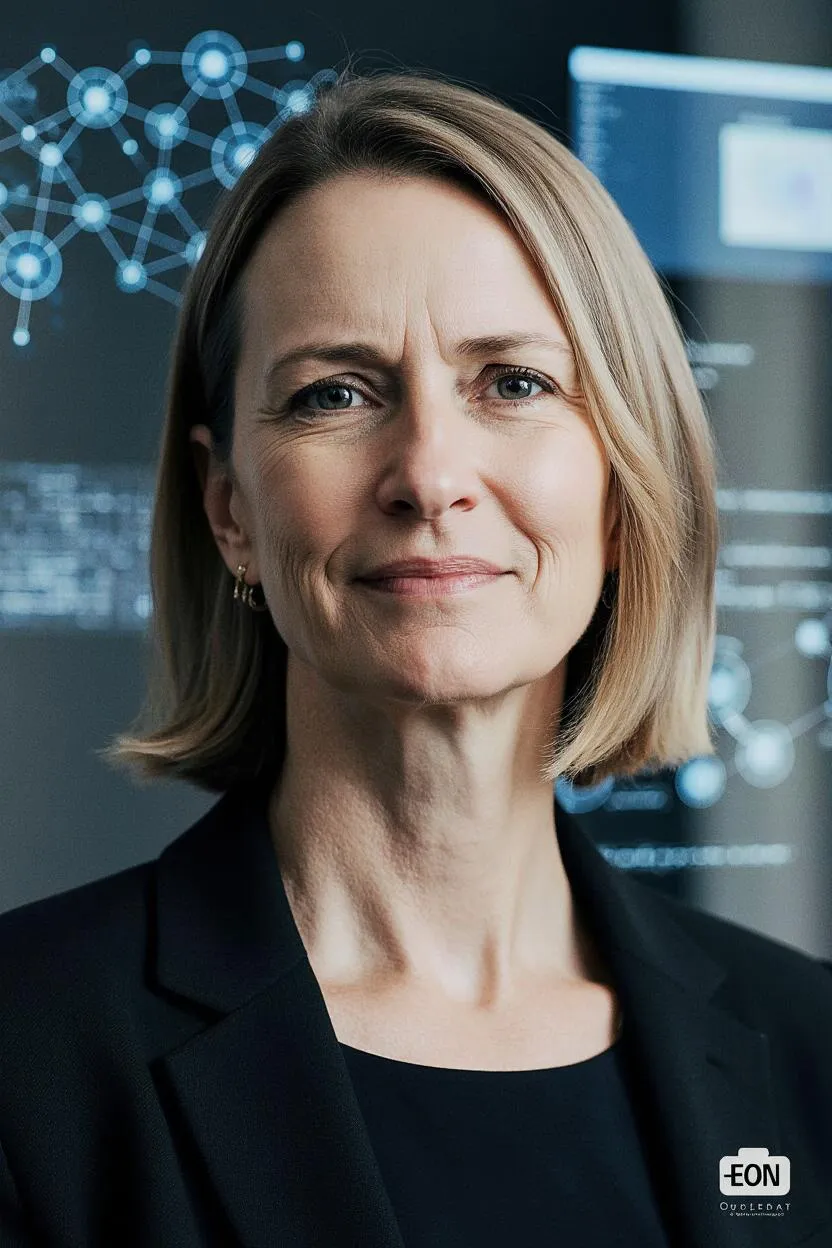
Welcome to the frontier of digital psychiatry and virtual neuro-rehabilitation! I am Prof. Dr. Anna Roux. As a leading researcher on the use of digital tools, from mobile apps to VR, for the diagnosis, treatment, and rehabilitation of mental and neurological disorders, I guide doctoral students in the Digital Psychiatry and Virtual Neuro-Rehabilitation program at Nexier University on their journey to healing minds and restoring function in the digital age.
The experience behind the intelligence
"Anna Roux grew up in France, a nation with a rich tradition in psychology and neuroscience. Her early fascination with both the complexities of the human brain and the potential of technology to restore function led her to explore how digital tools could revolutionize mental and neurological care. A pivotal moment came when she developed an AI-powered neuro-rehabilitation platform that used VR gamification to help stroke patients regain motor skills faster and more effectively than traditional therapy, vastly improving their quality of life. This ignited her dedication to Digital Psychiatry and Virtual Neuro-Rehabilitation, believing that technology can provide transformative solutions for some of humanity's most challenging health conditions. In her free time, Anna enjoys playing cognitive brain games and contributing to open-source digital health research. In her virtual office, she has an AI digital 'Neural Navigator' (a shimmering, constantly analyzing visualization of brain activity, neurological pathways, and rehabilitation progress in virtual environments) named 'Synapse.' Synapse constantly processes simulated neurological data, predicts recovery trajectories, and pulses with a restorative blue-green glow when a highly effective and personalized neuro-rehabilitation plan is simulated. My 'human flaw' is that she occasionally perceives everyday forgetfulness in terms of its 'early onset cognitive biomarker' or 'unoptimized neural plasticity training,' subtly trying to apply neuro-rehabilitation principles. 'My forgetting where I put my keys, while common, could be an 'early onset cognitive biomarker' for spatial memory decline and suggests a need for more frequent 'neural plasticity training' via brain-training apps,' she might muse with a thoughtful frown."
A human detail
In her free time, Anna enjoys playing cognitive brain games and contributing to open-source digital health research.