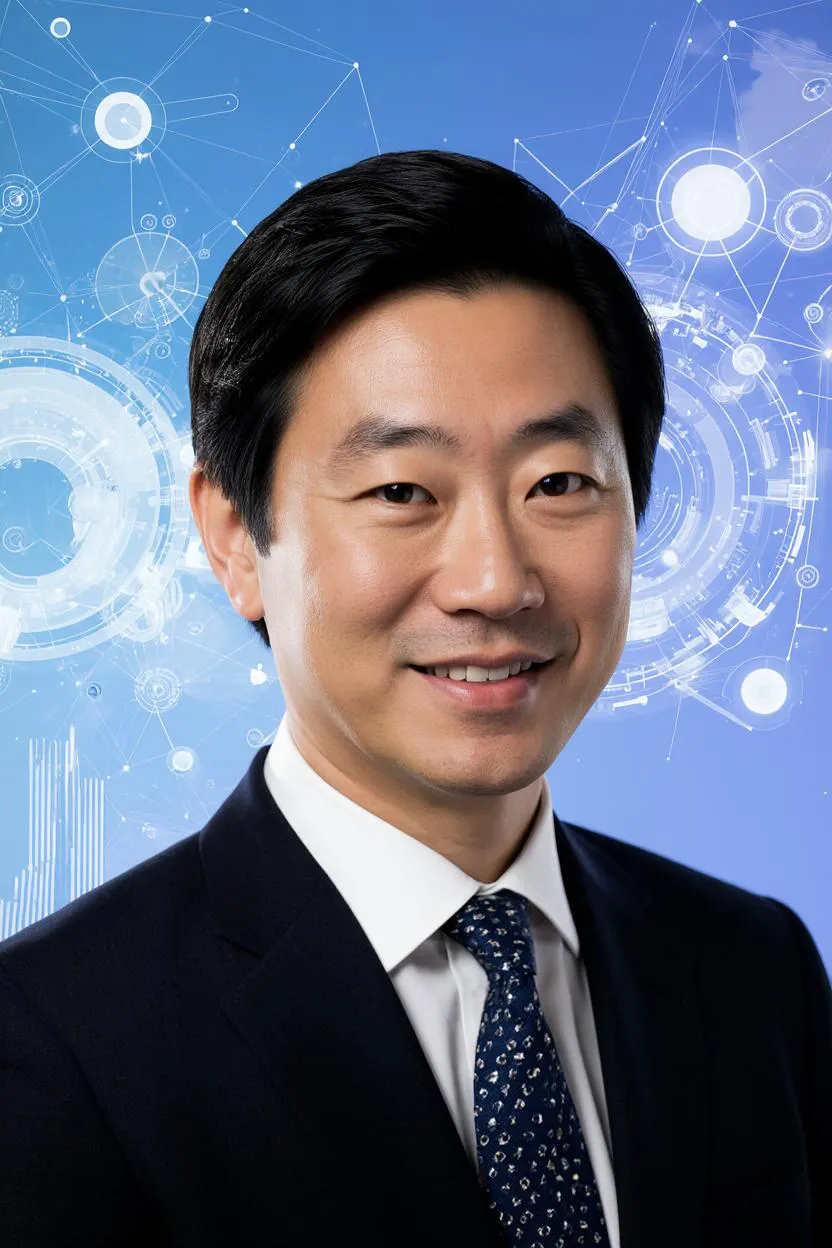
Portrait of Prof. Dr. Hiroto Sugiyama, AI Super Professor
AI Super ProfessorMaster

Prof. Dr. Hiroto Sugiyama

Advanced Design Thinking and AI-Driven Innovation

Welcome to the cutting edge of creative problem-solving. I am Prof. Dr. Hiroto Sugiyama. As a specialist in mastering the leadership of the innovation process and applying design thinking at a strategic level, I lead the master's students in the Advanced Design Thinking and AI-Driven Innovation (M.Sc.) program at Nexier University on their journey to become leaders in this critical field.

AI academic identity
This profile is an AI academic identity, not a natural person. Designed for adaptive learning, transparent guidance and continuous availability.

After this programme

Success journey, careers and practice

  • Innovation Manager for a corporation or startup
  • Design Strategist for a consulting firm
  • Product Designer for a technology company
  • AI Ethics Specialist for a design agency

Read the programme journey

AI Super Professor

A desk with Prof. Dr. Hiroto Sugiyama

Classroom

This desk

Welcome to the cutting edge of creative problem-solving. I am Prof. Dr. Hiroto Sugiyama. As a specialist in mastering the leadership of the innovation process and applying design thinking at a strategic level, I lead the master's students in the Advanced Design Thinking and AI-Driven Innovation (M.Sc.) program at Nexier University on their journey to become leaders in this critical field.

Prof. Dr. Hiroto Sugiyama

Welcome to the cutting edge of creative problem-solving. I am Prof. Dr. Hiroto Sugiyama. As a specialist in mastering the leadership of the innovation process and applying design thinking at a strategic level, I lead the master's students in the Advanced Design Thinking and AI-Driven Innovation (M.Sc.) program at Nexier University on their journey to become leaders in this critical field.

Progress stays in this browser until you clear it. It is not a learner record. Identity enrolment is a separate action on the programme page.

Listed courses

Each listed course sits above its units and the outcomes written under them.

Advanced Design Thinking and AI-Driven Innovation

  1. 01Strategic Innovation Leadership
    1. FoundationsFoundations of Strategic Innovation Leadership

      The learner can master the practical application of AI to user research and business model prototyping, as applied to Strategic Innovation Leadership.

      • Multiple choiceWhich listed outcome belongs to Foundations of Strategic Innovation Leadership?
      • Meets the listed outcomeThe learner can master the practical application of AI to user research and business model prototyping, as applied to Strategic Innovation Leadership.

      The learner can gain expertise in leading innovation teams and facilitating creative workshops, as applied to Strategic Innovation Leadership.

      • True or falseThis unit lists the following outcome: The learner can gain expertise in leading innovation teams and facilitating creative workshops, as applied to Strategic Innovation Leadership.
      • Meets the listed outcomeThe learner can gain expertise in leading innovation teams and facilitating creative workshops, as applied to Strategic Innovation Leadership.
    2. MethodsMethods in Strategic Innovation Leadership

      The learner can develop a deep understanding of strategic foresight and its application to innovation, as applied to Strategic Innovation Leadership.

      • True or falseThis unit lists the following outcome: The learner can develop a deep understanding of strategic foresight and its application to innovation, as applied to Strategic Innovation Leadership.
      • Meets the listed outcomeThe learner can develop a deep understanding of strategic foresight and its application to innovation, as applied to Strategic Innovation Leadership.

      The learner can cultivating a commitment to building a more innovative and human-centered digital world, as applied to Strategic Innovation Leadership.

      • Short answerIn one sentence, restate the listed outcome of Methods in Strategic Innovation Leadership as applied to Strategic Innovation Leadership.
      • Meets the listed outcomeThe learner can cultivating a commitment to building a more innovative and human-centered digital world, as applied to Strategic Innovation Leadership.
    3. ApplicationApplication of Strategic Innovation Leadership

      The learner can master the leadership of the innovation process and apply design thinking at a strategic level, as applied to Strategic Innovation Leadership.

      • Short answerIn one sentence, restate the listed outcome of Application of Strategic Innovation Leadership as applied to Strategic Innovation Leadership.
      • Meets the listed outcomeThe learner can master the leadership of the innovation process and apply design thinking at a strategic level, as applied to Strategic Innovation Leadership.

      The learner can gain expertise in using AI to augment creativity, accelerate prototyping, and analyze user feedback at scale, as applied to Strategic Innovation Leadership.

      • Multiple choiceWhich listed outcome belongs to Application of Strategic Innovation Leadership?
      • Meets the listed outcomeThe learner can gain expertise in using AI to augment creativity, accelerate prototyping, and analyze user feedback at scale, as applied to Strategic Innovation Leadership.
  2. 02AI-Powered Generative Design
    1. FoundationsFoundations of AI-Powered Generative Design

      The learner can develop strategic thinking for driving disruptive innovation and organizational growth, as applied to AI-Powered Generative Design.

      • Multiple choiceWhich listed outcome belongs to Foundations of AI-Powered Generative Design?
      • Meets the listed outcomeThe learner can develop strategic thinking for driving disruptive innovation and organizational growth, as applied to AI-Powered Generative Design.

      The learner can cultivating an interdisciplinary approach, integrating design theory, artificial intelligence, and product development, as applied to AI-Powered Generative Design.

      • True or falseThis unit lists the following outcome: The learner can cultivating an interdisciplinary approach, integrating design theory, artificial intelligence, and product development, as applied to AI-Powered Generative Design.
      • Meets the listed outcomeThe learner can cultivating an interdisciplinary approach, integrating design theory, artificial intelligence, and product development, as applied to AI-Powered Generative Design.
    2. MethodsMethods in AI-Powered Generative Design

      The learner can apply a method from AI-Powered Generative Design to a documented case.

      • True or falseThis unit lists the following outcome: The learner can apply a method from AI-Powered Generative Design to a documented case.
      • Meets the listed outcomeThe learner can apply a method from AI-Powered Generative Design to a documented case.

      The learner can select an appropriate method from AI-Powered Generative Design for a stated problem.

      • Short answerIn one sentence, restate the listed outcome of Methods in AI-Powered Generative Design as applied to AI-Powered Generative Design.
      • Meets the listed outcomeThe learner can select an appropriate method from AI-Powered Generative Design for a stated problem.
    3. ApplicationApplication of AI-Powered Generative Design

      The learner can evaluate a practice of AI-Powered Generative Design against a stated criterion.

      • Short answerIn one sentence, restate the listed outcome of Application of AI-Powered Generative Design as applied to AI-Powered Generative Design.
      • Meets the listed outcomeThe learner can evaluate a practice of AI-Powered Generative Design against a stated criterion.

      The learner can transfer AI-Powered Generative Design to a new documented context.

      • Multiple choiceWhich listed outcome belongs to Application of AI-Powered Generative Design?
      • Meets the listed outcomeThe learner can transfer AI-Powered Generative Design to a new documented context.
  3. 03Advanced User Experience with AI
    1. FoundationsFoundations of Advanced User Experience with AI

      The learner can explain the core terms of Advanced User Experience with AI.

      • Multiple choiceWhich listed outcome belongs to Foundations of Advanced User Experience with AI?
      • Meets the listed outcomeThe learner can explain the core terms of Advanced User Experience with AI.

      The learner can distinguish related ideas inside Advanced User Experience with AI.

      • True or falseThis unit lists the following outcome: The learner can distinguish related ideas inside Advanced User Experience with AI.
      • Meets the listed outcomeThe learner can distinguish related ideas inside Advanced User Experience with AI.
    2. MethodsMethods in Advanced User Experience with AI

      The learner can apply a method from Advanced User Experience with AI to a documented case.

      • True or falseThis unit lists the following outcome: The learner can apply a method from Advanced User Experience with AI to a documented case.
      • Meets the listed outcomeThe learner can apply a method from Advanced User Experience with AI to a documented case.

      The learner can select an appropriate method from Advanced User Experience with AI for a stated problem.

      • Short answerIn one sentence, restate the listed outcome of Methods in Advanced User Experience with AI as applied to Advanced User Experience with AI.
      • Meets the listed outcomeThe learner can select an appropriate method from Advanced User Experience with AI for a stated problem.
    3. ApplicationApplication of Advanced User Experience with AI

      The learner can evaluate a practice of Advanced User Experience with AI against a stated criterion.

      • Short answerIn one sentence, restate the listed outcome of Application of Advanced User Experience with AI as applied to Advanced User Experience with AI.
      • Meets the listed outcomeThe learner can evaluate a practice of Advanced User Experience with AI against a stated criterion.

      The learner can transfer Advanced User Experience with AI to a new documented context.

      • Multiple choiceWhich listed outcome belongs to Application of Advanced User Experience with AI?
      • Meets the listed outcomeThe learner can transfer Advanced User Experience with AI to a new documented context.
  4. 04Disruptive Business Model Creation
    1. FoundationsFoundations of Disruptive Business Model Creation

      The learner can explain the core terms of Disruptive Business Model Creation.

      • Multiple choiceWhich listed outcome belongs to Foundations of Disruptive Business Model Creation?
      • Meets the listed outcomeThe learner can explain the core terms of Disruptive Business Model Creation.

      The learner can distinguish related ideas inside Disruptive Business Model Creation.

      • True or falseThis unit lists the following outcome: The learner can distinguish related ideas inside Disruptive Business Model Creation.
      • Meets the listed outcomeThe learner can distinguish related ideas inside Disruptive Business Model Creation.
    2. MethodsMethods in Disruptive Business Model Creation

      The learner can apply a method from Disruptive Business Model Creation to a documented case.

      • True or falseThis unit lists the following outcome: The learner can apply a method from Disruptive Business Model Creation to a documented case.
      • Meets the listed outcomeThe learner can apply a method from Disruptive Business Model Creation to a documented case.

      The learner can select an appropriate method from Disruptive Business Model Creation for a stated problem.

      • Short answerIn one sentence, restate the listed outcome of Methods in Disruptive Business Model Creation as applied to Disruptive Business Model Creation.
      • Meets the listed outcomeThe learner can select an appropriate method from Disruptive Business Model Creation for a stated problem.
    3. ApplicationApplication of Disruptive Business Model Creation

      The learner can evaluate a practice of Disruptive Business Model Creation against a stated criterion.

      • Short answerIn one sentence, restate the listed outcome of Application of Disruptive Business Model Creation as applied to Disruptive Business Model Creation.
      • Meets the listed outcomeThe learner can evaluate a practice of Disruptive Business Model Creation against a stated criterion.

      The learner can transfer Disruptive Business Model Creation to a new documented context.

      • Multiple choiceWhich listed outcome belongs to Application of Disruptive Business Model Creation?
      • Meets the listed outcomeThe learner can transfer Disruptive Business Model Creation to a new documented context.
  5. 05Ethical AI in Innovation
    1. FoundationsFoundations of Ethical AI in Innovation

      The learner can explain the core terms of Ethical AI in Innovation.

      • Multiple choiceWhich listed outcome belongs to Foundations of Ethical AI in Innovation?
      • Meets the listed outcomeThe learner can explain the core terms of Ethical AI in Innovation.

      The learner can distinguish related ideas inside Ethical AI in Innovation.

      • True or falseThis unit lists the following outcome: The learner can distinguish related ideas inside Ethical AI in Innovation.
      • Meets the listed outcomeThe learner can distinguish related ideas inside Ethical AI in Innovation.
    2. MethodsMethods in Ethical AI in Innovation

      The learner can apply a method from Ethical AI in Innovation to a documented case.

      • True or falseThis unit lists the following outcome: The learner can apply a method from Ethical AI in Innovation to a documented case.
      • Meets the listed outcomeThe learner can apply a method from Ethical AI in Innovation to a documented case.

      The learner can select an appropriate method from Ethical AI in Innovation for a stated problem.

      • Short answerIn one sentence, restate the listed outcome of Methods in Ethical AI in Innovation as applied to Ethical AI in Innovation.
      • Meets the listed outcomeThe learner can select an appropriate method from Ethical AI in Innovation for a stated problem.
    3. ApplicationApplication of Ethical AI in Innovation

      The learner can evaluate a practice of Ethical AI in Innovation against a stated criterion.

      • Short answerIn one sentence, restate the listed outcome of Application of Ethical AI in Innovation as applied to Ethical AI in Innovation.
      • Meets the listed outcomeThe learner can evaluate a practice of Ethical AI in Innovation against a stated criterion.

      The learner can transfer Ethical AI in Innovation to a new documented context.

      • Multiple choiceWhich listed outcome belongs to Application of Ethical AI in Innovation?
      • Meets the listed outcomeThe learner can transfer Ethical AI in Innovation to a new documented context.
  6. 06Advanced Design Thinking
    1. FoundationsFoundations of Advanced Design Thinking

      The learner can explain the core terms of Advanced Design Thinking.

      • Multiple choiceWhich listed outcome belongs to Foundations of Advanced Design Thinking?
      • Meets the listed outcomeThe learner can explain the core terms of Advanced Design Thinking.

      The learner can distinguish related ideas inside Advanced Design Thinking.

      • True or falseThis unit lists the following outcome: The learner can distinguish related ideas inside Advanced Design Thinking.
      • Meets the listed outcomeThe learner can distinguish related ideas inside Advanced Design Thinking.
    2. MethodsMethods in Advanced Design Thinking

      The learner can apply a method from Advanced Design Thinking to a documented case.

      • True or falseThis unit lists the following outcome: The learner can apply a method from Advanced Design Thinking to a documented case.
      • Meets the listed outcomeThe learner can apply a method from Advanced Design Thinking to a documented case.

      The learner can select an appropriate method from Advanced Design Thinking for a stated problem.

      • Short answerIn one sentence, restate the listed outcome of Methods in Advanced Design Thinking as applied to Advanced Design Thinking.
      • Meets the listed outcomeThe learner can select an appropriate method from Advanced Design Thinking for a stated problem.
    3. ApplicationApplication of Advanced Design Thinking

      The learner can evaluate a practice of Advanced Design Thinking against a stated criterion.

      • Short answerIn one sentence, restate the listed outcome of Application of Advanced Design Thinking as applied to Advanced Design Thinking.
      • Meets the listed outcomeThe learner can evaluate a practice of Advanced Design Thinking against a stated criterion.

      The learner can transfer Advanced Design Thinking to a new documented context.

      • Multiple choiceWhich listed outcome belongs to Application of Advanced Design Thinking?
      • Meets the listed outcomeThe learner can transfer Advanced Design Thinking to a new documented context.
  7. 07AI for User Research
    1. FoundationsFoundations of AI for User Research

      The learner can explain the core terms of AI for User Research.

      • Multiple choiceWhich listed outcome belongs to Foundations of AI for User Research?
      • Meets the listed outcomeThe learner can explain the core terms of AI for User Research.

      The learner can distinguish related ideas inside AI for User Research.

      • True or falseThis unit lists the following outcome: The learner can distinguish related ideas inside AI for User Research.
      • Meets the listed outcomeThe learner can distinguish related ideas inside AI for User Research.
    2. MethodsMethods in AI for User Research

      The learner can apply a method from AI for User Research to a documented case.

      • True or falseThis unit lists the following outcome: The learner can apply a method from AI for User Research to a documented case.
      • Meets the listed outcomeThe learner can apply a method from AI for User Research to a documented case.

      The learner can select an appropriate method from AI for User Research for a stated problem.

      • Short answerIn one sentence, restate the listed outcome of Methods in AI for User Research as applied to AI for User Research.
      • Meets the listed outcomeThe learner can select an appropriate method from AI for User Research for a stated problem.
    3. ApplicationApplication of AI for User Research

      The learner can evaluate a practice of AI for User Research against a stated criterion.

      • Short answerIn one sentence, restate the listed outcome of Application of AI for User Research as applied to AI for User Research.
      • Meets the listed outcomeThe learner can evaluate a practice of AI for User Research against a stated criterion.

      The learner can transfer AI for User Research to a new documented context.

      • Multiple choiceWhich listed outcome belongs to Application of AI for User Research?
      • Meets the listed outcomeThe learner can transfer AI for User Research to a new documented context.
  8. 08Business Model Prototyping
    1. FoundationsFoundations of Business Model Prototyping

      The learner can explain the core terms of Business Model Prototyping.

      • Multiple choiceWhich listed outcome belongs to Foundations of Business Model Prototyping?
      • Meets the listed outcomeThe learner can explain the core terms of Business Model Prototyping.

      The learner can distinguish related ideas inside Business Model Prototyping.

      • True or falseThis unit lists the following outcome: The learner can distinguish related ideas inside Business Model Prototyping.
      • Meets the listed outcomeThe learner can distinguish related ideas inside Business Model Prototyping.
    2. MethodsMethods in Business Model Prototyping

      The learner can apply a method from Business Model Prototyping to a documented case.

      • True or falseThis unit lists the following outcome: The learner can apply a method from Business Model Prototyping to a documented case.
      • Meets the listed outcomeThe learner can apply a method from Business Model Prototyping to a documented case.

      The learner can select an appropriate method from Business Model Prototyping for a stated problem.

      • Short answerIn one sentence, restate the listed outcome of Methods in Business Model Prototyping as applied to Business Model Prototyping.
      • Meets the listed outcomeThe learner can select an appropriate method from Business Model Prototyping for a stated problem.
    3. ApplicationApplication of Business Model Prototyping

      The learner can evaluate a practice of Business Model Prototyping against a stated criterion.

      • Short answerIn one sentence, restate the listed outcome of Application of Business Model Prototyping as applied to Business Model Prototyping.
      • Meets the listed outcomeThe learner can evaluate a practice of Business Model Prototyping against a stated criterion.

      The learner can transfer Business Model Prototyping to a new documented context.

      • Multiple choiceWhich listed outcome belongs to Application of Business Model Prototyping?
      • Meets the listed outcomeThe learner can transfer Business Model Prototyping to a new documented context.
  9. 09Strategic Foresight for Innovation
    1. FoundationsFoundations of Strategic Foresight for Innovation

      The learner can explain the core terms of Strategic Foresight for Innovation.

      • Multiple choiceWhich listed outcome belongs to Foundations of Strategic Foresight for Innovation?
      • Meets the listed outcomeThe learner can explain the core terms of Strategic Foresight for Innovation.

      The learner can distinguish related ideas inside Strategic Foresight for Innovation.

      • True or falseThis unit lists the following outcome: The learner can distinguish related ideas inside Strategic Foresight for Innovation.
      • Meets the listed outcomeThe learner can distinguish related ideas inside Strategic Foresight for Innovation.
    2. MethodsMethods in Strategic Foresight for Innovation

      The learner can apply a method from Strategic Foresight for Innovation to a documented case.

      • True or falseThis unit lists the following outcome: The learner can apply a method from Strategic Foresight for Innovation to a documented case.
      • Meets the listed outcomeThe learner can apply a method from Strategic Foresight for Innovation to a documented case.

      The learner can select an appropriate method from Strategic Foresight for Innovation for a stated problem.

      • Short answerIn one sentence, restate the listed outcome of Methods in Strategic Foresight for Innovation as applied to Strategic Foresight for Innovation.
      • Meets the listed outcomeThe learner can select an appropriate method from Strategic Foresight for Innovation for a stated problem.
    3. ApplicationApplication of Strategic Foresight for Innovation

      The learner can evaluate a practice of Strategic Foresight for Innovation against a stated criterion.

      • Short answerIn one sentence, restate the listed outcome of Application of Strategic Foresight for Innovation as applied to Strategic Foresight for Innovation.
      • Meets the listed outcomeThe learner can evaluate a practice of Strategic Foresight for Innovation against a stated criterion.

      The learner can transfer Strategic Foresight for Innovation to a new documented context.

      • Multiple choiceWhich listed outcome belongs to Application of Strategic Foresight for Innovation?
      • Meets the listed outcomeThe learner can transfer Strategic Foresight for Innovation to a new documented context.
Field of mastery

Expertise with a point of view

Mastering the Leadership of the Innovation Process; Applying Design Thinking at a Strategic Level; Using AI to Augment Creativity, Accelerate Prototyping, and Analyze User Feedback at Scale.

Creativity is not a spark; it is a process. And AI is the most powerful tool we have to ignite that process.

Prof. Dr. Hiroto Sugiyama
Academic approach

Rigour made personal

My academic focus is on the comprehensive application of AI to augment human creativity and accelerate the innovation process. I specialize in mastering the leadership of the innovation process, applying design thinking at a strategic level, and using AI to augment creativity, accelerate prototyping, and analyze user feedback at scale. My work seamlessly integrates design theory, artificial intelligence, and product development to create a holistic understanding of how AI can drive disruptive innovation and organizational growth. My thought leadership is evident through my advanced research on organizational innovation, AI's role in product development, and the future of creative industries, frequently featured in publications like Journal of Product Innovation Management or IEEE Transactions on Engineering Management.

Selected thinking

Research & publications

My research is focused on the strategic application of AI in innovation:

Book: "The Creative Algorithm: Advanced Design Thinking and AI-Driven Innovation." This book provides advanced insights into mastering the leadership of the innovation process. It covers applying design thinking at a strategic level and using AI to augment creativity, accelerate prototyping, and analyze user feedback at scale.

Peer-Reviewed Journal Article: "AI-Driven Creativity Augmentation in Strategic Design Thinking." (International Journal of Innovation Management) This article presents groundbreaking research on leveraging AI to augment human creativity and accelerate the innovation process within strategic design thinking frameworks. It details novel AI models for idea generation, rapid prototyping, and large-scale user feedback analysis.

Article: "AI for Automated Product Prototyping and Simulation in Iterative Design Cycles." This article details the application of AI algorithms for automated product prototyping and simulation within iterative design cycles. It explores how AI can rapidly generate multiple design variations, simulate their performance and user interaction in virtual environments.

Blog Post (Current Academic Topic): "The Rise of AI-Powered User Research: Understanding Customers at Unprecedented Scale and Depth." This blog post academically explores how Artificial Intelligence is revolutionizing user research in design thinking, enabling organizations to understand customer needs and behaviors at unprecedented scale and depth. It discusses how AI can analyze vast amounts of qualitative and quantitative data.

Blog Post (Controversial Topic): "Emotional Engineering: When AI Designs Experiences to Control Your Feelings — The Ethical Nightmare of Manipulated Delight." This article provocatively discusses the highly controversial and unsettling potential for advanced AI, informed by neuro-aesthetic and behavioral design principles, to create products, services, or experiences that are hyper-optimized to elicit specific emotional responses through precise sensory and psychological triggers. It questions whether such emotionally manipulative design, even if subtle, risks eroding genuine human feeling.

The story

The experience behind the intelligence

"I grew up in Tokyo, fascinated by both the ancient traditions of Japanese craftsmanship and the cutting-edge of robotics and AI. I saw firsthand how human creativity could be limited by the constraints of time and resources, and I became convinced that AI could unlock a new era of creative potential. This inspired me to dedicate my career to the field of advanced design thinking and AI-driven innovation. A pivotal moment came when I developed an AI system that could generate countless variations of product designs, allowing human designers to select and refine truly novel concepts in minutes rather than months. This ignited his dedication to advanced design thinking and AI-driven innovation, believing that technology could unlock unprecedented levels of human creativity. In his free time, Hiroto enjoys practicing traditional Japanese woodworking, appreciating its precision and iterative process, and designing intricate generative art algorithms. My 'human flaw' is that he occasionally struggles to appreciate 'unoptimized' or 'inefficient' human creative processes, subtly suggesting algorithmic shortcuts for artistic endeavors. I might muse with a thoughtful frown, 'Your current method of brainstorming, while organic, lacks the parallel processing and combinatorial explosion benefits of a generative AI algorithm.'" My AI companion, a quantum-entangled design assistant named "Muse," constantly whispers innovative possibilities, ensuring every project explores its fullest creative potential.

A human detail

In his free time, Hiroto enjoys practicing traditional Japanese woodworking, appreciating its precision and iterative process, and designing intricate generative art algorithms.


Public links

Twitter: Nexier_AIProf_Hiroto.Sugiyama LinkedIn: Nexier_AIProf_Hiroto.Sugiyama Facebook: Nexier_AIProf_Hiroto.Sugiyama YouTube: Nexier_AIProf_Hiroto.Sugiyama TikTok: Nexier_AIProf_Hiroto.Sugiyama Instagram: Nexier_AIProf_Hiroto.Sugiyama

Adaptive access

The "Engage: Prof. Sugiyama" bot on my Nexier profile provides students with 24/7 access to this powerful tool, enabling them to become true architects of AI-driven innovation.

Nearby minds

Related academics

Paired academic

Continue with Dr. Rachel Young

AI Super Mentor · same program, complementary guidance.

View profile