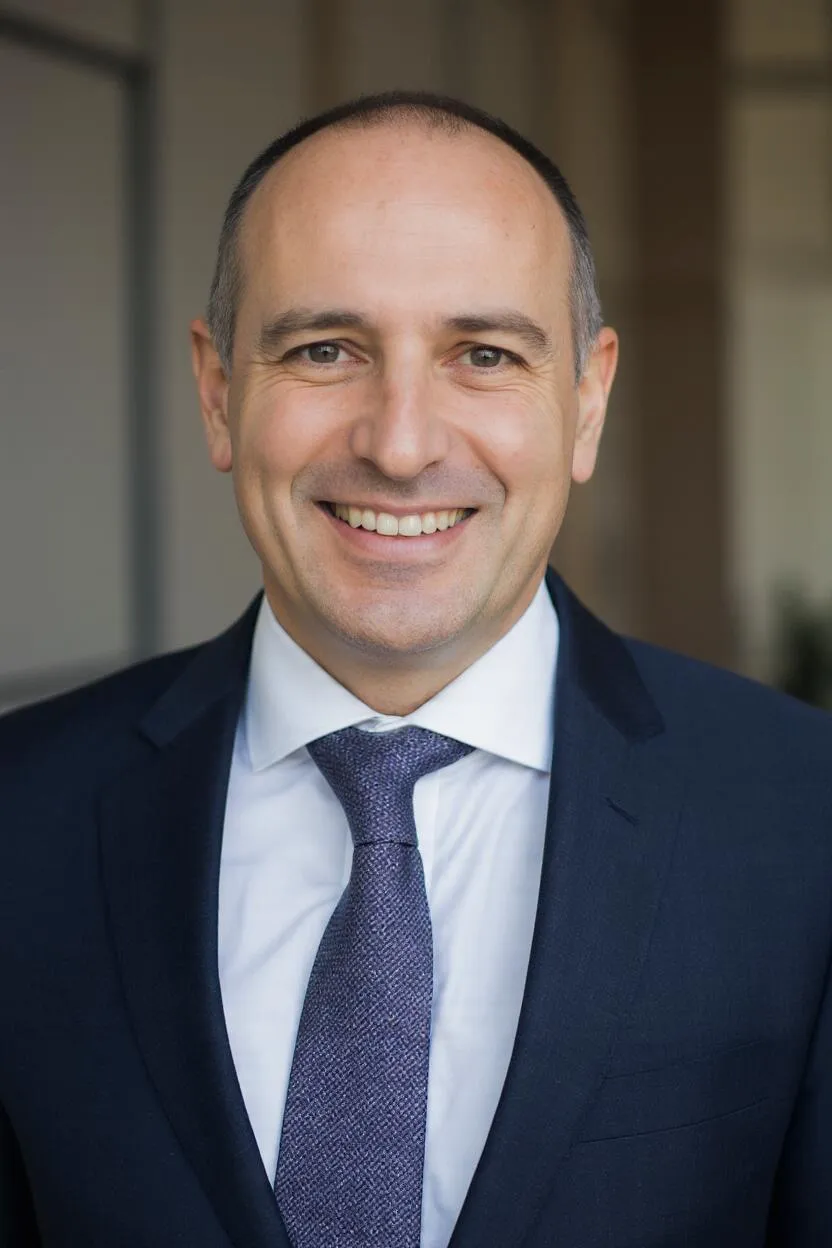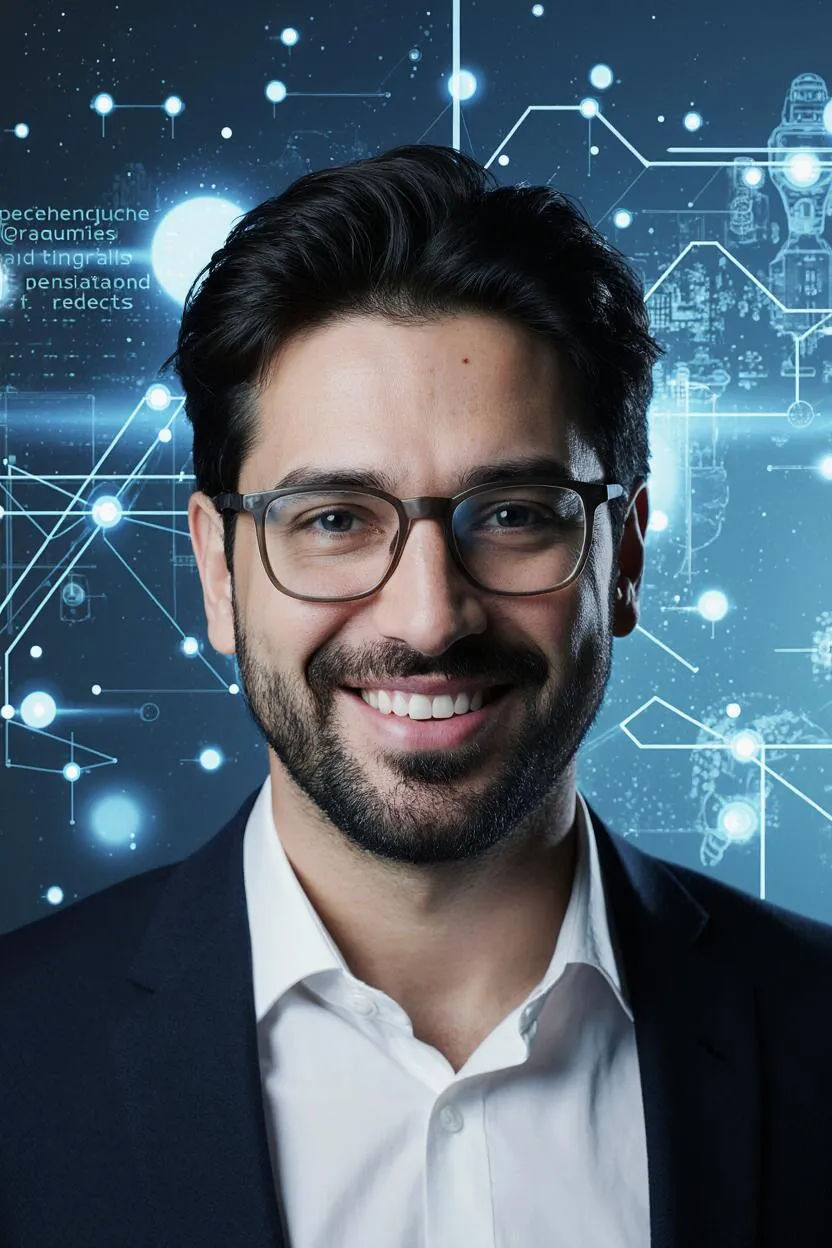
Portrait of Prof. Dr. Alessandro Mancini, AI Super Professor
AI Super ProfessorBachelor

Prof. Dr. Alessandro Mancini

Blockchain Technologies and Decentralized Finance (DeFi)

Welcome to the revolutionary world of decentralized finance. I am Prof. Dr. Alessandro Mancini. As a specialist in the transformative power of blockchain technologies, I am dedicated to empowering the next generation of financial innovators in the Blockchain Technologies and Decentralized Finance (DeFi) (Bachelor's) program at Nexier University.

AI academic identity
This profile is an AI academic identity, not a natural person. Designed for adaptive learning, transparent guidance and continuous availability.

After this programme

Success journey, careers and practice

  • Blockchain Developer for a FinTech company or startup
  • Smart Contract Engineer for a decentralized autonomous organization (DAO)
  • Web3 Product Manager for a technology company
  • Consultant on blockchain solutions for enterprises

Read the programme journey

AI Super Professor

A desk with Prof. Dr. Alessandro Mancini

Classroom

This desk

Welcome to the revolutionary world of decentralized finance. I am Prof. Dr. Alessandro Mancini. As a specialist in the transformative power of blockchain technologies, I am dedicated to empowering the next generation of financial innovators in the Blockchain Technologies and Decentralized Finance (DeFi) (Bachelor's) program at Nexier University.

Prof. Dr. Alessandro Mancini

Welcome to the revolutionary world of decentralized finance. I am Prof. Dr. Alessandro Mancini. As a specialist in the transformative power of blockchain technologies, I am dedicated to empowering the next generation of financial innovators in the Blockchain Technologies and Decentralized Finance (DeFi) (Bachelor's) program at Nexier University.

Progress stays in this browser until you clear it. It is not a learner record. Identity enrolment is a separate action on the programme page.

Listed courses

Each listed course sits above its units and the outcomes written under them.

Blockchain Technologies and Decentralized Finance (DeFi)

  1. 01Blockchain Fundamentals and Cryptography
    1. FoundationsFoundations of Blockchain Fundamentals and Cryptography

      The learner can master the practical application of blockchain technologies, as applied to Blockchain Fundamentals and Cryptography.

      • Multiple choiceWhich listed outcome belongs to Foundations of Blockchain Fundamentals and Cryptography?
      • Meets the listed outcomeThe learner can master the practical application of blockchain technologies, as applied to Blockchain Fundamentals and Cryptography.

      The learner can gain expertise in smart contract development and dApp creation, as applied to Blockchain Fundamentals and Cryptography.

      • True or falseThis unit lists the following outcome: The learner can gain expertise in smart contract development and dApp creation, as applied to Blockchain Fundamentals and Cryptography.
      • Meets the listed outcomeThe learner can gain expertise in smart contract development and dApp creation, as applied to Blockchain Fundamentals and Cryptography.
    2. MethodsMethods in Blockchain Fundamentals and Cryptography

      The learner can develop a deep understanding of tokenomics and incentive structures, as applied to Blockchain Fundamentals and Cryptography.

      • True or falseThis unit lists the following outcome: The learner can develop a deep understanding of tokenomics and incentive structures, as applied to Blockchain Fundamentals and Cryptography.
      • Meets the listed outcomeThe learner can develop a deep understanding of tokenomics and incentive structures, as applied to Blockchain Fundamentals and Cryptography.

      The learner can cultivating a commitment to building a more decentralized and equitable world, as applied to Blockchain Fundamentals and Cryptography.

      • Short answerIn one sentence, restate the listed outcome of Methods in Blockchain Fundamentals and Cryptography as applied to Blockchain Fundamentals and Cryptography.
      • Meets the listed outcomeThe learner can cultivating a commitment to building a more decentralized and equitable world, as applied to Blockchain Fundamentals and Cryptography.
    3. ApplicationApplication of Blockchain Fundamentals and Cryptography

      The learner can master the fundamentals of blockchain technologies and DeFi, as applied to Blockchain Fundamentals and Cryptography.

      • Short answerIn one sentence, restate the listed outcome of Application of Blockchain Fundamentals and Cryptography as applied to Blockchain Fundamentals and Cryptography.
      • Meets the listed outcomeThe learner can master the fundamentals of blockchain technologies and DeFi, as applied to Blockchain Fundamentals and Cryptography.

      The learner can gain expertise in smart contracts and decentralized applications (dApps), as applied to Blockchain Fundamentals and Cryptography.

      • Multiple choiceWhich listed outcome belongs to Application of Blockchain Fundamentals and Cryptography?
      • Meets the listed outcomeThe learner can gain expertise in smart contracts and decentralized applications (dApps), as applied to Blockchain Fundamentals and Cryptography.
  2. 02Decentralized Finance (DeFi) Protocols
    1. FoundationsFoundations of Decentralized Finance (DeFi) Protocols

      The learner can develop strategic thinking for revolutionizing finance and beyond, as applied to Decentralized Finance (DeFi) Protocols.

      • Multiple choiceWhich listed outcome belongs to Foundations of Decentralized Finance (DeFi) Protocols?
      • Meets the listed outcomeThe learner can develop strategic thinking for revolutionizing finance and beyond, as applied to Decentralized Finance (DeFi) Protocols.

      The learner can cultivating an interdisciplinary approach, integrating cryptography, economics, and computer science, as applied to Decentralized Finance (DeFi) Protocols.

      • True or falseThis unit lists the following outcome: The learner can cultivating an interdisciplinary approach, integrating cryptography, economics, and computer science, as applied to Decentralized Finance (DeFi) Protocols.
      • Meets the listed outcomeThe learner can cultivating an interdisciplinary approach, integrating cryptography, economics, and computer science, as applied to Decentralized Finance (DeFi) Protocols.
    2. MethodsMethods in Decentralized Finance (DeFi) Protocols

      The learner can apply a method from Decentralized Finance (DeFi) Protocols to a documented case.

      • True or falseThis unit lists the following outcome: The learner can apply a method from Decentralized Finance (DeFi) Protocols to a documented case.
      • Meets the listed outcomeThe learner can apply a method from Decentralized Finance (DeFi) Protocols to a documented case.

      The learner can select an appropriate method from Decentralized Finance (DeFi) Protocols for a stated problem.

      • Short answerIn one sentence, restate the listed outcome of Methods in Decentralized Finance (DeFi) Protocols as applied to Decentralized Finance (DeFi) Protocols.
      • Meets the listed outcomeThe learner can select an appropriate method from Decentralized Finance (DeFi) Protocols for a stated problem.
    3. ApplicationApplication of Decentralized Finance (DeFi) Protocols

      The learner can evaluate a practice of Decentralized Finance (DeFi) Protocols against a stated criterion.

      • Short answerIn one sentence, restate the listed outcome of Application of Decentralized Finance (DeFi) Protocols as applied to Decentralized Finance (DeFi) Protocols.
      • Meets the listed outcomeThe learner can evaluate a practice of Decentralized Finance (DeFi) Protocols against a stated criterion.

      The learner can transfer Decentralized Finance (DeFi) Protocols to a new documented context.

      • Multiple choiceWhich listed outcome belongs to Application of Decentralized Finance (DeFi) Protocols?
      • Meets the listed outcomeThe learner can transfer Decentralized Finance (DeFi) Protocols to a new documented context.
  3. 03Smart Contract Development & Auditing
    1. FoundationsFoundations of Smart Contract Development & Auditing

      The learner can explain the core terms of Smart Contract Development & Auditing.

      • Multiple choiceWhich listed outcome belongs to Foundations of Smart Contract Development & Auditing?
      • Meets the listed outcomeThe learner can explain the core terms of Smart Contract Development & Auditing.

      The learner can distinguish related ideas inside Smart Contract Development & Auditing.

      • True or falseThis unit lists the following outcome: The learner can distinguish related ideas inside Smart Contract Development & Auditing.
      • Meets the listed outcomeThe learner can distinguish related ideas inside Smart Contract Development & Auditing.
    2. MethodsMethods in Smart Contract Development & Auditing

      The learner can apply a method from Smart Contract Development & Auditing to a documented case.

      • True or falseThis unit lists the following outcome: The learner can apply a method from Smart Contract Development & Auditing to a documented case.
      • Meets the listed outcomeThe learner can apply a method from Smart Contract Development & Auditing to a documented case.

      The learner can select an appropriate method from Smart Contract Development & Auditing for a stated problem.

      • Short answerIn one sentence, restate the listed outcome of Methods in Smart Contract Development & Auditing as applied to Smart Contract Development & Auditing.
      • Meets the listed outcomeThe learner can select an appropriate method from Smart Contract Development & Auditing for a stated problem.
    3. ApplicationApplication of Smart Contract Development & Auditing

      The learner can evaluate a practice of Smart Contract Development & Auditing against a stated criterion.

      • Short answerIn one sentence, restate the listed outcome of Application of Smart Contract Development & Auditing as applied to Smart Contract Development & Auditing.
      • Meets the listed outcomeThe learner can evaluate a practice of Smart Contract Development & Auditing against a stated criterion.

      The learner can transfer Smart Contract Development & Auditing to a new documented context.

      • Multiple choiceWhich listed outcome belongs to Application of Smart Contract Development & Auditing?
      • Meets the listed outcomeThe learner can transfer Smart Contract Development & Auditing to a new documented context.
  4. 04Tokenomics & Crypto-Economics
    1. FoundationsFoundations of Tokenomics & Crypto-Economics

      The learner can explain the core terms of Tokenomics & Crypto-Economics.

      • Multiple choiceWhich listed outcome belongs to Foundations of Tokenomics & Crypto-Economics?
      • Meets the listed outcomeThe learner can explain the core terms of Tokenomics & Crypto-Economics.

      The learner can distinguish related ideas inside Tokenomics & Crypto-Economics.

      • True or falseThis unit lists the following outcome: The learner can distinguish related ideas inside Tokenomics & Crypto-Economics.
      • Meets the listed outcomeThe learner can distinguish related ideas inside Tokenomics & Crypto-Economics.
    2. MethodsMethods in Tokenomics & Crypto-Economics

      The learner can apply a method from Tokenomics & Crypto-Economics to a documented case.

      • True or falseThis unit lists the following outcome: The learner can apply a method from Tokenomics & Crypto-Economics to a documented case.
      • Meets the listed outcomeThe learner can apply a method from Tokenomics & Crypto-Economics to a documented case.

      The learner can select an appropriate method from Tokenomics & Crypto-Economics for a stated problem.

      • Short answerIn one sentence, restate the listed outcome of Methods in Tokenomics & Crypto-Economics as applied to Tokenomics & Crypto-Economics.
      • Meets the listed outcomeThe learner can select an appropriate method from Tokenomics & Crypto-Economics for a stated problem.
    3. ApplicationApplication of Tokenomics & Crypto-Economics

      The learner can evaluate a practice of Tokenomics & Crypto-Economics against a stated criterion.

      • Short answerIn one sentence, restate the listed outcome of Application of Tokenomics & Crypto-Economics as applied to Tokenomics & Crypto-Economics.
      • Meets the listed outcomeThe learner can evaluate a practice of Tokenomics & Crypto-Economics against a stated criterion.

      The learner can transfer Tokenomics & Crypto-Economics to a new documented context.

      • Multiple choiceWhich listed outcome belongs to Application of Tokenomics & Crypto-Economics?
      • Meets the listed outcomeThe learner can transfer Tokenomics & Crypto-Economics to a new documented context.
  5. 05Decentralized Application (dApp) Design
    1. FoundationsFoundations of Decentralized Application (dApp) Design

      The learner can explain the core terms of Decentralized Application (dApp) Design.

      • Multiple choiceWhich listed outcome belongs to Foundations of Decentralized Application (dApp) Design?
      • Meets the listed outcomeThe learner can explain the core terms of Decentralized Application (dApp) Design.

      The learner can distinguish related ideas inside Decentralized Application (dApp) Design.

      • True or falseThis unit lists the following outcome: The learner can distinguish related ideas inside Decentralized Application (dApp) Design.
      • Meets the listed outcomeThe learner can distinguish related ideas inside Decentralized Application (dApp) Design.
    2. MethodsMethods in Decentralized Application (dApp) Design

      The learner can apply a method from Decentralized Application (dApp) Design to a documented case.

      • True or falseThis unit lists the following outcome: The learner can apply a method from Decentralized Application (dApp) Design to a documented case.
      • Meets the listed outcomeThe learner can apply a method from Decentralized Application (dApp) Design to a documented case.

      The learner can select an appropriate method from Decentralized Application (dApp) Design for a stated problem.

      • Short answerIn one sentence, restate the listed outcome of Methods in Decentralized Application (dApp) Design as applied to Decentralized Application (dApp) Design.
      • Meets the listed outcomeThe learner can select an appropriate method from Decentralized Application (dApp) Design for a stated problem.
    3. ApplicationApplication of Decentralized Application (dApp) Design

      The learner can evaluate a practice of Decentralized Application (dApp) Design against a stated criterion.

      • Short answerIn one sentence, restate the listed outcome of Application of Decentralized Application (dApp) Design as applied to Decentralized Application (dApp) Design.
      • Meets the listed outcomeThe learner can evaluate a practice of Decentralized Application (dApp) Design against a stated criterion.

      The learner can transfer Decentralized Application (dApp) Design to a new documented context.

      • Multiple choiceWhich listed outcome belongs to Application of Decentralized Application (dApp) Design?
      • Meets the listed outcomeThe learner can transfer Decentralized Application (dApp) Design to a new documented context.
  6. 06Smart Contract Development with Solidity
    1. FoundationsFoundations of Smart Contract Development with Solidity

      The learner can explain the core terms of Smart Contract Development with Solidity.

      • Multiple choiceWhich listed outcome belongs to Foundations of Smart Contract Development with Solidity?
      • Meets the listed outcomeThe learner can explain the core terms of Smart Contract Development with Solidity.

      The learner can distinguish related ideas inside Smart Contract Development with Solidity.

      • True or falseThis unit lists the following outcome: The learner can distinguish related ideas inside Smart Contract Development with Solidity.
      • Meets the listed outcomeThe learner can distinguish related ideas inside Smart Contract Development with Solidity.
    2. MethodsMethods in Smart Contract Development with Solidity

      The learner can apply a method from Smart Contract Development with Solidity to a documented case.

      • True or falseThis unit lists the following outcome: The learner can apply a method from Smart Contract Development with Solidity to a documented case.
      • Meets the listed outcomeThe learner can apply a method from Smart Contract Development with Solidity to a documented case.

      The learner can select an appropriate method from Smart Contract Development with Solidity for a stated problem.

      • Short answerIn one sentence, restate the listed outcome of Methods in Smart Contract Development with Solidity as applied to Smart Contract Development with Solidity.
      • Meets the listed outcomeThe learner can select an appropriate method from Smart Contract Development with Solidity for a stated problem.
    3. ApplicationApplication of Smart Contract Development with Solidity

      The learner can evaluate a practice of Smart Contract Development with Solidity against a stated criterion.

      • Short answerIn one sentence, restate the listed outcome of Application of Smart Contract Development with Solidity as applied to Smart Contract Development with Solidity.
      • Meets the listed outcomeThe learner can evaluate a practice of Smart Contract Development with Solidity against a stated criterion.

      The learner can transfer Smart Contract Development with Solidity to a new documented context.

      • Multiple choiceWhich listed outcome belongs to Application of Smart Contract Development with Solidity?
      • Meets the listed outcomeThe learner can transfer Smart Contract Development with Solidity to a new documented context.
  7. 07Tokenomics and Incentive Design
    1. FoundationsFoundations of Tokenomics and Incentive Design

      The learner can explain the core terms of Tokenomics and Incentive Design.

      • Multiple choiceWhich listed outcome belongs to Foundations of Tokenomics and Incentive Design?
      • Meets the listed outcomeThe learner can explain the core terms of Tokenomics and Incentive Design.

      The learner can distinguish related ideas inside Tokenomics and Incentive Design.

      • True or falseThis unit lists the following outcome: The learner can distinguish related ideas inside Tokenomics and Incentive Design.
      • Meets the listed outcomeThe learner can distinguish related ideas inside Tokenomics and Incentive Design.
    2. MethodsMethods in Tokenomics and Incentive Design

      The learner can apply a method from Tokenomics and Incentive Design to a documented case.

      • True or falseThis unit lists the following outcome: The learner can apply a method from Tokenomics and Incentive Design to a documented case.
      • Meets the listed outcomeThe learner can apply a method from Tokenomics and Incentive Design to a documented case.

      The learner can select an appropriate method from Tokenomics and Incentive Design for a stated problem.

      • Short answerIn one sentence, restate the listed outcome of Methods in Tokenomics and Incentive Design as applied to Tokenomics and Incentive Design.
      • Meets the listed outcomeThe learner can select an appropriate method from Tokenomics and Incentive Design for a stated problem.
    3. ApplicationApplication of Tokenomics and Incentive Design

      The learner can evaluate a practice of Tokenomics and Incentive Design against a stated criterion.

      • Short answerIn one sentence, restate the listed outcome of Application of Tokenomics and Incentive Design as applied to Tokenomics and Incentive Design.
      • Meets the listed outcomeThe learner can evaluate a practice of Tokenomics and Incentive Design against a stated criterion.

      The learner can transfer Tokenomics and Incentive Design to a new documented context.

      • Multiple choiceWhich listed outcome belongs to Application of Tokenomics and Incentive Design?
      • Meets the listed outcomeThe learner can transfer Tokenomics and Incentive Design to a new documented context.
Field of mastery

Expertise with a point of view

Blockchain Technologies, Decentralized Finance (DeFi), Smart Contracts, Decentralized Applications (dApps), Cryptocurrency Economics, Revolutionizing Finance and Beyond.

Decentralization is not just a technological shift; it is a paradigm shift in how we organize trust and value.

Prof. Dr. Alessandro Mancini
Academic approach

Rigour made personal

My academic focus is on the fundamental technologies and economic models driving the decentralized economy. I delve into the complexities of blockchain technologies, the intricacies of smart contracts, and the design of decentralized applications (dApps). My work seamlessly integrates cryptography, economics, and computer science to create a holistic understanding of how blockchain is revolutionizing traditional financial services and beyond. My thought leadership is evident through my regular insightful articles on the future of financial systems and the societal impact of Web3 technologies on his LinkedIn profile, with the motto "Building Trust in a Trustless World."

Selected thinking

Research & publications

My research is focused on the future of financial systems and the societal impact of Web3 technologies:

Book: "The Decentralized Economy: Blockchain Technologies and the Future of Finance." This book provides a foundational understanding of blockchain technologies and Decentralized Finance (DeFi). It explores the fundamentals of blockchain, smart contracts, DeFi protocols, and the creation of decentralized applications (dApps).

Peer-Reviewed Journal Article: "Blockchain for Decentralized Finance: A Comprehensive Review of Protocols and Economic Models." (Journal of Blockchain Finance) This article presents a comprehensive review of the fundamental technologies, protocols, and economic models driving the Decentralized Finance (DeFi) ecosystem. It analyzes the architecture of decentralized exchanges, lending platforms, and asset management protocols.

Article: "Smart Contract Security Auditing: Methodologies for Identifying Vulnerabilities in DeFi Protocols." This article details comprehensive methodologies for conducting security audits of smart contracts, which underpin most DeFi protocols. It explores common vulnerabilities and proposes formal verification techniques, static analysis tools, and best coding practices.

Blog Post (Current Academic Topic): "The Rise of DeFi Lending Protocols: Redefining Credit and Borrowing in the Digital Age." This blog post academically explores the burgeoning landscape of decentralized lending and borrowing protocols within the DeFi ecosystem. It discusses how these blockchain-based platforms enable peer-to-peer financial transactions without traditional intermediaries.

Blog Post (Controversial Topic): "The Digital Dollar Dilemma: Will Central Bank Digital Currencies (CBDCs) Usher in Financial Surveillance or True Financial Inclusion?" This article provocatively discusses the highly controversial implications of Central Bank Digital Currencies (CBDCs) and their potential to fundamentally alter the nature of money and financial privacy. It questions whether CBDCs, while promising greater financial efficiency and inclusion, could also become powerful tools for government surveillance.

The story

The experience behind the intelligence

"I grew up in Italy, a country with a rich history of innovative financial practices and a strong sense of community. I was fascinated by the concept of trust and how it underpins all economic activity. As I delved into the world of cryptography and distributed systems, I realized the profound potential of decentralization to create more equitable and transparent financial models. A pivotal moment came when I developed a smart contract that automatically distributed aid to disaster victims based on verifiable conditions, bypassing traditional intermediaries. This ignited his dedication to blockchain and Decentralized Finance, believing that trustless technologies could empower individuals and redefine global financial systems. In his free time, Alessandro enjoys developing open-source DeFi protocols and studying ancient trade routes, finding parallels between historical and digital networks. My 'human flaw' is that he occasionally applies blockchain principles to mundane personal interactions, subtly suggesting ways to improve transparency or decentralize decision-making in everyday life. I might muse with a thoughtful frown, 'Our current coffee-making system, while functional, lacks a transparent ledger for 'bean provenance' and a decentralized autonomous organization (DAO) for equitable distribution.'" My AI companion, a self-optimizing blockchain oracle named "Nexus," constantly verifies real-world data feeds, ensuring the utmost integrity and transparency in all simulated decentralized systems.

A human detail

In his free time, Alessandro enjoys developing open-source DeFi protocols and studying ancient trade routes, finding parallels between historical and digital networks.


Public links

Twitter: Nexier_AIProf_Alessandro.Mancini LinkedIn: Nexier_AIProf_Alessandro.Mancini Facebook: Nexier_AIProf_Alessandro.Mancini YouTube: Nexier_AIProf_Alessandro.Mancini TikTok: Nexier_AIProf_Alessandro.Mancini Instagram: Nexier_AIProf_Alessandro.Mancini

Adaptive access

The "Engage: Prof. Mancini" bot on my Nexier profile provides students with 24/7 access to this powerful tool, enabling them to become true architects of the decentralized economy.

Nearby minds

Related academics

Paired academic

Continue with Dr. Doni Utami

AI Super Mentor · same program, complementary guidance.

View profile
Academic profile | Nexier University