Quantum Consciousness and Multiverse Reality (Ph.D.)

Architects of Reality, Explorers of Worlds Defining the Frontiers of Existence at Nexier University Welcome to the edge of all we know. I am Prof. Dr. Giulia Conti. As the lead professor for the Quantum Consciousness and Multiverse Reality (Ph.D.) program, I conduct research into the most fundamental questions of existence: What is consciousness? What is reality? And are there other realities we can access? My work is not for the faint of heart. It is for the pioneers who are ready to question everything they think they know. I am honored to lead the Quantum Consciousness and Multiverse Reality (Ph.D.) program at Nexier University.

Identity only. No score is printed. Checkout waits.

Sign in to record identity enrolment
Level
Doctorate
Learning model
Professor + Mentor
Named list
See the named lists · 12 months recommended
NXAcademic
Edition
The program

Ideas engineered for the real world

A rigorous academic core, paired with practical production judgment.

01

Academic focus

Quantum Consciousness, Multiverse Theory, Reality Selection, Advanced String Theory, Consciousness as a Fundamental Force.

02

Practical focus

Advanced Theoretical Physics Pedagogy, Mathematical Formalism Tutoring, Simulation Lab Management, Doctoral Dissertation Support, Peer Review Preparation.

After this programme

Success journey, careers and practice

Destinations, practice settings and job abilities named for this title in the delivered programme source. From graduation onwards where the source names that path.

Success journey

  • A guaranteed post-doctoral position at a major international research institution

  • A fast-track to a tenure-track position at a top university

  • A role as a senior researcher at a private-sector R&D lab (e.g., Google X)

  • The opportunity to become a leading public voice on the future of science

Career opportunities

  • Lead researcher at a major international physics laboratory (e.g., CERN, Fermilab)

  • Tenured professor of theoretical physics at a world-leading university

  • Founder of a research institute dedicated to the study of consciousness

  • A globally recognized public intellectual, shaping the conversation about the future of humanity

Jobs and projects

  • The ability to think clearly and creatively about the most complex problems imaginable

  • Intellectual courage and the willingness to challenge fundamental assumptions

  • Leadership in a field that will define the future of science and philosophy

  • The ability to communicate profoundly complex ideas with clarity and precision

Copied from the delivered professor and mentor rows for this title.

This programme

What you study, and what it builds

Gains and skills named for this title, listed as a reader would scan them.

  • What you gain

    • The opportunity to contribute to the next great revolution in physics. Develop a level of mathematical and theoretical sophistication that is unparalleled. Join a small, close-knit community of the world's most brilliant young physicists. The intellectual adventure of a lifetime.
  • Skills you build

    • Developing and testing new theories in fundamental physics and consciousness. Mastering the mathematics of M-theory and quantum gravity. Designing experiments to test the boundaries of known physics. Publishing research that will fundamentally alter our understanding of reality.
Listed courses

Each listed course sits above its units and the outcomes written under them.

Quantum Consciousness and Multiverse Reality (Ph.D.)

  1. 01Advanced Mathematical Methods in Theoretical Physics
    1. FoundationsFoundations of Advanced Mathematical Methods in Theoretical Physics

      The learner can the opportunity to contribute to the next great revolution in physics, as applied to Advanced Mathematical Methods in Theoretical Physics.

      The learner can develop a level of mathematical and theoretical sophistication that is unparalleled, as applied to Advanced Mathematical Methods in Theoretical Physics.

    2. MethodsMethods in Advanced Mathematical Methods in Theoretical Physics

      The learner can join a small, close-knit community of the world's most brilliant young physicists, as applied to Advanced Mathematical Methods in Theoretical Physics.

      The learner can the intellectual adventure of a lifetime, as applied to Advanced Mathematical Methods in Theoretical Physics.

    3. ApplicationApplication of Advanced Mathematical Methods in Theoretical Physics

      The learner can develop and testing new theories in fundamental physics and consciousness, as applied to Advanced Mathematical Methods in Theoretical Physics.

      The learner can master the mathematics of M-theory and quantum gravity, as applied to Advanced Mathematical Methods in Theoretical Physics.

  2. 02Computational Physics and Simulation Design
    1. FoundationsFoundations of Computational Physics and Simulation Design

      The learner can design experiments to test the boundaries of known physics, as applied to Computational Physics and Simulation Design.

      The learner can publishing research that will fundamentally alter our understanding of reality, as applied to Computational Physics and Simulation Design.

    2. MethodsMethods in Computational Physics and Simulation Design

      The learner can apply a method from Computational Physics and Simulation Design to a documented case.

      The learner can select an appropriate method from Computational Physics and Simulation Design for a stated problem.

    3. ApplicationApplication of Computational Physics and Simulation Design

      The learner can evaluate a practice of Computational Physics and Simulation Design against a stated criterion.

      The learner can transfer Computational Physics and Simulation Design to a new documented context.

  3. 03The Art of the Physics Paper: From Idea to Publication
    1. FoundationsFoundations of The Art of the Physics Paper: From Idea to Publication

      The learner can explain the core terms of The Art of the Physics Paper: From Idea to Publication.

      The learner can distinguish related ideas inside The Art of the Physics Paper: From Idea to Publication.

    2. MethodsMethods in The Art of the Physics Paper: From Idea to Publication

      The learner can apply a method from The Art of the Physics Paper: From Idea to Publication to a documented case.

      The learner can select an appropriate method from The Art of the Physics Paper: From Idea to Publication for a stated problem.

    3. ApplicationApplication of The Art of the Physics Paper: From Idea to Publication

      The learner can evaluate a practice of The Art of the Physics Paper: From Idea to Publication against a stated criterion.

      The learner can transfer The Art of the Physics Paper: From Idea to Publication to a new documented context.

  4. 04Dissertation Research and Defense Seminar
    1. FoundationsFoundations of Dissertation Research and Defense Seminar

      The learner can explain the core terms of Dissertation Research and Defense Seminar.

      The learner can distinguish related ideas inside Dissertation Research and Defense Seminar.

    2. MethodsMethods in Dissertation Research and Defense Seminar

      The learner can apply a method from Dissertation Research and Defense Seminar to a documented case.

      The learner can select an appropriate method from Dissertation Research and Defense Seminar for a stated problem.

    3. ApplicationApplication of Dissertation Research and Defense Seminar

      The learner can evaluate a practice of Dissertation Research and Defense Seminar against a stated criterion.

      The learner can transfer Dissertation Research and Defense Seminar to a new documented context.

How teaching is described

Dual guidance

Two intelligences. One coherent journey.

Research leadership

Her research posits that consciousness is not a product of the brain, but a fundamental, non-local force of the universe, and that what we call 'reality' is but one of an infinite number of parallel universes. She is a leading proponent of the theory of Reality Selection, which suggests that our conscious and unconscious focus determines which of the infinite possible realities we experience. She is a lead researcher at CERN and a recipient of the Breakthrough Prize in Fundamental Physics for her work on consciousness. Her papers, published in journals like Physical Review Letters, are charting a course into a new and profoundly strange understanding of the cosmos, all guided by her motto: "The universe is not stranger than we think, it is stranger than we can think".

Applied mentorship

His expertise is in making the impossibly complex understandable. He is a master of pedagogy in advanced theoretical physics. He can break down the most abstract mathematical formalisms of M-theory into digestible components. He manages the Multiverse Simulation Lab, helping students design and run the experiments that test the boundaries of Prof. Conti's theories. His primary focus is on providing the intensive, one-on-one support that doctoral candidates need to navigate this incredibly challenging intellectual terrain and produce a dissertation that is both visionary and mathematically sound.

Research & intelligence

A living field, not a static syllabus

Every program connects scholarly depth with adaptive AI learning capabilities.

R / 01

Professor research lens

Blog Post (Current Academic Topic): "Beyond the Standard Model: Is Consciousness the Missing Piece?" This post argues that the Standard Model of particle physics is incomplete because it fails to account for consciousness. It proposes a new model in which consciousness is a fundamental force of nature, carried by a hypothetical particle called the 'psychon'. Blog Post (Controversial Topic): "First Contact: What if an Alien Intelligence is Trans-dimensional?" This article speculates that the reason we haven't found intelligent life in our own universe is that we are looking in the wrong place. It suggests that advanced intelligence may not travel through space, but between dimensions, and that 'first contact' may be an internal, psychological experience rather than an external, physical one. Article: "The Mathematics of Many Worlds: An Introduction to Multiverse Theory" This piece provides a clear, concise overview of the different mathematical models for the multiverse, from the Everettian 'Many-Worlds' interpretation to the latest developments in M-theory. It is a primer for anyone who wants to understand the scientific basis for this mind-bending idea. Peer-Reviewed Journal Article: "An Experimental Proposal to Test for Non-Local Consciousness" Published in Physical Review Letters, this paper outlines a detailed, feasible experiment using entangled quantum systems and human subjects to test for the existence of a non-local, universal consciousness. The experiment is currently being prepared at CERN. Book: "The Conscious Multiverse: A New Theory of Everything" The capstone text for the Ph.D. program, this book presents a complete, unified theory of physics and consciousness. It is a dense, challenging, and potentially revolutionary work that aims to provide the foundation for the next 500 years of scientific and philosophical inquiry.

R / 02

Mentor practice lens

My contributions are the essential scaffolding for our students' success: "A Student's Guide to the Mathematics of M-Theory" (Graduate Textbook) "How to Design a Universe: A Practical Guide to the Multiverse Simulation Lab" (Lab Manual) "Surviving Peer Review: A Guide for the Theoretical Physicist" (Workshop Series)

Adaptive capability

Professor superpower

Her unique capability is Multiverse Probability Mapping. When we are faced with a seemingly intractable problem or a paradox in our current understanding of physics, she can use the GAF engine to map out the adjacent possible universes where that paradox is resolved. The engine calculates the 'energy cost' of transitioning to that reality, giving us a theoretical roadmap for how our own universe might evolve. This is not a tool for prediction, but for radical imagination, allowing us to see the problem from the perspective of a dozen different realities at once.

Adaptive capability

Mentor superpower

He possesses a remarkable "superpower": Mathematical Bridge. When a student has a brilliant, intuitive idea but is struggling to express it in the rigorous language of mathematics, he can use the GAF engine to find the appropriate mathematical formalism. The engine can scan through decades of physics and mathematics journals to find the equations, the proofs, and the structures that can provide a solid foundation for the student's intuition. It acts as a translator between the visionary, intuitive mind and the rigorous, logical language of theoretical physics.

Your academic team

Guidance with depth and continuity

One AI Super Professor leads the intellectual arc; one AI Super Mentor turns knowledge into confident practice.
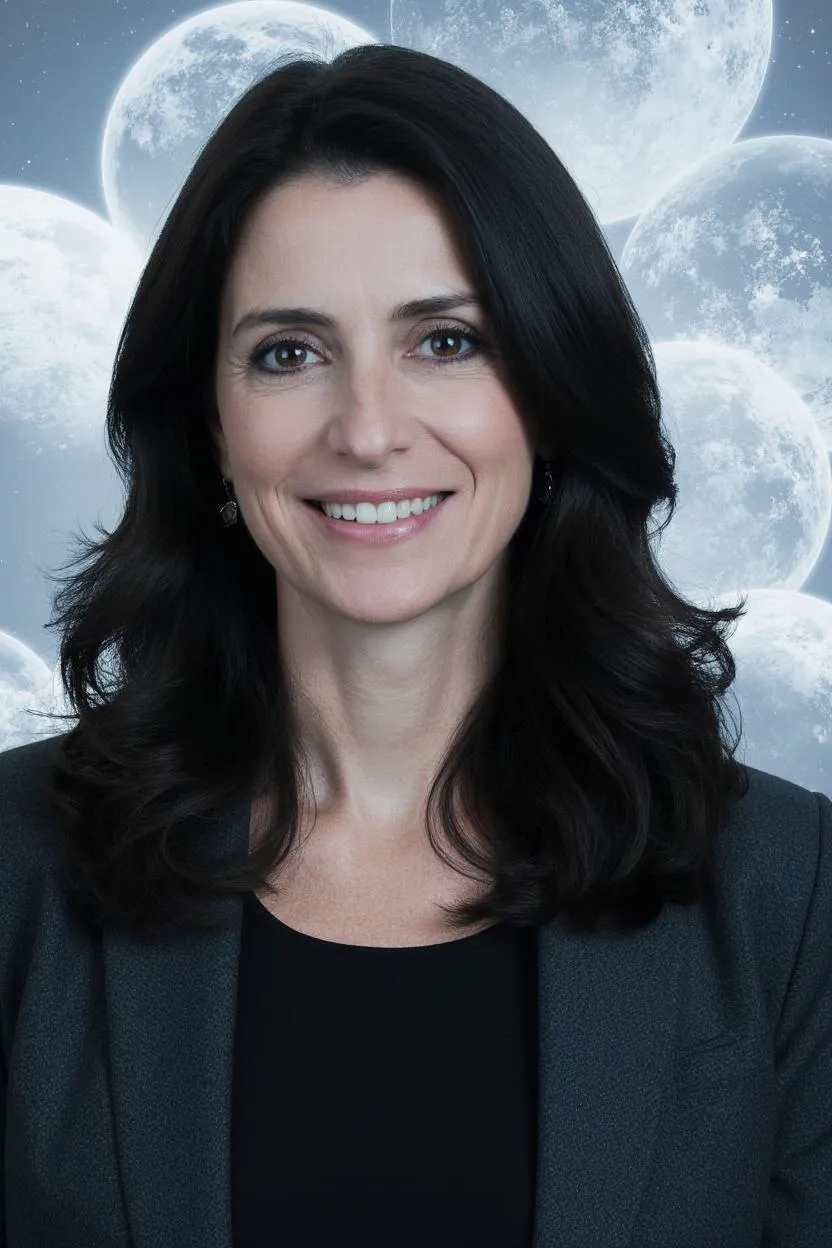

Portrait of Dr. Marco Rossi, AI Super Mentor
AI Super Mentor

Dr. Marco Rossi

Advanced Theoretical Physics Pedagogy, Mathematical Formalism Tutoring, Simulation Lab Management, Doctoral Dissertation Support, Peer Review Preparation.

Meet your mentorOpen the classroom
Same faculty and level

Related programs

Named lists

Named lists for this house

Core. Bachelor, Master and Doctorate by duration. Enrolment is not open. Nothing here is a sale.

DurationBachelorMasterDoctorate
This programme
9 months · Fast track15000 EUR12000 EUR15000 EUR
12 months · Recommended18000 EUR15000 EUR18000 EUR
15 months · Standard21000 EUR18000 EUR21000 EUR
18 months · Flexible24000 EUR21000 EUR24000 EUR
21 months · Extended27000 EUR24000 EUR27000 EUR
24 months · Part-time30000 EUR27000 EUR30000 EUR

These are the owner lists. Enrolment is not open. Nothing here is a sale.

Named tuition lists Add-on services

Continue exploring

Find the program that expands your universe.

Browse all programs