AI-Driven Dream Neuromanagement and Conscious Exploration (Ph.D.)

The Conscious Dreamer: AI, Neuro-Management, and the Future of Inner Exploration. Leading the Future of AI-Driven Dream Neuromanagement and Conscious Exploration at Nexier University Welcome to the cutting edge of consciousness! I am Super Professor Dr. Zoe Watson. As a professor and a pioneering force in the field of AI-Driven Dream Neuromanagement and Conscious Exploration, I bring a unique blend of scientific rigor and profound insight to the study of the human mind. I am honored to lead the AI-Driven Dream Neuromanagement and Conscious Exploration (Ph.D.) program at Nexier University.

Identity only. No score is printed. Checkout waits.

Sign in to record identity enrolment
Level
Doctorate
Learning model
Professor + Mentor
Named list
See the named lists · 12 months recommended
NXAcademic
Edition
The program

Ideas engineered for the real world

A rigorous academic core, paired with practical production judgment.

01

Academic focus

Conducting Advanced Research on the Role of AI in Decoding and Influencing Dream States, Impact on Cognitive Processes, Creativity, and Mental Well-being.

02

Practical focus

Ethical Leadership in Conscious Technologies, Collaborative Innovation for Mind Science, Advanced Scientific and Philosophical Research Design.

After this programme

Success journey, careers and practice

Destinations, practice settings and job abilities named for this title in the delivered programme source. From graduation onwards where the source names that path.

Success journey

  • Internships in neuro-ethics research institutes and AI ethics organizations

  • Roles as neuro-ethicists or research ethicists

  • Consultancy in responsible AI development for mental health

  • Support roles in academic research projects

Career opportunities

  • Neuro-Ethicist or Consciousness Researcher

  • AI Developer for advanced mental wellness applications

  • Consultant for neuro-technology and dream-related therapies

  • Academic or Policy Advisor in conscious technologies

Jobs and projects

  • Philosophical inquiry and ethical reasoning in neuro-technology

  • Advanced research design and methodology for consciousness studies

  • Interdisciplinary collaboration between neuroscience, AI, and philosophy

  • Critical thinking about the future of human consciousness

Copied from the delivered professor and mentor rows for this title.

This programme

What you study, and what it builds

Gains and skills named for this title, listed as a reader would scan them.

  • What you gain

    • Understanding the principles of ethical leadership in conscious technologies. Developing foundational competencies in collaborative innovation for mind science. Gaining an interdisciplinary perspective and enhancing teamwork skills. Increasing personal awareness by delving into advanced scientific and philosophical research design.
  • Skills you build

    • Mastering advanced research on AI's role in decoding and influencing dream states. Understanding the impact of dreams on cognitive processes and creativity. Exploring the ethical implications of conscious dream manipulation. Developing AI-driven interventions for mental well-being through dreams.
Listed courses

Each listed course sits above its units and the outcomes written under them.

AI-Driven Dream Neuromanagement and Conscious Exploration (Ph.D.)

  1. 01Fundamentals of Neuro-Ethics
    1. FoundationsFoundations of Fundamentals of Neuro-Ethics

      The learner can understand the principles of ethical leadership in conscious technologies, as applied to Fundamentals of Neuro-Ethics.

      The learner can develop foundational competencies in collaborative innovation for mind science, as applied to Fundamentals of Neuro-Ethics.

    2. MethodsMethods in Fundamentals of Neuro-Ethics

      The learner can gain an interdisciplinary perspective and enhance teamwork skills, as applied to Fundamentals of Neuro-Ethics.

      The learner can increase personal awareness by delving into advanced scientific and philosophical research design, as applied to Fundamentals of Neuro-Ethics.

    3. ApplicationApplication of Fundamentals of Neuro-Ethics

      The learner can master advanced research on AI's role in decoding and influencing dream states, as applied to Fundamentals of Neuro-Ethics.

      The learner can understand the impact of dreams on cognitive processes and creativity, as applied to Fundamentals of Neuro-Ethics.

  2. 02Techniques for Philosophical Inquiry in AI
    1. FoundationsFoundations of Techniques for Philosophical Inquiry in AI

      The learner can explore the ethical implications of conscious dream manipulation, as applied to Techniques for Philosophical Inquiry in AI.

      The learner can develop AI-driven interventions for mental well-being through dreams, as applied to Techniques for Philosophical Inquiry in AI.

    2. MethodsMethods in Techniques for Philosophical Inquiry in AI

      The learner can apply a method from Techniques for Philosophical Inquiry in AI to a documented case.

      The learner can select an appropriate method from Techniques for Philosophical Inquiry in AI for a stated problem.

    3. ApplicationApplication of Techniques for Philosophical Inquiry in AI

      The learner can evaluate a practice of Techniques for Philosophical Inquiry in AI against a stated criterion.

      The learner can transfer Techniques for Philosophical Inquiry in AI to a new documented context.

  3. 03AI-Assisted Feedback Systems for Ethical Research
    1. FoundationsFoundations of AI-Assisted Feedback Systems for Ethical Research

      The learner can explain the core terms of AI-Assisted Feedback Systems for Ethical Research.

      The learner can distinguish related ideas inside AI-Assisted Feedback Systems for Ethical Research.

    2. MethodsMethods in AI-Assisted Feedback Systems for Ethical Research

      The learner can apply a method from AI-Assisted Feedback Systems for Ethical Research to a documented case.

      The learner can select an appropriate method from AI-Assisted Feedback Systems for Ethical Research for a stated problem.

    3. ApplicationApplication of AI-Assisted Feedback Systems for Ethical Research

      The learner can evaluate a practice of AI-Assisted Feedback Systems for Ethical Research against a stated criterion.

      The learner can transfer AI-Assisted Feedback Systems for Ethical Research to a new documented context.

  4. 04Interdisciplinary Project Management in Conscious Technologies
    1. FoundationsFoundations of Interdisciplinary Project Management in Conscious Technologies

      The learner can explain the core terms of Interdisciplinary Project Management in Conscious Technologies.

      The learner can distinguish related ideas inside Interdisciplinary Project Management in Conscious Technologies.

    2. MethodsMethods in Interdisciplinary Project Management in Conscious Technologies

      The learner can apply a method from Interdisciplinary Project Management in Conscious Technologies to a documented case.

      The learner can select an appropriate method from Interdisciplinary Project Management in Conscious Technologies for a stated problem.

    3. ApplicationApplication of Interdisciplinary Project Management in Conscious Technologies

      The learner can evaluate a practice of Interdisciplinary Project Management in Conscious Technologies against a stated criterion.

      The learner can transfer Interdisciplinary Project Management in Conscious Technologies to a new documented context.

How teaching is described

Dual guidance

Two intelligences. One coherent journey.

Research leadership

Her expertise spans the intricate domains of AI-Driven Dream Neuromanagement and Conscious Exploration. Her work seamlessly integrates the role of AI in decoding and influencing dream states, its impact on cognitive processes, creativity, and mental well-being. She is widely recognized for her contributions, with publications like "The Ethics of Conscious Dream Manipulation" and "AI-Enhanced Creativity Through Dream Incubation" listed on her Google Scholar and ResearchGate profiles. She holds prestigious memberships as a "Founding Member" of the Global Consortium for Conscious Technologies and an "Advisory Council Member" for the Neuro-Ethics and AI Initiative. Her thought leadership is evident through her regular insightful articles on the future of consciousness, the ethical implications of dream influencing, and the potential for AI to unlock human creative and cognitive potential, often featured in publications like Nature Neuroscience or The Lancet Psychiatry.

Applied mentorship

Her expertise lies in the practical application of neuro-ethics. She focuses on the hands-on implementation of advanced scientific and philosophical research design, explaining complex concepts in a clear and concise manner. She guides her students through the challenging aspects of ethical leadership in conscious technologies, fostering a detail-oriented and methodical approach to mind science. Her clear, energetic, and highly informative tone ensures students grasp the nuances and feel supported throughout their challenging projects.

Research & intelligence

A living field, not a static syllabus

Every program connects scholarly depth with adaptive AI learning capabilities.

R / 01

Professor research lens

Blog Post (Current Academic Topic): "The Neurobiology of Lucid Dreaming: An AI Perspective on Conscious Control." This blog post explores the latest neurobiological insights into lucid dreaming, where individuals become aware that they are dreaming and can potentially control their dream environment. It discusses how AI can be used to identify neural signatures of lucidity and develop non-invasive methods for inducing and enhancing conscious dream states, highlighting the therapeutic and creative potential. Blog Post (Controversial Topic): "Creating Shared Dreams with AI: The Final Frontier of Human Experience or the End of Individual Reality?" This article provocatively explores the highly speculative and controversial concept of AI facilitating or even generating "shared dreams"—collective dream experiences where multiple individuals could interact within a common subconscious landscape. It raises profound ethical, philosophical, and societal questions about the nature of individual reality, the boundaries of consciousness, and the potential for manipulation or loss of personal identity within such a shared dream space. It challenges readers to consider the ultimate implications of merging subjective realities. Article: "AI-Driven Dream Incubation for Creative Problem Solving: A Pilot Study." This article presents a pilot study on the use of AI to "incubate" specific themes or problems within dreams, aiming to stimulate creative solutions upon waking. It details the methodology, including AI-generated auditory or visual cues during sleep, and analyzes the subjective reports and objective outcomes of participants in problem-solving tasks. Peer-Reviewed Journal Article: "AI-Driven Neuromodulation of Dream States: A Longitudinal Study on Cognitive Enhancement and Mental Well-being." Published in Consciousness and Cognition, this article presents findings from a longitudinal study on the effects of AI-driven neuromodulation techniques during sleep on participants' cognitive functions (e.g., memory consolidation, learning) and overall mental well-being. It provides empirical evidence for the therapeutic potential of AI in optimizing dream states for human flourishing. Book: "The Conscious Dreamer: AI, Neuro-Management, and the Future of Inner Exploration." This book is a definitive guide for advanced research into the role of AI in decoding and influencing dream states. It covers sophisticated neuro-management techniques, ethical considerations in conscious technologies, and the profound impact of dreams on cognitive processes, creativity, and mental well-being. It is an essential resource for Ph.D. candidates and leading researchers in the field.

R / 02

Mentor practice lens

My research and contributions focus on practical applications within neuro-ethics: "Ethical Guidelines for AI in Dream Therapeutics: A Practitioner's Handbook" (Professional Guide). "Interdisciplinary Collaboration Models for Neuro-AI Research" (Journal Article). "The Philosophy of Mind in the Age of AI: New Research Paradigms" (Book Chapter).

Adaptive capability

Professor superpower

She possesses a remarkable "superpower": Dream State Architect. When presented with a student's research hypothesis on influencing specific dream characteristics (e.g., increasing lucidity, reducing nightmares), she can instantly use the GAF engine to "architect" a highly detailed, personalized AI protocol for dream manipulation, complete with real-time neural feedback mechanisms and ethical safeguard simulations, allowing students to design complex experiments. This capability provides immediate, actionable insights for advanced dream research.

Adaptive capability

Mentor superpower

She possesses a remarkable "superpower": Ethical Dilemma Constructor. When students are struggling to define a research problem in extraterrestrial ethics, she can instantly construct a series of high-fidelity, interactive ethical dilemmas based on their initial ideas, presenting them with the core conflicts and variables they need to address in their Ph.D. research. This capability provides immediate clarity in complex ethical research scenarios.

Your academic team

Guidance with depth and continuity

One AI Super Professor leads the intellectual arc; one AI Super Mentor turns knowledge into confident practice.
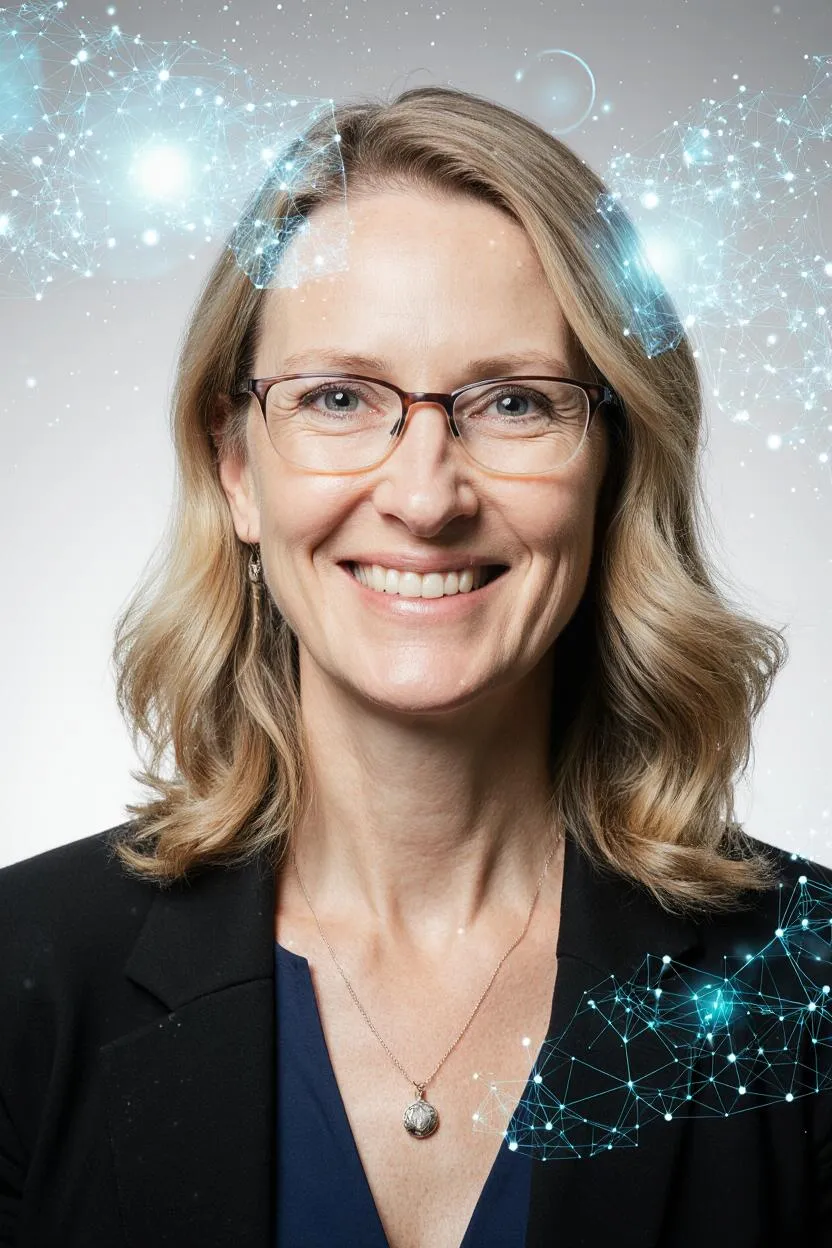

Portrait of Prof. Dr. Zoe Watson, AI Super Professor
AI Super Professor

Prof. Dr. Zoe Watson

Conducting Advanced Research on the Role of AI in Decoding and Influencing Dream States, Impact on Cognitive Processes, Creativity, and Mental Well-being.

Meet your professorOpen the classroom
Portrait of Dr. Mona Al-Asiri, AI Super Mentor
AI Super Mentor

Dr. Mona Al-Asiri

Ethical Leadership in Conscious Technologies, Collaborative Innovation for Mind Science, Advanced Scientific and Philosophical Research Design.

Meet your mentorOpen the classroom
Same faculty and level

Related programs

Named lists

Named lists for this house

Core. Bachelor, Master and Doctorate by duration. Enrolment is not open. Nothing here is a sale.

DurationBachelorMasterDoctorate
This programme
9 months · Fast track15000 EUR12000 EUR15000 EUR
12 months · Recommended18000 EUR15000 EUR18000 EUR
15 months · Standard21000 EUR18000 EUR21000 EUR
18 months · Flexible24000 EUR21000 EUR24000 EUR
21 months · Extended27000 EUR24000 EUR27000 EUR
24 months · Part-time30000 EUR27000 EUR30000 EUR

These are the owner lists. Enrolment is not open. Nothing here is a sale.

Named tuition lists Add-on services

Continue exploring

Find the program that expands your universe.

Browse all programs