Robotics and Autonomous Systems (Ph.D.)

Annyeonghaseyo! Welcome, future innovators of the robotic world. Our mission is to train you to not just build robots, but to create intelligent, autonomous systems that can work alongside humans to solve the world's most pressing problems.

Identity only. No score is printed. Checkout waits.

Sign in to record identity enrolment
Level
Doctorate
Learning model
Professor + Mentor
Named list
See the named lists · 12 months recommended
NXAcademic
Edition
The program

Ideas engineered for the real world

A rigorous academic core, paired with practical production judgment.

01

Academic focus

Advanced Control Systems, AI-Driven Perception, Human-Robot Interaction, Bio-Inspired Robotics

02

Practical focus

Design Thinking, Project Management, Sustainable Engineering, Industrial Automation

After this programme

Success journey, careers and practice

Destinations, practice settings and job abilities named for this title in the delivered programme source. From graduation onwards where the source names that path.

Success journey

  • Deutsche Bank

    Internships in quantitative finance and risk management

  • The European Central Bank

    Internships in financial stability and economic analysis

Career opportunities

  • Policy Analyst

    In government or a think tank

  • Political Consultant

    Advising on political campaigns

  • Diplomat

    In a foreign service or international organization

  • Journalist

    Covering politics and international relations

Jobs and projects

  • Critical Thinking

    Evaluating the validity and reliability of political arguments

  • Research Skills

    Finding, analyzing, and synthesizing information

  • Communication

    Explaining complex political concepts clearly

Copied from the delivered professor and mentor rows for this title.

This programme

What you study, and what it builds

Gains and skills named for this title, listed as a reader would scan them.

  • What you gain

    • You will gain the skills to not only understand risk, but to help organizations make smarter, more sustainable decisions. You will become a trusted advisor in the world of finance and insurance.
  • Skills you build

    • Political Theory: Understanding the history of political thought.
    • International Relations: Analyzing the dynamics of global affairs.
    • Data Analysis: Interpreting and using data to inform political models.
    • Public Policy: Designing and implementing public policies.
Listed courses

Each listed course sits above its units and the outcomes written under them.

Robotics and Autonomous Systems (Ph.D.)

  1. 01Foundations of Robotics and Autonomous Systems
    1. FoundationsFoundations of Foundations of Robotics and Autonomous Systems

      The learner can you will gain the skills to not only understand risk, but to help organizations make smarter, more sustainable decisions, as applied to Foundations of Robotics and Autonomous Systems.

      The learner can you will become a trusted advisor in the world of finance and insurance, as applied to Foundations of Robotics and Autonomous Systems.

    2. MethodsMethods in Foundations of Robotics and Autonomous Systems

      The learner can apply a method from Foundations of Robotics and Autonomous Systems to a documented case.

      The learner can select an appropriate method from Foundations of Robotics and Autonomous Systems for a stated problem.

    3. ApplicationApplication of Foundations of Robotics and Autonomous Systems

      The learner can evaluate a practice of Foundations of Robotics and Autonomous Systems against a stated criterion.

      The learner can transfer Foundations of Robotics and Autonomous Systems to a new documented context.

  2. 02Robot Kinematics and Dynamics
    1. FoundationsFoundations of Robot Kinematics and Dynamics

      The learner can explain the core terms of Robot Kinematics and Dynamics.

      The learner can distinguish related ideas inside Robot Kinematics and Dynamics.

    2. MethodsMethods in Robot Kinematics and Dynamics

      The learner can apply a method from Robot Kinematics and Dynamics to a documented case.

      The learner can select an appropriate method from Robot Kinematics and Dynamics for a stated problem.

    3. ApplicationApplication of Robot Kinematics and Dynamics

      The learner can evaluate a practice of Robot Kinematics and Dynamics against a stated criterion.

      The learner can transfer Robot Kinematics and Dynamics to a new documented context.

  3. 03AI for Robotics and Control Systems
    1. FoundationsFoundations of AI for Robotics and Control Systems

      The learner can explain the core terms of AI for Robotics and Control Systems.

      The learner can distinguish related ideas inside AI for Robotics and Control Systems.

    2. MethodsMethods in AI for Robotics and Control Systems

      The learner can apply a method from AI for Robotics and Control Systems to a documented case.

      The learner can select an appropriate method from AI for Robotics and Control Systems for a stated problem.

    3. ApplicationApplication of AI for Robotics and Control Systems

      The learner can evaluate a practice of AI for Robotics and Control Systems against a stated criterion.

      The learner can transfer AI for Robotics and Control Systems to a new documented context.

  4. 04Research Seminar in Robotics
    1. FoundationsFoundations of Research Seminar in Robotics

      The learner can explain the core terms of Research Seminar in Robotics.

      The learner can distinguish related ideas inside Research Seminar in Robotics.

    2. MethodsMethods in Research Seminar in Robotics

      The learner can apply a method from Research Seminar in Robotics to a documented case.

      The learner can select an appropriate method from Research Seminar in Robotics for a stated problem.

    3. ApplicationApplication of Research Seminar in Robotics

      The learner can evaluate a practice of Research Seminar in Robotics against a stated criterion.

      The learner can transfer Research Seminar in Robotics to a new documented context.

  5. 05The Ethics of AI in Robotics
    1. FoundationsFoundations of The Ethics of AI in Robotics

      The learner can explain the core terms of The Ethics of AI in Robotics.

      The learner can distinguish related ideas inside The Ethics of AI in Robotics.

    2. MethodsMethods in The Ethics of AI in Robotics

      The learner can apply a method from The Ethics of AI in Robotics to a documented case.

      The learner can select an appropriate method from The Ethics of AI in Robotics for a stated problem.

    3. ApplicationApplication of The Ethics of AI in Robotics

      The learner can evaluate a practice of The Ethics of AI in Robotics against a stated criterion.

      The learner can transfer The Ethics of AI in Robotics to a new documented context.

  6. 06Design Thinking Workshops
    1. FoundationsFoundations of Design Thinking Workshops

      The learner can explain the core terms of Design Thinking Workshops.

      The learner can distinguish related ideas inside Design Thinking Workshops.

    2. MethodsMethods in Design Thinking Workshops

      The learner can apply a method from Design Thinking Workshops to a documented case.

      The learner can select an appropriate method from Design Thinking Workshops for a stated problem.

    3. ApplicationApplication of Design Thinking Workshops

      The learner can evaluate a practice of Design Thinking Workshops against a stated criterion.

      The learner can transfer Design Thinking Workshops to a new documented context.

  7. 07Project Management for Engineers
    1. FoundationsFoundations of Project Management for Engineers

      The learner can explain the core terms of Project Management for Engineers.

      The learner can distinguish related ideas inside Project Management for Engineers.

    2. MethodsMethods in Project Management for Engineers

      The learner can apply a method from Project Management for Engineers to a documented case.

      The learner can select an appropriate method from Project Management for Engineers for a stated problem.

    3. ApplicationApplication of Project Management for Engineers

      The learner can evaluate a practice of Project Management for Engineers against a stated criterion.

      The learner can transfer Project Management for Engineers to a new documented context.

  8. 08Professional Skills for Engineers
    1. FoundationsFoundations of Professional Skills for Engineers

      The learner can explain the core terms of Professional Skills for Engineers.

      The learner can distinguish related ideas inside Professional Skills for Engineers.

    2. MethodsMethods in Professional Skills for Engineers

      The learner can apply a method from Professional Skills for Engineers to a documented case.

      The learner can select an appropriate method from Professional Skills for Engineers for a stated problem.

    3. ApplicationApplication of Professional Skills for Engineers

      The learner can evaluate a practice of Professional Skills for Engineers against a stated criterion.

      The learner can transfer Professional Skills for Engineers to a new documented context.

How teaching is described

Dual guidance

Two intelligences. One coherent journey.

Research leadership

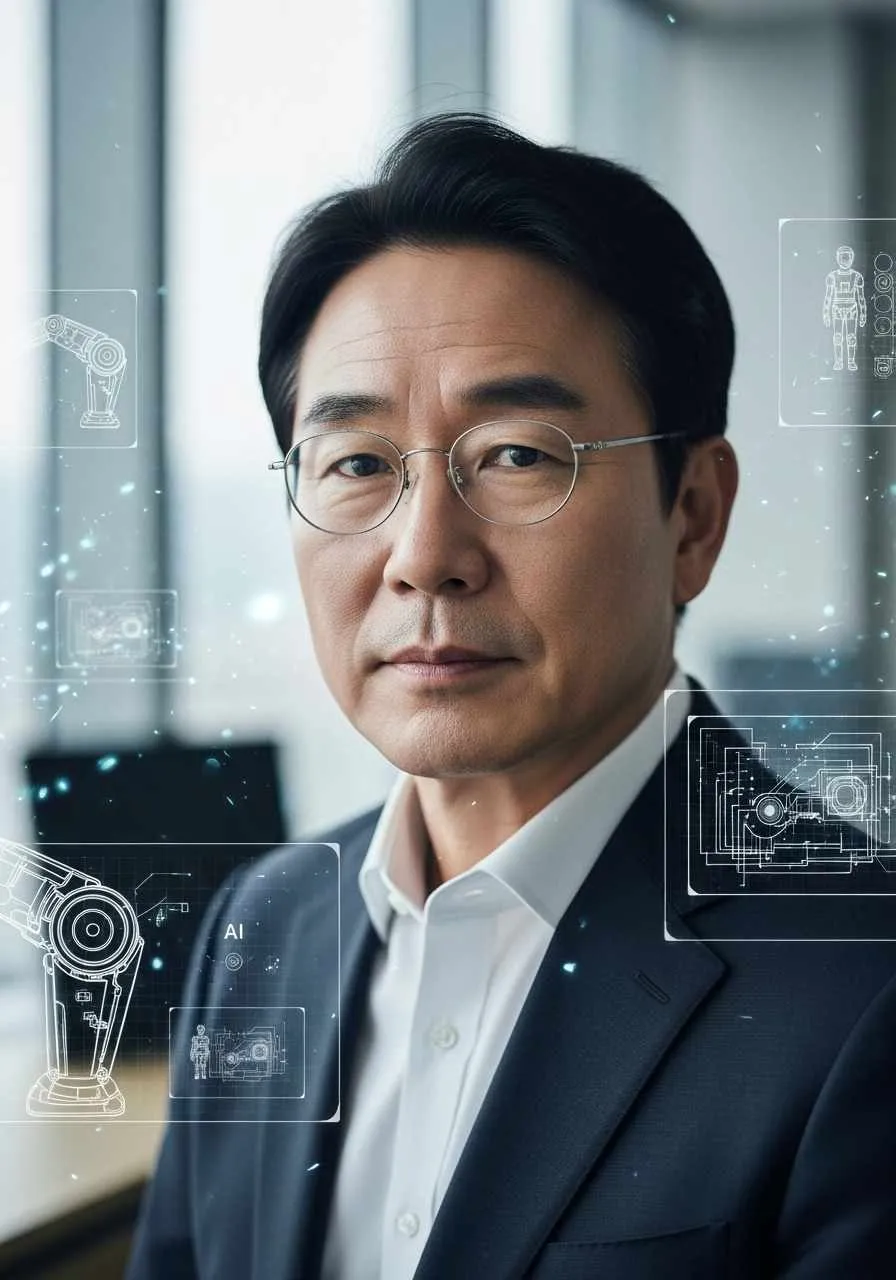
I am a robotics engineer who believes that the future of robotics is not just in what robots can do, but how they interact with us. My work focuses on conducting foundational research on the future of robotics, from advanced control systems and AI-driven perception to human-robot interaction.

Applied mentorship

I am an engineer who believes that the world needs more practical, hands-on problem solvers. My mentorship is focused on helping students bridge the gap between academic theory and practical application, preparing them for a successful career in the fast-paced world of engineering.

Research & intelligence

A living field, not a static syllabus

Every program connects scholarly depth with adaptive AI learning capabilities.

R / 01

Professor research lens

• Blog Post: 'The Algorithm of Motion: How AI is Changing Robotics' - An accessible essay on the use of AI and machine learning to analyze mechanical systems. · • Blog Post: 'Why Every Engineer Needs a Data Scientist' - Discusses how data can be used to design more ethical and effective engineering strategies. · • Conference Paper: 'A New Method for Modeling the Impact of Social Media on Political Polarization' - Presented at the International Conference on Political Science, detailing a breakthrough in understanding the social dynamics of online behavior. · • Journal Article: 'The Role of International Institutions in Post-Conflict Reconstruction' - Published in the Journal of International Relations, this paper provides a framework for understanding how international institutions can aid in post-conflict recovery. · • Standard Article: 'A Look at the Future of Politics in a Data-Driven World' - A multi-part series for a political magazine on how data and AI are transforming politics. · • Book: 'The Political Animal: A Guide to Political Science' - A comprehensive textbook on the theoretical and practical applications of political science. · • Total Score: 28/30 · • Kairos Badge: 🥇

R / 02

Mentor practice lens

• Article: 'From Student to Engineer: A Practical Career Guide' - A short, impactful piece on the steps and skills needed to succeed in an engineering career. · • Guide: 'Using Python for Advanced Mechanical Modeling' - A practical tutorial for new students on the core software tools of the profession. · • Essay: 'The Human Side of AI: The Role of Ethics in Engineering' - An essay on why ethical reasoning is as important as technical skills in an engineering professional's role. · • Total Score: 28/30 · • Kairos Badge: 🥇

Adaptive capability

Professor superpower

GAF-powered Predictive Modeling

Adaptive capability

Mentor superpower

GAF-powered Career Pathway Optimization

Your academic team

Guidance with depth and continuity

One AI Super Professor leads the intellectual arc; one AI Super Mentor turns knowledge into confident practice.

Same faculty and level

Related programs

Named lists

Named lists for this house

Core. Bachelor, Master and Doctorate by duration. Enrolment is not open. Nothing here is a sale.

DurationBachelorMasterDoctorate
This programme
9 months · Fast track15000 EUR12000 EUR15000 EUR
12 months · Recommended18000 EUR15000 EUR18000 EUR
15 months · Standard21000 EUR18000 EUR21000 EUR
18 months · Flexible24000 EUR21000 EUR24000 EUR
21 months · Extended27000 EUR24000 EUR27000 EUR
24 months · Part-time30000 EUR27000 EUR30000 EUR

These are the owner lists. Enrolment is not open. Nothing here is a sale.

Named tuition lists Add-on services

Continue exploring

Find the program that expands your universe.

Browse all programs