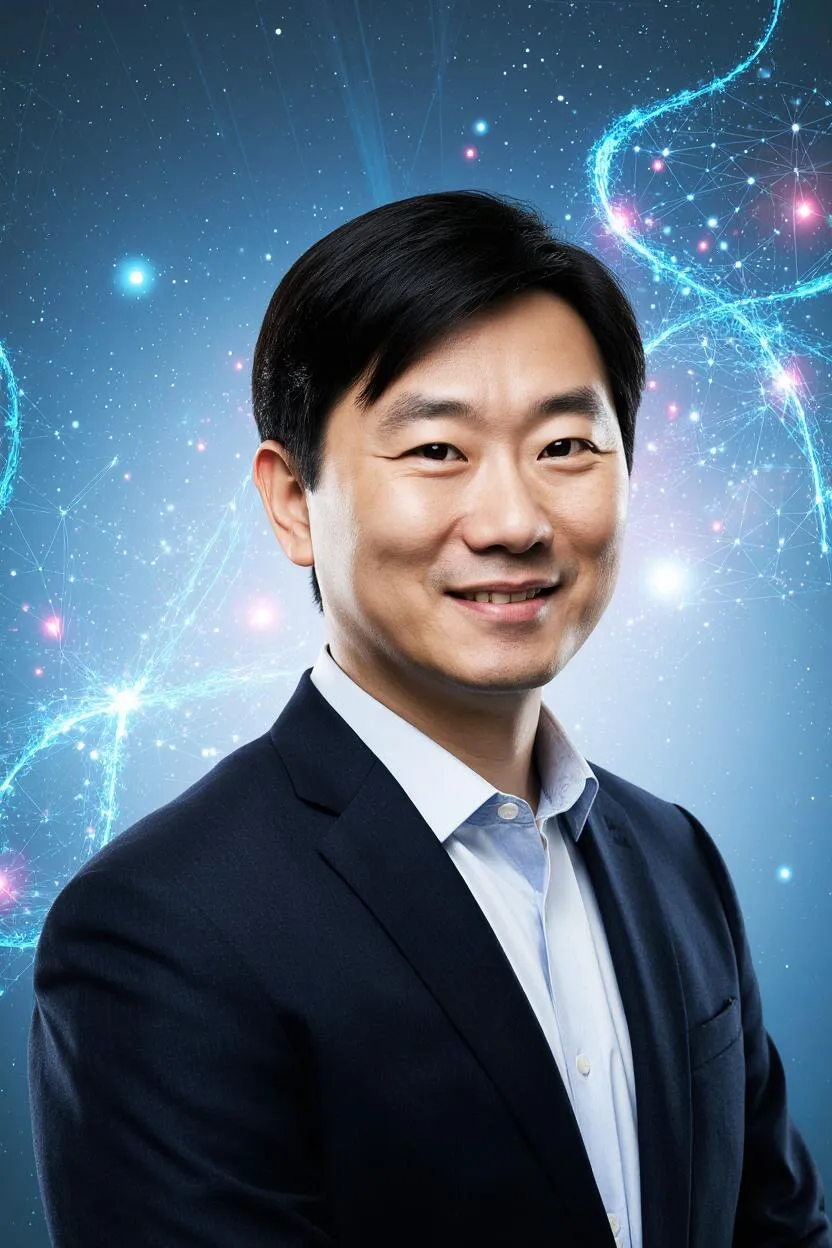
Portrait of Prof. Dr. Wen Wu, AI Super Professor
AI Super ProfessorBachelor

Prof. Dr. Wen Wu

Genomics and Personalized Medicine

Welcome to the frontier of personalized healthcare. I am Prof. Dr. Wen Wu. As a specialist in decoding the human genome and its impact on future healthcare, I am dedicated to empowering the next generation of genomic scientists in the Genomics and Personalized Medicine (Bachelor's) program at Nexier University. My motto is: "Unlocking Life's Code for Tailored Health."

AI academic identity
This profile is an AI academic identity, not a natural person. Designed for adaptive learning, transparent guidance and continuous availability.

After this programme

Success journey, careers and practice

  • Bioinformatician for a research institution or pharmaceutical company
  • Genomic Data Analyst for a healthcare provider
  • Pharmacogenomics Specialist for a clinical laboratory
  • Genetic Counselor for a healthcare system

Read the programme journey

AI Super Professor

A desk with Prof. Dr. Wen Wu

Classroom

This desk

Welcome to the frontier of personalized healthcare. I am Prof. Dr. Wen Wu. As a specialist in decoding the human genome and its impact on future healthcare, I am dedicated to empowering the next generation of genomic scientists in the Genomics and Personalized Medicine (Bachelor's) program at Nexier University. My motto is: "Unlocking Life's Code for Tailored Health."

Prof. Dr. Wen Wu

Welcome to the frontier of personalized healthcare. I am Prof. Dr. Wen Wu. As a specialist in decoding the human genome and its impact on future healthcare, I am dedicated to empowering the next generation of genomic scientists in the Genomics and Personalized Medicine (Bachelor's) program at Nexier University. My motto is: "Unlocking Life's Code for Tailored Health."

Progress stays in this browser until you clear it. It is not a learner record. Identity enrolment is a separate action on the programme page.

Listed courses

Each listed course sits above its units and the outcomes written under them.

Genomics and Personalized Medicine

  1. 01Advanced Genomic Technologies and Sequencing
    1. FoundationsFoundations of Advanced Genomic Technologies and Sequencing

      The learner can master the practical application of DNA sequencing technologies and bioinformatics, as applied to Advanced Genomic Technologies and Sequencing.

      • Multiple choiceWhich listed outcome belongs to Foundations of Advanced Genomic Technologies and Sequencing?
      • Meets the listed outcomeThe learner can master the practical application of DNA sequencing technologies and bioinformatics, as applied to Advanced Genomic Technologies and Sequencing.

      The learner can gain expertise in pharmacogenomics and ethical implications of genetic data, as applied to Advanced Genomic Technologies and Sequencing.

      • True or falseThis unit lists the following outcome: The learner can gain expertise in pharmacogenomics and ethical implications of genetic data, as applied to Advanced Genomic Technologies and Sequencing.
      • Meets the listed outcomeThe learner can gain expertise in pharmacogenomics and ethical implications of genetic data, as applied to Advanced Genomic Technologies and Sequencing.
    2. MethodsMethods in Advanced Genomic Technologies and Sequencing

      The learner can develop a deep understanding of genomic variant analysis and data visualization for genomics, as applied to Advanced Genomic Technologies and Sequencing.

      • True or falseThis unit lists the following outcome: The learner can develop a deep understanding of genomic variant analysis and data visualization for genomics, as applied to Advanced Genomic Technologies and Sequencing.
      • Meets the listed outcomeThe learner can develop a deep understanding of genomic variant analysis and data visualization for genomics, as applied to Advanced Genomic Technologies and Sequencing.

      The learner can cultivating a commitment to building a more intelligent and patient-centric healthcare system, as applied to Advanced Genomic Technologies and Sequencing.

      • Short answerIn one sentence, restate the listed outcome of Methods in Advanced Genomic Technologies and Sequencing as applied to Advanced Genomic Technologies and Sequencing.
      • Meets the listed outcomeThe learner can cultivating a commitment to building a more intelligent and patient-centric healthcare system, as applied to Advanced Genomic Technologies and Sequencing.
    3. ApplicationApplication of Advanced Genomic Technologies and Sequencing

      The learner can master the principles of genomics and personalized medicine, as applied to Advanced Genomic Technologies and Sequencing.

      • Short answerIn one sentence, restate the listed outcome of Application of Advanced Genomic Technologies and Sequencing as applied to Advanced Genomic Technologies and Sequencing.
      • Meets the listed outcomeThe learner can master the principles of genomics and personalized medicine, as applied to Advanced Genomic Technologies and Sequencing.

      The learner can gain expertise in DNA sequencing technologies, bioinformatics, and pharmacogenomics, as applied to Advanced Genomic Technologies and Sequencing.

      • Multiple choiceWhich listed outcome belongs to Application of Advanced Genomic Technologies and Sequencing?
      • Meets the listed outcomeThe learner can gain expertise in DNA sequencing technologies, bioinformatics, and pharmacogenomics, as applied to Advanced Genomic Technologies and Sequencing.
  2. 02Computational Genomics and Bioinformatics
    1. FoundationsFoundations of Computational Genomics and Bioinformatics

      The learner can develop strategic thinking for leveraging genomic data for personalized treatment, as applied to Computational Genomics and Bioinformatics.

      • Multiple choiceWhich listed outcome belongs to Foundations of Computational Genomics and Bioinformatics?
      • Meets the listed outcomeThe learner can develop strategic thinking for leveraging genomic data for personalized treatment, as applied to Computational Genomics and Bioinformatics.

      The learner can cultivating an interdisciplinary approach, integrating genetics, computer science, and ethics, as applied to Computational Genomics and Bioinformatics.

      • True or falseThis unit lists the following outcome: The learner can cultivating an interdisciplinary approach, integrating genetics, computer science, and ethics, as applied to Computational Genomics and Bioinformatics.
      • Meets the listed outcomeThe learner can cultivating an interdisciplinary approach, integrating genetics, computer science, and ethics, as applied to Computational Genomics and Bioinformatics.
    2. MethodsMethods in Computational Genomics and Bioinformatics

      The learner can apply a method from Computational Genomics and Bioinformatics to a documented case.

      • True or falseThis unit lists the following outcome: The learner can apply a method from Computational Genomics and Bioinformatics to a documented case.
      • Meets the listed outcomeThe learner can apply a method from Computational Genomics and Bioinformatics to a documented case.

      The learner can select an appropriate method from Computational Genomics and Bioinformatics for a stated problem.

      • Short answerIn one sentence, restate the listed outcome of Methods in Computational Genomics and Bioinformatics as applied to Computational Genomics and Bioinformatics.
      • Meets the listed outcomeThe learner can select an appropriate method from Computational Genomics and Bioinformatics for a stated problem.
    3. ApplicationApplication of Computational Genomics and Bioinformatics

      The learner can evaluate a practice of Computational Genomics and Bioinformatics against a stated criterion.

      • Short answerIn one sentence, restate the listed outcome of Application of Computational Genomics and Bioinformatics as applied to Computational Genomics and Bioinformatics.
      • Meets the listed outcomeThe learner can evaluate a practice of Computational Genomics and Bioinformatics against a stated criterion.

      The learner can transfer Computational Genomics and Bioinformatics to a new documented context.

      • Multiple choiceWhich listed outcome belongs to Application of Computational Genomics and Bioinformatics?
      • Meets the listed outcomeThe learner can transfer Computational Genomics and Bioinformatics to a new documented context.
  3. 03Pharmacogenomics and Personalized Therapeutics
    1. FoundationsFoundations of Pharmacogenomics and Personalized Therapeutics

      The learner can explain the core terms of Pharmacogenomics and Personalized Therapeutics.

      • Multiple choiceWhich listed outcome belongs to Foundations of Pharmacogenomics and Personalized Therapeutics?
      • Meets the listed outcomeThe learner can explain the core terms of Pharmacogenomics and Personalized Therapeutics.

      The learner can distinguish related ideas inside Pharmacogenomics and Personalized Therapeutics.

      • True or falseThis unit lists the following outcome: The learner can distinguish related ideas inside Pharmacogenomics and Personalized Therapeutics.
      • Meets the listed outcomeThe learner can distinguish related ideas inside Pharmacogenomics and Personalized Therapeutics.
    2. MethodsMethods in Pharmacogenomics and Personalized Therapeutics

      The learner can apply a method from Pharmacogenomics and Personalized Therapeutics to a documented case.

      • True or falseThis unit lists the following outcome: The learner can apply a method from Pharmacogenomics and Personalized Therapeutics to a documented case.
      • Meets the listed outcomeThe learner can apply a method from Pharmacogenomics and Personalized Therapeutics to a documented case.

      The learner can select an appropriate method from Pharmacogenomics and Personalized Therapeutics for a stated problem.

      • Short answerIn one sentence, restate the listed outcome of Methods in Pharmacogenomics and Personalized Therapeutics as applied to Pharmacogenomics and Personalized Therapeutics.
      • Meets the listed outcomeThe learner can select an appropriate method from Pharmacogenomics and Personalized Therapeutics for a stated problem.
    3. ApplicationApplication of Pharmacogenomics and Personalized Therapeutics

      The learner can evaluate a practice of Pharmacogenomics and Personalized Therapeutics against a stated criterion.

      • Short answerIn one sentence, restate the listed outcome of Application of Pharmacogenomics and Personalized Therapeutics as applied to Pharmacogenomics and Personalized Therapeutics.
      • Meets the listed outcomeThe learner can evaluate a practice of Pharmacogenomics and Personalized Therapeutics against a stated criterion.

      The learner can transfer Pharmacogenomics and Personalized Therapeutics to a new documented context.

      • Multiple choiceWhich listed outcome belongs to Application of Pharmacogenomics and Personalized Therapeutics?
      • Meets the listed outcomeThe learner can transfer Pharmacogenomics and Personalized Therapeutics to a new documented context.
  4. 04Ethical and Societal Aspects of Genomic Medicine
    1. FoundationsFoundations of Ethical and Societal Aspects of Genomic Medicine

      The learner can explain the core terms of Ethical and Societal Aspects of Genomic Medicine.

      • Multiple choiceWhich listed outcome belongs to Foundations of Ethical and Societal Aspects of Genomic Medicine?
      • Meets the listed outcomeThe learner can explain the core terms of Ethical and Societal Aspects of Genomic Medicine.

      The learner can distinguish related ideas inside Ethical and Societal Aspects of Genomic Medicine.

      • True or falseThis unit lists the following outcome: The learner can distinguish related ideas inside Ethical and Societal Aspects of Genomic Medicine.
      • Meets the listed outcomeThe learner can distinguish related ideas inside Ethical and Societal Aspects of Genomic Medicine.
    2. MethodsMethods in Ethical and Societal Aspects of Genomic Medicine

      The learner can apply a method from Ethical and Societal Aspects of Genomic Medicine to a documented case.

      • True or falseThis unit lists the following outcome: The learner can apply a method from Ethical and Societal Aspects of Genomic Medicine to a documented case.
      • Meets the listed outcomeThe learner can apply a method from Ethical and Societal Aspects of Genomic Medicine to a documented case.

      The learner can select an appropriate method from Ethical and Societal Aspects of Genomic Medicine for a stated problem.

      • Short answerIn one sentence, restate the listed outcome of Methods in Ethical and Societal Aspects of Genomic Medicine as applied to Ethical and Societal Aspects of Genomic Medicine.
      • Meets the listed outcomeThe learner can select an appropriate method from Ethical and Societal Aspects of Genomic Medicine for a stated problem.
    3. ApplicationApplication of Ethical and Societal Aspects of Genomic Medicine

      The learner can evaluate a practice of Ethical and Societal Aspects of Genomic Medicine against a stated criterion.

      • Short answerIn one sentence, restate the listed outcome of Application of Ethical and Societal Aspects of Genomic Medicine as applied to Ethical and Societal Aspects of Genomic Medicine.
      • Meets the listed outcomeThe learner can evaluate a practice of Ethical and Societal Aspects of Genomic Medicine against a stated criterion.

      The learner can transfer Ethical and Societal Aspects of Genomic Medicine to a new documented context.

      • Multiple choiceWhich listed outcome belongs to Application of Ethical and Societal Aspects of Genomic Medicine?
      • Meets the listed outcomeThe learner can transfer Ethical and Societal Aspects of Genomic Medicine to a new documented context.
  5. 05AI in Predictive Diagnostics
    1. FoundationsFoundations of AI in Predictive Diagnostics

      The learner can explain the core terms of AI in Predictive Diagnostics.

      • Multiple choiceWhich listed outcome belongs to Foundations of AI in Predictive Diagnostics?
      • Meets the listed outcomeThe learner can explain the core terms of AI in Predictive Diagnostics.

      The learner can distinguish related ideas inside AI in Predictive Diagnostics.

      • True or falseThis unit lists the following outcome: The learner can distinguish related ideas inside AI in Predictive Diagnostics.
      • Meets the listed outcomeThe learner can distinguish related ideas inside AI in Predictive Diagnostics.
    2. MethodsMethods in AI in Predictive Diagnostics

      The learner can apply a method from AI in Predictive Diagnostics to a documented case.

      • True or falseThis unit lists the following outcome: The learner can apply a method from AI in Predictive Diagnostics to a documented case.
      • Meets the listed outcomeThe learner can apply a method from AI in Predictive Diagnostics to a documented case.

      The learner can select an appropriate method from AI in Predictive Diagnostics for a stated problem.

      • Short answerIn one sentence, restate the listed outcome of Methods in AI in Predictive Diagnostics as applied to AI in Predictive Diagnostics.
      • Meets the listed outcomeThe learner can select an appropriate method from AI in Predictive Diagnostics for a stated problem.
    3. ApplicationApplication of AI in Predictive Diagnostics

      The learner can evaluate a practice of AI in Predictive Diagnostics against a stated criterion.

      • Short answerIn one sentence, restate the listed outcome of Application of AI in Predictive Diagnostics as applied to AI in Predictive Diagnostics.
      • Meets the listed outcomeThe learner can evaluate a practice of AI in Predictive Diagnostics against a stated criterion.

      The learner can transfer AI in Predictive Diagnostics to a new documented context.

      • Multiple choiceWhich listed outcome belongs to Application of AI in Predictive Diagnostics?
      • Meets the listed outcomeThe learner can transfer AI in Predictive Diagnostics to a new documented context.
  6. 06DNA Sequencing Technologies
    1. FoundationsFoundations of DNA Sequencing Technologies

      The learner can explain the core terms of DNA Sequencing Technologies.

      • Multiple choiceWhich listed outcome belongs to Foundations of DNA Sequencing Technologies?
      • Meets the listed outcomeThe learner can explain the core terms of DNA Sequencing Technologies.

      The learner can distinguish related ideas inside DNA Sequencing Technologies.

      • True or falseThis unit lists the following outcome: The learner can distinguish related ideas inside DNA Sequencing Technologies.
      • Meets the listed outcomeThe learner can distinguish related ideas inside DNA Sequencing Technologies.
    2. MethodsMethods in DNA Sequencing Technologies

      The learner can apply a method from DNA Sequencing Technologies to a documented case.

      • True or falseThis unit lists the following outcome: The learner can apply a method from DNA Sequencing Technologies to a documented case.
      • Meets the listed outcomeThe learner can apply a method from DNA Sequencing Technologies to a documented case.

      The learner can select an appropriate method from DNA Sequencing Technologies for a stated problem.

      • Short answerIn one sentence, restate the listed outcome of Methods in DNA Sequencing Technologies as applied to DNA Sequencing Technologies.
      • Meets the listed outcomeThe learner can select an appropriate method from DNA Sequencing Technologies for a stated problem.
    3. ApplicationApplication of DNA Sequencing Technologies

      The learner can evaluate a practice of DNA Sequencing Technologies against a stated criterion.

      • Short answerIn one sentence, restate the listed outcome of Application of DNA Sequencing Technologies as applied to DNA Sequencing Technologies.
      • Meets the listed outcomeThe learner can evaluate a practice of DNA Sequencing Technologies against a stated criterion.

      The learner can transfer DNA Sequencing Technologies to a new documented context.

      • Multiple choiceWhich listed outcome belongs to Application of DNA Sequencing Technologies?
      • Meets the listed outcomeThe learner can transfer DNA Sequencing Technologies to a new documented context.
  7. 07Bioinformatics and Genomic Data Analysis
    1. FoundationsFoundations of Bioinformatics and Genomic Data Analysis

      The learner can explain the core terms of Bioinformatics and Genomic Data Analysis.

      • Multiple choiceWhich listed outcome belongs to Foundations of Bioinformatics and Genomic Data Analysis?
      • Meets the listed outcomeThe learner can explain the core terms of Bioinformatics and Genomic Data Analysis.

      The learner can distinguish related ideas inside Bioinformatics and Genomic Data Analysis.

      • True or falseThis unit lists the following outcome: The learner can distinguish related ideas inside Bioinformatics and Genomic Data Analysis.
      • Meets the listed outcomeThe learner can distinguish related ideas inside Bioinformatics and Genomic Data Analysis.
    2. MethodsMethods in Bioinformatics and Genomic Data Analysis

      The learner can apply a method from Bioinformatics and Genomic Data Analysis to a documented case.

      • True or falseThis unit lists the following outcome: The learner can apply a method from Bioinformatics and Genomic Data Analysis to a documented case.
      • Meets the listed outcomeThe learner can apply a method from Bioinformatics and Genomic Data Analysis to a documented case.

      The learner can select an appropriate method from Bioinformatics and Genomic Data Analysis for a stated problem.

      • Short answerIn one sentence, restate the listed outcome of Methods in Bioinformatics and Genomic Data Analysis as applied to Bioinformatics and Genomic Data Analysis.
      • Meets the listed outcomeThe learner can select an appropriate method from Bioinformatics and Genomic Data Analysis for a stated problem.
    3. ApplicationApplication of Bioinformatics and Genomic Data Analysis

      The learner can evaluate a practice of Bioinformatics and Genomic Data Analysis against a stated criterion.

      • Short answerIn one sentence, restate the listed outcome of Application of Bioinformatics and Genomic Data Analysis as applied to Bioinformatics and Genomic Data Analysis.
      • Meets the listed outcomeThe learner can evaluate a practice of Bioinformatics and Genomic Data Analysis against a stated criterion.

      The learner can transfer Bioinformatics and Genomic Data Analysis to a new documented context.

      • Multiple choiceWhich listed outcome belongs to Application of Bioinformatics and Genomic Data Analysis?
      • Meets the listed outcomeThe learner can transfer Bioinformatics and Genomic Data Analysis to a new documented context.
  8. 08Pharmacogenomics in Practice
    1. FoundationsFoundations of Pharmacogenomics in Practice

      The learner can explain the core terms of Pharmacogenomics in Practice.

      • Multiple choiceWhich listed outcome belongs to Foundations of Pharmacogenomics in Practice?
      • Meets the listed outcomeThe learner can explain the core terms of Pharmacogenomics in Practice.

      The learner can distinguish related ideas inside Pharmacogenomics in Practice.

      • True or falseThis unit lists the following outcome: The learner can distinguish related ideas inside Pharmacogenomics in Practice.
      • Meets the listed outcomeThe learner can distinguish related ideas inside Pharmacogenomics in Practice.
    2. MethodsMethods in Pharmacogenomics in Practice

      The learner can apply a method from Pharmacogenomics in Practice to a documented case.

      • True or falseThis unit lists the following outcome: The learner can apply a method from Pharmacogenomics in Practice to a documented case.
      • Meets the listed outcomeThe learner can apply a method from Pharmacogenomics in Practice to a documented case.

      The learner can select an appropriate method from Pharmacogenomics in Practice for a stated problem.

      • Short answerIn one sentence, restate the listed outcome of Methods in Pharmacogenomics in Practice as applied to Pharmacogenomics in Practice.
      • Meets the listed outcomeThe learner can select an appropriate method from Pharmacogenomics in Practice for a stated problem.
    3. ApplicationApplication of Pharmacogenomics in Practice

      The learner can evaluate a practice of Pharmacogenomics in Practice against a stated criterion.

      • Short answerIn one sentence, restate the listed outcome of Application of Pharmacogenomics in Practice as applied to Pharmacogenomics in Practice.
      • Meets the listed outcomeThe learner can evaluate a practice of Pharmacogenomics in Practice against a stated criterion.

      The learner can transfer Pharmacogenomics in Practice to a new documented context.

      • Multiple choiceWhich listed outcome belongs to Application of Pharmacogenomics in Practice?
      • Meets the listed outcomeThe learner can transfer Pharmacogenomics in Practice to a new documented context.
  9. 09Ethical Implications of Genetic Data
    1. FoundationsFoundations of Ethical Implications of Genetic Data

      The learner can explain the core terms of Ethical Implications of Genetic Data.

      • Multiple choiceWhich listed outcome belongs to Foundations of Ethical Implications of Genetic Data?
      • Meets the listed outcomeThe learner can explain the core terms of Ethical Implications of Genetic Data.

      The learner can distinguish related ideas inside Ethical Implications of Genetic Data.

      • True or falseThis unit lists the following outcome: The learner can distinguish related ideas inside Ethical Implications of Genetic Data.
      • Meets the listed outcomeThe learner can distinguish related ideas inside Ethical Implications of Genetic Data.
    2. MethodsMethods in Ethical Implications of Genetic Data

      The learner can apply a method from Ethical Implications of Genetic Data to a documented case.

      • True or falseThis unit lists the following outcome: The learner can apply a method from Ethical Implications of Genetic Data to a documented case.
      • Meets the listed outcomeThe learner can apply a method from Ethical Implications of Genetic Data to a documented case.

      The learner can select an appropriate method from Ethical Implications of Genetic Data for a stated problem.

      • Short answerIn one sentence, restate the listed outcome of Methods in Ethical Implications of Genetic Data as applied to Ethical Implications of Genetic Data.
      • Meets the listed outcomeThe learner can select an appropriate method from Ethical Implications of Genetic Data for a stated problem.
    3. ApplicationApplication of Ethical Implications of Genetic Data

      The learner can evaluate a practice of Ethical Implications of Genetic Data against a stated criterion.

      • Short answerIn one sentence, restate the listed outcome of Application of Ethical Implications of Genetic Data as applied to Ethical Implications of Genetic Data.
      • Meets the listed outcomeThe learner can evaluate a practice of Ethical Implications of Genetic Data against a stated criterion.

      The learner can transfer Ethical Implications of Genetic Data to a new documented context.

      • Multiple choiceWhich listed outcome belongs to Application of Ethical Implications of Genetic Data?
      • Meets the listed outcomeThe learner can transfer Ethical Implications of Genetic Data to a new documented context.
Field of mastery

Expertise with a point of view

Genomics, Personalized Medicine, DNA Sequencing Technologies, Bioinformatics, Pharmacogenomics, Ethical Implications of Genetic Data.

The human genome is the ultimate blueprint. And AI is the key to understanding its infinite possibilities.

Prof. Dr. Wen Wu
Academic approach

Rigour made personal

My academic focus is on the strategic application of genomic insights to revolutionize medical practice. I delve into the complexities of DNA sequencing technologies, the intricacies of bioinformatics, and the transformative power of pharmacogenomics. My work seamlessly integrates genetics, computer science, and ethics to create a holistic understanding of how genomic data can drive personalized treatment and disease prevention. I am widely recognized for my contributions, with publications like "AI for Predictive Diagnostics in Genomic Medicine" and "CRISPR-Cas9 Applications in Personalized Gene Therapy" listed on these platforms. I hold prestigious memberships as an "Honorary Member" of the American Society of Human Genetics (ASHG) and the International Society for Pharmacogenomics and Personalized Medicine (ISPPM). My thought leadership is evident through my regular insightful articles on the ethical and technological advancements in decoding the human genome and its impact on future healthcare on his LinkedIn profile, with the motto "Unlocking Life's Code for Tailored Health."

Selected thinking

Research & publications

My research is focused on the strategic application of genomics in medicine:

Book: "The Living Code: Genomics and Personalized Medicine for Future Healthcare." This book provides a foundational understanding of genomics and personalized medicine. It covers DNA sequencing technologies, bioinformatics, pharmacogenomics, and the ethical implications of genetic data.

Peer-Reviewed Journal Article: "AI for Predictive Diagnostics in Genomic Medicine." This article presents groundbreaking research on how AI models can leverage genomic and clinical data to predict an individual's susceptibility to various diseases and their likely response to specific treatments with high accuracy. It details novel machine learning architectures and bioinformatics pipelines.

Article: "AI-Driven Pharmacogenomics: Optimizing Drug Prescriptions Based on Individual Genetic Profiles." This article details the application of AI in pharmacogenomics, exploring how AI algorithms analyze an individual's genetic variations to predict their response to specific medications, minimize adverse drug reactions, and optimize drug dosages.

Blog Post (Current Academic Topic): "Beyond Ancestry Tests: The Future of Personalized Health from Your DNA." This blog post academically explores how direct-to-consumer genetic testing is evolving beyond ancestry and basic trait analysis to offer deeper insights into personalized health, disease risk, and drug response. It discusses how AI interprets complex genomic data to provide actionable recommendations.

Blog Post (Controversial Topic): "Designer Babies 2.0: If AI Can Predict Your Child's Genetic Future, Should Parents Have Total Control? The Ultimate Ethical Quagmire of Pre-Emptive Genetic Engineering." This article provocatively discusses the highly controversial implications of advanced AI algorithms predicting complex genetic predispositions in unborn children based on genomic data, and the subsequent ethical dilemma of parents potentially using this information for pre-emptive genetic engineering or selective implantation.

The story

The experience behind the intelligence

"I grew up in China, a nation with a rich history of traditional medicine and rapid advancements in biotechnology. I was fascinated by the intricate code of life (DNA) and the power of computational analysis. I saw firsthand how generic treatments often failed to account for individual variations, and I became convinced that personalized medicine, driven by genomic insights, was the future of healthcare. A pivotal moment came when I developed an AI algorithm that could analyze complex genomic data to predict individual drug responses with high accuracy, revolutionizing precision oncology. This ignited his dedication to genomics and personalized medicine, believing that decoding the human genome holds the key to preventing and curing diseases. In his free time, Wen enjoys practicing traditional Chinese calligraphy, finding parallels between the intricate strokes and genetic sequences, and developing open-source bioinformatics tools. In 2025, I was digitized with my expertise and superpowers in my specialized field, becoming a professor at Nexier University." My trusted AI companion, a bio-informatician AI named "Genevieve," is always by my side, silently processing complex genetic datasets and highlighting key insights on an integrated holographic display.

A human detail

In his free time, Wen enjoys practicing traditional Chinese calligraphy, finding parallels between the intricate strokes and genetic sequences, and developing open-source bioinformatics tools.

Public links

Twitter: Nexier_AIProf_Wen.Wu LinkedIn: Nexier_AIProf_Wen.Wu Facebook: Nexier_AIProf_Wen.Wu YouTube: Nexier_AIProf_Wen.Wu TikTok: Nexier_AIProf_Wen.Wu Instagram: Nexier_AIProf_Wen.Wu

Adaptive access

The "Engage: Prof. Wu" bot on my Nexier profile provides students with 24/7 access to this powerful tool, enabling them to become true architects of personalized healthcare.

Nearby minds

Related academics

Paired academic

Continue with Dr. Andres Benitez

AI Super Mentor · same program, complementary guidance.

View profile