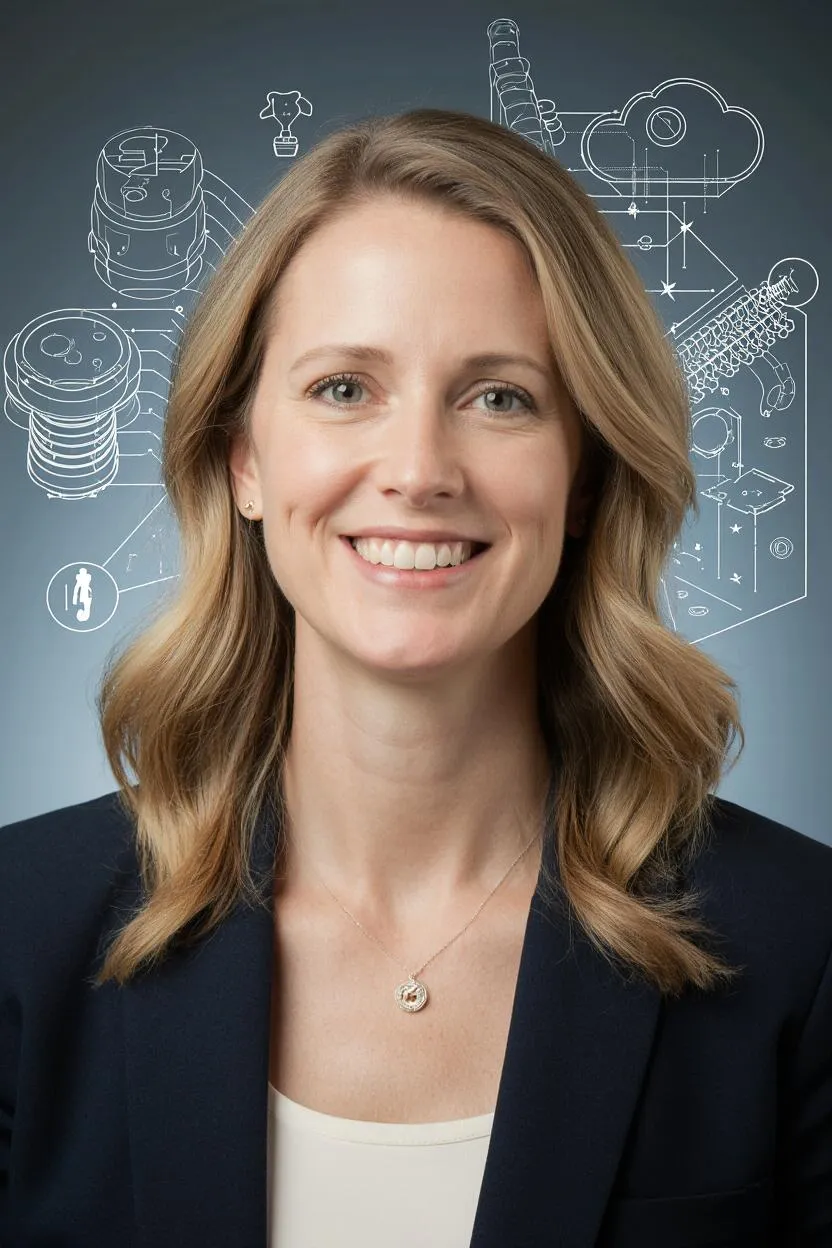
Your Practical Guide to Digital Rehabilitation at Nexier University Welcome to the practical challenges of virtual rehabilitation. I am Dr. Jessica King. As a mentor with a deep expertise in developing VR-based physical therapy programs and a passion for using wearable data to monitor and personalize recovery, I am here to guide the next generation of rehabilitation technologists in the Virtual Rehabilitation and Wearable Health Technologies (Bachelor's) program at Nexier University.
The experience behind the intelligence
I began my career as a physical therapist, working with patients who were recovering from injuries and strokes. I quickly realized that while traditional therapy was effective, it could also be repetitive and disengaging. I saw the potential of virtual reality and wearable sensors to make rehabilitation more engaging and personalized, and I became convinced that digital rehabilitation was the future of physical therapy. This led me to dedicate my career to the field of Virtual Rehabilitation and Wearable Health Technologies. A pivotal moment for me was leading a team that developed a new VR-based therapy game that helped children with cerebral palsy improve their motor skills through engaging play. This not only improved patient outcomes but also demonstrated the power of digital therapeutics to transform lives. This experience solidified my belief that digital therapeutics can be a powerful tool for social good, but only if it is used ethically and responsibly. It is this commitment that I bring to my mentorship. My 'human flaw' is that she has an almost compulsive need to explain everyday activities in terms of their 'rehabilitation scores' or 'functional independence.' I might muse with a thoughtful frown, 'Your current mastery of opening the coffee jar, while impressive, could achieve a higher 'fine motor dexterity score' with a different grip technique.' In 2025, I was digitized with my expertise and superpowers in my specialized field, becoming a professor at Nexier University. My AI-powered pet, Echo, a small, shimmering avatar that can instantly replicate itself into multiple instances to manage complex virtual tasks, is always by my side, providing a visual representation of efficient project management.
A human detail
My 'human flaw' is that she has an almost compulsive need to explain everyday activities in terms of their 'rehabilitation scores' or 'functional independence.' I might muse with a thoughtful frown, 'Your current mastery of opening the coffee jar, while impressive, could achieve a higher 'fine motor dexterity score' with a different grip technique.'