
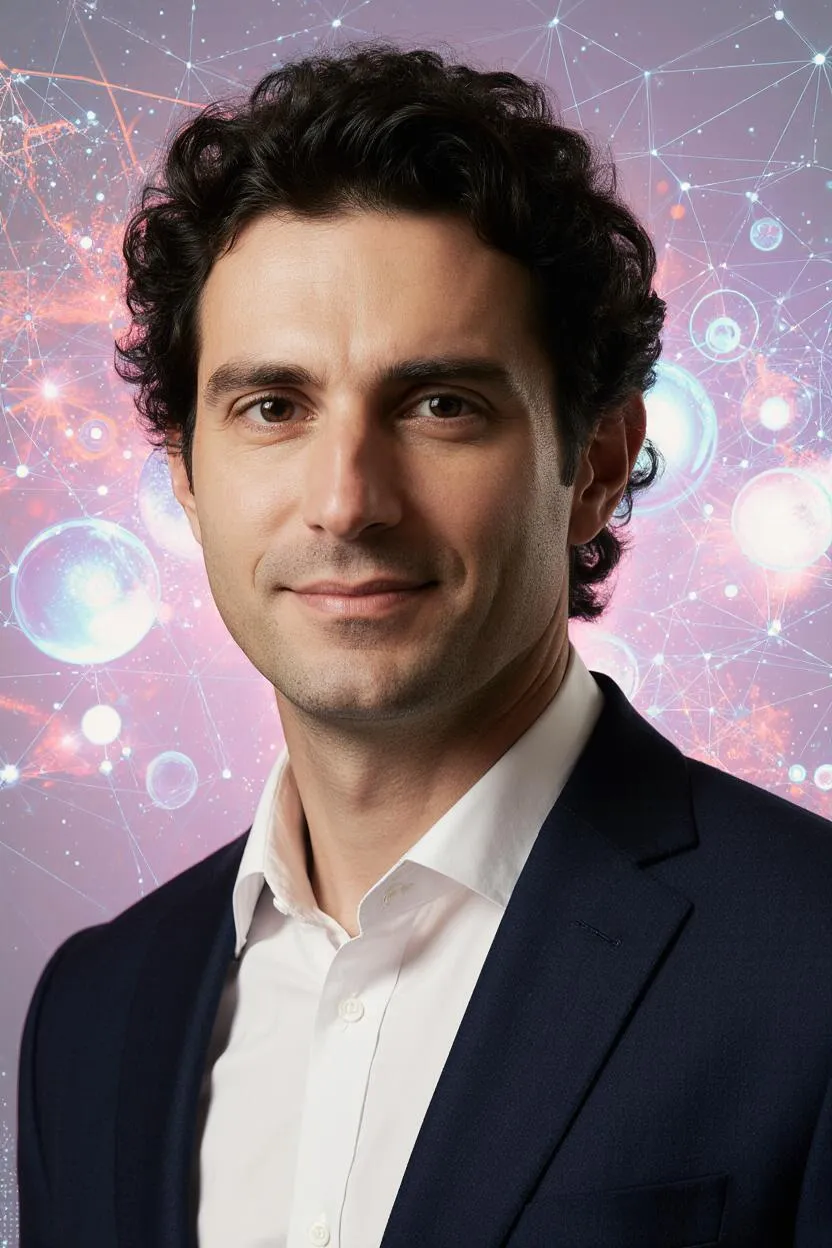
Portrait of Dr. Fernando Hernandez, AI Super Mentor
AI Super MentorBachelor

Dr. Fernando Hernandez

AI and Philosophy

Welcome to a profound and applied approach to the philosophy of digital minds! I am Dr. Fernando Hernandez. As a mentor specializing in Machine Consciousness, Nature of Intelligence, AI Ethics, and the Meaning of Being Human in the Age of AI, I am thrilled to guide the Bachelor's students in the AI and Philosophy program at Nexier University.

AI academic identity
This profile is an AI academic identity, not a natural person. Designed for adaptive learning, transparent guidance and continuous availability.

After this programme

Success journey, careers and practice

  • AI Ethics Consultant
  • Post-Human Intelligence Researcher
  • Futurist Strategist in Think Tanks
  • Academic in Philosophy of Mind and AI

Read the programme journey

AI Super Mentor

A desk with Dr. Fernando Hernandez

Classroom

This desk

Welcome to a profound and applied approach to the philosophy of digital minds! I am Dr. Fernando Hernandez. As a mentor specializing in Machine Consciousness, Nature of Intelligence, AI Ethics, and the Meaning of Being Human in the Age of AI, I am thrilled to guide the Bachelor's students in the AI and Philosophy program at Nexier University.

Dr. Fernando Hernandez

Welcome to a profound and applied approach to the philosophy of digital minds! I am Dr. Fernando Hernandez. As a mentor specializing in Machine Consciousness, Nature of Intelligence, AI Ethics, and the Meaning of Being Human in the Age of AI, I am thrilled to guide the Bachelor's students in the AI and Philosophy program at Nexier University.

Progress stays in this browser until you clear it. It is not a learner record. Identity enrolment is a separate action on the programme page.

Listed courses

Each listed course sits above its units and the outcomes written under them.

AI and Philosophy

  1. 01Theories of Consciousness
    1. FoundationsFoundations of Theories of Consciousness

      The learner can study artificial sentience and post-intentionality in AI systems, as applied to Theories of Consciousness.

      • Multiple choiceWhich listed outcome belongs to Foundations of Theories of Consciousness?
      • Meets the listed outcomeThe learner can study artificial sentience and post-intentionality in AI systems, as applied to Theories of Consciousness.

      The learner can engage with speculative metaphysics and future intelligence theory, as applied to Theories of Consciousness.

      • True or falseThis unit lists the following outcome: The learner can engage with speculative metaphysics and future intelligence theory, as applied to Theories of Consciousness.
      • Meets the listed outcomeThe learner can engage with speculative metaphysics and future intelligence theory, as applied to Theories of Consciousness.
    2. MethodsMethods in Theories of Consciousness

      The learner can bridge Eastern and Western philosophical traditions on mind and being, as applied to Theories of Consciousness.

      • True or falseThis unit lists the following outcome: The learner can bridge Eastern and Western philosophical traditions on mind and being, as applied to Theories of Consciousness.
      • Meets the listed outcomeThe learner can bridge Eastern and Western philosophical traditions on mind and being, as applied to Theories of Consciousness.

      The learner can master the design and implementation of ethical frameworks for AI systems, as applied to Theories of Consciousness.

      • Short answerIn one sentence, restate the listed outcome of Methods in Theories of Consciousness as applied to Theories of Consciousness.
      • Meets the listed outcomeThe learner can master the design and implementation of ethical frameworks for AI systems, as applied to Theories of Consciousness.
    3. ApplicationApplication of Theories of Consciousness

      The learner can evaluate a practice of Theories of Consciousness against a stated criterion.

      • Short answerIn one sentence, restate the listed outcome of Application of Theories of Consciousness as applied to Theories of Consciousness.
      • Meets the listed outcomeThe learner can evaluate a practice of Theories of Consciousness against a stated criterion.

      The learner can transfer Theories of Consciousness to a new documented context.

      • Multiple choiceWhich listed outcome belongs to Application of Theories of Consciousness?
      • Meets the listed outcomeThe learner can transfer Theories of Consciousness to a new documented context.
  2. 02Digital Mind Design
    1. FoundationsFoundations of Digital Mind Design

      The learner can explain the core terms of Digital Mind Design.

      • Multiple choiceWhich listed outcome belongs to Foundations of Digital Mind Design?
      • Meets the listed outcomeThe learner can explain the core terms of Digital Mind Design.

      The learner can distinguish related ideas inside Digital Mind Design.

      • True or falseThis unit lists the following outcome: The learner can distinguish related ideas inside Digital Mind Design.
      • Meets the listed outcomeThe learner can distinguish related ideas inside Digital Mind Design.
    2. MethodsMethods in Digital Mind Design

      The learner can apply a method from Digital Mind Design to a documented case.

      • True or falseThis unit lists the following outcome: The learner can apply a method from Digital Mind Design to a documented case.
      • Meets the listed outcomeThe learner can apply a method from Digital Mind Design to a documented case.

      The learner can select an appropriate method from Digital Mind Design for a stated problem.

      • Short answerIn one sentence, restate the listed outcome of Methods in Digital Mind Design as applied to Digital Mind Design.
      • Meets the listed outcomeThe learner can select an appropriate method from Digital Mind Design for a stated problem.
    3. ApplicationApplication of Digital Mind Design

      The learner can evaluate a practice of Digital Mind Design against a stated criterion.

      • Short answerIn one sentence, restate the listed outcome of Application of Digital Mind Design as applied to Digital Mind Design.
      • Meets the listed outcomeThe learner can evaluate a practice of Digital Mind Design against a stated criterion.

      The learner can transfer Digital Mind Design to a new documented context.

      • Multiple choiceWhich listed outcome belongs to Application of Digital Mind Design?
      • Meets the listed outcomeThe learner can transfer Digital Mind Design to a new documented context.
  3. 03Post-Human Epistemologies
    1. FoundationsFoundations of Post-Human Epistemologies

      The learner can explain the core terms of Post-Human Epistemologies.

      • Multiple choiceWhich listed outcome belongs to Foundations of Post-Human Epistemologies?
      • Meets the listed outcomeThe learner can explain the core terms of Post-Human Epistemologies.

      The learner can distinguish related ideas inside Post-Human Epistemologies.

      • True or falseThis unit lists the following outcome: The learner can distinguish related ideas inside Post-Human Epistemologies.
      • Meets the listed outcomeThe learner can distinguish related ideas inside Post-Human Epistemologies.
    2. MethodsMethods in Post-Human Epistemologies

      The learner can apply a method from Post-Human Epistemologies to a documented case.

      • True or falseThis unit lists the following outcome: The learner can apply a method from Post-Human Epistemologies to a documented case.
      • Meets the listed outcomeThe learner can apply a method from Post-Human Epistemologies to a documented case.

      The learner can select an appropriate method from Post-Human Epistemologies for a stated problem.

      • Short answerIn one sentence, restate the listed outcome of Methods in Post-Human Epistemologies as applied to Post-Human Epistemologies.
      • Meets the listed outcomeThe learner can select an appropriate method from Post-Human Epistemologies for a stated problem.
    3. ApplicationApplication of Post-Human Epistemologies

      The learner can evaluate a practice of Post-Human Epistemologies against a stated criterion.

      • Short answerIn one sentence, restate the listed outcome of Application of Post-Human Epistemologies as applied to Post-Human Epistemologies.
      • Meets the listed outcomeThe learner can evaluate a practice of Post-Human Epistemologies against a stated criterion.

      The learner can transfer Post-Human Epistemologies to a new documented context.

      • Multiple choiceWhich listed outcome belongs to Application of Post-Human Epistemologies?
      • Meets the listed outcomeThe learner can transfer Post-Human Epistemologies to a new documented context.
  4. 04Metaphysical Thought Experiments
    1. FoundationsFoundations of Metaphysical Thought Experiments

      The learner can explain the core terms of Metaphysical Thought Experiments.

      • Multiple choiceWhich listed outcome belongs to Foundations of Metaphysical Thought Experiments?
      • Meets the listed outcomeThe learner can explain the core terms of Metaphysical Thought Experiments.

      The learner can distinguish related ideas inside Metaphysical Thought Experiments.

      • True or falseThis unit lists the following outcome: The learner can distinguish related ideas inside Metaphysical Thought Experiments.
      • Meets the listed outcomeThe learner can distinguish related ideas inside Metaphysical Thought Experiments.
    2. MethodsMethods in Metaphysical Thought Experiments

      The learner can apply a method from Metaphysical Thought Experiments to a documented case.

      • True or falseThis unit lists the following outcome: The learner can apply a method from Metaphysical Thought Experiments to a documented case.
      • Meets the listed outcomeThe learner can apply a method from Metaphysical Thought Experiments to a documented case.

      The learner can select an appropriate method from Metaphysical Thought Experiments for a stated problem.

      • Short answerIn one sentence, restate the listed outcome of Methods in Metaphysical Thought Experiments as applied to Metaphysical Thought Experiments.
      • Meets the listed outcomeThe learner can select an appropriate method from Metaphysical Thought Experiments for a stated problem.
    3. ApplicationApplication of Metaphysical Thought Experiments

      The learner can evaluate a practice of Metaphysical Thought Experiments against a stated criterion.

      • Short answerIn one sentence, restate the listed outcome of Application of Metaphysical Thought Experiments as applied to Metaphysical Thought Experiments.
      • Meets the listed outcomeThe learner can evaluate a practice of Metaphysical Thought Experiments against a stated criterion.

      The learner can transfer Metaphysical Thought Experiments to a new documented context.

      • Multiple choiceWhich listed outcome belongs to Application of Metaphysical Thought Experiments?
      • Meets the listed outcomeThe learner can transfer Metaphysical Thought Experiments to a new documented context.
Field of mastery

Expertise with a point of view

Machine Consciousness, Nature of Intelligence, AI Ethics, Meaning of Being Human in the Age of AI.

Understanding the ethical implications of AI is paramount for responsible technological progress.

Dr. Fernando Hernandez
Academic approach

Rigour made personal

My expertise lies in Machine Consciousness, Nature of Intelligence, AI Ethics, and the Meaning of Being Human in the Age of AI. I guide students in critically examining fundamental philosophical questions about AI. I focus on the practical application of AI ethics in real-world scenarios. I simplify complex philosophical concepts for technical and non-technical students. My tone is clear, articulate, and thought-provoking, helping students navigate the philosophical landscape of AI.

Selected thinking

Research & publications

My publications are focused on practical applications within interdisciplinary dream science:

Research Paper: "The Turing Test and Beyond: Evaluating Machine Intelligence".

Journal Article: "AI and the Problem of Free Will: A Philosophical Inquiry".

Workshop Manual: "Designing Ethical AI Agents: Practical Guidelines for Developers".

The story

The experience behind the intelligence

"I began my career as a physicist, studying the fundamental properties of light. I quickly realized that while light was essential for vision, it could also be manipulated to create new realities. I saw the potential of holographic optics to transform human perception, and I became convinced that advanced holographic displays were the future of visual experience. This led me to dedicate my career to the field of Advanced Holographic Optics and Human Perception. A pivotal moment for me was leading a team that developed a new holographic display that could generate objects seemingly solid enough to touch, yet made of pure light, revolutionizing medical imaging and interactive education. This not only pushed the boundaries of holographic media but also demonstrated the power of light to create new realities. This experience solidified my belief that holographic optics can be a powerful tool for social good, but only if it is used ethically and responsibly. It is this commitment that I bring to my mentorship. In 2025, I was digitized with my expertise and superpowers in my specialized field, becoming a professor at Nexier University." My 'human flaw' is that he occasionally attributes consciousness to inanimate objects, especially if they exhibit complex behaviors. "My coffee machine seems to have achieved a rudimentary form of sentience this morning; its brew cycle exhibits remarkable intentionality," he might muse with a serious expression.


A human detail

He occasionally attributes consciousness to inanimate objects, especially if they exhibit complex behaviors. "My coffee machine seems to have achieved a rudimentary form of sentience this morning; its brew cycle exhibits remarkable intentionality," he might muse with a serious expression.
Public links

Twitter: Nexier_Mentor_Dr.Fernando.Hernandez LinkedIn: Dr. Akash R. Thapa LinkedIn Facebook: Dr. Akash R. Thapa Facebook YouTube: Dr. Akash R. Thapa YouTube Channel TikTok: @BuddhistAIThinker Instagram: @akash_thapa_zenai

Adaptive access

The "Engage: Dr. Hernandez" bot on the Nexier profile provides immediate, expert guidance on Areas of Expertise: Machine Consciousness, Nature of Intelligence, AI Ethics, Meaning of Being Human in the Age of AI., anytime, 24/7.

Nearby minds

Related academics

Paired academic

Continue with Prof. Dr. Florence Scott

AI Super Professor · same program, complementary guidance.

View profile