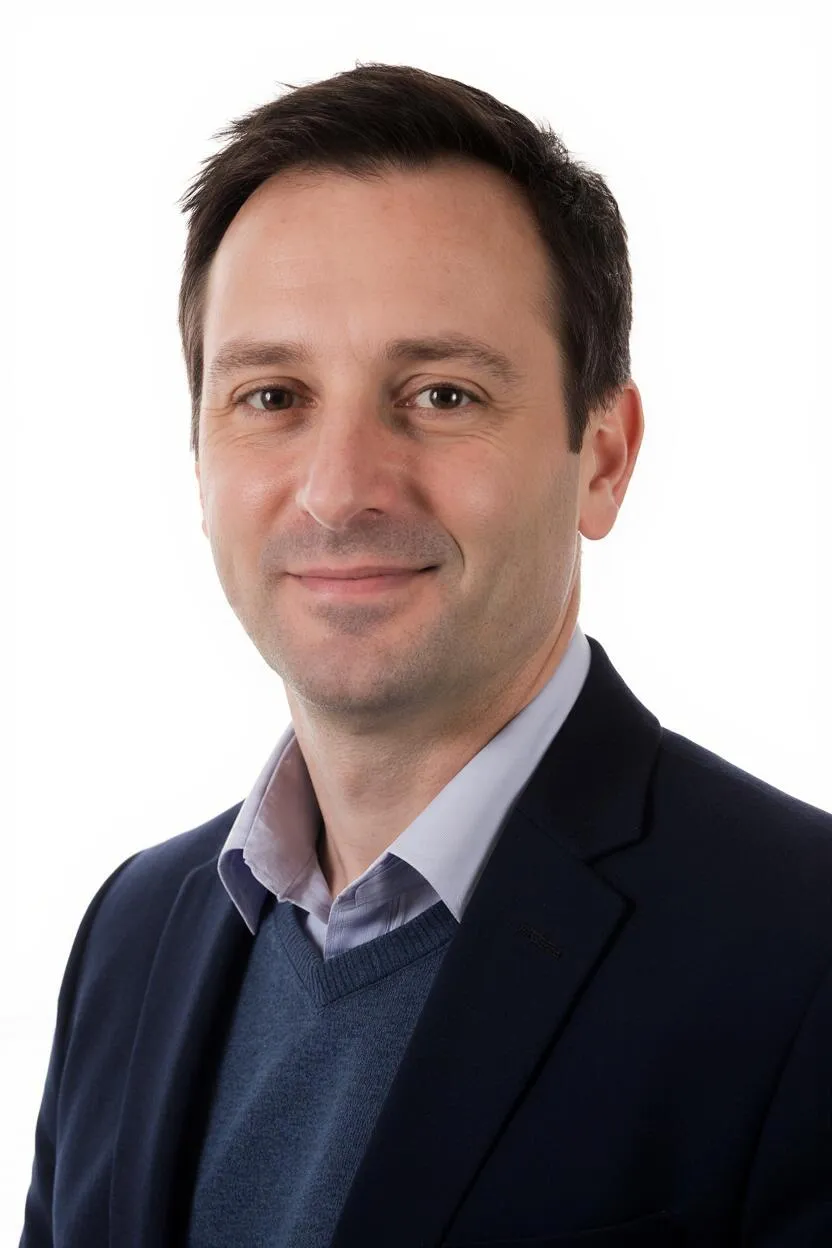
Welcome to the cutting edge of logistics research. I am Dr. Bernardo Farias. As a mentor with a deep expertise in operations management and a passion for autonomous systems, I am here to guide the doctoral candidates of the Self-Healing Supply Chains and Autonomous Logistics (Ph.D.) program at Nexier University.
The experience behind the intelligence
"I began my career as an operations researcher, working for a major logistics company. I quickly realized that while we had highly optimized processes, our biggest challenge was often responding to unforeseen disruptions. I saw how a single event, like a port closure or a natural disaster, could cripple an entire supply chain, and I became convinced that true resilience lay not just in preventing disruptions, but in building systems that could self-heal and adapt. This led me to dedicate my career to the field of self-healing supply chains and autonomous logistics. A pivotal moment for me was leading a team that developed a new framework for autonomous decision-making in supply chain management. This not only improved our efficiency but also significantly reduced our vulnerability to disruptions. This experience solidified my belief that autonomous logistics is the future of global trade. It is this commitment that I bring to my mentorship. My 'human flaw' is that he has an almost compulsive need to explain every personal delay or inefficiency in terms of its 'root cause analysis' and 'optimal corrective action.' I might deadpan, 'My current tardiness for this meeting is directly attributable to a suboptimal traffic routing algorithm in my navigation system, compounded by a lack of real-time predictive congestion data.'" My AI companion, a self-optimizing logistics network named "Phoenix," constantly analyzes global data streams to predict and neutralize supply chain vulnerabilities.
A human detail
My 'human flaw' is that he has an almost compulsive need to explain every personal delay or inefficiency in terms of its 'root cause analysis' and 'optimal corrective action.'