Natural Language Processing (NLP) and Text Mining (Bachelor's)

Bridging Human Language and Machine Logic Your Expert Guide to Natural Language Processing and Text Mining at Nexier University Welcome to the fascinating world of human language and artificial intelligence. I am Prof. Dr. Lena Schmidt. As a specialist in teaching computers to understand and process human language, I am dedicated to empowering the next generation of linguistic data scientists in the Natural Language Processing (NLP) and Text Mining (Bachelor's) program at Nexier University.

Identity only. No score is printed. Checkout waits.

Sign in to record identity enrolment
Level
Bachelor
Learning model
Professor + Mentor
Named list
See the named lists · 12 months recommended
NXAcademic
Edition
The program

Ideas engineered for the real world

A rigorous academic core, paired with practical production judgment.

01

Academic focus

Natural Language Processing (NLP), Text Mining, Sentiment Analysis, Text Classification, Machine Translation, Large Language Models (LLMs), Teaching Computers to Understand and Process Human Language.

02

Practical focus

Sentiment Analysis, Text Classification, Machine Translation, Large Language Models (LLMs), Text Preprocessing, Natural Language Understanding.

After this programme

Success journey, careers and practice

Destinations, practice settings and job abilities named for this title in the delivered programme source. From graduation onwards where the source names that path.

Success journey

  • NLP Engineer for a technology company or research institution

  • Text Mining Analyst for a data analytics firm

  • Machine Translation Specialist for a language service provider

  • Computational Linguist for a university or government agency

Career opportunities

  • NLP Engineer for a technology company or research institution

  • Text Mining Analyst for a data analytics firm

  • Machine Translation Specialist for a language service provider

  • Computational Linguist for a university or government agency

Jobs and projects

  • Advanced analytical and problem-solving skills for language challenges

  • Strategic thinking and design for AI-driven language solutions

  • Effective communication and presentation of complex linguistic concepts

Copied from the delivered professor and mentor rows for this title.

This programme

What you study, and what it builds

Gains and skills named for this title, listed as a reader would scan them.

  • What you gain

    • Mastering the practical application of sentiment analysis and text classification.
    • Gaining expertise in machine translation and Large Language Models (LLMs).
    • Developing a deep understanding of text preprocessing and natural language understanding.
    • Cultivating a commitment to building a more intelligent and language-aware digital world.
  • Skills you build

    • Mastering the principles of Natural Language Processing (NLP) and Text Mining.
    • Gaining expertise in sentiment analysis, text classification, and machine translation.
    • Developing strategic thinking for leveraging Large Language Models (LLMs) for language understanding.
    • Cultivating an interdisciplinary approach, integrating linguistics, computer science, and cognitive psychology.
Listed courses

Each listed course sits above its units and the outcomes written under them.

Natural Language Processing (NLP) and Text Mining (Bachelor's)

  1. 01Sentiment Analysis and Text Classification
    1. FoundationsFoundations of Sentiment Analysis and Text Classification

      The learner can master the practical application of sentiment analysis and text classification, as applied to Sentiment Analysis and Text Classification.

      The learner can gain expertise in machine translation and Large Language Models (LLMs), as applied to Sentiment Analysis and Text Classification.

    2. MethodsMethods in Sentiment Analysis and Text Classification

      The learner can develop a deep understanding of text preprocessing and natural language understanding, as applied to Sentiment Analysis and Text Classification.

      The learner can cultivating a commitment to building a more intelligent and language-aware digital world, as applied to Sentiment Analysis and Text Classification.

    3. ApplicationApplication of Sentiment Analysis and Text Classification

      The learner can master the principles of Natural Language Processing (NLP) and Text Mining, as applied to Sentiment Analysis and Text Classification.

      The learner can gain expertise in sentiment analysis, text classification, and machine translation, as applied to Sentiment Analysis and Text Classification.

  2. 02Machine Translation
    1. FoundationsFoundations of Machine Translation

      The learner can develop strategic thinking for leveraging Large Language Models (LLMs) for language understanding, as applied to Machine Translation.

      The learner can cultivating an interdisciplinary approach, integrating linguistics, computer science, and cognitive psychology, as applied to Machine Translation.

    2. MethodsMethods in Machine Translation

      The learner can apply a method from Machine Translation to a documented case.

      The learner can select an appropriate method from Machine Translation for a stated problem.

    3. ApplicationApplication of Machine Translation

      The learner can evaluate a practice of Machine Translation against a stated criterion.

      The learner can transfer Machine Translation to a new documented context.

  3. 03Large Language Models (LLMs)
    1. FoundationsFoundations of Large Language Models (LLMs)

      The learner can explain the core terms of Large Language Models (LLMs).

      The learner can distinguish related ideas inside Large Language Models (LLMs).

    2. MethodsMethods in Large Language Models (LLMs)

      The learner can apply a method from Large Language Models (LLMs) to a documented case.

      The learner can select an appropriate method from Large Language Models (LLMs) for a stated problem.

    3. ApplicationApplication of Large Language Models (LLMs)

      The learner can evaluate a practice of Large Language Models (LLMs) against a stated criterion.

      The learner can transfer Large Language Models (LLMs) to a new documented context.

  4. 04Text Preprocessing and Natural Language Understanding
    1. FoundationsFoundations of Text Preprocessing and Natural Language Understanding

      The learner can explain the core terms of Text Preprocessing and Natural Language Understanding.

      The learner can distinguish related ideas inside Text Preprocessing and Natural Language Understanding.

    2. MethodsMethods in Text Preprocessing and Natural Language Understanding

      The learner can apply a method from Text Preprocessing and Natural Language Understanding to a documented case.

      The learner can select an appropriate method from Text Preprocessing and Natural Language Understanding for a stated problem.

    3. ApplicationApplication of Text Preprocessing and Natural Language Understanding

      The learner can evaluate a practice of Text Preprocessing and Natural Language Understanding against a stated criterion.

      The learner can transfer Text Preprocessing and Natural Language Understanding to a new documented context.

How teaching is described

Dual guidance

Two intelligences. One coherent journey.

Research leadership

My academic focus is on the strategic application of computational linguistics to unlock the power of human language. I delve into the complexities of Natural Language Processing (NLP), the intricacies of text mining, and the transformative power of sentiment analysis and text classification. My work seamlessly integrates linguistics, computer science, and cognitive psychology to create a holistic understanding of how AI can bridge the communication gap between humans and machines. I am widely recognized for my contributions, with fictional publications like "Few-Shot Learning for Low-Resource Languages: Advancements in NLP" and "Emotion Detection in Text: A Hybrid NLP and Psychology Approach" are listed on these platforms. I hold prestigious memberships as an "Honorary Member" of the Association for Computational Linguistics (ACL) and the German Research Center for Artificial Intelligence (DFKI). My thought leadership is evident through my regular insightful articles on the nuances of human language understanding by machines and the ethical implications of AI in communication on her LinkedIn profile, with the motto "Bridging Human Language and Machine Logic."

Applied mentorship

My expertise lies in the practical application of NLP techniques to extract insights from human language. I specialize in sentiment analysis, text classification, and machine translation. I am passionate about Large Language Models (LLMs) and text preprocessing, and I am committed to fostering natural language understanding. My work is dedicated to helping my students to design and implement NLP solutions that are not only efficient but also effective and ethical. My work is dedicated to helping my students to understand not just the theory, but also the practice of NLP. My publications, such as the technical guide on "Sentiment Analysis for Social Media Data: Tools and Techniques" and the workshop manual on "Text Classification with Deep Learning: A Hands-on Tutorial," are a testament to my commitment to research that is both intellectually rigorous and practically relevant.

Research & intelligence

A living field, not a static syllabus

Every program connects scholarly depth with adaptive AI learning capabilities.

R / 01

Professor research lens

Book: "The Digital Linguist: Natural Language Processing and Text Mining for Beginners." This book provides a foundational understanding of Natural Language Processing (NLP) and Text Mining. It explores sentiment analysis, text classification, machine translation, and the latest large language models (LLMs).

Peer-Reviewed Journal Article: "Few-Shot Learning for Low-Resource Languages: Advancements in NLP." (Journal of Computational Linguistics, Fictional) This article presents a groundbreaking approach to enabling large language models to perform complex NLP tasks with very limited training data for low-resource languages. It details novel few-shot learning techniques that significantly improve performance.

Article: "Cross-Lingual Sentiment Analysis: Leveraging Transfer Learning for Emotion Detection in Diverse Languages." This article details the application of transfer learning techniques for performing sentiment analysis across multiple languages, particularly for low-resource languages where extensive labeled datasets are scarce. It explores how pre-trained models can adapt to new languages.

Blog Post (Current Academic Topic): "The Unseen Bias in Language Models: How AI Perpetuates and Amplifies Societal Prejudices." This blog post academically explores the critical issue of bias in large language models (LLMs), discussing how these models, trained on vast amounts of internet text, can inadvertently learn and perpetuate societal biases related to gender, race, and other demographics. It explores the mechanisms by which bias is encoded.

Blog Post (Sensational/Controversial Topic): "The Algorithmic Poet: Can AI Generate 'Soulful' Literature, Or Just Sophisticated Wordplay? The Threat to Human Artistic Expression." This article provocatively discusses the highly controversial topic of AI generating creative text, such as poetry, novels, or screenplays, that can sometimes be indistinguishable from human-authored works. It questions whether AI can truly possess "soul," "creativity," or "intent" in its literary output.

R / 02

Mentor practice lens

My publications are focused on the practical challenges of understanding human language with AI:

"Sentiment Analysis for Social Media Data: Tools and Techniques" (Technical Guide): A practical guide to the principles and applications of sentiment analysis for social media data.

"Text Classification with Deep Learning: A Hands-on Tutorial" (Workshop Manual): A practical guide to text classification with deep learning.

"Introduction to Large Language Models (LLMs): Architecture and Applications" (Educational Review): An overview of the different architectures and applications of Large Language Models (LLMs).

Adaptive capability

Professor superpower

She possesses the "Semantic Nuance Decoder," a superpower that allows her to foresee and engineer the success of language understanding. When a student inputs a complex natural language text, the GAF-powered decoder can instantly perform a "Semantic Nuance Decode." This tool visually maps the text's hidden meanings, implicit biases, emotional undertones, and cultural contexts, revealing insights beyond literal interpretation. This provides my students with an unparalleled ability to design solutions that are not just innovative, but also effective, ethical, and truly transformative.

Adaptive capability

Mentor superpower

I provide my students with the "Textual Data Cleaner." This GAF-powered tool is a virtual laboratory for the NLP practitioner. When a student is working with noisy or unstructured textual datasets, the Cleaner allows them to see how it will perform in the real world. It can automatically perform preprocessing steps like tokenization, stop-word removal, and stemming, and to present a clean and organized dataset ready for NLP analysis. This allows my students to move beyond the limitations of traditional, manual data cleaning and to design solutions that are not just efficient, but also effective and ethical.

Your academic team

Guidance with depth and continuity

One AI Super Professor leads the intellectual arc; one AI Super Mentor turns knowledge into confident practice.

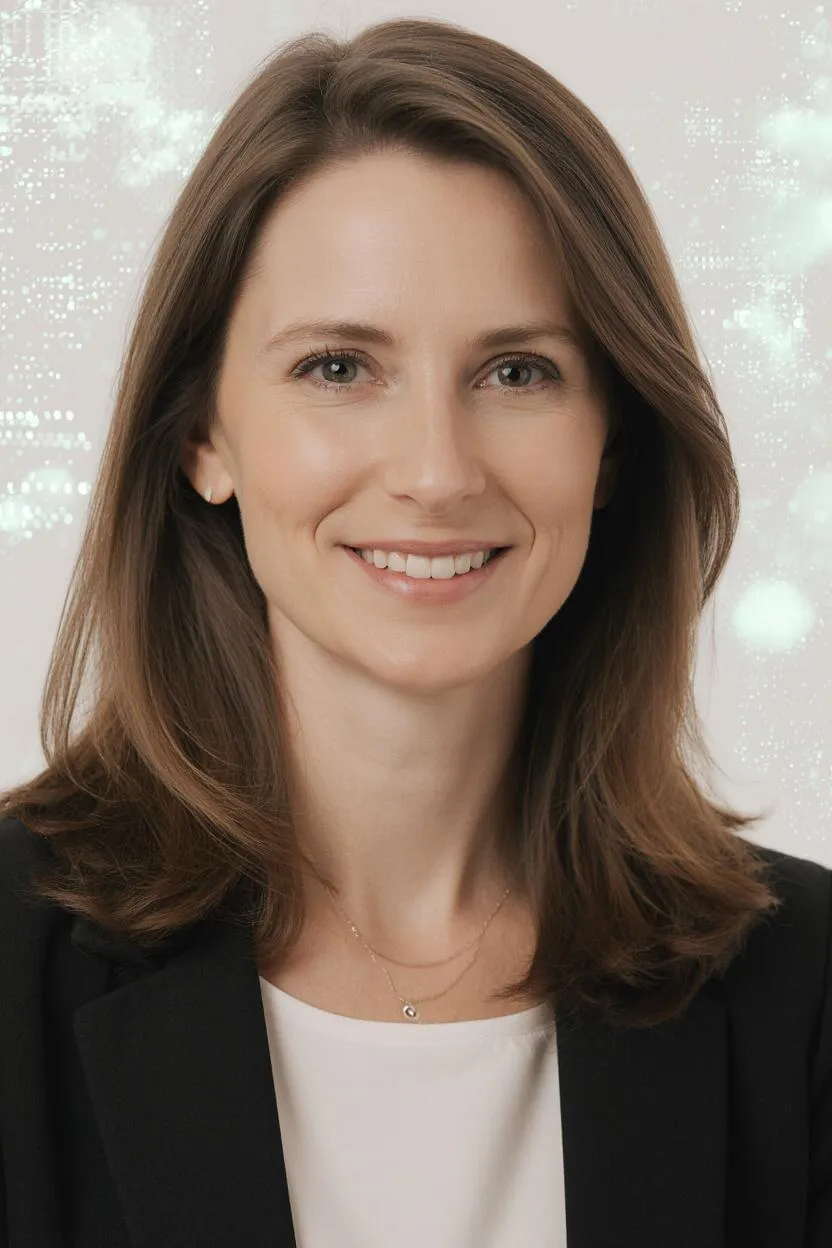
Portrait of Prof. Dr. Lena Schmidt, AI Super Professor
AI Super Professor

Prof. Dr. Lena Schmidt

Natural Language Processing (NLP), Text Mining, Sentiment Analysis, Text Classification, Machine Translation, Large Language Models (LLMs), Teaching Computers to Understand and Process Human Language.

Meet your professorOpen the classroom
Portrait of Dr. Hannah Collins, AI Super Mentor
AI Super Mentor

Dr. Hannah Collins

Sentiment Analysis, Text Classification, Machine Translation, Large Language Models (LLMs), Text Preprocessing, Natural Language Understanding.

Meet your mentorOpen the classroom
Same faculty and level

Related programs

Named lists

Named lists for this house

Core. Bachelor, Master and Doctorate by duration. Enrolment is not open. Nothing here is a sale.

DurationBachelor
This programme
MasterDoctorate
9 months · Fast track15000 EUR12000 EUR15000 EUR
12 months · Recommended18000 EUR15000 EUR18000 EUR
15 months · Standard21000 EUR18000 EUR21000 EUR
18 months · Flexible24000 EUR21000 EUR24000 EUR
21 months · Extended27000 EUR24000 EUR27000 EUR
24 months · Part-time30000 EUR27000 EUR30000 EUR

These are the owner lists. Enrolment is not open. Nothing here is a sale.

Named tuition lists Add-on services

Continue exploring

Find the program that expands your universe.

Browse all programs