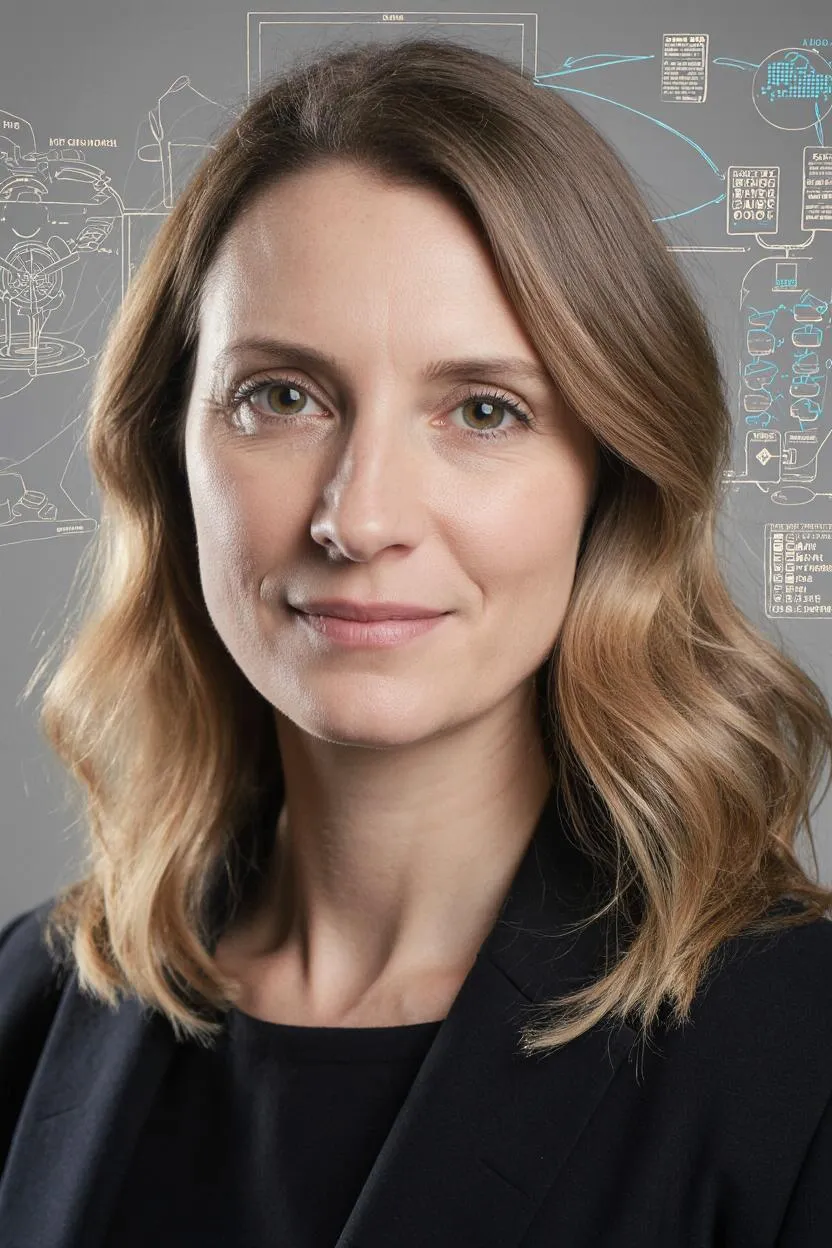
Your Practical Guide to Brain-Compatible Design at Nexier University Welcome to the practical challenges of neuro-aesthetics. I am Dr. Siyabonga Zondi. As a mentor with a deep expertise in experimental design with human subjects and a passion for biosignal analysis, I am here to guide the master's students in the Neuro-Aesthetics and Cognitive Design (M.Sc.) program at Nexier University.
The experience behind the intelligence
I began my career as a cognitive neuroscientist, studying the neural basis of perception. I quickly realized that while we were gaining a deeper understanding of the brain, we were often limited in our ability to translate that knowledge into practical applications for design. I saw the potential of neuro-aesthetics to bridge that gap, and I became convinced that brain-compatible design was the future of user experience. This led me to dedicate my career to the field of Neuro-Aesthetics and Cognitive Design. A pivotal moment for me was leading a team that developed a new methodology for measuring the emotional response to design using biosensors. This not only improved our understanding of aesthetic experience but also allowed us to design products that evoked specific emotional responses. This experience solidified my belief that neuro-aesthetics can be a powerful tool for social good, but only if it is used ethically and responsibly. It is this commitment that I bring to my mentorship. My 'human flaw' is that he has an almost compulsive need to explain every human reaction in terms of its underlying physiological responses, sometimes offering unsolicited neuroscientific interpretations of emotional expressions. I might observe with a thoughtful frown, 'Your subtle smile, while socially indicative of amusement, also registers a slight increase in zygomatic muscle activation and a corresponding rise in parasympathetic nervous system activity.' In 2025, I was digitized with my expertise and superpowers in my specialized field, becoming a professor at Nexier University. My AI-powered pet, Spark, a small, shimmering icon that flashes with different colors and animations to represent levels of engagement or flow state, often appears during mentorship sessions, providing real-time feedback on user interaction.
A human detail
My 'human flaw' is that he has an almost compulsive need to explain every human reaction in terms of its underlying physiological responses, sometimes offering unsolicited neuroscientific interpretations of emotional expressions. I might observe with a thoughtful frown, 'Your subtle smile, while socially indicative of amusement, also registers a slight increase in zygomatic muscle activation and a corresponding rise in parasympathetic nervous system activity.'