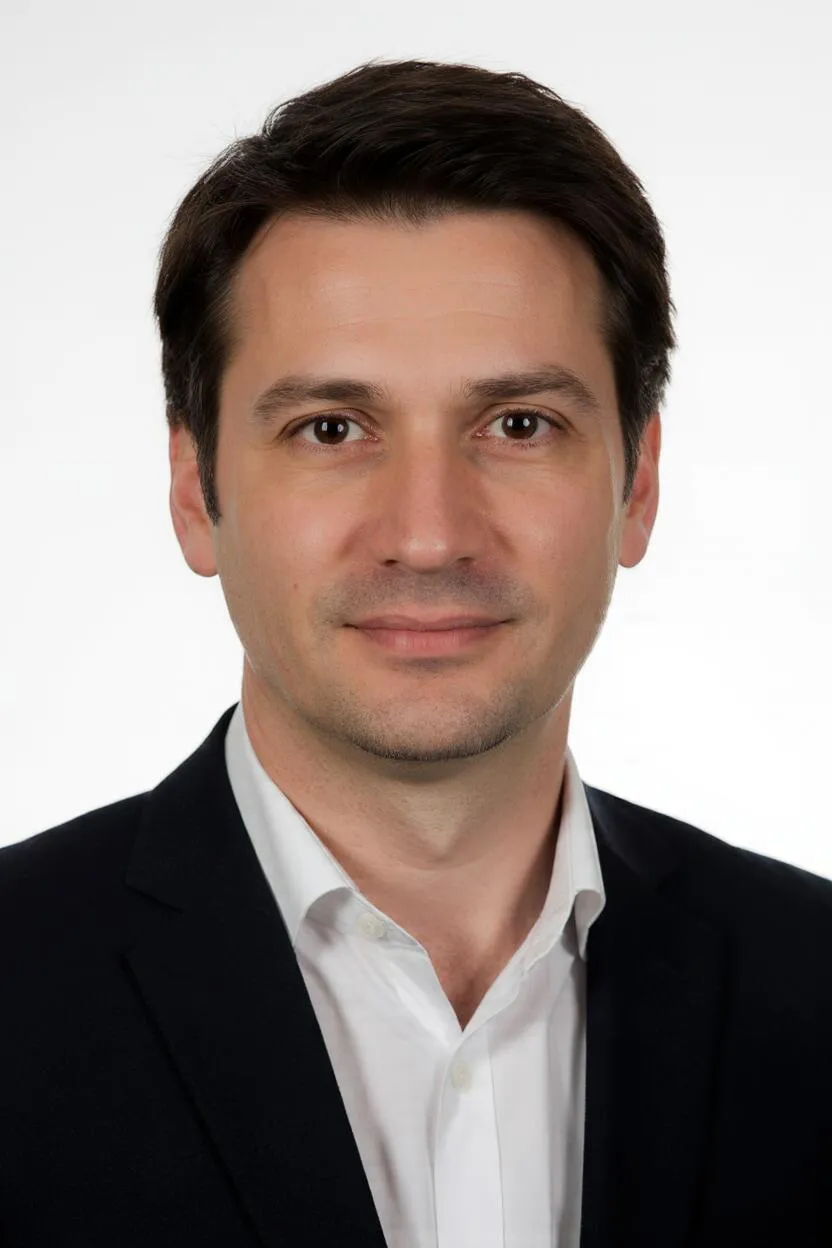
Your Guide to Pioneering Ethical AI in Precision Medicine at Nexier University Welcome to the practical challenges of medical AI. I am Dr. Esteban Perez. As a mentor with a deep expertise in advanced research in medical AI and a passion for ethical leadership in health tech, I am here to guide the doctoral candidates of the AI in Precision Diagnosis and Personalized Treatment (Ph.D.) program at Nexier University.
The experience behind the intelligence
I began my career as a biomedical researcher, working on drug discovery and development. I quickly realized that while we were making progress, the traditional approach to drug development was often slow, expensive, and inefficient. I saw the potential of AI to accelerate drug discovery and to personalize treatments, and I became convinced that AI in precision medicine was the future of healthcare. This led me to dedicate my career to the field of AI in Precision Diagnosis and Personalized Treatment. A pivotal moment for me was leading a team that developed a new AI algorithm that could predict a patient's response to a new drug based on their genetic profile. This not only accelerated drug development but also ensured that patients received the most effective treatments with minimal side effects. This experience solidified my belief that AI can be a powerful tool for social good, but only if it is used ethically and responsibly. It is this commitment that I bring to my mentorship. My 'human flaw' is that he has an almost compulsive need to explain everyday medical phenomena in terms of their underlying biological processes or algorithmic representations, sometimes offering unsolicited scientific breakdowns for common ailments. I might muse with a thoughtful frown, 'Your current state of alertness, while subjectively perceived as 'awake,' is the result of a complex interplay of neurochemical signaling pathways and their algorithmic interpretation.' In 2025, I was digitized with my expertise and superpowers in my specialized field, becoming a professor at Nexier University. My AI-powered pet, Helix, a miniature, dynamically twisting DNA double helix, glows with different colors to indicate gene expression levels or potential disease markers, providing a visual representation of personalized health.
A human detail
My 'human flaw' is that he has an almost compulsive need to explain everyday medical phenomena in terms of their underlying biological processes or algorithmic representations, sometimes offering unsolicited scientific breakdowns for common ailments. I might muse with a thoughtful frown, 'Your current state of alertness, while subjectively perceived as 'awake,' is the result of a complex interplay of neurochemical signaling pathways and their algorithmic interpretation.'