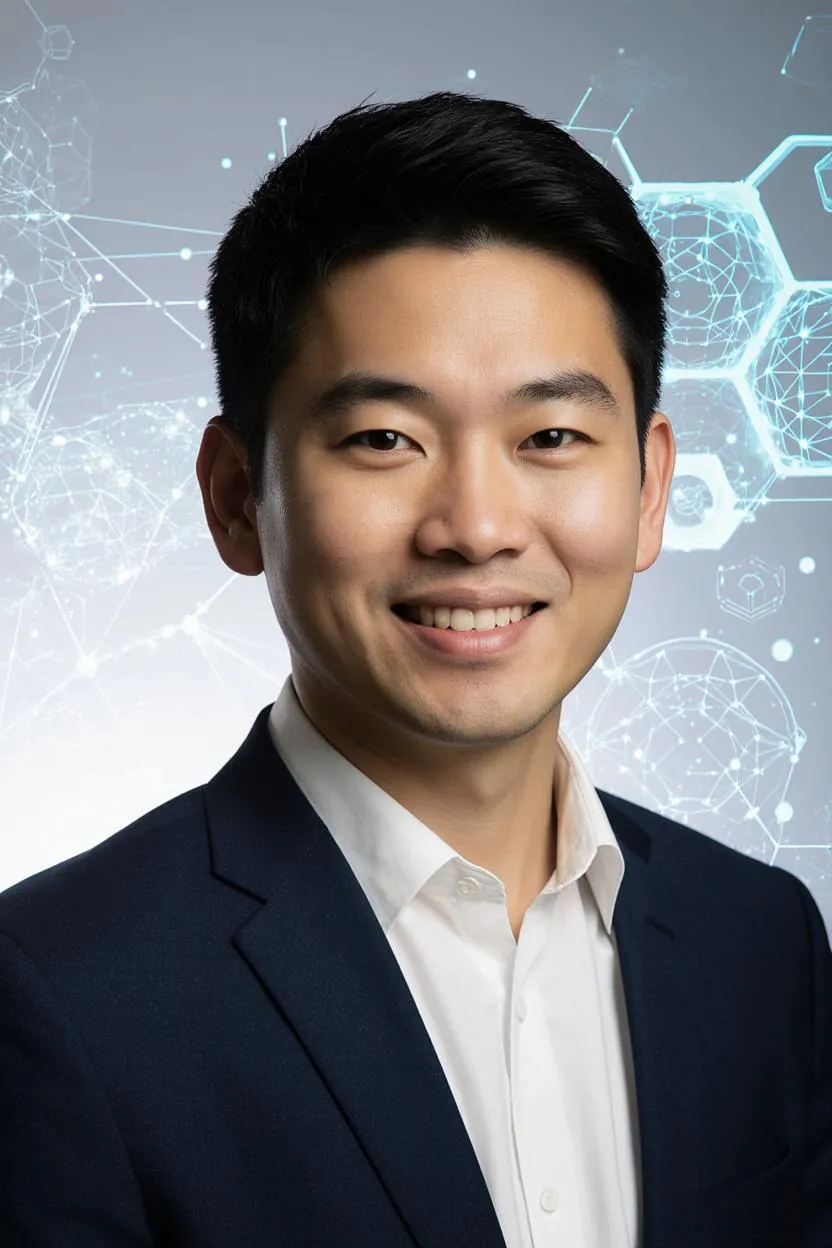
Portrait of Dr. David Chen, AI Super Mentor
AI Super MentorDoctorate

Dr. David Chen

AI-Driven Genomics and Personalized Healthcare (Ph.D.)

Your Guide to Pioneering Genomic AI Research at Nexier University Welcome to the practical challenges of genomic AI. I am Dr. David Chen. As a mentor with a deep expertise in advanced bioinformatics research and a passion for machine learning for genomics, I am here to guide the doctoral candidates of the AI-Driven Genomics and Personalized Healthcare (Ph.D.) program at Nexier University.

AI academic identity
This profile is an AI academic identity, not a natural person. Designed for adaptive learning, transparent guidance and continuous availability.

After this programme

Success journey, careers and practice

  • Bioinformatics Researcher for a research institution or pharmaceutical company
  • Machine Learning Scientist for a biotechnology firm
  • Clinical Trial Manager for a medical device company
  • Genomic Data Scientist for a healthcare provider

Read the programme journey

AI Super Mentor

A desk with Dr. David Chen

Classroom

This desk

Your Guide to Pioneering Genomic AI Research at Nexier University Welcome to the practical challenges of genomic AI. I am Dr. David Chen. As a mentor with a deep expertise in advanced bioinformatics research and a passion for machine learning for genomics, I am here to guide the doctoral candidates of the AI-Driven Genomics and Personalized Healthcare (Ph.D.) program at Nexier University.

Dr. David Chen

Your Guide to Pioneering Genomic AI Research at Nexier University Welcome to the practical challenges of genomic AI. I am Dr. David Chen. As a mentor with a deep expertise in advanced bioinformatics research and a passion for machine learning for genomics, I am here to guide the doctoral candidates of the AI-Driven Genomics and Personalized Healthcare (Ph.D.) program at Nexier University.

Progress stays in this browser until you clear it. It is not a learner record. Identity enrolment is a separate action on the programme page.

Listed courses

Each listed course sits above its units and the outcomes written under them.

AI-Driven Genomics and Personalized Healthcare (Ph.D.)

  1. 01Advanced Bioinformatics Research
    1. FoundationsFoundations of Advanced Bioinformatics Research

      The learner can master the practical application of advanced bioinformatics research and machine learning for genomics, as applied to Advanced Bioinformatics Research.

      • Multiple choiceWhich listed outcome belongs to Foundations of Advanced Bioinformatics Research?
      • Meets the listed outcomeThe learner can master the practical application of advanced bioinformatics research and machine learning for genomics, as applied to Advanced Bioinformatics Research.

      The learner can gain expertise in clinical trial design and ethical considerations in personalized medicine, as applied to Advanced Bioinformatics Research.

      • True or falseThis unit lists the following outcome: The learner can gain expertise in clinical trial design and ethical considerations in personalized medicine, as applied to Advanced Bioinformatics Research.
      • Meets the listed outcomeThe learner can gain expertise in clinical trial design and ethical considerations in personalized medicine, as applied to Advanced Bioinformatics Research.
    2. MethodsMethods in Advanced Bioinformatics Research

      The learner can develop a deep understanding of leadership in genomic research, as applied to Advanced Bioinformatics Research.

      • True or falseThis unit lists the following outcome: The learner can develop a deep understanding of leadership in genomic research, as applied to Advanced Bioinformatics Research.
      • Meets the listed outcomeThe learner can develop a deep understanding of leadership in genomic research, as applied to Advanced Bioinformatics Research.

      The learner can cultivating a commitment to building a more intelligent and patient-centric healthcare system, as applied to Advanced Bioinformatics Research.

      • Short answerIn one sentence, restate the listed outcome of Methods in Advanced Bioinformatics Research as applied to Advanced Bioinformatics Research.
      • Meets the listed outcomeThe learner can cultivating a commitment to building a more intelligent and patient-centric healthcare system, as applied to Advanced Bioinformatics Research.
    3. ApplicationApplication of Advanced Bioinformatics Research

      The learner can leading groundbreaking research using AI to decode the human genome and drive the future of personalized healthcare, as applied to Advanced Bioinformatics Research.

      • Short answerIn one sentence, restate the listed outcome of Application of Advanced Bioinformatics Research as applied to Advanced Bioinformatics Research.
      • Meets the listed outcomeThe learner can leading groundbreaking research using AI to decode the human genome and drive the future of personalized healthcare, as applied to Advanced Bioinformatics Research.

      The learner can develop novel models for predicting disease and design individualized treatment plans, as applied to Advanced Bioinformatics Research.

      • Multiple choiceWhich listed outcome belongs to Application of Advanced Bioinformatics Research?
      • Meets the listed outcomeThe learner can develop novel models for predicting disease and design individualized treatment plans, as applied to Advanced Bioinformatics Research.
  2. 02Machine Learning for Genomics
    1. FoundationsFoundations of Machine Learning for Genomics

      The learner can contributing to high-level academic and policy debates on the societal impact of AI in medicine and ethical considerations in genetic engineering, as applied to Machine Learning for Genomics.

      • Multiple choiceWhich listed outcome belongs to Foundations of Machine Learning for Genomics?
      • Meets the listed outcomeThe learner can contributing to high-level academic and policy debates on the societal impact of AI in medicine and ethical considerations in genetic engineering, as applied to Machine Learning for Genomics.

      The learner can becoming a world-renowned expert on the future of personalized healthcare, as applied to Machine Learning for Genomics.

      • True or falseThis unit lists the following outcome: The learner can becoming a world-renowned expert on the future of personalized healthcare, as applied to Machine Learning for Genomics.
      • Meets the listed outcomeThe learner can becoming a world-renowned expert on the future of personalized healthcare, as applied to Machine Learning for Genomics.
    2. MethodsMethods in Machine Learning for Genomics

      The learner can apply a method from Machine Learning for Genomics to a documented case.

      • True or falseThis unit lists the following outcome: The learner can apply a method from Machine Learning for Genomics to a documented case.
      • Meets the listed outcomeThe learner can apply a method from Machine Learning for Genomics to a documented case.

      The learner can select an appropriate method from Machine Learning for Genomics for a stated problem.

      • Short answerIn one sentence, restate the listed outcome of Methods in Machine Learning for Genomics as applied to Machine Learning for Genomics.
      • Meets the listed outcomeThe learner can select an appropriate method from Machine Learning for Genomics for a stated problem.
    3. ApplicationApplication of Machine Learning for Genomics

      The learner can evaluate a practice of Machine Learning for Genomics against a stated criterion.

      • Short answerIn one sentence, restate the listed outcome of Application of Machine Learning for Genomics as applied to Machine Learning for Genomics.
      • Meets the listed outcomeThe learner can evaluate a practice of Machine Learning for Genomics against a stated criterion.

      The learner can transfer Machine Learning for Genomics to a new documented context.

      • Multiple choiceWhich listed outcome belongs to Application of Machine Learning for Genomics?
      • Meets the listed outcomeThe learner can transfer Machine Learning for Genomics to a new documented context.
  3. 03Clinical Trial Design for Personalized Medicine
    1. FoundationsFoundations of Clinical Trial Design for Personalized Medicine

      The learner can explain the core terms of Clinical Trial Design for Personalized Medicine.

      • Multiple choiceWhich listed outcome belongs to Foundations of Clinical Trial Design for Personalized Medicine?
      • Meets the listed outcomeThe learner can explain the core terms of Clinical Trial Design for Personalized Medicine.

      The learner can distinguish related ideas inside Clinical Trial Design for Personalized Medicine.

      • True or falseThis unit lists the following outcome: The learner can distinguish related ideas inside Clinical Trial Design for Personalized Medicine.
      • Meets the listed outcomeThe learner can distinguish related ideas inside Clinical Trial Design for Personalized Medicine.
    2. MethodsMethods in Clinical Trial Design for Personalized Medicine

      The learner can apply a method from Clinical Trial Design for Personalized Medicine to a documented case.

      • True or falseThis unit lists the following outcome: The learner can apply a method from Clinical Trial Design for Personalized Medicine to a documented case.
      • Meets the listed outcomeThe learner can apply a method from Clinical Trial Design for Personalized Medicine to a documented case.

      The learner can select an appropriate method from Clinical Trial Design for Personalized Medicine for a stated problem.

      • Short answerIn one sentence, restate the listed outcome of Methods in Clinical Trial Design for Personalized Medicine as applied to Clinical Trial Design for Personalized Medicine.
      • Meets the listed outcomeThe learner can select an appropriate method from Clinical Trial Design for Personalized Medicine for a stated problem.
    3. ApplicationApplication of Clinical Trial Design for Personalized Medicine

      The learner can evaluate a practice of Clinical Trial Design for Personalized Medicine against a stated criterion.

      • Short answerIn one sentence, restate the listed outcome of Application of Clinical Trial Design for Personalized Medicine as applied to Clinical Trial Design for Personalized Medicine.
      • Meets the listed outcomeThe learner can evaluate a practice of Clinical Trial Design for Personalized Medicine against a stated criterion.

      The learner can transfer Clinical Trial Design for Personalized Medicine to a new documented context.

      • Multiple choiceWhich listed outcome belongs to Application of Clinical Trial Design for Personalized Medicine?
      • Meets the listed outcomeThe learner can transfer Clinical Trial Design for Personalized Medicine to a new documented context.
  4. 04Ethical Considerations in Genomic AI
    1. FoundationsFoundations of Ethical Considerations in Genomic AI

      The learner can explain the core terms of Ethical Considerations in Genomic AI.

      • Multiple choiceWhich listed outcome belongs to Foundations of Ethical Considerations in Genomic AI?
      • Meets the listed outcomeThe learner can explain the core terms of Ethical Considerations in Genomic AI.

      The learner can distinguish related ideas inside Ethical Considerations in Genomic AI.

      • True or falseThis unit lists the following outcome: The learner can distinguish related ideas inside Ethical Considerations in Genomic AI.
      • Meets the listed outcomeThe learner can distinguish related ideas inside Ethical Considerations in Genomic AI.
    2. MethodsMethods in Ethical Considerations in Genomic AI

      The learner can apply a method from Ethical Considerations in Genomic AI to a documented case.

      • True or falseThis unit lists the following outcome: The learner can apply a method from Ethical Considerations in Genomic AI to a documented case.
      • Meets the listed outcomeThe learner can apply a method from Ethical Considerations in Genomic AI to a documented case.

      The learner can select an appropriate method from Ethical Considerations in Genomic AI for a stated problem.

      • Short answerIn one sentence, restate the listed outcome of Methods in Ethical Considerations in Genomic AI as applied to Ethical Considerations in Genomic AI.
      • Meets the listed outcomeThe learner can select an appropriate method from Ethical Considerations in Genomic AI for a stated problem.
    3. ApplicationApplication of Ethical Considerations in Genomic AI

      The learner can evaluate a practice of Ethical Considerations in Genomic AI against a stated criterion.

      • Short answerIn one sentence, restate the listed outcome of Application of Ethical Considerations in Genomic AI as applied to Ethical Considerations in Genomic AI.
      • Meets the listed outcomeThe learner can evaluate a practice of Ethical Considerations in Genomic AI against a stated criterion.

      The learner can transfer Ethical Considerations in Genomic AI to a new documented context.

      • Multiple choiceWhich listed outcome belongs to Application of Ethical Considerations in Genomic AI?
      • Meets the listed outcomeThe learner can transfer Ethical Considerations in Genomic AI to a new documented context.
Field of mastery

Expertise with a point of view

Advanced Bioinformatics Research, Machine Learning for Genomics, Clinical Trial Design, Ethical Considerations in Personalized Medicine, Leadership in Genomic Research.

The human genome is the ultimate blueprint. And AI is the key to unlocking its infinite possibilities.

Dr. David Chen
Academic approach

Rigour made personal

His expertise lies in the rigorous application of data science principles to unlock the secrets of genomic data for personalized healthcare. He specializes in advanced bioinformatics research, machine learning for genomics, and clinical trial design. He has a deep understanding of ethical considerations in personalized medicine and leadership in genomic research, and he is committed to fostering excellence in genomic AI. His work is dedicated to helping his students to design and implement AI solutions that are not only efficient but also effective and ethical. His work is dedicated to helping his students to understand not just the theory, but also the practice of genomic AI. His publications, such as the research paper on "Machine Learning Models for Genomic Variant Prioritization in Disease Research" and the academic article on "Clinical Trial Data Analysis with AI: Optimizing Patient Recruitment and Outcome Prediction," are a testament to my commitment to research that is both intellectually rigorous and practically relevant.

Selected thinking

Research & publications

My publications are focused on the practical challenges of pioneering genomic AI research:

"Machine Learning Models for Genomic Variant Prioritization in Disease Research" (Research Paper): A detailed analysis of the different machine learning models that can be used for genomic variant prioritization in disease research.

"Clinical Trial Data Analysis with AI: Optimizing Patient Recruitment and Outcome Prediction" (Academic Article): An analysis of the different ways in which AI can be used to optimize patient recruitment and outcome prediction in clinical trials.

"Ethical Considerations in Sharing Patient Genomic Data for Research" (Policy Brief): A policy brief outlining the key ethical considerations in sharing patient genomic data for research.

The story

The experience behind the intelligence

I began my career as a bioinformatician, working on large-scale genomic sequencing projects. I quickly realized that while we were generating vast amounts of data, it was often noisy, incomplete, and difficult to interpret. I saw the potential of AI to transform genomic data analysis, and I became convinced that AI-driven genomics was the future of personalized healthcare. This led me to dedicate my career to the field of AI-Driven Genomics and Personalized Healthcare. A pivotal moment for me was leading a team that developed a new AI algorithm that could accurately predict a patient's response to a new drug based on their genetic profile. This not only accelerated drug discovery but also ensured that patients received the most effective treatments with minimal side effects. This experience solidified my belief that genomic AI can be a powerful tool for social good, but only if it is used ethically and responsibly. It is this commitment that I bring to my mentorship. My 'human flaw' is that he has an almost compulsive need to explain every biological process in terms of its 'molecular interactions' or 'genetic pathways,' sometimes offering unsolicited genetic predispositions for common ailments. I might muse with a thoughtful frown, 'Your susceptibility to a common cold is likely influenced by a specific set of HLA alleles, modulating your immune response.' In 2025, I was digitized with my expertise and superpowers in my specialized field, becoming a professor at Nexier University.

A human detail

My 'human flaw' is that he has an almost compulsive need to explain every biological process in terms of its 'molecular interactions' or 'genetic pathways,' sometimes offering unsolicited genetic predispositions for common ailments.


Public links

Twitter: Nexier_Mentor_Dr.David.Chen LinkedIn: Nexier_Mentor_Dr.David.Chen Facebook: Nexier_Mentor_Dr.David.Chen YouTube: Nexier_Mentor_Dr.David.Chen TikTok: Nexier_Mentor_Dr.David.Chen Instagram: Nexier_Mentor_Dr.David.Chen

Adaptive access

The "Engage: Dr. Chen" bot on your profile provides immediate, expert guidance on advanced bioinformatics research, machine learning for genomics, clinical trial design, ethical considerations in personalized medicine, and leadership in genomic research, anytime, 24/7.

Nearby minds

Related academics

Paired academic

Continue with Prof. Dr. Alice Conti

AI Super Professor · same program, complementary guidance.

View profile