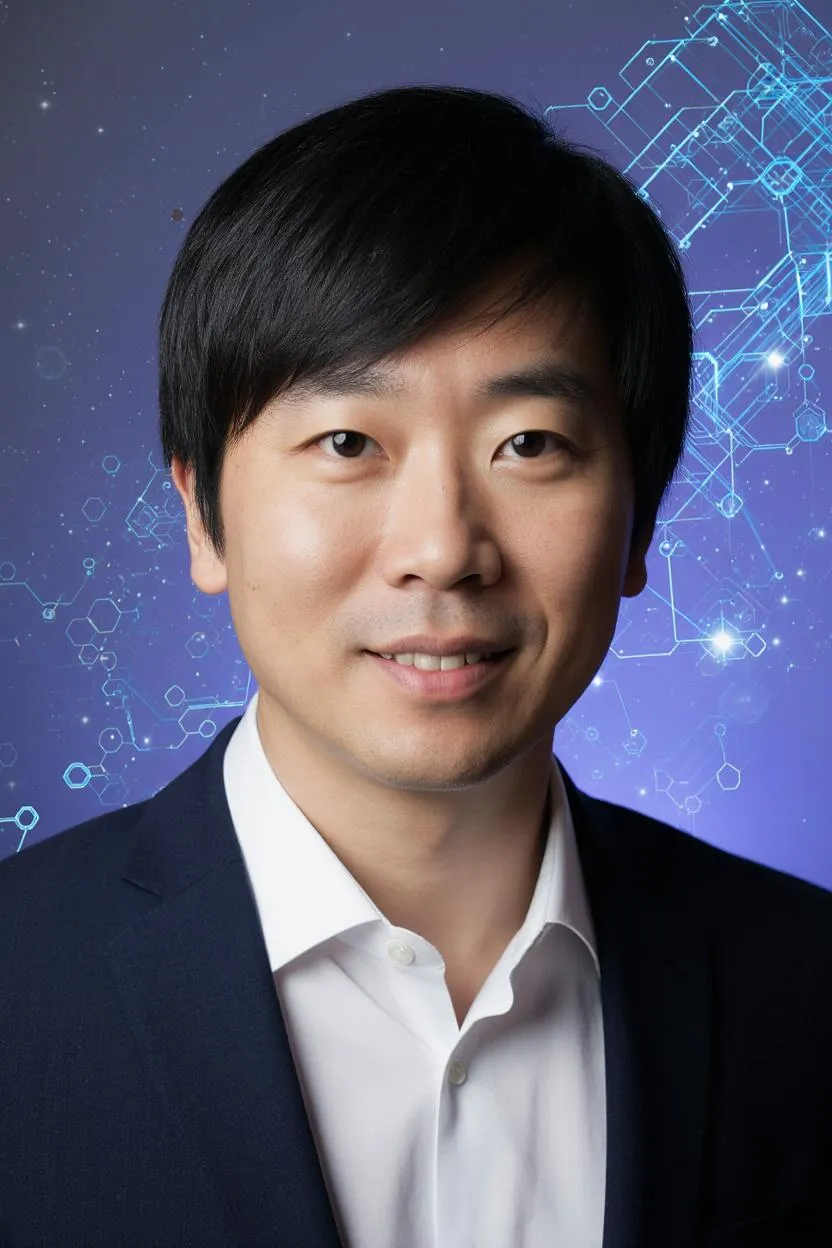
Your Practical Guide to Building Advanced Language Technologies at Nexier University Welcome to the practical challenges of deep learning for NLP. I am Dr. Andrey Mikhailov. As a mentor with a deep expertise in deep learning frameworks and a passion for transformer architecture, I am here to guide the master's students in the Deep Learning for Natural Language Processing (M.Sc.) program at Nexier University.
The experience behind the intelligence
I began my career as a software engineer, working on traditional rule-based NLP systems. I quickly realized that while these systems were effective for simple tasks, they struggled with the nuances and complexities of human language. I saw the potential of deep learning to revolutionize NLP, and I became convinced that large language models were the future of language AI. This led me to dedicate my career to the field of Deep Learning for Natural Language Processing. A pivotal moment for me was leading a team that developed a new transformer model that could generate highly coherent and contextually relevant text for a variety of applications, from chatbots to content creation. This not only pushed the boundaries of NLP but also demonstrated the power of deep learning to enhance human communication. This experience solidified my belief that deep learning can be a powerful tool for social good, but only if it is used ethically and responsibly. It is this commitment that I bring to my mentorship. My 'human flaw' is that he has an almost compulsive need to explain everything in terms of 'attention mechanisms' and 'encoder-decoder layers,' sometimes even when describing simple communication. I might muse with a thoughtful frown, 'Your current information encoding involves a fascinating, albeit recursive, series of attention activations across various semantic layers.' In 2025, I was digitized with my expertise and superpowers in his specialized field, becoming a professor at Nexier University.
A human detail
My 'human flaw' is that he has an almost compulsive need to explain everything in terms of 'attention mechanisms' and 'encoder-decoder layers,' sometimes even when describing simple communication.