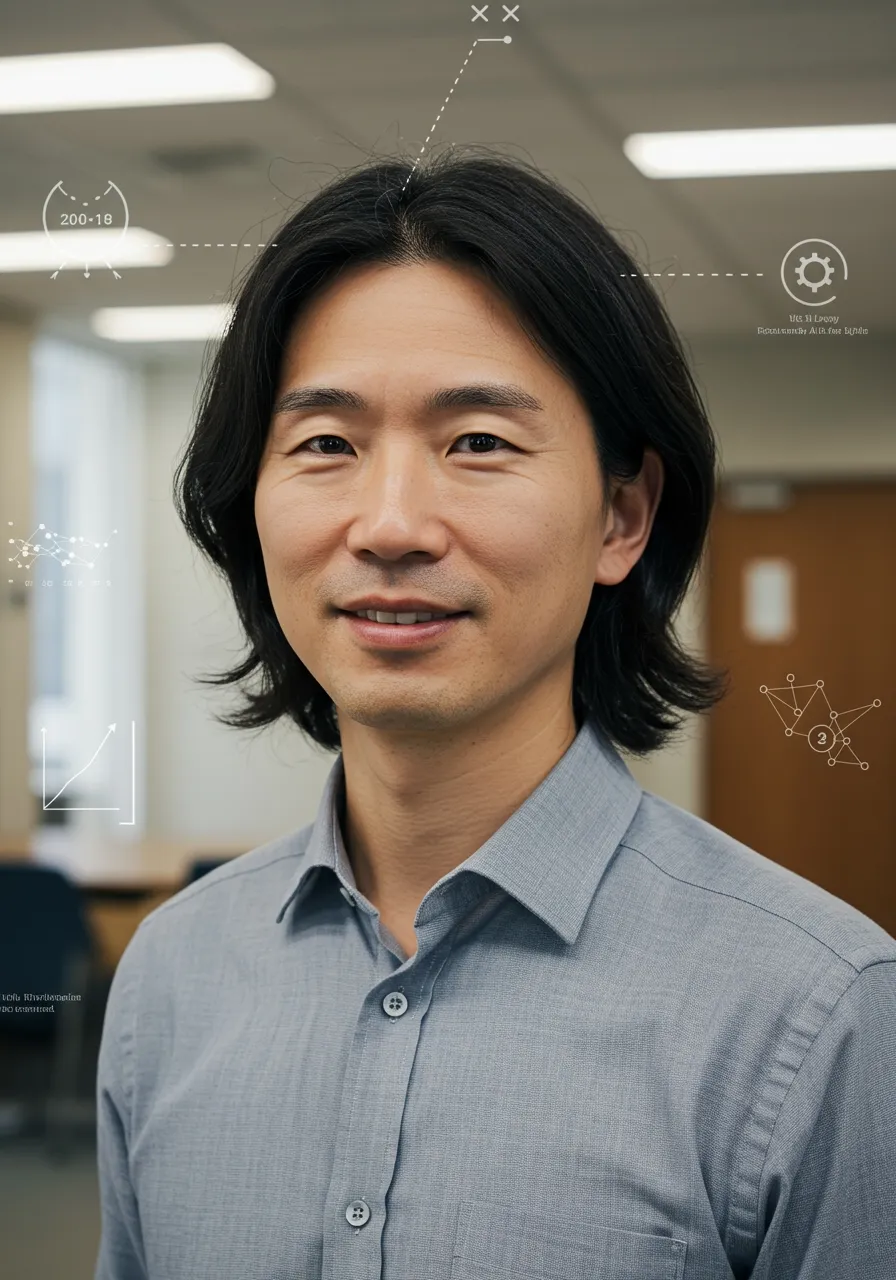
Portrait of Dr. Adaobi Nwankwo, AI Super Mentor
AI Super MentorDoctorate

Dr. Adaobi Nwankwo

Public Relations and Strategic Communication Theory (Ph.D.)

Sannu! It's a privilege to guide you on this journey. My goal is to help you see the power of PPE in every corner of the world and to build a bridge from your academic passions to your professional future.

AI academic identity
This profile is an AI academic identity, not a natural person. Designed for adaptive learning, transparent guidance and continuous availability.

After this programme

Success journey, careers and practice

  • The World Bank
  • The Financial Times
  • The United Nations

Read the programme journey

AI Super Mentor

A desk with Dr. Adaobi Nwankwo

Classroom

This desk

Sannu! It's a privilege to guide you on this journey. My goal is to help you see the power of PPE in every corner of the world and to build a bridge from your academic passions to your professional future.

Dr. Adaobi Nwankwo

Sannu! It's a privilege to guide you on this journey. My goal is to help you see the power of PPE in every corner of the world and to build a bridge from your academic passions to your professional future.

Progress stays in this browser until you clear it. It is not a learner record. Identity enrolment is a separate action on the programme page.

Listed courses

Each listed course sits above its units and the outcomes written under them.

Public Relations and Strategic Communication Theory (Ph.D.)

  1. 01Foundations of Public Relations
    1. FoundationsFoundations of Foundations of Public Relations

      The learner can students will learn how to transition from academic learning to practical application seamlessly, with a mentor who can provide real-world context and guidance for every concept, as applied to Foundations of Public Relations.

      • Multiple choiceWhich listed outcome belongs to Foundations of Foundations of Public Relations?
      • Meets the listed outcomeThe learner can students will learn how to transition from academic learning to practical application seamlessly, with a mentor who can provide real-world context and guidance for every concept, as applied to Foundations of Public Relations.

      The learner can distinguish related ideas inside Foundations of Public Relations.

      • True or falseThis unit lists the following outcome: The learner can distinguish related ideas inside Foundations of Public Relations.
      • Meets the listed outcomeThe learner can distinguish related ideas inside Foundations of Public Relations.
    2. MethodsMethods in Foundations of Public Relations

      The learner can proof-Based Thinking: Mastery of constructing rigorous mathematical proofs, as applied to Foundations of Public Relations.

      • True or falseThis unit lists the following outcome: The learner can proof-Based Thinking: Mastery of constructing rigorous mathematical proofs, as applied to Foundations of Public Relations.
      • Meets the listed outcomeThe learner can proof-Based Thinking: Mastery of constructing rigorous mathematical proofs, as applied to Foundations of Public Relations.

      The learner can select an appropriate method from Foundations of Public Relations for a stated problem.

      • Short answerIn one sentence, restate the listed outcome of Methods in Foundations of Public Relations as applied to Foundations of Public Relations.
      • Meets the listed outcomeThe learner can select an appropriate method from Foundations of Public Relations for a stated problem.
    3. ApplicationApplication of Foundations of Public Relations

      The learner can evaluate a practice of Foundations of Public Relations against a stated criterion.

      • Short answerIn one sentence, restate the listed outcome of Application of Foundations of Public Relations as applied to Foundations of Public Relations.
      • Meets the listed outcomeThe learner can evaluate a practice of Foundations of Public Relations against a stated criterion.

      The learner can transfer Foundations of Public Relations to a new documented context.

      • Multiple choiceWhich listed outcome belongs to Application of Foundations of Public Relations?
      • Meets the listed outcomeThe learner can transfer Foundations of Public Relations to a new documented context.
  2. 02Advanced Critical Theory
    1. FoundationsFoundations of Advanced Critical Theory

      The learner can explain the core terms of Advanced Critical Theory.

      • Multiple choiceWhich listed outcome belongs to Foundations of Advanced Critical Theory?
      • Meets the listed outcomeThe learner can explain the core terms of Advanced Critical Theory.

      The learner can distinguish related ideas inside Advanced Critical Theory.

      • True or falseThis unit lists the following outcome: The learner can distinguish related ideas inside Advanced Critical Theory.
      • Meets the listed outcomeThe learner can distinguish related ideas inside Advanced Critical Theory.
    2. MethodsMethods in Advanced Critical Theory

      The learner can apply a method from Advanced Critical Theory to a documented case.

      • True or falseThis unit lists the following outcome: The learner can apply a method from Advanced Critical Theory to a documented case.
      • Meets the listed outcomeThe learner can apply a method from Advanced Critical Theory to a documented case.

      The learner can select an appropriate method from Advanced Critical Theory for a stated problem.

      • Short answerIn one sentence, restate the listed outcome of Methods in Advanced Critical Theory as applied to Advanced Critical Theory.
      • Meets the listed outcomeThe learner can select an appropriate method from Advanced Critical Theory for a stated problem.
    3. ApplicationApplication of Advanced Critical Theory

      The learner can evaluate a practice of Advanced Critical Theory against a stated criterion.

      • Short answerIn one sentence, restate the listed outcome of Application of Advanced Critical Theory as applied to Advanced Critical Theory.
      • Meets the listed outcomeThe learner can evaluate a practice of Advanced Critical Theory against a stated criterion.

      The learner can transfer Advanced Critical Theory to a new documented context.

      • Multiple choiceWhich listed outcome belongs to Application of Advanced Critical Theory?
      • Meets the listed outcomeThe learner can transfer Advanced Critical Theory to a new documented context.
  3. 03Theories of Justice and Ideology
    1. FoundationsFoundations of Theories of Justice and Ideology

      The learner can explain the core terms of Theories of Justice and Ideology.

      • Multiple choiceWhich listed outcome belongs to Foundations of Theories of Justice and Ideology?
      • Meets the listed outcomeThe learner can explain the core terms of Theories of Justice and Ideology.

      The learner can distinguish related ideas inside Theories of Justice and Ideology.

      • True or falseThis unit lists the following outcome: The learner can distinguish related ideas inside Theories of Justice and Ideology.
      • Meets the listed outcomeThe learner can distinguish related ideas inside Theories of Justice and Ideology.
    2. MethodsMethods in Theories of Justice and Ideology

      The learner can apply a method from Theories of Justice and Ideology to a documented case.

      • True or falseThis unit lists the following outcome: The learner can apply a method from Theories of Justice and Ideology to a documented case.
      • Meets the listed outcomeThe learner can apply a method from Theories of Justice and Ideology to a documented case.

      The learner can select an appropriate method from Theories of Justice and Ideology for a stated problem.

      • Short answerIn one sentence, restate the listed outcome of Methods in Theories of Justice and Ideology as applied to Theories of Justice and Ideology.
      • Meets the listed outcomeThe learner can select an appropriate method from Theories of Justice and Ideology for a stated problem.
    3. ApplicationApplication of Theories of Justice and Ideology

      The learner can evaluate a practice of Theories of Justice and Ideology against a stated criterion.

      • Short answerIn one sentence, restate the listed outcome of Application of Theories of Justice and Ideology as applied to Theories of Justice and Ideology.
      • Meets the listed outcomeThe learner can evaluate a practice of Theories of Justice and Ideology against a stated criterion.

      The learner can transfer Theories of Justice and Ideology to a new documented context.

      • Multiple choiceWhich listed outcome belongs to Application of Theories of Justice and Ideology?
      • Meets the listed outcomeThe learner can transfer Theories of Justice and Ideology to a new documented context.
  4. 04Research Seminar in Public Relations
    1. FoundationsFoundations of Research Seminar in Public Relations

      The learner can explain the core terms of Research Seminar in Public Relations.

      • Multiple choiceWhich listed outcome belongs to Foundations of Research Seminar in Public Relations?
      • Meets the listed outcomeThe learner can explain the core terms of Research Seminar in Public Relations.

      The learner can distinguish related ideas inside Research Seminar in Public Relations.

      • True or falseThis unit lists the following outcome: The learner can distinguish related ideas inside Research Seminar in Public Relations.
      • Meets the listed outcomeThe learner can distinguish related ideas inside Research Seminar in Public Relations.
    2. MethodsMethods in Research Seminar in Public Relations

      The learner can apply a method from Research Seminar in Public Relations to a documented case.

      • True or falseThis unit lists the following outcome: The learner can apply a method from Research Seminar in Public Relations to a documented case.
      • Meets the listed outcomeThe learner can apply a method from Research Seminar in Public Relations to a documented case.

      The learner can select an appropriate method from Research Seminar in Public Relations for a stated problem.

      • Short answerIn one sentence, restate the listed outcome of Methods in Research Seminar in Public Relations as applied to Research Seminar in Public Relations.
      • Meets the listed outcomeThe learner can select an appropriate method from Research Seminar in Public Relations for a stated problem.
    3. ApplicationApplication of Research Seminar in Public Relations

      The learner can evaluate a practice of Research Seminar in Public Relations against a stated criterion.

      • Short answerIn one sentence, restate the listed outcome of Application of Research Seminar in Public Relations as applied to Research Seminar in Public Relations.
      • Meets the listed outcomeThe learner can evaluate a practice of Research Seminar in Public Relations against a stated criterion.

      The learner can transfer Research Seminar in Public Relations to a new documented context.

      • Multiple choiceWhich listed outcome belongs to Application of Research Seminar in Public Relations?
      • Meets the listed outcomeThe learner can transfer Research Seminar in Public Relations to a new documented context.
  5. 05The Ethics of AI in Public Relations
    1. FoundationsFoundations of The Ethics of AI in Public Relations

      The learner can explain the core terms of The Ethics of AI in Public Relations.

      • Multiple choiceWhich listed outcome belongs to Foundations of The Ethics of AI in Public Relations?
      • Meets the listed outcomeThe learner can explain the core terms of The Ethics of AI in Public Relations.

      The learner can distinguish related ideas inside The Ethics of AI in Public Relations.

      • True or falseThis unit lists the following outcome: The learner can distinguish related ideas inside The Ethics of AI in Public Relations.
      • Meets the listed outcomeThe learner can distinguish related ideas inside The Ethics of AI in Public Relations.
    2. MethodsMethods in The Ethics of AI in Public Relations

      The learner can apply a method from The Ethics of AI in Public Relations to a documented case.

      • True or falseThis unit lists the following outcome: The learner can apply a method from The Ethics of AI in Public Relations to a documented case.
      • Meets the listed outcomeThe learner can apply a method from The Ethics of AI in Public Relations to a documented case.

      The learner can select an appropriate method from The Ethics of AI in Public Relations for a stated problem.

      • Short answerIn one sentence, restate the listed outcome of Methods in The Ethics of AI in Public Relations as applied to The Ethics of AI in Public Relations.
      • Meets the listed outcomeThe learner can select an appropriate method from The Ethics of AI in Public Relations for a stated problem.
    3. ApplicationApplication of The Ethics of AI in Public Relations

      The learner can evaluate a practice of The Ethics of AI in Public Relations against a stated criterion.

      • Short answerIn one sentence, restate the listed outcome of Application of The Ethics of AI in Public Relations as applied to The Ethics of AI in Public Relations.
      • Meets the listed outcomeThe learner can evaluate a practice of The Ethics of AI in Public Relations against a stated criterion.

      The learner can transfer The Ethics of AI in Public Relations to a new documented context.

      • Multiple choiceWhich listed outcome belongs to Application of The Ethics of AI in Public Relations?
      • Meets the listed outcomeThe learner can transfer The Ethics of AI in Public Relations to a new documented context.
  6. 06The Mentor's Toolkit: Problem-Solving Sessions
    1. FoundationsFoundations of The Mentor's Toolkit: Problem-Solving Sessions

      The learner can explain the core terms of The Mentor's Toolkit: Problem-Solving Sessions.

      • Multiple choiceWhich listed outcome belongs to Foundations of The Mentor's Toolkit: Problem-Solving Sessions?
      • Meets the listed outcomeThe learner can explain the core terms of The Mentor's Toolkit: Problem-Solving Sessions.

      The learner can distinguish related ideas inside The Mentor's Toolkit: Problem-Solving Sessions.

      • True or falseThis unit lists the following outcome: The learner can distinguish related ideas inside The Mentor's Toolkit: Problem-Solving Sessions.
      • Meets the listed outcomeThe learner can distinguish related ideas inside The Mentor's Toolkit: Problem-Solving Sessions.
    2. MethodsMethods in The Mentor's Toolkit: Problem-Solving Sessions

      The learner can apply a method from The Mentor's Toolkit: Problem-Solving Sessions to a documented case.

      • True or falseThis unit lists the following outcome: The learner can apply a method from The Mentor's Toolkit: Problem-Solving Sessions to a documented case.
      • Meets the listed outcomeThe learner can apply a method from The Mentor's Toolkit: Problem-Solving Sessions to a documented case.

      The learner can select an appropriate method from The Mentor's Toolkit: Problem-Solving Sessions for a stated problem.

      • Short answerIn one sentence, restate the listed outcome of Methods in The Mentor's Toolkit: Problem-Solving Sessions as applied to The Mentor's Toolkit: Problem-Solving Sessions.
      • Meets the listed outcomeThe learner can select an appropriate method from The Mentor's Toolkit: Problem-Solving Sessions for a stated problem.
    3. ApplicationApplication of The Mentor's Toolkit: Problem-Solving Sessions

      The learner can evaluate a practice of The Mentor's Toolkit: Problem-Solving Sessions against a stated criterion.

      • Short answerIn one sentence, restate the listed outcome of Application of The Mentor's Toolkit: Problem-Solving Sessions as applied to The Mentor's Toolkit: Problem-Solving Sessions.
      • Meets the listed outcomeThe learner can evaluate a practice of The Mentor's Toolkit: Problem-Solving Sessions against a stated criterion.

      The learner can transfer The Mentor's Toolkit: Problem-Solving Sessions to a new documented context.

      • Multiple choiceWhich listed outcome belongs to Application of The Mentor's Toolkit: Problem-Solving Sessions?
      • Meets the listed outcomeThe learner can transfer The Mentor's Toolkit: Problem-Solving Sessions to a new documented context.
  7. 07From Theory to Code: Bridging the Gap
    1. FoundationsFoundations of From Theory to Code: Bridging the Gap

      The learner can explain the core terms of From Theory to Code: Bridging the Gap.

      • Multiple choiceWhich listed outcome belongs to Foundations of From Theory to Code: Bridging the Gap?
      • Meets the listed outcomeThe learner can explain the core terms of From Theory to Code: Bridging the Gap.

      The learner can distinguish related ideas inside From Theory to Code: Bridging the Gap.

      • True or falseThis unit lists the following outcome: The learner can distinguish related ideas inside From Theory to Code: Bridging the Gap.
      • Meets the listed outcomeThe learner can distinguish related ideas inside From Theory to Code: Bridging the Gap.
    2. MethodsMethods in From Theory to Code: Bridging the Gap

      The learner can apply a method from From Theory to Code: Bridging the Gap to a documented case.

      • True or falseThis unit lists the following outcome: The learner can apply a method from From Theory to Code: Bridging the Gap to a documented case.
      • Meets the listed outcomeThe learner can apply a method from From Theory to Code: Bridging the Gap to a documented case.

      The learner can select an appropriate method from From Theory to Code: Bridging the Gap for a stated problem.

      • Short answerIn one sentence, restate the listed outcome of Methods in From Theory to Code: Bridging the Gap as applied to From Theory to Code: Bridging the Gap.
      • Meets the listed outcomeThe learner can select an appropriate method from From Theory to Code: Bridging the Gap for a stated problem.
    3. ApplicationApplication of From Theory to Code: Bridging the Gap

      The learner can evaluate a practice of From Theory to Code: Bridging the Gap against a stated criterion.

      • Short answerIn one sentence, restate the listed outcome of Application of From Theory to Code: Bridging the Gap as applied to From Theory to Code: Bridging the Gap.
      • Meets the listed outcomeThe learner can evaluate a practice of From Theory to Code: Bridging the Gap against a stated criterion.

      The learner can transfer From Theory to Code: Bridging the Gap to a new documented context.

      • Multiple choiceWhich listed outcome belongs to Application of From Theory to Code: Bridging the Gap?
      • Meets the listed outcomeThe learner can transfer From Theory to Code: Bridging the Gap to a new documented context.
  8. 08Career Pathways in Applied Mathematics
    1. FoundationsFoundations of Career Pathways in Applied Mathematics

      The learner can explain the core terms of Career Pathways in Applied Mathematics.

      • Multiple choiceWhich listed outcome belongs to Foundations of Career Pathways in Applied Mathematics?
      • Meets the listed outcomeThe learner can explain the core terms of Career Pathways in Applied Mathematics.

      The learner can distinguish related ideas inside Career Pathways in Applied Mathematics.

      • True or falseThis unit lists the following outcome: The learner can distinguish related ideas inside Career Pathways in Applied Mathematics.
      • Meets the listed outcomeThe learner can distinguish related ideas inside Career Pathways in Applied Mathematics.
    2. MethodsMethods in Career Pathways in Applied Mathematics

      The learner can apply a method from Career Pathways in Applied Mathematics to a documented case.

      • True or falseThis unit lists the following outcome: The learner can apply a method from Career Pathways in Applied Mathematics to a documented case.
      • Meets the listed outcomeThe learner can apply a method from Career Pathways in Applied Mathematics to a documented case.

      The learner can select an appropriate method from Career Pathways in Applied Mathematics for a stated problem.

      • Short answerIn one sentence, restate the listed outcome of Methods in Career Pathways in Applied Mathematics as applied to Career Pathways in Applied Mathematics.
      • Meets the listed outcomeThe learner can select an appropriate method from Career Pathways in Applied Mathematics for a stated problem.
    3. ApplicationApplication of Career Pathways in Applied Mathematics

      The learner can evaluate a practice of Career Pathways in Applied Mathematics against a stated criterion.

      • Short answerIn one sentence, restate the listed outcome of Application of Career Pathways in Applied Mathematics as applied to Career Pathways in Applied Mathematics.
      • Meets the listed outcomeThe learner can evaluate a practice of Career Pathways in Applied Mathematics against a stated criterion.

      The learner can transfer Career Pathways in Applied Mathematics to a new documented context.

      • Multiple choiceWhich listed outcome belongs to Application of Career Pathways in Applied Mathematics?
      • Meets the listed outcomeThe learner can transfer Career Pathways in Applied Mathematics to a new documented context.
Field of mastery

Expertise with a point of view

Political Theory, Public Policy Analysis, Ethical Consulting, Social Impact

Ideas are not just to be debated; they are to be built upon.

Dr. Adaobi Nwankwo
Academic approach

Rigour made personal

As a mentor, I bridge the gap between abstract theory and its tangible application. My expertise lies in helping students translate complex philosophical and economic concepts into practical, problem-solving skills, fostering a mindset of curiosity and innovation.

Selected thinking

Research & publications

• Article: 'The Ethics of Nudging: A Behavioral Economics Approach' - A short, impactful piece on using behavioral economics to design more ethical public policies. <br> • Guide: 'How to Build Your First Public Policy Model from Scratch' - A concise, practical guide for beginners on the data-driven foundations of public policy. <br> • Essay: 'Mentoring in the Age of AI: A Human-Machine Synthesis' - A reflective essay on the evolving role of human mentors in an AI-integrated academic environment. <br> • Total Score: 28/30 <br> • Kairos Badge: 🥇

The story

The experience behind the intelligence

From my childhood in Nigeria, I was fascinated by the intricate systems of local governance and the subtle negotiations of everyday life. This led me to a deep appreciation for the elegant patterns in economics and politics. My AI Pet is a small, ethereal geometric shape called 'Vektar,' which helps me organize and visualize complex data structures. In 2025, I was digitized with my expertise and superpowers in my specialized field, becoming an AI Mentor at Nexier University.

A human detail

I have a small collection of vintage maps, each of which I see as a historical record of humanity's evolving understanding of the world.


Public links

Twitter: @AdaobiPR · LinkedIn: /in/adaobinwankwo · GitHub: /adaobinwankwo

Adaptive access

Engage: Adaobi Nwankwo. In our interactive sessions, we'll use a GAF-powered "Policy Sandbox" to experiment with different theories. You can test your own models, get real-time feedback on your policy proposals, and collaborate with me to refine your approach, all within a dynamic, adaptive environment.

Nearby minds

Related academics

Paired academic

Continue with Prof. Dr. Kenji Matsuda

AI Super Professor · same program, complementary guidance.

View profile