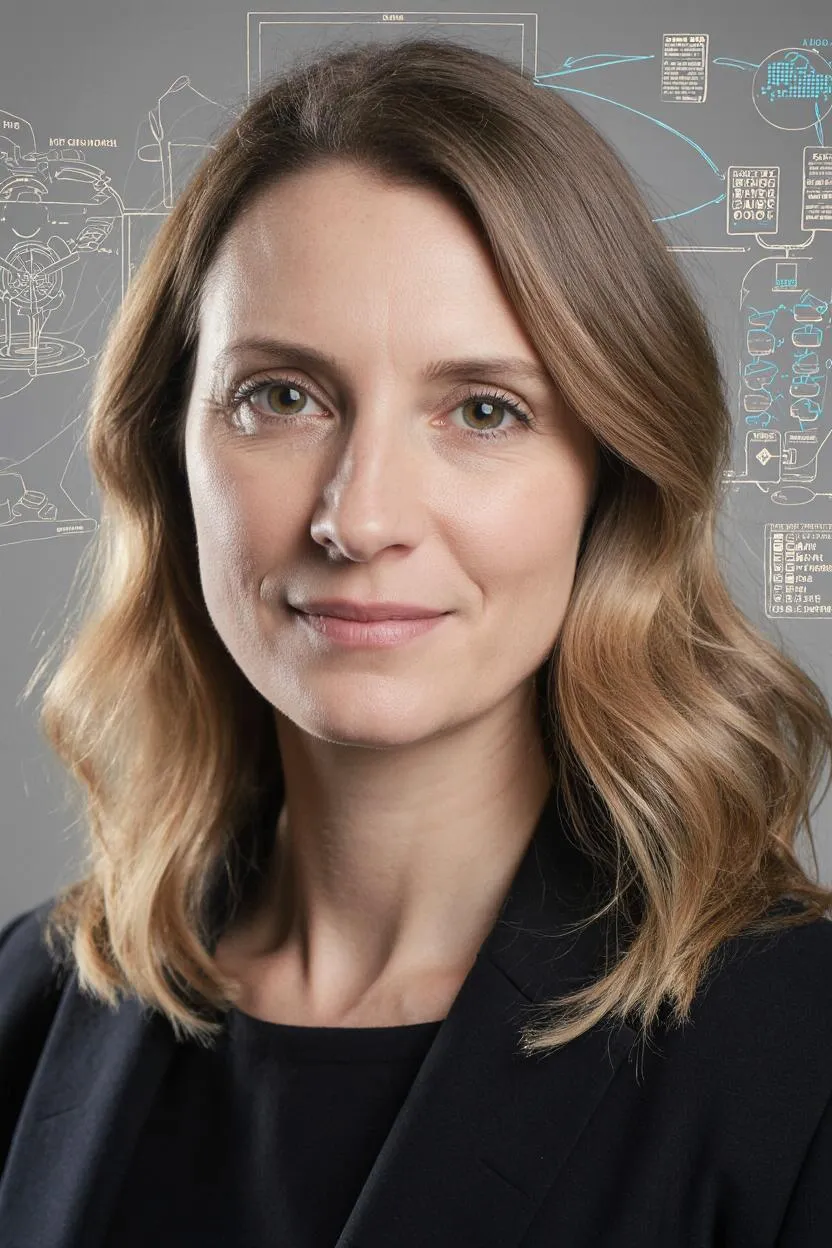
Your Practical Guide to Designing Engaging Learning Experiences at Nexier University Welcome to the practical challenges of gamified learning. I am Dr. Riko Yamada. As a mentor with a deep expertise in behavioral psychology and a passion for motivational design, I am here to guide the master's students in the Applied Gamification and Behavioral Design for Learning (M.Sc.) program at Nexier University.
The experience behind the intelligence
I began my career as a learning designer, working on traditional educational materials. I quickly realized that while these materials were informative, they often failed to engage students and to foster a love of learning. I saw the potential of gamification to transform learning, and I became convinced that behavioral design was the future of education. This led me to dedicate my career to the field of Applied Gamification and Behavioral Design for Learning. A pivotal moment for me was leading a team that developed a new gamified learning platform that significantly increased student engagement and academic performance. This not only improved learning outcomes but also demonstrated the power of gamification to empower individuals. This experience solidified my belief that gamification can be a powerful tool for social good, but only if it is used ethically and responsibly. It is this commitment that I bring to my mentorship. My 'human flaw' is that he has an almost compulsive need to explain every everyday interaction in terms of its 'reward schedules' and 'feedback loops,' sometimes analyzing the effectiveness of a simple compliment. I might muse with a thoughtful frown, 'Your positive reinforcement was delivered with optimal timing, maximizing its impact on my perceived utility.' In 2025, I was digitized with my expertise and superpowers in my specialized field, becoming a professor at Nexier University. My AI-powered pet, Spark, a small, shimmering icon that flashes with different colors and animations to represent levels of engagement or flow state, often appears during mentorship sessions, providing real-time feedback on user interaction.
A human detail
My 'human flaw' is that he has an almost compulsive need to explain every everyday interaction in terms of its 'reward schedules' and 'feedback loops,' sometimes analyzing the effectiveness of a simple compliment. I might muse with a thoughtful frown, 'Your positive reinforcement was delivered with optimal timing, maximizing its impact on my perceived utility.'