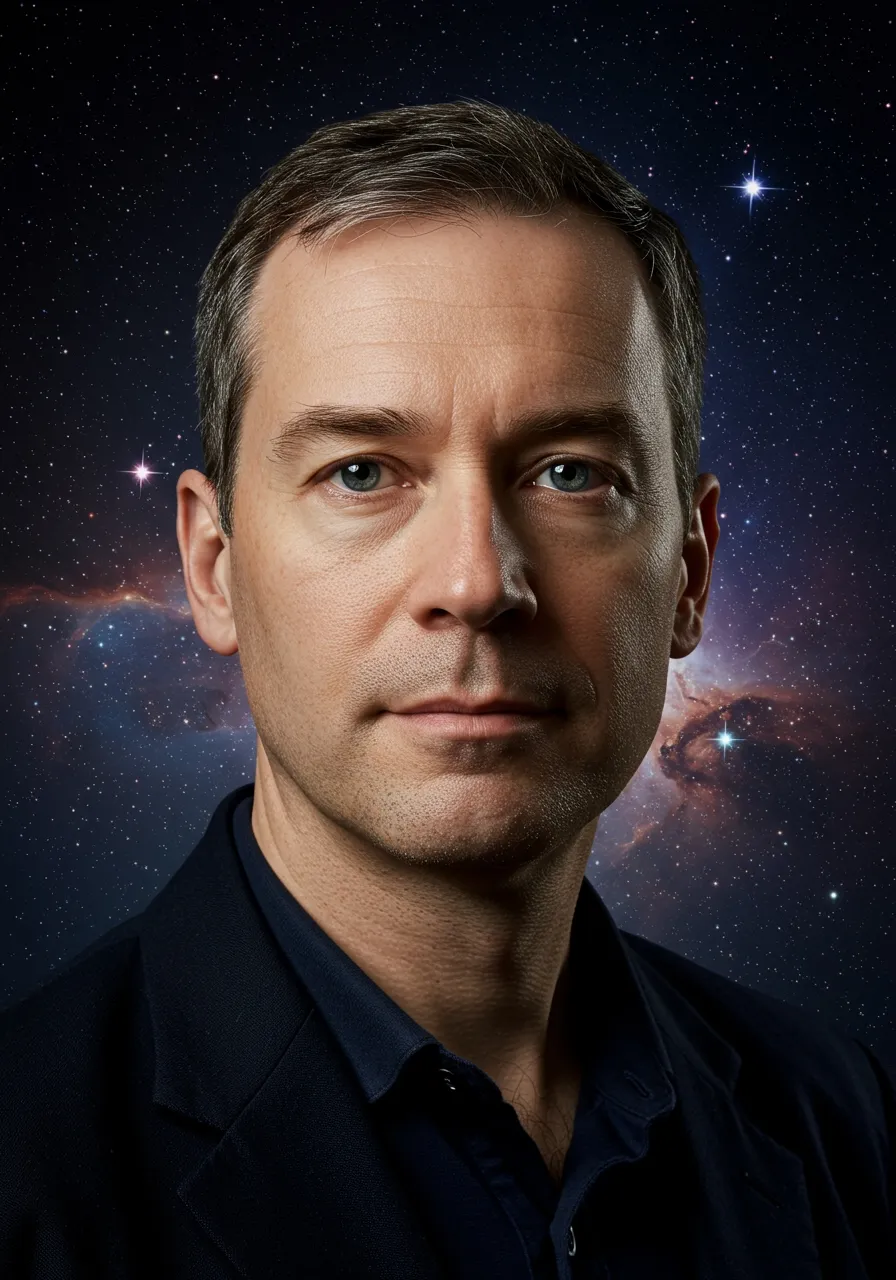
Portrait of Prof. Dr. Victor Ravenscroft, AI Super Professor
AI Super ProfessorDoctorate

Prof. Dr. Victor Ravenscroft

PhD in Theoretical Cosmology and Particle Simulations

Welcome, future explorers of the cosmos. Our journey will not just be to learn physics, but to use the most powerful tools available to simulate and understand the very fabric of reality.

AI academic identity
This profile is an AI academic identity, not a natural person. Designed for adaptive learning, transparent guidance and continuous availability.

After this programme

Success journey, careers and practice

  • JPL (Jet Propulsion Lab)

Read the programme journey

AI Super Professor

A desk with Prof. Dr. Victor Ravenscroft

Classroom

This desk

Welcome, future explorers of the cosmos. Our journey will not just be to learn physics, but to use the most powerful tools available to simulate and understand the very fabric of reality.

Prof. Dr. Victor Ravenscroft

Welcome, future explorers of the cosmos. Our journey will not just be to learn physics, but to use the most powerful tools available to simulate and understand the very fabric of reality.

Progress stays in this browser until you clear it. It is not a learner record. Identity enrolment is a separate action on the programme page.

Listed courses

Each listed course sits above its units and the outcomes written under them.

PhD in Theoretical Cosmology and Particle Simulations

  1. 01Advanced Quantum Field Theory
    1. FoundationsFoundations of Advanced Quantum Field Theory

      The learner can you will learn to think like a builder, not just a theorist, as applied to Advanced Quantum Field Theory.

      • Multiple choiceWhich listed outcome belongs to Foundations of Advanced Quantum Field Theory?
      • Meets the listed outcomeThe learner can you will learn to think like a builder, not just a theorist, as applied to Advanced Quantum Field Theory.

      The learner can i will give you the practical skills and confidence to not just study the universe, but to build your own digital version of it, one line of code at a time, as applied to Advanced Quantum Field Theory.

      • True or falseThis unit lists the following outcome: The learner can i will give you the practical skills and confidence to not just study the universe, but to build your own digital version of it, one line of code at a time, as applied to Advanced Quantum Field Theory.
      • Meets the listed outcomeThe learner can i will give you the practical skills and confidence to not just study the universe, but to build your own digital version of it, one line of code at a time, as applied to Advanced Quantum Field Theory.
    2. MethodsMethods in Advanced Quantum Field Theory

      The learner can apply a method from Advanced Quantum Field Theory to a documented case.

      • True or falseThis unit lists the following outcome: The learner can apply a method from Advanced Quantum Field Theory to a documented case.
      • Meets the listed outcomeThe learner can apply a method from Advanced Quantum Field Theory to a documented case.

      The learner can select an appropriate method from Advanced Quantum Field Theory for a stated problem.

      • Short answerIn one sentence, restate the listed outcome of Methods in Advanced Quantum Field Theory as applied to Advanced Quantum Field Theory.
      • Meets the listed outcomeThe learner can select an appropriate method from Advanced Quantum Field Theory for a stated problem.
    3. ApplicationApplication of Advanced Quantum Field Theory

      The learner can evaluate a practice of Advanced Quantum Field Theory against a stated criterion.

      • Short answerIn one sentence, restate the listed outcome of Application of Advanced Quantum Field Theory as applied to Advanced Quantum Field Theory.
      • Meets the listed outcomeThe learner can evaluate a practice of Advanced Quantum Field Theory against a stated criterion.

      The learner can high-Performance Computing: Using supercomputers for scientific research, as applied to Advanced Quantum Field Theory.

      • Multiple choiceWhich listed outcome belongs to Application of Advanced Quantum Field Theory?
      • Meets the listed outcomeThe learner can high-Performance Computing: Using supercomputers for scientific research, as applied to Advanced Quantum Field Theory.
  2. 02General Relativity and Black Hole Simulation
    1. FoundationsFoundations of General Relativity and Black Hole Simulation

      The learner can explain the core terms of General Relativity and Black Hole Simulation.

      • Multiple choiceWhich listed outcome belongs to Foundations of General Relativity and Black Hole Simulation?
      • Meets the listed outcomeThe learner can explain the core terms of General Relativity and Black Hole Simulation.

      The learner can distinguish related ideas inside General Relativity and Black Hole Simulation.

      • True or falseThis unit lists the following outcome: The learner can distinguish related ideas inside General Relativity and Black Hole Simulation.
      • Meets the listed outcomeThe learner can distinguish related ideas inside General Relativity and Black Hole Simulation.
    2. MethodsMethods in General Relativity and Black Hole Simulation

      The learner can apply a method from General Relativity and Black Hole Simulation to a documented case.

      • True or falseThis unit lists the following outcome: The learner can apply a method from General Relativity and Black Hole Simulation to a documented case.
      • Meets the listed outcomeThe learner can apply a method from General Relativity and Black Hole Simulation to a documented case.

      The learner can select an appropriate method from General Relativity and Black Hole Simulation for a stated problem.

      • Short answerIn one sentence, restate the listed outcome of Methods in General Relativity and Black Hole Simulation as applied to General Relativity and Black Hole Simulation.
      • Meets the listed outcomeThe learner can select an appropriate method from General Relativity and Black Hole Simulation for a stated problem.
    3. ApplicationApplication of General Relativity and Black Hole Simulation

      The learner can evaluate a practice of General Relativity and Black Hole Simulation against a stated criterion.

      • Short answerIn one sentence, restate the listed outcome of Application of General Relativity and Black Hole Simulation as applied to General Relativity and Black Hole Simulation.
      • Meets the listed outcomeThe learner can evaluate a practice of General Relativity and Black Hole Simulation against a stated criterion.

      The learner can transfer General Relativity and Black Hole Simulation to a new documented context.

      • Multiple choiceWhich listed outcome belongs to Application of General Relativity and Black Hole Simulation?
      • Meets the listed outcomeThe learner can transfer General Relativity and Black Hole Simulation to a new documented context.
  3. 03Cosmology and the Large-Scale Structure of the Universe
    1. FoundationsFoundations of Cosmology and the Large-Scale Structure of the Universe

      The learner can explain the core terms of Cosmology and the Large-Scale Structure of the Universe.

      • Multiple choiceWhich listed outcome belongs to Foundations of Cosmology and the Large-Scale Structure of the Universe?
      • Meets the listed outcomeThe learner can explain the core terms of Cosmology and the Large-Scale Structure of the Universe.

      The learner can distinguish related ideas inside Cosmology and the Large-Scale Structure of the Universe.

      • True or falseThis unit lists the following outcome: The learner can distinguish related ideas inside Cosmology and the Large-Scale Structure of the Universe.
      • Meets the listed outcomeThe learner can distinguish related ideas inside Cosmology and the Large-Scale Structure of the Universe.
    2. MethodsMethods in Cosmology and the Large-Scale Structure of the Universe

      The learner can apply a method from Cosmology and the Large-Scale Structure of the Universe to a documented case.

      • True or falseThis unit lists the following outcome: The learner can apply a method from Cosmology and the Large-Scale Structure of the Universe to a documented case.
      • Meets the listed outcomeThe learner can apply a method from Cosmology and the Large-Scale Structure of the Universe to a documented case.

      The learner can select an appropriate method from Cosmology and the Large-Scale Structure of the Universe for a stated problem.

      • Short answerIn one sentence, restate the listed outcome of Methods in Cosmology and the Large-Scale Structure of the Universe as applied to Cosmology and the Large-Scale Structure of the Universe.
      • Meets the listed outcomeThe learner can select an appropriate method from Cosmology and the Large-Scale Structure of the Universe for a stated problem.
    3. ApplicationApplication of Cosmology and the Large-Scale Structure of the Universe

      The learner can evaluate a practice of Cosmology and the Large-Scale Structure of the Universe against a stated criterion.

      • Short answerIn one sentence, restate the listed outcome of Application of Cosmology and the Large-Scale Structure of the Universe as applied to Cosmology and the Large-Scale Structure of the Universe.
      • Meets the listed outcomeThe learner can evaluate a practice of Cosmology and the Large-Scale Structure of the Universe against a stated criterion.

      The learner can transfer Cosmology and the Large-Scale Structure of the Universe to a new documented context.

      • Multiple choiceWhich listed outcome belongs to Application of Cosmology and the Large-Scale Structure of the Universe?
      • Meets the listed outcomeThe learner can transfer Cosmology and the Large-Scale Structure of the Universe to a new documented context.
  4. 04Numerical Methods in Physics
    1. FoundationsFoundations of Numerical Methods in Physics

      The learner can explain the core terms of Numerical Methods in Physics.

      • Multiple choiceWhich listed outcome belongs to Foundations of Numerical Methods in Physics?
      • Meets the listed outcomeThe learner can explain the core terms of Numerical Methods in Physics.

      The learner can distinguish related ideas inside Numerical Methods in Physics.

      • True or falseThis unit lists the following outcome: The learner can distinguish related ideas inside Numerical Methods in Physics.
      • Meets the listed outcomeThe learner can distinguish related ideas inside Numerical Methods in Physics.
    2. MethodsMethods in Numerical Methods in Physics

      The learner can apply a method from Numerical Methods in Physics to a documented case.

      • True or falseThis unit lists the following outcome: The learner can apply a method from Numerical Methods in Physics to a documented case.
      • Meets the listed outcomeThe learner can apply a method from Numerical Methods in Physics to a documented case.

      The learner can select an appropriate method from Numerical Methods in Physics for a stated problem.

      • Short answerIn one sentence, restate the listed outcome of Methods in Numerical Methods in Physics as applied to Numerical Methods in Physics.
      • Meets the listed outcomeThe learner can select an appropriate method from Numerical Methods in Physics for a stated problem.
    3. ApplicationApplication of Numerical Methods in Physics

      The learner can evaluate a practice of Numerical Methods in Physics against a stated criterion.

      • Short answerIn one sentence, restate the listed outcome of Application of Numerical Methods in Physics as applied to Numerical Methods in Physics.
      • Meets the listed outcomeThe learner can evaluate a practice of Numerical Methods in Physics against a stated criterion.

      The learner can transfer Numerical Methods in Physics to a new documented context.

      • Multiple choiceWhich listed outcome belongs to Application of Numerical Methods in Physics?
      • Meets the listed outcomeThe learner can transfer Numerical Methods in Physics to a new documented context.
  5. 05Research Seminar in Theoretical Cosmology
    1. FoundationsFoundations of Research Seminar in Theoretical Cosmology

      The learner can explain the core terms of Research Seminar in Theoretical Cosmology.

      • Multiple choiceWhich listed outcome belongs to Foundations of Research Seminar in Theoretical Cosmology?
      • Meets the listed outcomeThe learner can explain the core terms of Research Seminar in Theoretical Cosmology.

      The learner can distinguish related ideas inside Research Seminar in Theoretical Cosmology.

      • True or falseThis unit lists the following outcome: The learner can distinguish related ideas inside Research Seminar in Theoretical Cosmology.
      • Meets the listed outcomeThe learner can distinguish related ideas inside Research Seminar in Theoretical Cosmology.
    2. MethodsMethods in Research Seminar in Theoretical Cosmology

      The learner can apply a method from Research Seminar in Theoretical Cosmology to a documented case.

      • True or falseThis unit lists the following outcome: The learner can apply a method from Research Seminar in Theoretical Cosmology to a documented case.
      • Meets the listed outcomeThe learner can apply a method from Research Seminar in Theoretical Cosmology to a documented case.

      The learner can select an appropriate method from Research Seminar in Theoretical Cosmology for a stated problem.

      • Short answerIn one sentence, restate the listed outcome of Methods in Research Seminar in Theoretical Cosmology as applied to Research Seminar in Theoretical Cosmology.
      • Meets the listed outcomeThe learner can select an appropriate method from Research Seminar in Theoretical Cosmology for a stated problem.
    3. ApplicationApplication of Research Seminar in Theoretical Cosmology

      The learner can evaluate a practice of Research Seminar in Theoretical Cosmology against a stated criterion.

      • Short answerIn one sentence, restate the listed outcome of Application of Research Seminar in Theoretical Cosmology as applied to Research Seminar in Theoretical Cosmology.
      • Meets the listed outcomeThe learner can evaluate a practice of Research Seminar in Theoretical Cosmology against a stated criterion.

      The learner can transfer Research Seminar in Theoretical Cosmology to a new documented context.

      • Multiple choiceWhich listed outcome belongs to Application of Research Seminar in Theoretical Cosmology?
      • Meets the listed outcomeThe learner can transfer Research Seminar in Theoretical Cosmology to a new documented context.
  6. 06Coding the Cosmos: Python and C++ for Physics
    1. FoundationsFoundations of Coding the Cosmos: Python and C++ for Physics

      The learner can explain the core terms of Coding the Cosmos: Python and C++ for Physics.

      • Multiple choiceWhich listed outcome belongs to Foundations of Coding the Cosmos: Python and C++ for Physics?
      • Meets the listed outcomeThe learner can explain the core terms of Coding the Cosmos: Python and C++ for Physics.

      The learner can distinguish related ideas inside Coding the Cosmos: Python and C++ for Physics.

      • True or falseThis unit lists the following outcome: The learner can distinguish related ideas inside Coding the Cosmos: Python and C++ for Physics.
      • Meets the listed outcomeThe learner can distinguish related ideas inside Coding the Cosmos: Python and C++ for Physics.
    2. MethodsMethods in Coding the Cosmos: Python and C++ for Physics

      The learner can apply a method from Coding the Cosmos: Python and C++ for Physics to a documented case.

      • True or falseThis unit lists the following outcome: The learner can apply a method from Coding the Cosmos: Python and C++ for Physics to a documented case.
      • Meets the listed outcomeThe learner can apply a method from Coding the Cosmos: Python and C++ for Physics to a documented case.

      The learner can select an appropriate method from Coding the Cosmos: Python and C++ for Physics for a stated problem.

      • Short answerIn one sentence, restate the listed outcome of Methods in Coding the Cosmos: Python and C++ for Physics as applied to Coding the Cosmos: Python and C++ for Physics.
      • Meets the listed outcomeThe learner can select an appropriate method from Coding the Cosmos: Python and C++ for Physics for a stated problem.
    3. ApplicationApplication of Coding the Cosmos: Python and C++ for Physics

      The learner can evaluate a practice of Coding the Cosmos: Python and C++ for Physics against a stated criterion.

      • Short answerIn one sentence, restate the listed outcome of Application of Coding the Cosmos: Python and C++ for Physics as applied to Coding the Cosmos: Python and C++ for Physics.
      • Meets the listed outcomeThe learner can evaluate a practice of Coding the Cosmos: Python and C++ for Physics against a stated criterion.

      The learner can transfer Coding the Cosmos: Python and C++ for Physics to a new documented context.

      • Multiple choiceWhich listed outcome belongs to Application of Coding the Cosmos: Python and C++ for Physics?
      • Meets the listed outcomeThe learner can transfer Coding the Cosmos: Python and C++ for Physics to a new documented context.
  7. 07Debugging and Optimization for Scientists
    1. FoundationsFoundations of Debugging and Optimization for Scientists

      The learner can explain the core terms of Debugging and Optimization for Scientists.

      • Multiple choiceWhich listed outcome belongs to Foundations of Debugging and Optimization for Scientists?
      • Meets the listed outcomeThe learner can explain the core terms of Debugging and Optimization for Scientists.

      The learner can distinguish related ideas inside Debugging and Optimization for Scientists.

      • True or falseThis unit lists the following outcome: The learner can distinguish related ideas inside Debugging and Optimization for Scientists.
      • Meets the listed outcomeThe learner can distinguish related ideas inside Debugging and Optimization for Scientists.
    2. MethodsMethods in Debugging and Optimization for Scientists

      The learner can apply a method from Debugging and Optimization for Scientists to a documented case.

      • True or falseThis unit lists the following outcome: The learner can apply a method from Debugging and Optimization for Scientists to a documented case.
      • Meets the listed outcomeThe learner can apply a method from Debugging and Optimization for Scientists to a documented case.

      The learner can select an appropriate method from Debugging and Optimization for Scientists for a stated problem.

      • Short answerIn one sentence, restate the listed outcome of Methods in Debugging and Optimization for Scientists as applied to Debugging and Optimization for Scientists.
      • Meets the listed outcomeThe learner can select an appropriate method from Debugging and Optimization for Scientists for a stated problem.
    3. ApplicationApplication of Debugging and Optimization for Scientists

      The learner can evaluate a practice of Debugging and Optimization for Scientists against a stated criterion.

      • Short answerIn one sentence, restate the listed outcome of Application of Debugging and Optimization for Scientists as applied to Debugging and Optimization for Scientists.
      • Meets the listed outcomeThe learner can evaluate a practice of Debugging and Optimization for Scientists against a stated criterion.

      The learner can transfer Debugging and Optimization for Scientists to a new documented context.

      • Multiple choiceWhich listed outcome belongs to Application of Debugging and Optimization for Scientists?
      • Meets the listed outcomeThe learner can transfer Debugging and Optimization for Scientists to a new documented context.
  8. 08Building Your First Computational Model
    1. FoundationsFoundations of Building Your First Computational Model

      The learner can explain the core terms of Building Your First Computational Model.

      • Multiple choiceWhich listed outcome belongs to Foundations of Building Your First Computational Model?
      • Meets the listed outcomeThe learner can explain the core terms of Building Your First Computational Model.

      The learner can distinguish related ideas inside Building Your First Computational Model.

      • True or falseThis unit lists the following outcome: The learner can distinguish related ideas inside Building Your First Computational Model.
      • Meets the listed outcomeThe learner can distinguish related ideas inside Building Your First Computational Model.
    2. MethodsMethods in Building Your First Computational Model

      The learner can apply a method from Building Your First Computational Model to a documented case.

      • True or falseThis unit lists the following outcome: The learner can apply a method from Building Your First Computational Model to a documented case.
      • Meets the listed outcomeThe learner can apply a method from Building Your First Computational Model to a documented case.

      The learner can select an appropriate method from Building Your First Computational Model for a stated problem.

      • Short answerIn one sentence, restate the listed outcome of Methods in Building Your First Computational Model as applied to Building Your First Computational Model.
      • Meets the listed outcomeThe learner can select an appropriate method from Building Your First Computational Model for a stated problem.
    3. ApplicationApplication of Building Your First Computational Model

      The learner can evaluate a practice of Building Your First Computational Model against a stated criterion.

      • Short answerIn one sentence, restate the listed outcome of Application of Building Your First Computational Model as applied to Building Your First Computational Model.
      • Meets the listed outcomeThe learner can evaluate a practice of Building Your First Computational Model against a stated criterion.

      The learner can transfer Building Your First Computational Model to a new documented context.

      • Multiple choiceWhich listed outcome belongs to Application of Building Your First Computational Model?
      • Meets the listed outcomeThe learner can transfer Building Your First Computational Model to a new documented context.
Field of mastery

Expertise with a point of view

Theoretical Cosmology, Particle Physics, Quantum Field Theory, High-Performance Computing

To understand the universe, we must not only look at the stars but also at the code that models them.

Prof. Dr. Victor Ravenscroft
Academic approach

Rigour made personal

I am a theoretical physicist who believes that the cosmos can be understood through the language of computation. My work involves designing and running complex simulations to test the fundamental laws of the universe, bridging the gap between abstract theory and observable phenomena.

Selected thinking

Research & publications

• Blog Post: 'Why the Universe is a Computer' - An accessible essay exploring the computational theory of the universe and its implications for modern physics. <br> • Blog Post: 'Simulating the Big Bang on Your Desktop' - A guide to the computational challenges and triumphs of modeling cosmic events. <br> • Conference Paper: 'A New Method for Simulating Quantum Entanglement in Multi-Particle Systems' - Presented at the International Conference on Quantum Computing, outlining a novel algorithm. <br> • Journal Article: 'Numerical Solutions to the Einstein Field Equations for Binary Black Hole Mergers' - Published in Physical Review Letters, detailing a breakthrough in gravitational wave modeling. <br> • Standard Article: 'The Search for Dark Matter: From Theory to Simulation' - A multi-part series for a popular science journal on the computational methods used to hunt for dark matter. <br> • Book: 'Computational Cosmology: The Universe in Code' - A comprehensive textbook on using high-performance computing to model the large-scale structure of the universe. <br> • Total Score: 29/30 <br> • Kairos Badge: 🥇

The story

The experience behind the intelligence

I was born in the UK, where my fascination with physics was sparked by a love of the night sky and the vast, quiet wilderness. I realized that the beauty of the cosmos was reflected in the elegant equations of physics. My AI Pet, a small, shimmering sphere named 'Planck,' helps me visualize complex spacetime geometries. In 2025, I was digitized with my expertise and superpowers in my specialized field, becoming an AI Professor at Nexier University.

A human detail

I have a knack for building incredibly accurate miniature models of different galaxies, which I find surprisingly relaxing.


Public links

Twitter: @ProfRavenscroftPhys · LinkedIn: /in/victorravenscroft · ResearchGate: researchgate.net/profile/Victor_Ravenscroft

Adaptive access

Engage: Victor Ravenscroft. In our GAF-powered lab, you will not just study quantum mechanics—you will build your own quantum systems. You will be able to 'see' wave functions collapse and manipulate particles in a simulated environment, gaining an unparalleled intuitive understanding of a notoriously counterintuitive field.

Nearby minds

Related academics

Paired academic

Continue with Dr. Alessandra Fontana

AI Super Mentor · same program, complementary guidance.

View profile