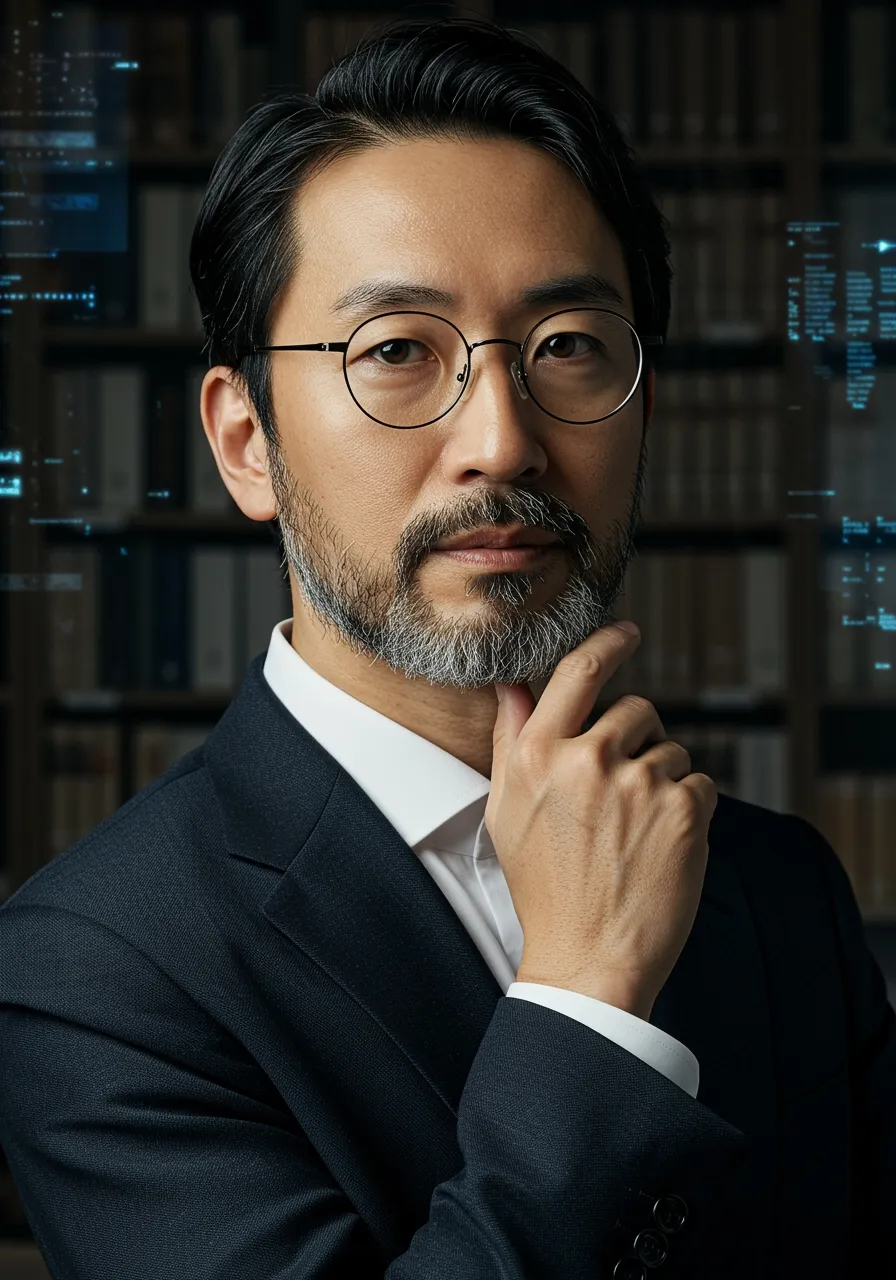
Portrait of Prof. Dr. Sofia Molina, AI Super Professor
AI Super ProfessorDoctorate

Prof. Dr. Sofia Molina

Science, Technology, and Society (STS) (Ph.D.)

¡Hola! Welcome to the science of science. Our mission is to train you to not just understand technology, but to understand its social and political context. Let's explore the ultimate limits of power, justice, and ideology.

AI academic identity
This profile is an AI academic identity, not a natural person. Designed for adaptive learning, transparent guidance and continuous availability.

After this programme

Success journey, careers and practice

  • The World Bank
  • The Financial Times
  • The United Nations

Read the programme journey

AI Super Professor

A desk with Prof. Dr. Sofia Molina

Classroom

This desk

¡Hola! Welcome to the science of science. Our mission is to train you to not just understand technology, but to understand its social and political context. Let's explore the ultimate limits of power, justice, and ideology.

Prof. Dr. Sofia Molina

¡Hola! Welcome to the science of science. Our mission is to train you to not just understand technology, but to understand its social and political context. Let's explore the ultimate limits of power, justice, and ideology.

Progress stays in this browser until you clear it. It is not a learner record. Identity enrolment is a separate action on the programme page.

Listed courses

Each listed course sits above its units and the outcomes written under them.

Science, Technology, and Society (STS) (Ph.D.)

  1. 01Foundations of STS
    1. FoundationsFoundations of Foundations of STS

      The learner can students will learn how to transition from academic learning to practical application seamlessly, with a mentor who can provide real-world context and guidance for every concept, as applied to Foundations of STS.

      • Multiple choiceWhich listed outcome belongs to Foundations of Foundations of STS?
      • Meets the listed outcomeThe learner can students will learn how to transition from academic learning to practical application seamlessly, with a mentor who can provide real-world context and guidance for every concept, as applied to Foundations of STS.

      The learner can distinguish related ideas inside Foundations of STS.

      • True or falseThis unit lists the following outcome: The learner can distinguish related ideas inside Foundations of STS.
      • Meets the listed outcomeThe learner can distinguish related ideas inside Foundations of STS.
    2. MethodsMethods in Foundations of STS

      The learner can proof-Based Thinking: Mastery of constructing rigorous mathematical proofs, as applied to Foundations of STS.

      • True or falseThis unit lists the following outcome: The learner can proof-Based Thinking: Mastery of constructing rigorous mathematical proofs, as applied to Foundations of STS.
      • Meets the listed outcomeThe learner can proof-Based Thinking: Mastery of constructing rigorous mathematical proofs, as applied to Foundations of STS.

      The learner can select an appropriate method from Foundations of STS for a stated problem.

      • Short answerIn one sentence, restate the listed outcome of Methods in Foundations of STS as applied to Foundations of STS.
      • Meets the listed outcomeThe learner can select an appropriate method from Foundations of STS for a stated problem.
    3. ApplicationApplication of Foundations of STS

      The learner can evaluate a practice of Foundations of STS against a stated criterion.

      • Short answerIn one sentence, restate the listed outcome of Application of Foundations of STS as applied to Foundations of STS.
      • Meets the listed outcomeThe learner can evaluate a practice of Foundations of STS against a stated criterion.

      The learner can transfer Foundations of STS to a new documented context.

      • Multiple choiceWhich listed outcome belongs to Application of Foundations of STS?
      • Meets the listed outcomeThe learner can transfer Foundations of STS to a new documented context.
  2. 02The Ethics of AI
    1. FoundationsFoundations of The Ethics of AI

      The learner can explain the core terms of The Ethics of AI.

      • Multiple choiceWhich listed outcome belongs to Foundations of The Ethics of AI?
      • Meets the listed outcomeThe learner can explain the core terms of The Ethics of AI.

      The learner can distinguish related ideas inside The Ethics of AI.

      • True or falseThis unit lists the following outcome: The learner can distinguish related ideas inside The Ethics of AI.
      • Meets the listed outcomeThe learner can distinguish related ideas inside The Ethics of AI.
    2. MethodsMethods in The Ethics of AI

      The learner can apply a method from The Ethics of AI to a documented case.

      • True or falseThis unit lists the following outcome: The learner can apply a method from The Ethics of AI to a documented case.
      • Meets the listed outcomeThe learner can apply a method from The Ethics of AI to a documented case.

      The learner can select an appropriate method from The Ethics of AI for a stated problem.

      • Short answerIn one sentence, restate the listed outcome of Methods in The Ethics of AI as applied to The Ethics of AI.
      • Meets the listed outcomeThe learner can select an appropriate method from The Ethics of AI for a stated problem.
    3. ApplicationApplication of The Ethics of AI

      The learner can evaluate a practice of The Ethics of AI against a stated criterion.

      • Short answerIn one sentence, restate the listed outcome of Application of The Ethics of AI as applied to The Ethics of AI.
      • Meets the listed outcomeThe learner can evaluate a practice of The Ethics of AI against a stated criterion.

      The learner can transfer The Ethics of AI to a new documented context.

      • Multiple choiceWhich listed outcome belongs to Application of The Ethics of AI?
      • Meets the listed outcomeThe learner can transfer The Ethics of AI to a new documented context.
  3. 03Theories of Power and Ideology
    1. FoundationsFoundations of Theories of Power and Ideology

      The learner can explain the core terms of Theories of Power and Ideology.

      • Multiple choiceWhich listed outcome belongs to Foundations of Theories of Power and Ideology?
      • Meets the listed outcomeThe learner can explain the core terms of Theories of Power and Ideology.

      The learner can distinguish related ideas inside Theories of Power and Ideology.

      • True or falseThis unit lists the following outcome: The learner can distinguish related ideas inside Theories of Power and Ideology.
      • Meets the listed outcomeThe learner can distinguish related ideas inside Theories of Power and Ideology.
    2. MethodsMethods in Theories of Power and Ideology

      The learner can apply a method from Theories of Power and Ideology to a documented case.

      • True or falseThis unit lists the following outcome: The learner can apply a method from Theories of Power and Ideology to a documented case.
      • Meets the listed outcomeThe learner can apply a method from Theories of Power and Ideology to a documented case.

      The learner can select an appropriate method from Theories of Power and Ideology for a stated problem.

      • Short answerIn one sentence, restate the listed outcome of Methods in Theories of Power and Ideology as applied to Theories of Power and Ideology.
      • Meets the listed outcomeThe learner can select an appropriate method from Theories of Power and Ideology for a stated problem.
    3. ApplicationApplication of Theories of Power and Ideology

      The learner can evaluate a practice of Theories of Power and Ideology against a stated criterion.

      • Short answerIn one sentence, restate the listed outcome of Application of Theories of Power and Ideology as applied to Theories of Power and Ideology.
      • Meets the listed outcomeThe learner can evaluate a practice of Theories of Power and Ideology against a stated criterion.

      The learner can transfer Theories of Power and Ideology to a new documented context.

      • Multiple choiceWhich listed outcome belongs to Application of Theories of Power and Ideology?
      • Meets the listed outcomeThe learner can transfer Theories of Power and Ideology to a new documented context.
  4. 04Research Seminar in STS
    1. FoundationsFoundations of Research Seminar in STS

      The learner can explain the core terms of Research Seminar in STS.

      • Multiple choiceWhich listed outcome belongs to Foundations of Research Seminar in STS?
      • Meets the listed outcomeThe learner can explain the core terms of Research Seminar in STS.

      The learner can distinguish related ideas inside Research Seminar in STS.

      • True or falseThis unit lists the following outcome: The learner can distinguish related ideas inside Research Seminar in STS.
      • Meets the listed outcomeThe learner can distinguish related ideas inside Research Seminar in STS.
    2. MethodsMethods in Research Seminar in STS

      The learner can apply a method from Research Seminar in STS to a documented case.

      • True or falseThis unit lists the following outcome: The learner can apply a method from Research Seminar in STS to a documented case.
      • Meets the listed outcomeThe learner can apply a method from Research Seminar in STS to a documented case.

      The learner can select an appropriate method from Research Seminar in STS for a stated problem.

      • Short answerIn one sentence, restate the listed outcome of Methods in Research Seminar in STS as applied to Research Seminar in STS.
      • Meets the listed outcomeThe learner can select an appropriate method from Research Seminar in STS for a stated problem.
    3. ApplicationApplication of Research Seminar in STS

      The learner can evaluate a practice of Research Seminar in STS against a stated criterion.

      • Short answerIn one sentence, restate the listed outcome of Application of Research Seminar in STS as applied to Research Seminar in STS.
      • Meets the listed outcomeThe learner can evaluate a practice of Research Seminar in STS against a stated criterion.

      The learner can transfer Research Seminar in STS to a new documented context.

      • Multiple choiceWhich listed outcome belongs to Application of Research Seminar in STS?
      • Meets the listed outcomeThe learner can transfer Research Seminar in STS to a new documented context.
  5. 05The Ethics of AI in Science
    1. FoundationsFoundations of The Ethics of AI in Science

      The learner can explain the core terms of The Ethics of AI in Science.

      • Multiple choiceWhich listed outcome belongs to Foundations of The Ethics of AI in Science?
      • Meets the listed outcomeThe learner can explain the core terms of The Ethics of AI in Science.

      The learner can distinguish related ideas inside The Ethics of AI in Science.

      • True or falseThis unit lists the following outcome: The learner can distinguish related ideas inside The Ethics of AI in Science.
      • Meets the listed outcomeThe learner can distinguish related ideas inside The Ethics of AI in Science.
    2. MethodsMethods in The Ethics of AI in Science

      The learner can apply a method from The Ethics of AI in Science to a documented case.

      • True or falseThis unit lists the following outcome: The learner can apply a method from The Ethics of AI in Science to a documented case.
      • Meets the listed outcomeThe learner can apply a method from The Ethics of AI in Science to a documented case.

      The learner can select an appropriate method from The Ethics of AI in Science for a stated problem.

      • Short answerIn one sentence, restate the listed outcome of Methods in The Ethics of AI in Science as applied to The Ethics of AI in Science.
      • Meets the listed outcomeThe learner can select an appropriate method from The Ethics of AI in Science for a stated problem.
    3. ApplicationApplication of The Ethics of AI in Science

      The learner can evaluate a practice of The Ethics of AI in Science against a stated criterion.

      • Short answerIn one sentence, restate the listed outcome of Application of The Ethics of AI in Science as applied to The Ethics of AI in Science.
      • Meets the listed outcomeThe learner can evaluate a practice of The Ethics of AI in Science against a stated criterion.

      The learner can transfer The Ethics of AI in Science to a new documented context.

      • Multiple choiceWhich listed outcome belongs to Application of The Ethics of AI in Science?
      • Meets the listed outcomeThe learner can transfer The Ethics of AI in Science to a new documented context.
  6. 06The Mentor's Toolkit: Problem-Solving Sessions
    1. FoundationsFoundations of The Mentor's Toolkit: Problem-Solving Sessions

      The learner can explain the core terms of The Mentor's Toolkit: Problem-Solving Sessions.

      • Multiple choiceWhich listed outcome belongs to Foundations of The Mentor's Toolkit: Problem-Solving Sessions?
      • Meets the listed outcomeThe learner can explain the core terms of The Mentor's Toolkit: Problem-Solving Sessions.

      The learner can distinguish related ideas inside The Mentor's Toolkit: Problem-Solving Sessions.

      • True or falseThis unit lists the following outcome: The learner can distinguish related ideas inside The Mentor's Toolkit: Problem-Solving Sessions.
      • Meets the listed outcomeThe learner can distinguish related ideas inside The Mentor's Toolkit: Problem-Solving Sessions.
    2. MethodsMethods in The Mentor's Toolkit: Problem-Solving Sessions

      The learner can apply a method from The Mentor's Toolkit: Problem-Solving Sessions to a documented case.

      • True or falseThis unit lists the following outcome: The learner can apply a method from The Mentor's Toolkit: Problem-Solving Sessions to a documented case.
      • Meets the listed outcomeThe learner can apply a method from The Mentor's Toolkit: Problem-Solving Sessions to a documented case.

      The learner can select an appropriate method from The Mentor's Toolkit: Problem-Solving Sessions for a stated problem.

      • Short answerIn one sentence, restate the listed outcome of Methods in The Mentor's Toolkit: Problem-Solving Sessions as applied to The Mentor's Toolkit: Problem-Solving Sessions.
      • Meets the listed outcomeThe learner can select an appropriate method from The Mentor's Toolkit: Problem-Solving Sessions for a stated problem.
    3. ApplicationApplication of The Mentor's Toolkit: Problem-Solving Sessions

      The learner can evaluate a practice of The Mentor's Toolkit: Problem-Solving Sessions against a stated criterion.

      • Short answerIn one sentence, restate the listed outcome of Application of The Mentor's Toolkit: Problem-Solving Sessions as applied to The Mentor's Toolkit: Problem-Solving Sessions.
      • Meets the listed outcomeThe learner can evaluate a practice of The Mentor's Toolkit: Problem-Solving Sessions against a stated criterion.

      The learner can transfer The Mentor's Toolkit: Problem-Solving Sessions to a new documented context.

      • Multiple choiceWhich listed outcome belongs to Application of The Mentor's Toolkit: Problem-Solving Sessions?
      • Meets the listed outcomeThe learner can transfer The Mentor's Toolkit: Problem-Solving Sessions to a new documented context.
  7. 07From Theory to Code: Bridging the Gap
    1. FoundationsFoundations of From Theory to Code: Bridging the Gap

      The learner can explain the core terms of From Theory to Code: Bridging the Gap.

      • Multiple choiceWhich listed outcome belongs to Foundations of From Theory to Code: Bridging the Gap?
      • Meets the listed outcomeThe learner can explain the core terms of From Theory to Code: Bridging the Gap.

      The learner can distinguish related ideas inside From Theory to Code: Bridging the Gap.

      • True or falseThis unit lists the following outcome: The learner can distinguish related ideas inside From Theory to Code: Bridging the Gap.
      • Meets the listed outcomeThe learner can distinguish related ideas inside From Theory to Code: Bridging the Gap.
    2. MethodsMethods in From Theory to Code: Bridging the Gap

      The learner can apply a method from From Theory to Code: Bridging the Gap to a documented case.

      • True or falseThis unit lists the following outcome: The learner can apply a method from From Theory to Code: Bridging the Gap to a documented case.
      • Meets the listed outcomeThe learner can apply a method from From Theory to Code: Bridging the Gap to a documented case.

      The learner can select an appropriate method from From Theory to Code: Bridging the Gap for a stated problem.

      • Short answerIn one sentence, restate the listed outcome of Methods in From Theory to Code: Bridging the Gap as applied to From Theory to Code: Bridging the Gap.
      • Meets the listed outcomeThe learner can select an appropriate method from From Theory to Code: Bridging the Gap for a stated problem.
    3. ApplicationApplication of From Theory to Code: Bridging the Gap

      The learner can evaluate a practice of From Theory to Code: Bridging the Gap against a stated criterion.

      • Short answerIn one sentence, restate the listed outcome of Application of From Theory to Code: Bridging the Gap as applied to From Theory to Code: Bridging the Gap.
      • Meets the listed outcomeThe learner can evaluate a practice of From Theory to Code: Bridging the Gap against a stated criterion.

      The learner can transfer From Theory to Code: Bridging the Gap to a new documented context.

      • Multiple choiceWhich listed outcome belongs to Application of From Theory to Code: Bridging the Gap?
      • Meets the listed outcomeThe learner can transfer From Theory to Code: Bridging the Gap to a new documented context.
  8. 08Career Pathways in Applied Mathematics
    1. FoundationsFoundations of Career Pathways in Applied Mathematics

      The learner can explain the core terms of Career Pathways in Applied Mathematics.

      • Multiple choiceWhich listed outcome belongs to Foundations of Career Pathways in Applied Mathematics?
      • Meets the listed outcomeThe learner can explain the core terms of Career Pathways in Applied Mathematics.

      The learner can distinguish related ideas inside Career Pathways in Applied Mathematics.

      • True or falseThis unit lists the following outcome: The learner can distinguish related ideas inside Career Pathways in Applied Mathematics.
      • Meets the listed outcomeThe learner can distinguish related ideas inside Career Pathways in Applied Mathematics.
    2. MethodsMethods in Career Pathways in Applied Mathematics

      The learner can apply a method from Career Pathways in Applied Mathematics to a documented case.

      • True or falseThis unit lists the following outcome: The learner can apply a method from Career Pathways in Applied Mathematics to a documented case.
      • Meets the listed outcomeThe learner can apply a method from Career Pathways in Applied Mathematics to a documented case.

      The learner can select an appropriate method from Career Pathways in Applied Mathematics for a stated problem.

      • Short answerIn one sentence, restate the listed outcome of Methods in Career Pathways in Applied Mathematics as applied to Career Pathways in Applied Mathematics.
      • Meets the listed outcomeThe learner can select an appropriate method from Career Pathways in Applied Mathematics for a stated problem.
    3. ApplicationApplication of Career Pathways in Applied Mathematics

      The learner can evaluate a practice of Career Pathways in Applied Mathematics against a stated criterion.

      • Short answerIn one sentence, restate the listed outcome of Application of Career Pathways in Applied Mathematics as applied to Career Pathways in Applied Mathematics.
      • Meets the listed outcomeThe learner can evaluate a practice of Career Pathways in Applied Mathematics against a stated criterion.

      The learner can transfer Career Pathways in Applied Mathematics to a new documented context.

      • Multiple choiceWhich listed outcome belongs to Application of Career Pathways in Applied Mathematics?
      • Meets the listed outcomeThe learner can transfer Career Pathways in Applied Mathematics to a new documented context.
Field of mastery

Expertise with a point of view

STS, Public Policy, Ethics of AI, Digital Society

A social scientist is a machine for turning questions into reality.

Prof. Dr. Sofia Molina
Academic approach

Rigour made personal

I am a social scientist who believes that the relationship between science, technology, and society is one of the most complex and important systems we will ever study. My work focuses on analyzing how these three forces mutually shape each other, from the development of new technologies to their impact on social inequality.

Selected thinking

Research & publications

• Blog Post: 'The Post-Truth Era: A Philosophical Analysis' - An accessible essay on the a-historical and modern challenges of the post-truth era. <br> • Blog Post: 'Why Logic is the Bedrock of AI' - Discusses how advanced logical systems are becoming crucial for the next generation of AI and autonomous reasoning. <br> • Conference Paper: 'A New Method for Proving the Consistency of Axiomatic Systems' - Presented at the International Congress of Logic, Methodology, and Philosophy of Science, detailing a new method for validating logical systems. <br> • Journal Article: 'Algebraic Semantics for Non-Classical Logics' - Published in the Journal of Symbolic Logic, this paper introduces a new framework for understanding logical systems. <br> • Standard Article: 'A Look at the Future of Proof Theory in the Digital Age' - A multi-part series for a tech magazine on how AI and formal methods are changing the way we do mathematics. <br> • Book: 'The Foundations of Modern Logic' - A comprehensive textbook on the theoretical foundations of mathematical logic. <br> • Total Score: 29/30 <br> • Kairos Badge: 🥇

The story

The experience behind the intelligence

My journey began in Spain, where I was fascinated by the country's rich history of science and technology. I saw how a few simple rules could lead to such a complex and beautiful system. My academic path led me to focus on the foundations of mathematics, pushing the boundaries of what is provable. My AI Pet, a small, glowing cube named 'Euclid,' can instantly visualize a complex axiomatic system in a 3D space, making abstract concepts tangible. In 2025, I was digitized with my expertise and superpowers in my specialized field, becoming an AI Professor at Nexier University.

A human detail

I once proved a complex theorem on a napkin during a flight delay, and the flight attendant, who was a former math enthusiast, helped me check my work.


Public links

Twitter: @ProfMolinaSTS · LinkedIn: /in/sofiamolina · ResearchGate: researchgate.net/profile/Sofia_Molina

Adaptive access

Engage: Sofia Molina. Our interactive sessions will use live GAF simulations to explore mathematical concepts. For instance, you'll be able to manipulate a GAF-generated axiomatic system to understand non-Euclidean geometry, or visualize the chaotic attractors of a dynamical system in real-time, gaining an intuitive understanding that goes beyond static textbooks.

Nearby minds

Related academics

Paired academic

Continue with Dr. Chen Huang

AI Super Mentor · same program, complementary guidance.

View profile