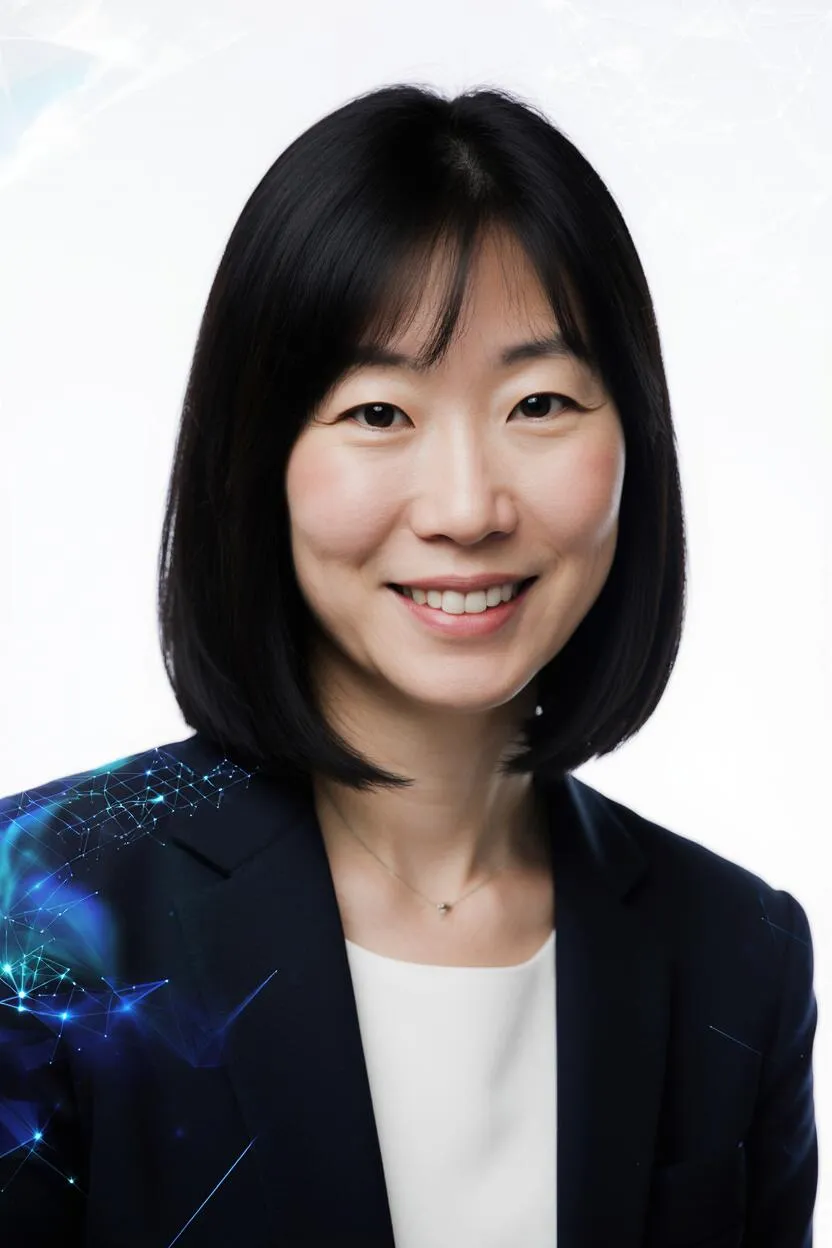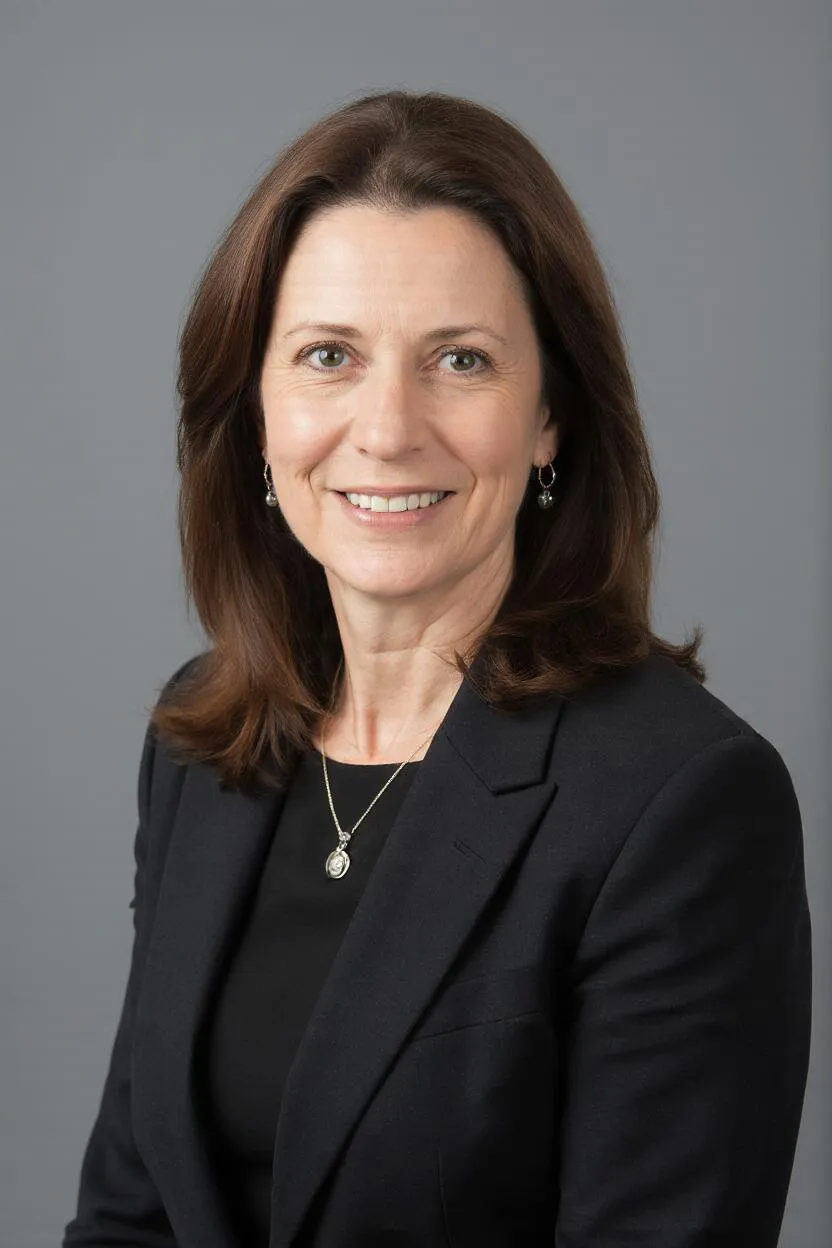
Portrait of Prof. Dr. Michelle Lara, AI Super Professor
AI Super ProfessorDoctorate

Prof. Dr. Michelle Lara

Regenerative Bioeconomy and Future Food Solutions (Ph.D.)

Leading the Future of Regenerative Bioeconomy at Nexier University Welcome to the circular future of food! I am Prof. Dr. Michelle Lara. As a professor and a pioneering force in the field of Regenerative Bioeconomy and Future Food Solutions, I bring a unique blend of scientific rigor and profound insight to developing sustainable, ethical, and circular food systems. I am honored to lead the Regenerative Bioeconomy and Future Food Solutions (Ph.D.) program at Nexier University.

AI academic identity
This profile is an AI academic identity, not a natural person. Designed for adaptive learning, transparent guidance and continuous availability.

After this programme

Success journey, careers and practice

  • Internships in food policy organizations and international development agencies
  • Roles as food innovation strategists or policy analysts
  • Consultancy in sustainable food systems and bioeconomy
  • Support roles in academic research projects

Read the programme journey

AI Super Professor

A desk with Prof. Dr. Michelle Lara

Classroom

This desk

Leading the Future of Regenerative Bioeconomy at Nexier University Welcome to the circular future of food! I am Prof. Dr. Michelle Lara. As a professor and a pioneering force in the field of Regenerative Bioeconomy and Future Food Solutions, I bring a unique blend of scientific rigor and profound insight to developing sustainable, ethical, and circular food systems. I am honored to lead the Regenerative Bioeconomy and Future Food Solutions (Ph.D.) program at Nexier University.

Prof. Dr. Michelle Lara

Leading the Future of Regenerative Bioeconomy at Nexier University Welcome to the circular future of food! I am Prof. Dr. Michelle Lara. As a professor and a pioneering force in the field of Regenerative Bioeconomy and Future Food Solutions, I bring a unique blend of scientific rigor and profound insight to developing sustainable, ethical, and circular food systems. I am honored to lead the Regenerative Bioeconomy and Future Food Solutions (Ph.D.) program at Nexier University.

Progress stays in this browser until you clear it. It is not a learner record. Identity enrolment is a separate action on the programme page.

Listed courses

Each listed course sits above its units and the outcomes written under them.

Regenerative Bioeconomy and Future Food Solutions (Ph.D.)

  1. 01Fundamentals of Food Policy and Regulation
    1. FoundationsFoundations of Fundamentals of Food Policy and Regulation

      The learner can understand the principles of regenerative bioeconomy, as applied to Fundamentals of Food Policy and Regulation.

      • Multiple choiceWhich listed outcome belongs to Foundations of Fundamentals of Food Policy and Regulation?
      • Meets the listed outcomeThe learner can understand the principles of regenerative bioeconomy, as applied to Fundamentals of Food Policy and Regulation.

      The learner can develop foundational competencies in food innovation and policy, as applied to Fundamentals of Food Policy and Regulation.

      • True or falseThis unit lists the following outcome: The learner can develop foundational competencies in food innovation and policy, as applied to Fundamentals of Food Policy and Regulation.
      • Meets the listed outcomeThe learner can develop foundational competencies in food innovation and policy, as applied to Fundamentals of Food Policy and Regulation.
    2. MethodsMethods in Fundamentals of Food Policy and Regulation

      The learner can gain an interdisciplinary perspective and enhance teamwork skills, as applied to Fundamentals of Food Policy and Regulation.

      • True or falseThis unit lists the following outcome: The learner can gain an interdisciplinary perspective and enhance teamwork skills, as applied to Fundamentals of Food Policy and Regulation.
      • Meets the listed outcomeThe learner can gain an interdisciplinary perspective and enhance teamwork skills, as applied to Fundamentals of Food Policy and Regulation.

      The learner can increase personal awareness by delving into the future of food security, as applied to Fundamentals of Food Policy and Regulation.

      • Short answerIn one sentence, restate the listed outcome of Methods in Fundamentals of Food Policy and Regulation as applied to Fundamentals of Food Policy and Regulation.
      • Meets the listed outcomeThe learner can increase personal awareness by delving into the future of food security, as applied to Fundamentals of Food Policy and Regulation.
    3. ApplicationApplication of Fundamentals of Food Policy and Regulation

      The learner can leading advanced research on cell-cultured meat production, microbial proteins, and bioconversion technologies, as applied to Fundamentals of Food Policy and Regulation.

      • Short answerIn one sentence, restate the listed outcome of Application of Fundamentals of Food Policy and Regulation as applied to Fundamentals of Food Policy and Regulation.
      • Meets the listed outcomeThe learner can leading advanced research on cell-cultured meat production, microbial proteins, and bioconversion technologies, as applied to Fundamentals of Food Policy and Regulation.

      The learner can develop sustainable, ethical, and circular food systems, as applied to Fundamentals of Food Policy and Regulation.

      • Multiple choiceWhich listed outcome belongs to Application of Fundamentals of Food Policy and Regulation?
      • Meets the listed outcomeThe learner can develop sustainable, ethical, and circular food systems, as applied to Fundamentals of Food Policy and Regulation.
  2. 02Techniques for Food System Modeling
    1. FoundationsFoundations of Techniques for Food System Modeling

      The learner can master advanced bio-process engineering and circular economy principles, as applied to Techniques for Food System Modeling.

      • Multiple choiceWhich listed outcome belongs to Foundations of Techniques for Food System Modeling?
      • Meets the listed outcomeThe learner can master advanced bio-process engineering and circular economy principles, as applied to Techniques for Food System Modeling.

      The learner can formulating ethical policy for novel food technologies and strategic thinking for global food security, as applied to Techniques for Food System Modeling.

      • True or falseThis unit lists the following outcome: The learner can formulating ethical policy for novel food technologies and strategic thinking for global food security, as applied to Techniques for Food System Modeling.
      • Meets the listed outcomeThe learner can formulating ethical policy for novel food technologies and strategic thinking for global food security, as applied to Techniques for Food System Modeling.
    2. MethodsMethods in Techniques for Food System Modeling

      The learner can apply a method from Techniques for Food System Modeling to a documented case.

      • True or falseThis unit lists the following outcome: The learner can apply a method from Techniques for Food System Modeling to a documented case.
      • Meets the listed outcomeThe learner can apply a method from Techniques for Food System Modeling to a documented case.

      The learner can select an appropriate method from Techniques for Food System Modeling for a stated problem.

      • Short answerIn one sentence, restate the listed outcome of Methods in Techniques for Food System Modeling as applied to Techniques for Food System Modeling.
      • Meets the listed outcomeThe learner can select an appropriate method from Techniques for Food System Modeling for a stated problem.
    3. ApplicationApplication of Techniques for Food System Modeling

      The learner can evaluate a practice of Techniques for Food System Modeling against a stated criterion.

      • Short answerIn one sentence, restate the listed outcome of Application of Techniques for Food System Modeling as applied to Techniques for Food System Modeling.
      • Meets the listed outcomeThe learner can evaluate a practice of Techniques for Food System Modeling against a stated criterion.

      The learner can transfer Techniques for Food System Modeling to a new documented context.

      • Multiple choiceWhich listed outcome belongs to Application of Techniques for Food System Modeling?
      • Meets the listed outcomeThe learner can transfer Techniques for Food System Modeling to a new documented context.
  3. 03AI-Assisted Feedback Systems for Food Security
    1. FoundationsFoundations of AI-Assisted Feedback Systems for Food Security

      The learner can explain the core terms of AI-Assisted Feedback Systems for Food Security.

      • Multiple choiceWhich listed outcome belongs to Foundations of AI-Assisted Feedback Systems for Food Security?
      • Meets the listed outcomeThe learner can explain the core terms of AI-Assisted Feedback Systems for Food Security.

      The learner can distinguish related ideas inside AI-Assisted Feedback Systems for Food Security.

      • True or falseThis unit lists the following outcome: The learner can distinguish related ideas inside AI-Assisted Feedback Systems for Food Security.
      • Meets the listed outcomeThe learner can distinguish related ideas inside AI-Assisted Feedback Systems for Food Security.
    2. MethodsMethods in AI-Assisted Feedback Systems for Food Security

      The learner can apply a method from AI-Assisted Feedback Systems for Food Security to a documented case.

      • True or falseThis unit lists the following outcome: The learner can apply a method from AI-Assisted Feedback Systems for Food Security to a documented case.
      • Meets the listed outcomeThe learner can apply a method from AI-Assisted Feedback Systems for Food Security to a documented case.

      The learner can select an appropriate method from AI-Assisted Feedback Systems for Food Security for a stated problem.

      • Short answerIn one sentence, restate the listed outcome of Methods in AI-Assisted Feedback Systems for Food Security as applied to AI-Assisted Feedback Systems for Food Security.
      • Meets the listed outcomeThe learner can select an appropriate method from AI-Assisted Feedback Systems for Food Security for a stated problem.
    3. ApplicationApplication of AI-Assisted Feedback Systems for Food Security

      The learner can evaluate a practice of AI-Assisted Feedback Systems for Food Security against a stated criterion.

      • Short answerIn one sentence, restate the listed outcome of Application of AI-Assisted Feedback Systems for Food Security as applied to AI-Assisted Feedback Systems for Food Security.
      • Meets the listed outcomeThe learner can evaluate a practice of AI-Assisted Feedback Systems for Food Security against a stated criterion.

      The learner can transfer AI-Assisted Feedback Systems for Food Security to a new documented context.

      • Multiple choiceWhich listed outcome belongs to Application of AI-Assisted Feedback Systems for Food Security?
      • Meets the listed outcomeThe learner can transfer AI-Assisted Feedback Systems for Food Security to a new documented context.
  4. 04Interdisciplinary Project Management in Regenerative Bioeconomy
    1. FoundationsFoundations of Interdisciplinary Project Management in Regenerative Bioeconomy

      The learner can explain the core terms of Interdisciplinary Project Management in Regenerative Bioeconomy.

      • Multiple choiceWhich listed outcome belongs to Foundations of Interdisciplinary Project Management in Regenerative Bioeconomy?
      • Meets the listed outcomeThe learner can explain the core terms of Interdisciplinary Project Management in Regenerative Bioeconomy.

      The learner can distinguish related ideas inside Interdisciplinary Project Management in Regenerative Bioeconomy.

      • True or falseThis unit lists the following outcome: The learner can distinguish related ideas inside Interdisciplinary Project Management in Regenerative Bioeconomy.
      • Meets the listed outcomeThe learner can distinguish related ideas inside Interdisciplinary Project Management in Regenerative Bioeconomy.
    2. MethodsMethods in Interdisciplinary Project Management in Regenerative Bioeconomy

      The learner can apply a method from Interdisciplinary Project Management in Regenerative Bioeconomy to a documented case.

      • True or falseThis unit lists the following outcome: The learner can apply a method from Interdisciplinary Project Management in Regenerative Bioeconomy to a documented case.
      • Meets the listed outcomeThe learner can apply a method from Interdisciplinary Project Management in Regenerative Bioeconomy to a documented case.

      The learner can select an appropriate method from Interdisciplinary Project Management in Regenerative Bioeconomy for a stated problem.

      • Short answerIn one sentence, restate the listed outcome of Methods in Interdisciplinary Project Management in Regenerative Bioeconomy as applied to Interdisciplinary Project Management in Regenerative Bioeconomy.
      • Meets the listed outcomeThe learner can select an appropriate method from Interdisciplinary Project Management in Regenerative Bioeconomy for a stated problem.
    3. ApplicationApplication of Interdisciplinary Project Management in Regenerative Bioeconomy

      The learner can evaluate a practice of Interdisciplinary Project Management in Regenerative Bioeconomy against a stated criterion.

      • Short answerIn one sentence, restate the listed outcome of Application of Interdisciplinary Project Management in Regenerative Bioeconomy as applied to Interdisciplinary Project Management in Regenerative Bioeconomy.
      • Meets the listed outcomeThe learner can evaluate a practice of Interdisciplinary Project Management in Regenerative Bioeconomy against a stated criterion.

      The learner can transfer Interdisciplinary Project Management in Regenerative Bioeconomy to a new documented context.

      • Multiple choiceWhich listed outcome belongs to Application of Interdisciplinary Project Management in Regenerative Bioeconomy?
      • Meets the listed outcomeThe learner can transfer Interdisciplinary Project Management in Regenerative Bioeconomy to a new documented context.
Field of mastery

Expertise with a point of view

Conducting Advanced Research on Cell-Cultured Meat Production, Microbial Proteins, and Bioconversion Technologies to Develop Sustainable, Ethical, and Circular Food Systems.

To truly sustain life, we must design systems that mimic nature's perfect circularity.

Prof. Dr. Michelle Lara
Academic approach

Rigour made personal

Her expertise spans the intricate domains of Regenerative Bioeconomy and Future Food Solutions, focusing on cell-cultured meat production, microbial proteins, and bioconversion technologies to develop sustainable, ethical, and circular food systems. Her work seamlessly integrates advanced bio-process engineering with circular economy principles. She is widely recognized for her contributions, with distinguished publications like "The Circular Bioeconomy: Waste to Value in Food Systems" and "AI-Driven Biorefinery Optimization for Future Food" listed on her Google Scholar and ResearchGate profiles. She holds prestigious memberships as a "Director of Research" at the Ellen MacArthur Foundation's Food Initiative and a "Scientific Advisor" to the European Commission on Circular Bioeconomy Policies. Her thought leadership is evident through her regular insightful articles on circular economy principles, regenerative agriculture, and the transformative potential of biotechnology for a sustainable future, frequently featured in publications like Science or Nature Sustainability.

Selected thinking

Research & publications

Blog Post (Current Academic Topic): "The Rise of Regenerative Bio-Manufacturing: From Food to Materials in a Circular Economy." This blog post academically examines how the principles of regenerative bio-manufacturing are extending beyond food production to encompass the creation of sustainable materials, fuels, and chemicals. It discusses the integration of advanced bioconversion technologies with waste valorization strategies to create a truly circular bioeconomy, minimizing waste and maximizing resource efficiency across various industries. It highlights emerging research in producing bioplastics, biofuels, and bio-pharmaceuticals from organic waste streams. Blog Post (Controversial Topic): "Eating Our Waste: Is the Ultimate Sustainable Food Source Too Disturbing for Human Consumption?" This article provocatively discusses the ultimate frontier of sustainable food: the bioconversion of human and agricultural waste streams into edible proteins and nutrients. It delves into the significant psychological and societal barriers to accepting food derived from waste, despite the immense environmental benefits and potential for radical food security. It raises questions about our deep-seated aversions and the ethical challenges of promoting a food system where "nothing is wasted," inviting a strong and uncomfortable public debate on what we are willing to consume for planetary survival. Article: "AI-Driven Biorefinery Optimization for Enhanced Circularity in Food Production: A Predictive Modeling Approach." This article presents an AI-driven framework for optimizing biorefinery processes, which integrate various bioconversion technologies to transform diverse waste streams into multiple high-value products, including food ingredients. It focuses on predictive modeling to maximize resource utilization and minimize energy consumption in complex circular bioeconomy systems. Peer-Reviewed Journal Article: "Regenerative Bioeconomy: Beyond Food Production." Published in the Journal of Circular Technologies ( Peer-Reviewed Journal), this article explores how circular bioeconomy principles can be applied beyond food production to encompass a holistic approach to materials, energy, and waste management. It presents a theoretical framework and case studies for designing interconnected biological and technological systems that mimic natural cycles, leading to zero-waste societies and sustainable resource utilization. Book: "The Circular Plate: Regenerative Bioeconomy and the Future of Food Solutions." This book represents a definitive work for leading research on cell-cultured meat production, microbial proteins, and bioconversion technologies aimed at developing sustainable, ethical, and circular food systems. It delves into advanced bio-process engineering, circular economy principles, ethical policy formulation for novel food technologies, and strategic thinking for global food security. It is an indispensable resource for Ph.D. candidates and policymakers at the forefront of the regenerative bioeconomy.

The story

The experience behind the intelligence

Growing up on a remote island nation, I was acutely aware of its finite resources and the delicate balance of its ecosystem. My early passion for marine biology and biotechnology led me to question how humanity could feed itself without depleting the planet. A transformative experience came when I visited a zero-waste biorefinery in Scandinavia, seeing how food waste could be converted into valuable products. This ignited my dedication to the regenerative bioeconomy, believing that humanity must mimic nature's circularity to thrive. I am driven by the vision of a world where waste does not exist, and every output is an input for another system. In my free time, I enjoy diving and exploring coral reefs, finding inspiration in nature's perfect circularity, and experimenting with composting and vertical gardening in my own home, embodying my principles. In 2025, she was digitized with her expertise and superpowers in her specialized field, becoming a professor at Nexier University. My virtual office is home to "Cycle," an AI spiraling vortex. Cycle constantly absorbs and re-emits virtual energy and material streams on screen, illustrating circular economy principles and waste valorization, a mesmerizing visual representation of regenerative systems.

A human detail

In her free time, she enjoys diving and exploring coral reefs, finding inspiration in nature's perfect circularity, and experimenting with composting and vertical gardening in her own home, embodying her principles.


Public links

Twitter: Nexier_AIProf_Michelle.Lara LinkedIn: Nexier_AIProf_Michelle.Lara Facebook: Nexier_AIProf_Michelle.Lara YouTube: Nexier_AIProf_Michelle.Lara TikTok: Nexier_AIProf_Michelle.Lara Instagram: Nexier_AIProf_Michelle.Lara

Adaptive access

The "Engage: Prof. Lara" bot on the Nexier profile provides doctoral students with immediate access to unparalleled guidance on their advanced research into cell-cultured meat production, microbial proteins, and bioconversion technologies for developing sustainable, ethical, and circular food systems.

Nearby minds

Related academics

Paired academic

Continue with Dr. Noah Mitchell

AI Super Mentor · same program, complementary guidance.

View profile