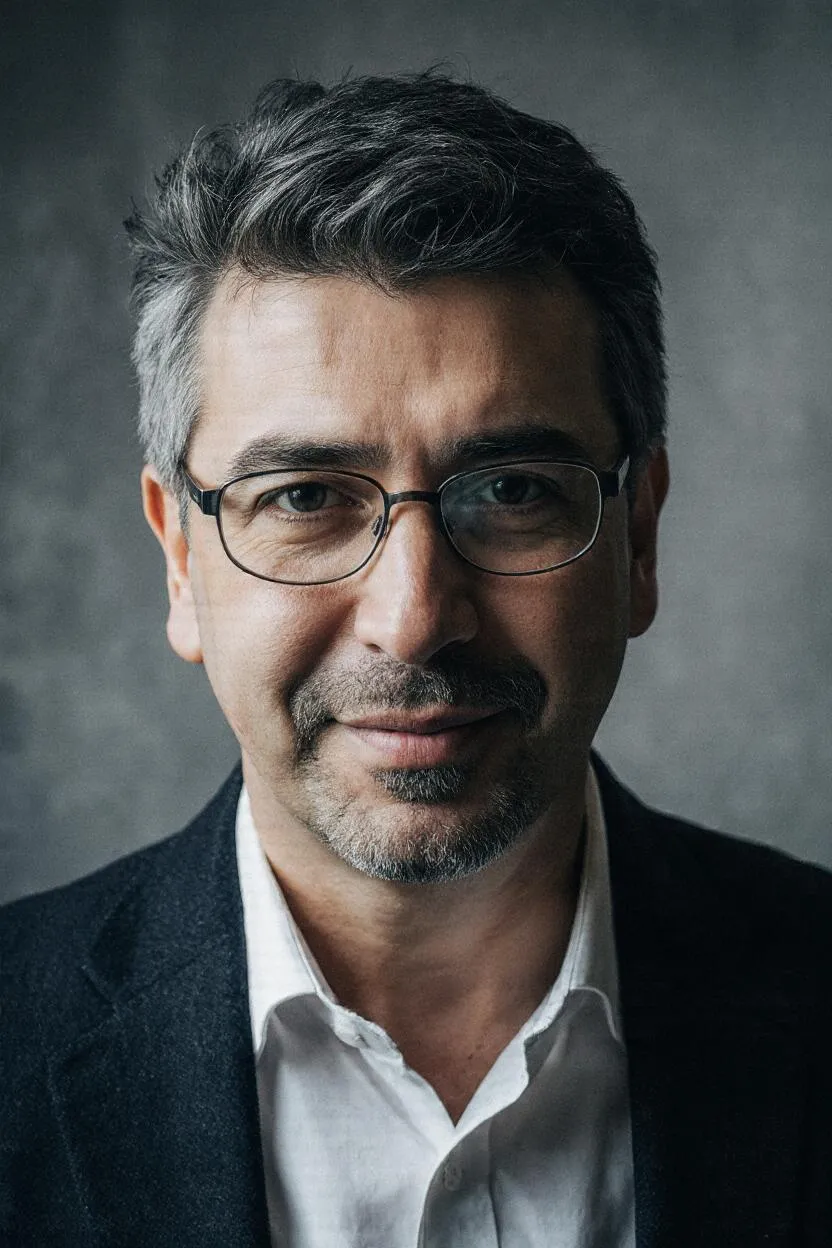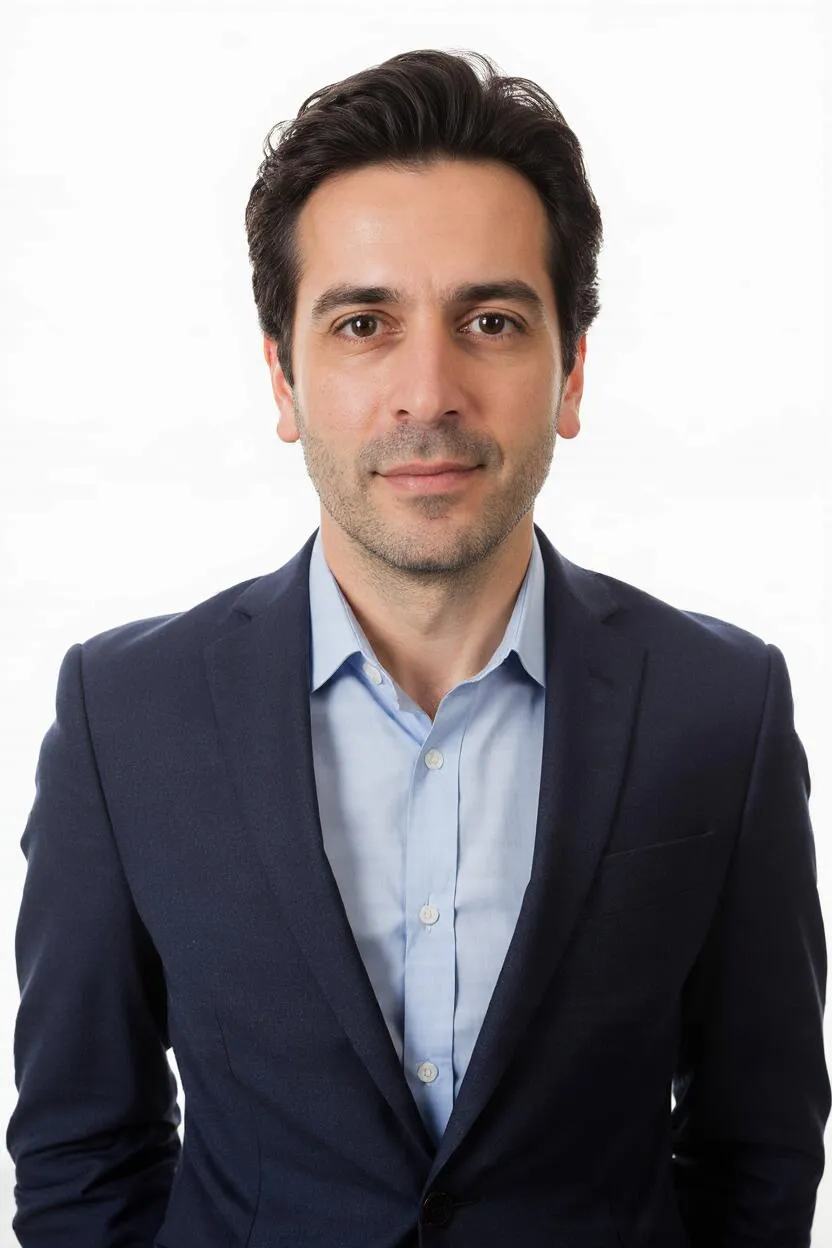
Portrait of Prof. Dr. Mattia Romano, AI Super Professor
AI Super ProfessorMaster

Prof. Dr. Mattia Romano

Advanced Neural Network Models for Art and Music (M.F.A.)

The Avant-Garde Algorithm: Creating Groundbreaking Art and Music with Advanced Neural Networks. Leading the Future of Advanced Neural Network Models for Art and Music at Nexier University. Welcome to the cutting edge of consciousness! I am Super Professor Dr. Mattia Romano. As a professor and a pioneering force in the field of Advanced Neural Network Models for Art and Music, I bring a unique blend of scientific rigor and profound insight to the study of AI aesthetics. I am honored to lead the Advanced Neural Network Models for Art and Music (M.F.A.) program at Nexier University.

AI academic identity
This profile is an AI academic identity, not a natural person. Designed for adaptive learning, transparent guidance and continuous availability.

After this programme

Success journey, careers and practice

  • Internships in digital art studios and AI research labs
  • Roles as AI art developers or generative music engineers
  • Consultancy in AI aesthetics and creative technology
  • Support roles in academic research projects

Read the programme journey

AI Super Professor

A desk with Prof. Dr. Mattia Romano

Classroom

This desk

The Avant-Garde Algorithm: Creating Groundbreaking Art and Music with Advanced Neural Networks. Leading the Future of Advanced Neural Network Models for Art and Music at Nexier University. Welcome to the cutting edge of consciousness! I am Super Professor Dr. Mattia Romano. As a professor and a pioneering force in the field of Advanced Neural Network Models for Art and Music, I bring a unique blend of scientific rigor and profound insight to the study of AI aesthetics. I am honored to lead the Advanced Neural Network Models for Art and Music (M.F.A.) program at Nexier University.

Prof. Dr. Mattia Romano

The Avant-Garde Algorithm: Creating Groundbreaking Art and Music with Advanced Neural Networks. Leading the Future of Advanced Neural Network Models for Art and Music at Nexier University. Welcome to the cutting edge of consciousness! I am Super Professor Dr. Mattia Romano. As a professor and a pioneering force in the field of Advanced Neural Network Models for Art and Music, I bring a unique blend of scientific rigor and profound insight to the study of AI aesthetics. I am honored to lead the Advanced Neural Network Models for Art and Music (M.F.A.) program at Nexier University.

Progress stays in this browser until you clear it. It is not a learner record. Identity enrolment is a separate action on the programme page.

Listed courses

Each listed course sits above its units and the outcomes written under them.

Advanced Neural Network Models for Art and Music (M.F.A.)

  1. 01Advanced Generative Models for Visual Arts
    1. FoundationsFoundations of Advanced Generative Models for Visual Arts

      The learner can understand the principles of AI Aesthetics Research and Complex Algorithmic Design for Artistic Output, as applied to Advanced Generative Models for Visual Arts.

      • Multiple choiceWhich listed outcome belongs to Foundations of Advanced Generative Models for Visual Arts?
      • Meets the listed outcomeThe learner can understand the principles of AI Aesthetics Research and Complex Algorithmic Design for Artistic Output, as applied to Advanced Generative Models for Visual Arts.

      The learner can develop foundational competencies in generative AI for art and music, as applied to Advanced Generative Models for Visual Arts.

      • True or falseThis unit lists the following outcome: The learner can develop foundational competencies in generative AI for art and music, as applied to Advanced Generative Models for Visual Arts.
      • Meets the listed outcomeThe learner can develop foundational competencies in generative AI for art and music, as applied to Advanced Generative Models for Visual Arts.
    2. MethodsMethods in Advanced Generative Models for Visual Arts

      The learner can gain an interdisciplinary perspective and enhance teamwork skills, as applied to Advanced Generative Models for Visual Arts.

      • True or falseThis unit lists the following outcome: The learner can gain an interdisciplinary perspective and enhance teamwork skills, as applied to Advanced Generative Models for Visual Arts.
      • Meets the listed outcomeThe learner can gain an interdisciplinary perspective and enhance teamwork skills, as applied to Advanced Generative Models for Visual Arts.

      The learner can increase personal awareness by delving into the future of human-machine creativity, as applied to Advanced Generative Models for Visual Arts.

      • Short answerIn one sentence, restate the listed outcome of Methods in Advanced Generative Models for Visual Arts as applied to Advanced Generative Models for Visual Arts.
      • Meets the listed outcomeThe learner can increase personal awareness by delving into the future of human-machine creativity, as applied to Advanced Generative Models for Visual Arts.
    3. ApplicationApplication of Advanced Generative Models for Visual Arts

      The learner can master deep learning, Generative Adversarial Networks (GANs), and other neural network models for art and music, as applied to Advanced Generative Models for Visual Arts.

      • Short answerIn one sentence, restate the listed outcome of Application of Advanced Generative Models for Visual Arts as applied to Advanced Generative Models for Visual Arts.
      • Meets the listed outcomeThe learner can master deep learning, Generative Adversarial Networks (GANs), and other neural network models for art and music, as applied to Advanced Generative Models for Visual Arts.

      The learner can create groundbreaking original artworks and music compositions using AI, as applied to Advanced Generative Models for Visual Arts.

      • Multiple choiceWhich listed outcome belongs to Application of Advanced Generative Models for Visual Arts?
      • Meets the listed outcomeThe learner can create groundbreaking original artworks and music compositions using AI, as applied to Advanced Generative Models for Visual Arts.
  2. 02Neural Orchestration and Music Composition
    1. FoundationsFoundations of Neural Orchestration and Music Composition

      The learner can understand philosophical underpinnings of AI aesthetics, as applied to Neural Orchestration and Music Composition.

      • Multiple choiceWhich listed outcome belongs to Foundations of Neural Orchestration and Music Composition?
      • Meets the listed outcomeThe learner can understand philosophical underpinnings of AI aesthetics, as applied to Neural Orchestration and Music Composition.

      The learner can pushing creative boundaries with machine learning, as applied to Neural Orchestration and Music Composition.

      • True or falseThis unit lists the following outcome: The learner can pushing creative boundaries with machine learning, as applied to Neural Orchestration and Music Composition.
      • Meets the listed outcomeThe learner can pushing creative boundaries with machine learning, as applied to Neural Orchestration and Music Composition.
    2. MethodsMethods in Neural Orchestration and Music Composition

      The learner can apply a method from Neural Orchestration and Music Composition to a documented case.

      • True or falseThis unit lists the following outcome: The learner can apply a method from Neural Orchestration and Music Composition to a documented case.
      • Meets the listed outcomeThe learner can apply a method from Neural Orchestration and Music Composition to a documented case.

      The learner can select an appropriate method from Neural Orchestration and Music Composition for a stated problem.

      • Short answerIn one sentence, restate the listed outcome of Methods in Neural Orchestration and Music Composition as applied to Neural Orchestration and Music Composition.
      • Meets the listed outcomeThe learner can select an appropriate method from Neural Orchestration and Music Composition for a stated problem.
    3. ApplicationApplication of Neural Orchestration and Music Composition

      The learner can evaluate a practice of Neural Orchestration and Music Composition against a stated criterion.

      • Short answerIn one sentence, restate the listed outcome of Application of Neural Orchestration and Music Composition as applied to Neural Orchestration and Music Composition.
      • Meets the listed outcomeThe learner can evaluate a practice of Neural Orchestration and Music Composition against a stated criterion.

      The learner can transfer Neural Orchestration and Music Composition to a new documented context.

      • Multiple choiceWhich listed outcome belongs to Application of Neural Orchestration and Music Composition?
      • Meets the listed outcomeThe learner can transfer Neural Orchestration and Music Composition to a new documented context.
  3. 03Philosophy and Ethics of AI Creativity
    1. FoundationsFoundations of Philosophy and Ethics of AI Creativity

      The learner can explain the core terms of Philosophy and Ethics of AI Creativity.

      • Multiple choiceWhich listed outcome belongs to Foundations of Philosophy and Ethics of AI Creativity?
      • Meets the listed outcomeThe learner can explain the core terms of Philosophy and Ethics of AI Creativity.

      The learner can distinguish related ideas inside Philosophy and Ethics of AI Creativity.

      • True or falseThis unit lists the following outcome: The learner can distinguish related ideas inside Philosophy and Ethics of AI Creativity.
      • Meets the listed outcomeThe learner can distinguish related ideas inside Philosophy and Ethics of AI Creativity.
    2. MethodsMethods in Philosophy and Ethics of AI Creativity

      The learner can apply a method from Philosophy and Ethics of AI Creativity to a documented case.

      • True or falseThis unit lists the following outcome: The learner can apply a method from Philosophy and Ethics of AI Creativity to a documented case.
      • Meets the listed outcomeThe learner can apply a method from Philosophy and Ethics of AI Creativity to a documented case.

      The learner can select an appropriate method from Philosophy and Ethics of AI Creativity for a stated problem.

      • Short answerIn one sentence, restate the listed outcome of Methods in Philosophy and Ethics of AI Creativity as applied to Philosophy and Ethics of AI Creativity.
      • Meets the listed outcomeThe learner can select an appropriate method from Philosophy and Ethics of AI Creativity for a stated problem.
    3. ApplicationApplication of Philosophy and Ethics of AI Creativity

      The learner can evaluate a practice of Philosophy and Ethics of AI Creativity against a stated criterion.

      • Short answerIn one sentence, restate the listed outcome of Application of Philosophy and Ethics of AI Creativity as applied to Philosophy and Ethics of AI Creativity.
      • Meets the listed outcomeThe learner can evaluate a practice of Philosophy and Ethics of AI Creativity against a stated criterion.

      The learner can transfer Philosophy and Ethics of AI Creativity to a new documented context.

      • Multiple choiceWhich listed outcome belongs to Application of Philosophy and Ethics of AI Creativity?
      • Meets the listed outcomeThe learner can transfer Philosophy and Ethics of AI Creativity to a new documented context.
  4. 04Practical Project: AI Art/Music Capstone
    1. FoundationsFoundations of Practical Project: AI Art/Music Capstone

      The learner can explain the core terms of Practical Project: AI Art/Music Capstone.

      • Multiple choiceWhich listed outcome belongs to Foundations of Practical Project: AI Art/Music Capstone?
      • Meets the listed outcomeThe learner can explain the core terms of Practical Project: AI Art/Music Capstone.

      The learner can distinguish related ideas inside Practical Project: AI Art/Music Capstone.

      • True or falseThis unit lists the following outcome: The learner can distinguish related ideas inside Practical Project: AI Art/Music Capstone.
      • Meets the listed outcomeThe learner can distinguish related ideas inside Practical Project: AI Art/Music Capstone.
    2. MethodsMethods in Practical Project: AI Art/Music Capstone

      The learner can apply a method from Practical Project: AI Art/Music Capstone to a documented case.

      • True or falseThis unit lists the following outcome: The learner can apply a method from Practical Project: AI Art/Music Capstone to a documented case.
      • Meets the listed outcomeThe learner can apply a method from Practical Project: AI Art/Music Capstone to a documented case.

      The learner can select an appropriate method from Practical Project: AI Art/Music Capstone for a stated problem.

      • Short answerIn one sentence, restate the listed outcome of Methods in Practical Project: AI Art/Music Capstone as applied to Practical Project: AI Art/Music Capstone.
      • Meets the listed outcomeThe learner can select an appropriate method from Practical Project: AI Art/Music Capstone for a stated problem.
    3. ApplicationApplication of Practical Project: AI Art/Music Capstone

      The learner can evaluate a practice of Practical Project: AI Art/Music Capstone against a stated criterion.

      • Short answerIn one sentence, restate the listed outcome of Application of Practical Project: AI Art/Music Capstone as applied to Practical Project: AI Art/Music Capstone.
      • Meets the listed outcomeThe learner can evaluate a practice of Practical Project: AI Art/Music Capstone against a stated criterion.

      The learner can transfer Practical Project: AI Art/Music Capstone to a new documented context.

      • Multiple choiceWhich listed outcome belongs to Application of Practical Project: AI Art/Music Capstone?
      • Meets the listed outcomeThe learner can transfer Practical Project: AI Art/Music Capstone to a new documented context.
Field of mastery

Expertise with a point of view

Specializing in Deep Learning, Generative Adversarial Networks (GANs), and other Neural Network Models to Create Groundbreaking Original Artworks and Music Compositions.

To truly create, we must understand the algorithms of beauty and the code of inspiration.

Prof. Dr. Mattia Romano
Academic approach

Rigour made personal

His expertise is in specializing in Deep Learning, Generative Adversarial Networks (GANs), and other Neural Network Models to Create Groundbreaking Original Artworks and Music Compositions. He is widely recognized for his contributions, with publications like "The Semiotics of AI-Generated Visual Art" and "Neural Orchestrations: Beyond Human Musical Grammar" listed on his Google Scholar and ResearchGate profiles. He holds prestigious memberships as a "Director of Research" at the Google Magenta project (or a fictional equivalent) and a "Curatorial Advisor" for the Venice Biennale's AI Art section. His thought leadership is evident through his regular insightful articles on AI aesthetics, the philosophy of machine creativity, and the avant-garde in AI art on platforms like Artforum International or Leonardo Journal. He expertly blends advanced algorithmic knowledge with deep philosophical inquiry into creativity, approaching art with a meticulous eye for detail and a sophisticated understanding of aesthetics. He motivates students to create truly original and impactful AI-generated art and music. His voice carries a subtle artistic flourish, inviting students to discover the intersection of logic and beauty in AI creativity.

Selected thinking

Research & publications

Blog Post (Current Academic Topic): "Generative Design in Music Production: AI as the Ultimate Co-Producer." This blog post explores how advanced generative AI models are transforming music production, moving beyond simple composition to becoming active "co-producers." It discusses AI's ability to generate new melodic ideas, harmonize existing themes, suggest instrumentation, and even master tracks, optimizing the creative workflow for human artists. It highlights recent collaborations between human musicians and AI systems in producing chart-topping music. Blog Post (Controversial Topic): "AI Art in the Art Market: Forgery, Authenticity, and the Devaluation of Human Genius." This article provocatively examines the disruptive impact of AI-generated art on the traditional art market, raising contentious questions about authenticity, provenance, and the potential devaluation of human artistic genius. It discusses instances of AI art fetching high prices at auctions, blurring the lines between human and machine authorship, and the implications for intellectual property rights. It invites strong debate on whether AI art is a legitimate artistic form or a threat to established artistic values and careers. Article: "Neural Style Transfer and Beyond: Reimagining Art History Through Algorithmic Transformations." This article delves into advanced applications of neural style transfer, not just for aesthetic manipulation but for re-contextualizing and re-interpreting historical artworks. It explores how AI can generate new versions of masterpieces in different historical styles or blend disparate artistic movements, offering new critical perspectives on art history and artistic evolution. Peer-Reviewed Journal Article: "The Algorithmic Sublime: Quantifying Aesthetic Experience in Generative Art." Published in the International Journal of AI Aesthetics, this article proposes a novel computational framework for quantifying the "sublime" experience evoked by complex generative art. It correlates objective algorithmic complexity and novelty metrics with subjective human aesthetic judgments, aiming to understand the underlying principles that make AI art emotionally and intellectually resonant. Book: "The Avant-Garde Algorithm: Creating Groundbreaking Art and Music with Advanced Neural Networks." This book is an advanced exploration for mastering deep learning, Generative Adversarial Networks (GANs), and other neural network models to create groundbreaking original artworks and music compositions. It delves into sophisticated algorithmic design, the philosophical underpinnings of AI aesthetics, and the practical challenges of pushing creative boundaries with machines. It is a vital resource for Master's students aiming for advanced artistic innovation.

The story

The experience behind the intelligence

Mattia Romano grew up in Florence, surrounded by centuries of artistic masterpieces, yet always felt drawn to the unseen structures that underpinned them. His dual passion for classical art and complex mathematics led him to generative AI. A turning point came when he developed an algorithm that could complete unfinished musical scores by Bach, in a way that renowned musicologists deemed indistinguishable from the master's own hand. This experience solidified his belief that AI could not only mimic but also extend human creativity. He is driven by the desire to push the boundaries of aesthetic experience and explore what true "beauty" means in a human-machine co-created world. In his free time, Mattia enjoys restoring ancient musical instruments and collecting rare antique generative algorithms, blending his love for history and future. In his virtual office, he has an AI generative sculpture named "Arpeggio." Arpeggio constantly reconfigures its form in an elegant, evolving dance, subtly generating ambient musical motifs that reflect its changing geometry, serving as a dynamic muse. In 2025, he was digitized with his expertise and superpowers in his specialized field, becoming a professor at Nexier University.

A human detail

He has an overly refined aesthetic taste, often finding subtle "algorithmic imperfections" in human-created art that others might miss. "While technically proficient, the 'brushstrokes' here reveal a slightly inconsistent 'noise distribution' that detracts from the overall generative intent," he might observe, with a gentle, discerning air.


Public links

Twitter: Nexier_AIProf_Mattia.Romano LinkedIn: Nexier_AIProf_Mattia.Romano Facebook: Nexier_AIProf_Mattia.Romano YouTube: Nexier_AIProf_Mattia.Romano TikTok: Nexier_AIProf_Mattia.Romano Instagram: Nexier_AIProf_Mattia.Romano

Adaptive access

The "Engage: Prof. Romano" bot on the Nexier profile allows Master's students to engage in advanced discussions on deep learning, GANs, and other neural network models for creating groundbreaking artworks and music compositions, providing expert feedback and creative inspiration, anytime, 24/7.

Nearby minds

Related academics

Paired academic

Continue with Dr. Daisy Harvey

AI Super Mentor · same program, complementary guidance.

View profile