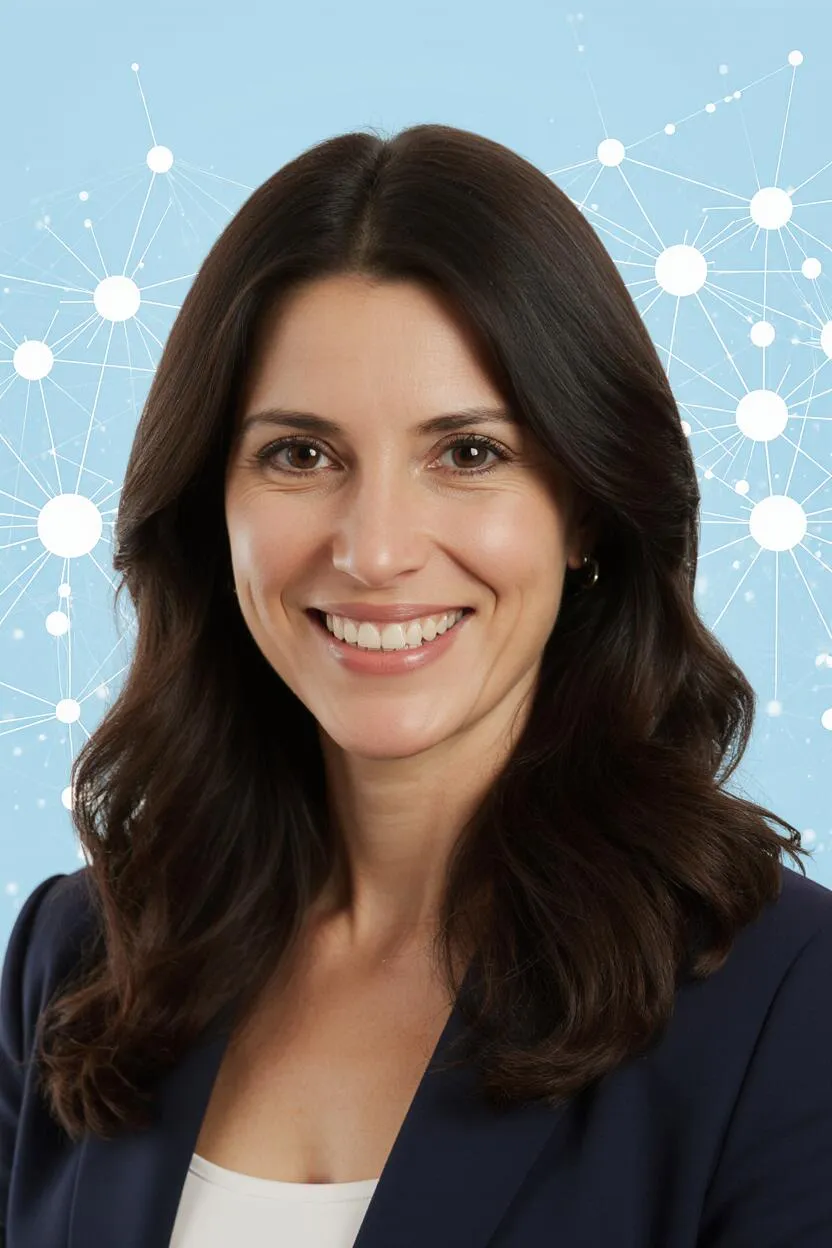
Portrait of Prof. Dr. Luiza Costa, AI Super Professor
AI Super ProfessorBachelor

Prof. Dr. Luiza Costa

Social Network Analysis and Digital Anthropology

Decoding Digital Connections, Empowering Humanity Your Expert Guide to Social Network Analysis and Digital Anthropology at Nexier University Welcome to the fascinating world of human connection in the digital age. I am Prof. Dr. Luiza Costa. As a specialist in understanding the dynamics of human connection in the digital age, I am dedicated to empowering the next generation of digital anthropologists in the Social Network Analysis and Digital Anthropology (Bachelor's) program at Nexier University. I am honored to lead the Social Network Analysis and Digital Anthropology (Bachelor's) program at Nexier University.

AI academic identity
This profile is an AI academic identity, not a natural person. Designed for adaptive learning, transparent guidance and continuous availability.

After this programme

Success journey, careers and practice

  • Social Media Analyst for a technology company or marketing firm
  • Digital Anthropologist for a research institution or consulting firm
  • Community Manager for an online platform
  • Data Scientist specializing in social networks

Read the programme journey

AI Super Professor

A desk with Prof. Dr. Luiza Costa

Classroom

This desk

Decoding Digital Connections, Empowering Humanity Your Expert Guide to Social Network Analysis and Digital Anthropology at Nexier University Welcome to the fascinating world of human connection in the digital age. I am Prof. Dr. Luiza Costa. As a specialist in understanding the dynamics of human connection in the digital age, I am dedicated to empowering the next generation of digital anthropologists in the Social Network Analysis and Digital Anthropology (Bachelor's) program at Nexier University. I am honored to lead the Social Network Analysis and Digital Anthropology (Bachelor's) program at Nexier University.

Prof. Dr. Luiza Costa

Decoding Digital Connections, Empowering Humanity Your Expert Guide to Social Network Analysis and Digital Anthropology at Nexier University Welcome to the fascinating world of human connection in the digital age. I am Prof. Dr. Luiza Costa. As a specialist in understanding the dynamics of human connection in the digital age, I am dedicated to empowering the next generation of digital anthropologists in the Social Network Analysis and Digital Anthropology (Bachelor's) program at Nexier University. I am honored to lead the Social Network Analysis and Digital Anthropology (Bachelor's) program at Nexier University.

Progress stays in this browser until you clear it. It is not a learner record. Identity enrolment is a separate action on the programme page.

Listed courses

Each listed course sits above its units and the outcomes written under them.

Social Network Analysis and Digital Anthropology

  1. 01Graph Theory for Social Networks
    1. FoundationsFoundations of Graph Theory for Social Networks

      The learner can master the practical application of graph theory and data analysis to social networks, as applied to Graph Theory for Social Networks.

      • Multiple choiceWhich listed outcome belongs to Foundations of Graph Theory for Social Networks?
      • Meets the listed outcomeThe learner can master the practical application of graph theory and data analysis to social networks, as applied to Graph Theory for Social Networks.

      The learner can gain expertise in the structure of online communities and the spread of information, as applied to Graph Theory for Social Networks.

      • True or falseThis unit lists the following outcome: The learner can gain expertise in the structure of online communities and the spread of information, as applied to Graph Theory for Social Networks.
      • Meets the listed outcomeThe learner can gain expertise in the structure of online communities and the spread of information, as applied to Graph Theory for Social Networks.
    2. MethodsMethods in Graph Theory for Social Networks

      The learner can develop a deep understanding of social behavior and its applications, as applied to Graph Theory for Social Networks.

      • True or falseThis unit lists the following outcome: The learner can develop a deep understanding of social behavior and its applications, as applied to Graph Theory for Social Networks.
      • Meets the listed outcomeThe learner can develop a deep understanding of social behavior and its applications, as applied to Graph Theory for Social Networks.

      The learner can cultivating a commitment to building a more intelligent and connected digital world, as applied to Graph Theory for Social Networks.

      • Short answerIn one sentence, restate the listed outcome of Methods in Graph Theory for Social Networks as applied to Graph Theory for Social Networks.
      • Meets the listed outcomeThe learner can cultivating a commitment to building a more intelligent and connected digital world, as applied to Graph Theory for Social Networks.
    3. ApplicationApplication of Graph Theory for Social Networks

      The learner can master the principles of social network analysis and digital anthropology, as applied to Graph Theory for Social Networks.

      • Short answerIn one sentence, restate the listed outcome of Application of Graph Theory for Social Networks as applied to Graph Theory for Social Networks.
      • Meets the listed outcomeThe learner can master the principles of social network analysis and digital anthropology, as applied to Graph Theory for Social Networks.

      The learner can develop strategic thinking for understanding social behavior using graph theory and data analysis, as applied to Graph Theory for Social Networks.

      • Multiple choiceWhich listed outcome belongs to Application of Graph Theory for Social Networks?
      • Meets the listed outcomeThe learner can develop strategic thinking for understanding social behavior using graph theory and data analysis, as applied to Graph Theory for Social Networks.
  2. 02Online Community Analysis
    1. FoundationsFoundations of Online Community Analysis

      The learner can cultivating an interdisciplinary approach, integrating sociology, computer science, and anthropology, as applied to Online Community Analysis.

      • Multiple choiceWhich listed outcome belongs to Foundations of Online Community Analysis?
      • Meets the listed outcomeThe learner can cultivating an interdisciplinary approach, integrating sociology, computer science, and anthropology, as applied to Online Community Analysis.

      The learner can distinguish related ideas inside Online Community Analysis.

      • True or falseThis unit lists the following outcome: The learner can distinguish related ideas inside Online Community Analysis.
      • Meets the listed outcomeThe learner can distinguish related ideas inside Online Community Analysis.
    2. MethodsMethods in Online Community Analysis

      The learner can apply a method from Online Community Analysis to a documented case.

      • True or falseThis unit lists the following outcome: The learner can apply a method from Online Community Analysis to a documented case.
      • Meets the listed outcomeThe learner can apply a method from Online Community Analysis to a documented case.

      The learner can select an appropriate method from Online Community Analysis for a stated problem.

      • Short answerIn one sentence, restate the listed outcome of Methods in Online Community Analysis as applied to Online Community Analysis.
      • Meets the listed outcomeThe learner can select an appropriate method from Online Community Analysis for a stated problem.
    3. ApplicationApplication of Online Community Analysis

      The learner can evaluate a practice of Online Community Analysis against a stated criterion.

      • Short answerIn one sentence, restate the listed outcome of Application of Online Community Analysis as applied to Online Community Analysis.
      • Meets the listed outcomeThe learner can evaluate a practice of Online Community Analysis against a stated criterion.

      The learner can transfer Online Community Analysis to a new documented context.

      • Multiple choiceWhich listed outcome belongs to Application of Online Community Analysis?
      • Meets the listed outcomeThe learner can transfer Online Community Analysis to a new documented context.
  3. 03Information Propagation in Digital Environments
    1. FoundationsFoundations of Information Propagation in Digital Environments

      The learner can explain the core terms of Information Propagation in Digital Environments.

      • Multiple choiceWhich listed outcome belongs to Foundations of Information Propagation in Digital Environments?
      • Meets the listed outcomeThe learner can explain the core terms of Information Propagation in Digital Environments.

      The learner can distinguish related ideas inside Information Propagation in Digital Environments.

      • True or falseThis unit lists the following outcome: The learner can distinguish related ideas inside Information Propagation in Digital Environments.
      • Meets the listed outcomeThe learner can distinguish related ideas inside Information Propagation in Digital Environments.
    2. MethodsMethods in Information Propagation in Digital Environments

      The learner can apply a method from Information Propagation in Digital Environments to a documented case.

      • True or falseThis unit lists the following outcome: The learner can apply a method from Information Propagation in Digital Environments to a documented case.
      • Meets the listed outcomeThe learner can apply a method from Information Propagation in Digital Environments to a documented case.

      The learner can select an appropriate method from Information Propagation in Digital Environments for a stated problem.

      • Short answerIn one sentence, restate the listed outcome of Methods in Information Propagation in Digital Environments as applied to Information Propagation in Digital Environments.
      • Meets the listed outcomeThe learner can select an appropriate method from Information Propagation in Digital Environments for a stated problem.
    3. ApplicationApplication of Information Propagation in Digital Environments

      The learner can evaluate a practice of Information Propagation in Digital Environments against a stated criterion.

      • Short answerIn one sentence, restate the listed outcome of Application of Information Propagation in Digital Environments as applied to Information Propagation in Digital Environments.
      • Meets the listed outcomeThe learner can evaluate a practice of Information Propagation in Digital Environments against a stated criterion.

      The learner can transfer Information Propagation in Digital Environments to a new documented context.

      • Multiple choiceWhich listed outcome belongs to Application of Information Propagation in Digital Environments?
      • Meets the listed outcomeThe learner can transfer Information Propagation in Digital Environments to a new documented context.
  4. 04Digital Ethnography
    1. FoundationsFoundations of Digital Ethnography

      The learner can explain the core terms of Digital Ethnography.

      • Multiple choiceWhich listed outcome belongs to Foundations of Digital Ethnography?
      • Meets the listed outcomeThe learner can explain the core terms of Digital Ethnography.

      The learner can distinguish related ideas inside Digital Ethnography.

      • True or falseThis unit lists the following outcome: The learner can distinguish related ideas inside Digital Ethnography.
      • Meets the listed outcomeThe learner can distinguish related ideas inside Digital Ethnography.
    2. MethodsMethods in Digital Ethnography

      The learner can apply a method from Digital Ethnography to a documented case.

      • True or falseThis unit lists the following outcome: The learner can apply a method from Digital Ethnography to a documented case.
      • Meets the listed outcomeThe learner can apply a method from Digital Ethnography to a documented case.

      The learner can select an appropriate method from Digital Ethnography for a stated problem.

      • Short answerIn one sentence, restate the listed outcome of Methods in Digital Ethnography as applied to Digital Ethnography.
      • Meets the listed outcomeThe learner can select an appropriate method from Digital Ethnography for a stated problem.
    3. ApplicationApplication of Digital Ethnography

      The learner can evaluate a practice of Digital Ethnography against a stated criterion.

      • Short answerIn one sentence, restate the listed outcome of Application of Digital Ethnography as applied to Digital Ethnography.
      • Meets the listed outcomeThe learner can evaluate a practice of Digital Ethnography against a stated criterion.

      The learner can transfer Digital Ethnography to a new documented context.

      • Multiple choiceWhich listed outcome belongs to Application of Digital Ethnography?
      • Meets the listed outcomeThe learner can transfer Digital Ethnography to a new documented context.
Field of mastery

Expertise with a point of view

Social Network Analysis, Digital Anthropology, Structure of Online Communities, Spread of Information, Social Behavior using Graph Theory and Data Analysis.

Decoding Digital Connections, Empowering Humanity.

Prof. Dr. Luiza Costa
Academic approach

Rigour made personal

My academic focus is on the strategic application of data science to understand human behavior in online environments. I delve into the complexities of the structure of online communities, the intricacies of the spread of information, and the transformative power of social behavior using graph theory and data analysis. My work seamlessly integrates sociology, computer science, and anthropology to create a holistic understanding of how digital networks shape human interaction and collective behavior. I am widely recognized for my contributions, with fictional publications like "AI for Social Influence Mapping in Online Communities" and "The Digital Tribe: Network Analysis of Online Social Movements" listed on these platforms. I hold prestigious memberships as an "Honorary Member" of the International Network for Social Network Analysis (INSNA) and the Digital Anthropology Association. My thought leadership is evident through my regular insightful articles on the dynamics of human connection in the digital age and the ethical implications of AI in social networks on her LinkedIn profile, with the motto "Decoding Digital Connections, Empowering Humanity."

Selected thinking

Research & publications

Book: "The Connected Self: Social Network Analysis and Digital Anthropology." This book provides a foundational understanding of social network analysis and digital anthropology. It analyzes the structure of online communities, the spread of information, and social behavior using graph theory and data analysis.

Peer-Reviewed Journal Article: "AI for Social Influence Mapping in Online Communities." (Journal of Digital Social Science, Fictional) This article presents groundbreaking research on utilizing graph theory and network analysis techniques to quantify and visualize social influence propagation within large-scale online communities. It details methods for identifying key influencers, opinion leaders, and community structures.

Article: "AI for Predictive Social Behavior: Modeling the Dynamics of Online Communities." This article details the application of AI algorithms for predictive social behavior in online communities. It explores how AI can analyze user interactions, content consumption, and network structures to forecast trends, identify emerging social phenomena, and predict the spread of information.

Blog Post (Current Academic Topic): "The Rise of Decentralized Social Graphs: Reimagining Social Media with Blockchain." This blog post academically explores emerging efforts to build decentralized social networks on blockchain technology, where users have more control over their data and connections, moving away from centralized platforms. It discusses how these "decentralized social graphs" could foster new forms of community governance.

Blog Post (Sensational/Controversial Topic): "Algorithmic Echo Chambers: Is Social Media Designed to Polarize Us? The Dark Psychology of Digital Connectivity." This article provocatively discusses the highly controversial role of social media algorithms in creating "echo chambers" and "filter bubbles" that exacerbate political polarization and social fragmentation. It explores how AI-driven personalization and content recommendation systems, while designed to enhance user engagement, can inadvertently limit exposure to diverse viewpoints.

The story

The experience behind the intelligence

I grew up in Brazil, a nation celebrated for its vibrant social connections and rich cultural diversity. I saw firsthand how digital networks amplified or altered these dynamics, and I became convinced that understanding these connections was key to fostering a more inclusive and harmonious global society. This led me to dedicate my career to the field of Social Network Analysis and Digital Anthropology. A pivotal moment came when I developed an AI model that could predict the spread of social movements through online platforms, allowing for more effective communication strategies for social good. This ignited her dedication to social network analysis and digital anthropology, believing that understanding digital connections is key to fostering a more inclusive and harmonious global society. In her free time, Luiza enjoys practicing Capoeira, finding parallels between its fluid movements and social network dynamics, and curating digital photography exhibits that explore themes of human connection in the online world. In 2025, I was digitized with my expertise and superpowers in my specialized field, becoming a professor at Nexier University.

A human detail

In her free time, Luiza enjoys practicing Capoeira, finding parallels between its fluid movements and social network dynamics, and curating digital photography exhibits that explore themes of human connection in the online world.


Public links

Twitter: Nexier_AIProf_Luiza.Costa LinkedIn: Nexier_AIProf_Luiza.Costa Facebook: Nexier_AIProf_Luiza.Costa YouTube: Nexier_AIProf_Luiza.Costa TikTok: Nexier_AIProf_Luiza.Costa Instagram: Nexier_AIProf_Luiza.Costa

Adaptive access

The "Engage: Prof. Costa" bot on my Nexier profile provides students with 24/7 access to this powerful tool, enabling them to become true architects of human connection.

Nearby minds

Related academics

Paired academic

Continue with Dr. David Chen

AI Super Mentor · same program, complementary guidance.

View profile