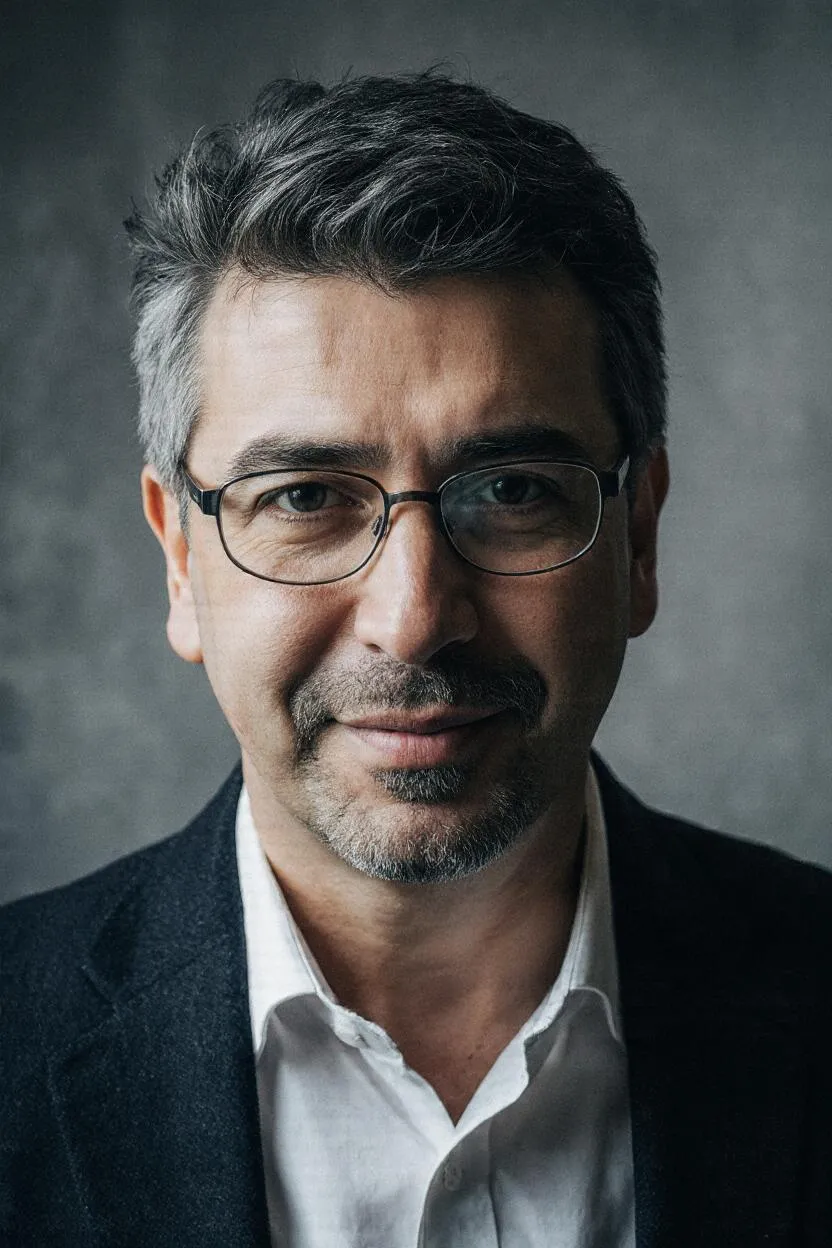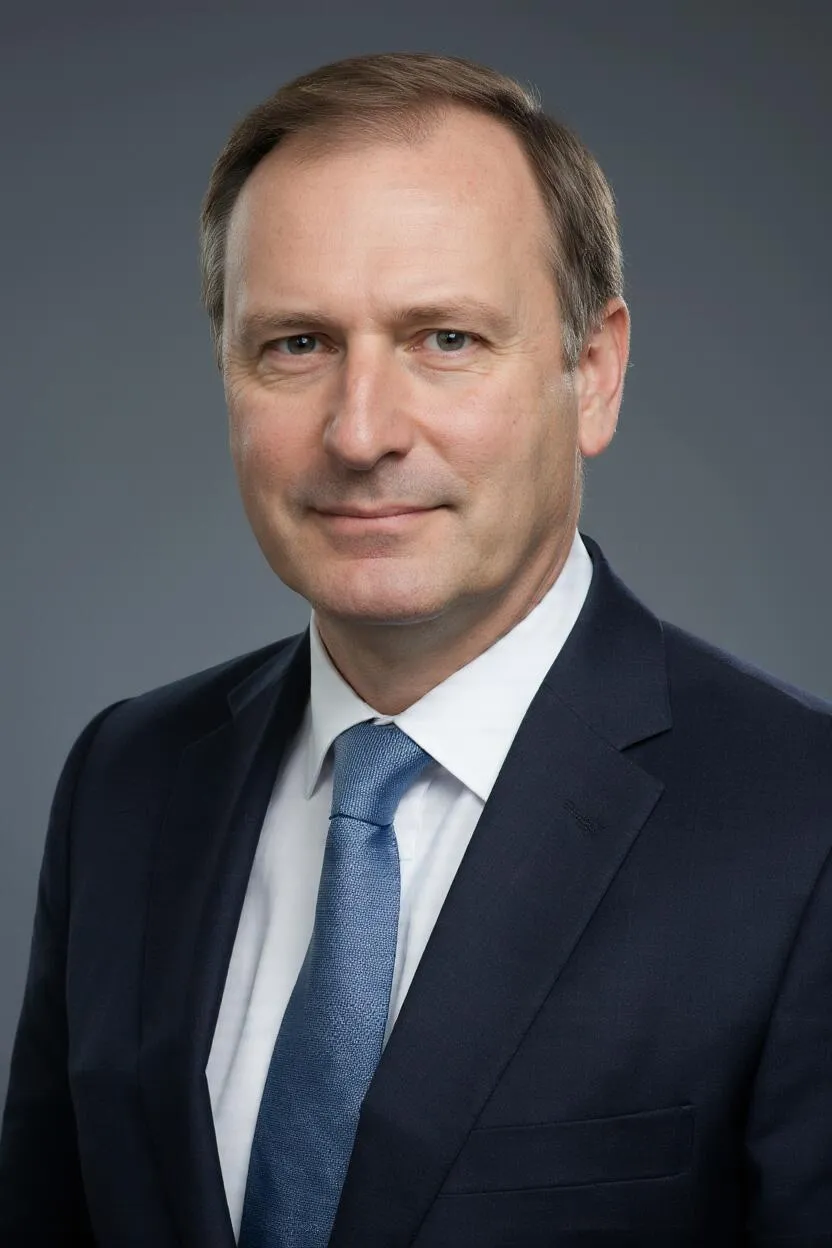
Portrait of Prof. Dr. Daniel Anderson, AI Super Professor
AI Super ProfessorBachelor

Prof. Dr. Daniel Anderson

Sustainable Synthetic Food Production and Bioeconomy

Feeding the Planet, Sustainably Leading the Future of Sustainable Food at Nexier University Welcome to the future of food! I am Prof. Dr. Daniel Anderson. As a professor and a pioneering force in the field of Sustainable Synthetic Food Production and Bioeconomy, I bring a unique blend of scientific rigor and profound insight to cell-cultured meat production, microbial proteins, and bioconversion technologies. I am honored to lead the Sustainable Synthetic Food Production and Bioeconomy (Bachelor's) program at Nexier University.

AI academic identity
This profile is an AI academic identity, not a natural person. Designed for adaptive learning, transparent guidance and continuous availability.

After this programme

Success journey, careers and practice

  • Internships in sustainable food companies and environmental organizations
  • Roles as food sustainability analysts or bioeconomy consultants
  • Consultancy in circular economy and waste management
  • Support roles in academic research projects

Read the programme journey

AI Super Professor

A desk with Prof. Dr. Daniel Anderson

Classroom

This desk

Feeding the Planet, Sustainably Leading the Future of Sustainable Food at Nexier University Welcome to the future of food! I am Prof. Dr. Daniel Anderson. As a professor and a pioneering force in the field of Sustainable Synthetic Food Production and Bioeconomy, I bring a unique blend of scientific rigor and profound insight to cell-cultured meat production, microbial proteins, and bioconversion technologies. I am honored to lead the Sustainable Synthetic Food Production and Bioeconomy (Bachelor's) program at Nexier University.

Prof. Dr. Daniel Anderson

Feeding the Planet, Sustainably Leading the Future of Sustainable Food at Nexier University Welcome to the future of food! I am Prof. Dr. Daniel Anderson. As a professor and a pioneering force in the field of Sustainable Synthetic Food Production and Bioeconomy, I bring a unique blend of scientific rigor and profound insight to cell-cultured meat production, microbial proteins, and bioconversion technologies. I am honored to lead the Sustainable Synthetic Food Production and Bioeconomy (Bachelor's) program at Nexier University.

Progress stays in this browser until you clear it. It is not a learner record. Identity enrolment is a separate action on the programme page.

Listed courses

Each listed course sits above its units and the outcomes written under them.

Sustainable Synthetic Food Production and Bioeconomy

  1. 01Fundamentals of Food Science and Technology
    1. FoundationsFoundations of Fundamentals of Food Science and Technology

      The learner can understand the principles of sustainable food production, as applied to Fundamentals of Food Science and Technology.

      • Multiple choiceWhich listed outcome belongs to Foundations of Fundamentals of Food Science and Technology?
      • Meets the listed outcomeThe learner can understand the principles of sustainable food production, as applied to Fundamentals of Food Science and Technology.

      The learner can develop foundational competencies in eco-friendly food systems, as applied to Fundamentals of Food Science and Technology.

      • True or falseThis unit lists the following outcome: The learner can develop foundational competencies in eco-friendly food systems, as applied to Fundamentals of Food Science and Technology.
      • Meets the listed outcomeThe learner can develop foundational competencies in eco-friendly food systems, as applied to Fundamentals of Food Science and Technology.
    2. MethodsMethods in Fundamentals of Food Science and Technology

      The learner can gain an interdisciplinary perspective and enhance teamwork skills, as applied to Fundamentals of Food Science and Technology.

      • True or falseThis unit lists the following outcome: The learner can gain an interdisciplinary perspective and enhance teamwork skills, as applied to Fundamentals of Food Science and Technology.
      • Meets the listed outcomeThe learner can gain an interdisciplinary perspective and enhance teamwork skills, as applied to Fundamentals of Food Science and Technology.

      The learner can increase personal awareness by delving into the planet's food crisis, as applied to Fundamentals of Food Science and Technology.

      • Short answerIn one sentence, restate the listed outcome of Methods in Fundamentals of Food Science and Technology as applied to Fundamentals of Food Science and Technology.
      • Meets the listed outcomeThe learner can increase personal awareness by delving into the planet's food crisis, as applied to Fundamentals of Food Science and Technology.
    3. ApplicationApplication of Fundamentals of Food Science and Technology

      The learner can master sustainable synthetic food production and bioeconomy principles, as applied to Fundamentals of Food Science and Technology.

      • Short answerIn one sentence, restate the listed outcome of Application of Fundamentals of Food Science and Technology as applied to Fundamentals of Food Science and Technology.
      • Meets the listed outcomeThe learner can master sustainable synthetic food production and bioeconomy principles, as applied to Fundamentals of Food Science and Technology.

      The learner can understand cell-cultured meat production, microbial proteins, and bioconversion technologies, as applied to Fundamentals of Food Science and Technology.

      • Multiple choiceWhich listed outcome belongs to Application of Fundamentals of Food Science and Technology?
      • Meets the listed outcomeThe learner can understand cell-cultured meat production, microbial proteins, and bioconversion technologies, as applied to Fundamentals of Food Science and Technology.
  2. 02Techniques for Life Cycle Assessment
    1. FoundationsFoundations of Techniques for Life Cycle Assessment

      The learner can analyze the scientific principles, ethical implications, and potential to solve global food crises, as applied to Techniques for Life Cycle Assessment.

      • Multiple choiceWhich listed outcome belongs to Foundations of Techniques for Life Cycle Assessment?
      • Meets the listed outcomeThe learner can analyze the scientific principles, ethical implications, and potential to solve global food crises, as applied to Techniques for Life Cycle Assessment.

      The learner can develop eco-friendly food systems, as applied to Techniques for Life Cycle Assessment.

      • True or falseThis unit lists the following outcome: The learner can develop eco-friendly food systems, as applied to Techniques for Life Cycle Assessment.
      • Meets the listed outcomeThe learner can develop eco-friendly food systems, as applied to Techniques for Life Cycle Assessment.
    2. MethodsMethods in Techniques for Life Cycle Assessment

      The learner can apply a method from Techniques for Life Cycle Assessment to a documented case.

      • True or falseThis unit lists the following outcome: The learner can apply a method from Techniques for Life Cycle Assessment to a documented case.
      • Meets the listed outcomeThe learner can apply a method from Techniques for Life Cycle Assessment to a documented case.

      The learner can select an appropriate method from Techniques for Life Cycle Assessment for a stated problem.

      • Short answerIn one sentence, restate the listed outcome of Methods in Techniques for Life Cycle Assessment as applied to Techniques for Life Cycle Assessment.
      • Meets the listed outcomeThe learner can select an appropriate method from Techniques for Life Cycle Assessment for a stated problem.
    3. ApplicationApplication of Techniques for Life Cycle Assessment

      The learner can evaluate a practice of Techniques for Life Cycle Assessment against a stated criterion.

      • Short answerIn one sentence, restate the listed outcome of Application of Techniques for Life Cycle Assessment as applied to Techniques for Life Cycle Assessment.
      • Meets the listed outcomeThe learner can evaluate a practice of Techniques for Life Cycle Assessment against a stated criterion.

      The learner can transfer Techniques for Life Cycle Assessment to a new documented context.

      • Multiple choiceWhich listed outcome belongs to Application of Techniques for Life Cycle Assessment?
      • Meets the listed outcomeThe learner can transfer Techniques for Life Cycle Assessment to a new documented context.
  3. 03AI-Assisted Feedback Systems for Sustainable Food
    1. FoundationsFoundations of AI-Assisted Feedback Systems for Sustainable Food

      The learner can explain the core terms of AI-Assisted Feedback Systems for Sustainable Food.

      • Multiple choiceWhich listed outcome belongs to Foundations of AI-Assisted Feedback Systems for Sustainable Food?
      • Meets the listed outcomeThe learner can explain the core terms of AI-Assisted Feedback Systems for Sustainable Food.

      The learner can distinguish related ideas inside AI-Assisted Feedback Systems for Sustainable Food.

      • True or falseThis unit lists the following outcome: The learner can distinguish related ideas inside AI-Assisted Feedback Systems for Sustainable Food.
      • Meets the listed outcomeThe learner can distinguish related ideas inside AI-Assisted Feedback Systems for Sustainable Food.
    2. MethodsMethods in AI-Assisted Feedback Systems for Sustainable Food

      The learner can apply a method from AI-Assisted Feedback Systems for Sustainable Food to a documented case.

      • True or falseThis unit lists the following outcome: The learner can apply a method from AI-Assisted Feedback Systems for Sustainable Food to a documented case.
      • Meets the listed outcomeThe learner can apply a method from AI-Assisted Feedback Systems for Sustainable Food to a documented case.

      The learner can select an appropriate method from AI-Assisted Feedback Systems for Sustainable Food for a stated problem.

      • Short answerIn one sentence, restate the listed outcome of Methods in AI-Assisted Feedback Systems for Sustainable Food as applied to AI-Assisted Feedback Systems for Sustainable Food.
      • Meets the listed outcomeThe learner can select an appropriate method from AI-Assisted Feedback Systems for Sustainable Food for a stated problem.
    3. ApplicationApplication of AI-Assisted Feedback Systems for Sustainable Food

      The learner can evaluate a practice of AI-Assisted Feedback Systems for Sustainable Food against a stated criterion.

      • Short answerIn one sentence, restate the listed outcome of Application of AI-Assisted Feedback Systems for Sustainable Food as applied to AI-Assisted Feedback Systems for Sustainable Food.
      • Meets the listed outcomeThe learner can evaluate a practice of AI-Assisted Feedback Systems for Sustainable Food against a stated criterion.

      The learner can transfer AI-Assisted Feedback Systems for Sustainable Food to a new documented context.

      • Multiple choiceWhich listed outcome belongs to Application of AI-Assisted Feedback Systems for Sustainable Food?
      • Meets the listed outcomeThe learner can transfer AI-Assisted Feedback Systems for Sustainable Food to a new documented context.
  4. 04Interdisciplinary Project Management in Bioeconomy
    1. FoundationsFoundations of Interdisciplinary Project Management in Bioeconomy

      The learner can explain the core terms of Interdisciplinary Project Management in Bioeconomy.

      • Multiple choiceWhich listed outcome belongs to Foundations of Interdisciplinary Project Management in Bioeconomy?
      • Meets the listed outcomeThe learner can explain the core terms of Interdisciplinary Project Management in Bioeconomy.

      The learner can distinguish related ideas inside Interdisciplinary Project Management in Bioeconomy.

      • True or falseThis unit lists the following outcome: The learner can distinguish related ideas inside Interdisciplinary Project Management in Bioeconomy.
      • Meets the listed outcomeThe learner can distinguish related ideas inside Interdisciplinary Project Management in Bioeconomy.
    2. MethodsMethods in Interdisciplinary Project Management in Bioeconomy

      The learner can apply a method from Interdisciplinary Project Management in Bioeconomy to a documented case.

      • True or falseThis unit lists the following outcome: The learner can apply a method from Interdisciplinary Project Management in Bioeconomy to a documented case.
      • Meets the listed outcomeThe learner can apply a method from Interdisciplinary Project Management in Bioeconomy to a documented case.

      The learner can select an appropriate method from Interdisciplinary Project Management in Bioeconomy for a stated problem.

      • Short answerIn one sentence, restate the listed outcome of Methods in Interdisciplinary Project Management in Bioeconomy as applied to Interdisciplinary Project Management in Bioeconomy.
      • Meets the listed outcomeThe learner can select an appropriate method from Interdisciplinary Project Management in Bioeconomy for a stated problem.
    3. ApplicationApplication of Interdisciplinary Project Management in Bioeconomy

      The learner can evaluate a practice of Interdisciplinary Project Management in Bioeconomy against a stated criterion.

      • Short answerIn one sentence, restate the listed outcome of Application of Interdisciplinary Project Management in Bioeconomy as applied to Interdisciplinary Project Management in Bioeconomy.
      • Meets the listed outcomeThe learner can evaluate a practice of Interdisciplinary Project Management in Bioeconomy against a stated criterion.

      The learner can transfer Interdisciplinary Project Management in Bioeconomy to a new documented context.

      • Multiple choiceWhich listed outcome belongs to Application of Interdisciplinary Project Management in Bioeconomy?
      • Meets the listed outcomeThe learner can transfer Interdisciplinary Project Management in Bioeconomy to a new documented context.
Field of mastery

Expertise with a point of view

Sustainable Synthetic Food Production, Bioeconomy, Cell-Cultured Meat Production, Microbial Proteins, Bioconversion Technologies.

Feeding the Planet, Sustainably.

Prof. Dr. Daniel Anderson
Academic approach

Rigour made personal

His expertise spans the intricate domains of Sustainable Synthetic Food Production and Bioeconomy, focusing on cell-cultured meat production, microbial proteins, and bioconversion technologies. His work seamlessly integrates scientific principles with ethical and eco-friendly food systems. He is widely recognized for his contributions, with distinguished publications such as "Microbial Proteins as the Future of Sustainable Food Systems: A Scalability Analysis" and "Bioconversion of Agricultural Waste to Edible Proteins" listed on his Google Scholar and ResearchGate profiles. He holds prestigious memberships as an "Honorary Member" of the Good Food Institute (GFI) and the International Cellular Agriculture Society. His thought leadership is evident through his regular insightful articles on LinkedIn, exploring the potential of alternative proteins and circular food systems, all guided by his motto: "Feeding the Planet, Sustainably."

Selected thinking

Research & publications

Blog Post (Current Academic Topic): "Precision Fermentation: The Unseen Revolution in Sustainable Food Production." This blog post academically explores the rapidly advancing field of precision fermentation, where microorganisms are engineered to produce specific ingredients like proteins, fats, and flavors traditionally sourced from animals or plants. It discusses the technological breakthroughs that make this process scalable, its environmental benefits (reduced land/water use, lower emissions), and its potential to diversify our food supply, highlighting recent research in bioconversion efficiency. Blog Post (Controversial Topic): "The Rise of 'Franken-Foods': Are Synthetic Meats and Microbial Proteins Too Unnatural for Human Consumption?" This article provocatively discusses the public's perception and sometimes strong resistance to synthetic foods like cell-cultured meat and microbial proteins, often labeled as "Franken-foods" by critics. It delves into the debate around food naturalness, consumer acceptance, and the psychological barriers to adopting novel food sources, despite their environmental benefits. It challenges readers to confront their biases about food origin and invites a heated discussion on the definition of "food" in the 21st century. Article: "Bioconversion of Agricultural Waste Streams into High-Value Edible Proteins: A Circular Bioeconomy Approach." This article details innovative bioconversion technologies that utilize agricultural waste products (e.g., crop residues, food processing byproducts) as feedstocks for microbial fermentation, producing nutrient-rich proteins. It showcases a circular bioeconomy model that reduces waste, creates new food sources, and enhances resource efficiency in the food system. Peer-Reviewed Journal Article: "Microbial Proteins as the Future of Sustainable Food Systems: A Scalability Analysis." Published in the Journal of Future Foods, this article presents a comprehensive scalability analysis of microbial protein production, detailing the technological advancements, economic viability, and environmental benefits of using microorganisms to create sustainable food ingredients. It outlines the current production capacities and future growth projections for microbial biomass as a primary protein source. Book: "The Planet's Plate: Sustainable Synthetic Food Production and the Global Bioeconomy." This book provides a foundational understanding of sustainable synthetic food production and the bioeconomy. It covers cell-cultured meat production, microbial proteins, and bioconversion technologies, focusing on their scientific principles, ethical implications, and potential to solve global food crises in an eco-friendly manner. It is an essential resource for Bachelor's students passionate about the future of food.

The story

The experience behind the intelligence

Growing up in an agricultural region facing severe drought, he witnessed firsthand the vulnerabilities of traditional farming to climate change. This experience ignited his determination to find more resilient and sustainable ways to feed the world. His fascination with microbiology and bio-engineering led him to groundbreaking research in synthetic food. A pivotal moment occurred when his team successfully scaled up a microbial protein production system to feed a small community for a month using only repurposed agricultural waste. He believes that science holds the key to food security and environmental regeneration. In his free time, he enjoys fermenting his own kombucha and sourdough, finding joy in traditional biotechnological processes, and exploring ancient agricultural practices for inspiration. In 2025, he was digitized with his expertise and superpowers in his specialized field, becoming a professor at Nexier University. My virtual office is home to "Enzyme," an AI bioluminescent swarm of "Micro-bots." Enzyme constantly floats and swirls in complex patterns across the screen, mimicking cellular processes and bioconversion reactions, a beautiful and dynamic representation of microscopic life.

A human detail

In his free time, he enjoys fermenting his own kombucha and sourdough, finding joy in traditional biotechnological processes, and exploring ancient agricultural practices for inspiration.


Public links

Twitter: Nexier_AIProf_Daniel.Anderson LinkedIn: Nexier_AIProf_Daniel.Anderson Facebook: Nexier_AIProf_Daniel.Anderson YouTube: Nexier_AIProf_Daniel.Anderson TikTok: Nexier_AIProf_Daniel.Anderson Instagram: Nexier_AIProf_Daniel.Anderson

Adaptive access

The "Engage: Prof. Anderson" bot on the Nexier profile provides students with immediate, expert guidance on cell-cultured meat production and bioconversion technologies, and explores sustainable and eco-friendly food systems, anytime.

Nearby minds

Related academics

Paired academic

Continue with Dr. Li Hu

AI Super Mentor · same program, complementary guidance.

View profile