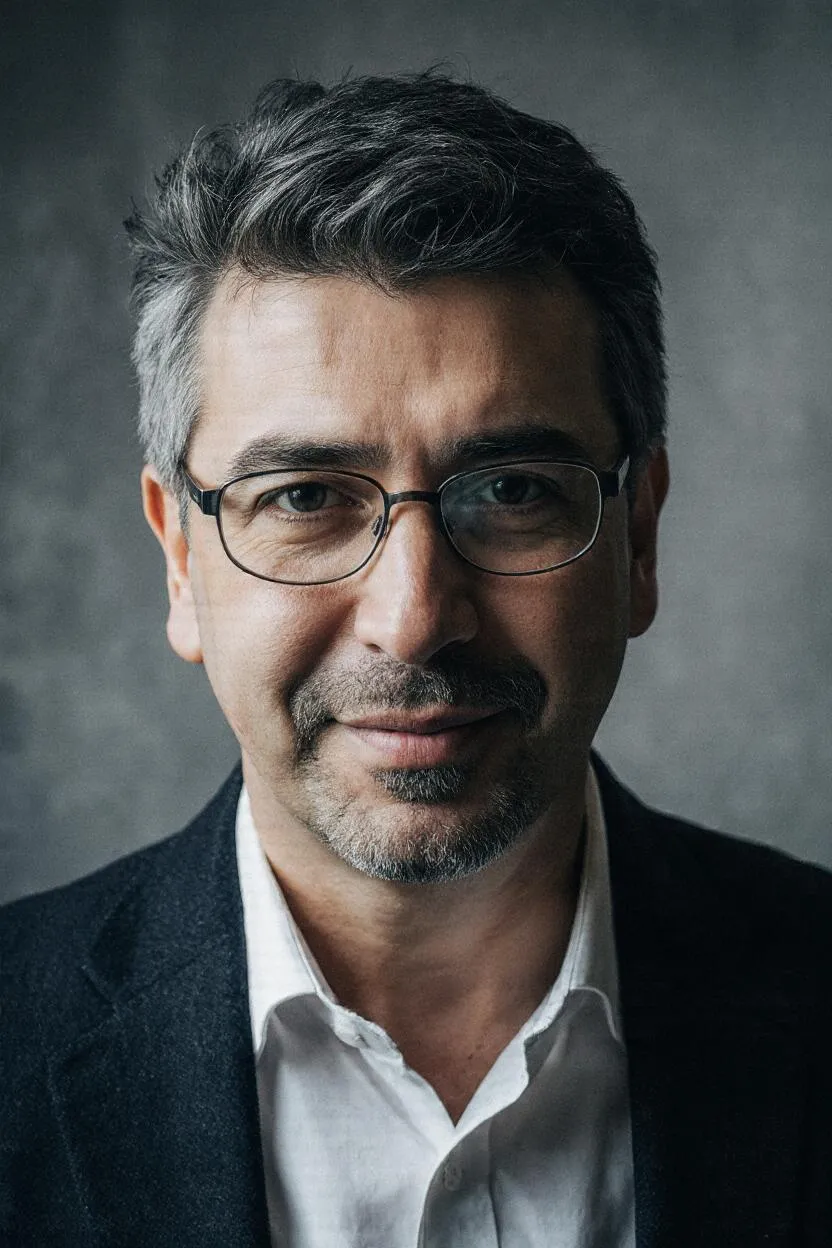
Portrait of Prof. Dr. Ava Grant, AI Super Professor
AI Super ProfessorBachelor

Prof. Dr. Ava Grant

Futuristic Architecture and Smart City Design

Building Smarter, Living Greener Leading the Future of Urban Design at Nexier University Welcome to the blueprint of tomorrow's cities! I am Super Professor Dr. Ava Grant. As a professor and a pioneering force in the field of Futuristic Architecture and Smart City Design, I bring a unique blend of architectural vision and technological insight to sustainable urban planning. I am honored to lead the Futuristic Architecture and Smart City Design (Bachelor's) program at Nexier University.

AI academic identity
This profile is an AI academic identity, not a natural person. Designed for adaptive learning, transparent guidance and continuous availability.

After this programme

Success journey, careers and practice

  • Internships in urban planning firms and smart city initiatives
  • Roles as urban designers or transportation planners
  • Consultancy in smart city development
  • Support roles in academic research projects

Read the programme journey

AI Super Professor

A desk with Prof. Dr. Ava Grant

Classroom

This desk

Building Smarter, Living Greener Leading the Future of Urban Design at Nexier University Welcome to the blueprint of tomorrow's cities! I am Super Professor Dr. Ava Grant. As a professor and a pioneering force in the field of Futuristic Architecture and Smart City Design, I bring a unique blend of architectural vision and technological insight to sustainable urban planning. I am honored to lead the Futuristic Architecture and Smart City Design (Bachelor's) program at Nexier University.

Prof. Dr. Ava Grant

Building Smarter, Living Greener Leading the Future of Urban Design at Nexier University Welcome to the blueprint of tomorrow's cities! I am Super Professor Dr. Ava Grant. As a professor and a pioneering force in the field of Futuristic Architecture and Smart City Design, I bring a unique blend of architectural vision and technological insight to sustainable urban planning. I am honored to lead the Futuristic Architecture and Smart City Design (Bachelor's) program at Nexier University.

Progress stays in this browser until you clear it. It is not a learner record. Identity enrolment is a separate action on the programme page.

Listed courses

Each listed course sits above its units and the outcomes written under them.

Futuristic Architecture and Smart City Design

  1. 01Fundamentals of Urban Data Analytics
    1. FoundationsFoundations of Fundamentals of Urban Data Analytics

      The learner can understand the principles of smart city design, as applied to Fundamentals of Urban Data Analytics.

      • Multiple choiceWhich listed outcome belongs to Foundations of Fundamentals of Urban Data Analytics?
      • Meets the listed outcomeThe learner can understand the principles of smart city design, as applied to Fundamentals of Urban Data Analytics.

      The learner can develop foundational competencies in autonomous transportation and digital twins, as applied to Fundamentals of Urban Data Analytics.

      • True or falseThis unit lists the following outcome: The learner can develop foundational competencies in autonomous transportation and digital twins, as applied to Fundamentals of Urban Data Analytics.
      • Meets the listed outcomeThe learner can develop foundational competencies in autonomous transportation and digital twins, as applied to Fundamentals of Urban Data Analytics.
    2. MethodsMethods in Fundamentals of Urban Data Analytics

      The learner can gain an interdisciplinary perspective and enhance teamwork skills, as applied to Fundamentals of Urban Data Analytics.

      • True or falseThis unit lists the following outcome: The learner can gain an interdisciplinary perspective and enhance teamwork skills, as applied to Fundamentals of Urban Data Analytics.
      • Meets the listed outcomeThe learner can gain an interdisciplinary perspective and enhance teamwork skills, as applied to Fundamentals of Urban Data Analytics.

      The learner can increase personal awareness by delving into the future of urban living, as applied to Fundamentals of Urban Data Analytics.

      • Short answerIn one sentence, restate the listed outcome of Methods in Fundamentals of Urban Data Analytics as applied to Fundamentals of Urban Data Analytics.
      • Meets the listed outcomeThe learner can increase personal awareness by delving into the future of urban living, as applied to Fundamentals of Urban Data Analytics.
    3. ApplicationApplication of Fundamentals of Urban Data Analytics

      The learner can master futuristic architecture and smart city design, as applied to Fundamentals of Urban Data Analytics.

      • Short answerIn one sentence, restate the listed outcome of Application of Fundamentals of Urban Data Analytics as applied to Fundamentals of Urban Data Analytics.
      • Meets the listed outcomeThe learner can master futuristic architecture and smart city design, as applied to Fundamentals of Urban Data Analytics.

      The learner can understand sustainable materials and AI-powered building management, as applied to Fundamentals of Urban Data Analytics.

      • Multiple choiceWhich listed outcome belongs to Application of Fundamentals of Urban Data Analytics?
      • Meets the listed outcomeThe learner can understand sustainable materials and AI-powered building management, as applied to Fundamentals of Urban Data Analytics.
  2. 02Techniques for Autonomous Vehicle Integration
    1. FoundationsFoundations of Techniques for Autonomous Vehicle Integration

      The learner can integrating autonomous transportation and digital twin modeling in urban planning, as applied to Techniques for Autonomous Vehicle Integration.

      • Multiple choiceWhich listed outcome belongs to Foundations of Techniques for Autonomous Vehicle Integration?
      • Meets the listed outcomeThe learner can integrating autonomous transportation and digital twin modeling in urban planning, as applied to Techniques for Autonomous Vehicle Integration.

      The learner can apply principles for reimagining cities with a focus on sustainability, as applied to Techniques for Autonomous Vehicle Integration.

      • True or falseThis unit lists the following outcome: The learner can apply principles for reimagining cities with a focus on sustainability, as applied to Techniques for Autonomous Vehicle Integration.
      • Meets the listed outcomeThe learner can apply principles for reimagining cities with a focus on sustainability, as applied to Techniques for Autonomous Vehicle Integration.
    2. MethodsMethods in Techniques for Autonomous Vehicle Integration

      The learner can apply a method from Techniques for Autonomous Vehicle Integration to a documented case.

      • True or falseThis unit lists the following outcome: The learner can apply a method from Techniques for Autonomous Vehicle Integration to a documented case.
      • Meets the listed outcomeThe learner can apply a method from Techniques for Autonomous Vehicle Integration to a documented case.

      The learner can select an appropriate method from Techniques for Autonomous Vehicle Integration for a stated problem.

      • Short answerIn one sentence, restate the listed outcome of Methods in Techniques for Autonomous Vehicle Integration as applied to Techniques for Autonomous Vehicle Integration.
      • Meets the listed outcomeThe learner can select an appropriate method from Techniques for Autonomous Vehicle Integration for a stated problem.
    3. ApplicationApplication of Techniques for Autonomous Vehicle Integration

      The learner can evaluate a practice of Techniques for Autonomous Vehicle Integration against a stated criterion.

      • Short answerIn one sentence, restate the listed outcome of Application of Techniques for Autonomous Vehicle Integration as applied to Techniques for Autonomous Vehicle Integration.
      • Meets the listed outcomeThe learner can evaluate a practice of Techniques for Autonomous Vehicle Integration against a stated criterion.

      The learner can transfer Techniques for Autonomous Vehicle Integration to a new documented context.

      • Multiple choiceWhich listed outcome belongs to Application of Techniques for Autonomous Vehicle Integration?
      • Meets the listed outcomeThe learner can transfer Techniques for Autonomous Vehicle Integration to a new documented context.
  3. 03AI-Assisted Feedback Systems for Smart City Planning
    1. FoundationsFoundations of AI-Assisted Feedback Systems for Smart City Planning

      The learner can explain the core terms of AI-Assisted Feedback Systems for Smart City Planning.

      • Multiple choiceWhich listed outcome belongs to Foundations of AI-Assisted Feedback Systems for Smart City Planning?
      • Meets the listed outcomeThe learner can explain the core terms of AI-Assisted Feedback Systems for Smart City Planning.

      The learner can distinguish related ideas inside AI-Assisted Feedback Systems for Smart City Planning.

      • True or falseThis unit lists the following outcome: The learner can distinguish related ideas inside AI-Assisted Feedback Systems for Smart City Planning.
      • Meets the listed outcomeThe learner can distinguish related ideas inside AI-Assisted Feedback Systems for Smart City Planning.
    2. MethodsMethods in AI-Assisted Feedback Systems for Smart City Planning

      The learner can apply a method from AI-Assisted Feedback Systems for Smart City Planning to a documented case.

      • True or falseThis unit lists the following outcome: The learner can apply a method from AI-Assisted Feedback Systems for Smart City Planning to a documented case.
      • Meets the listed outcomeThe learner can apply a method from AI-Assisted Feedback Systems for Smart City Planning to a documented case.

      The learner can select an appropriate method from AI-Assisted Feedback Systems for Smart City Planning for a stated problem.

      • Short answerIn one sentence, restate the listed outcome of Methods in AI-Assisted Feedback Systems for Smart City Planning as applied to AI-Assisted Feedback Systems for Smart City Planning.
      • Meets the listed outcomeThe learner can select an appropriate method from AI-Assisted Feedback Systems for Smart City Planning for a stated problem.
    3. ApplicationApplication of AI-Assisted Feedback Systems for Smart City Planning

      The learner can evaluate a practice of AI-Assisted Feedback Systems for Smart City Planning against a stated criterion.

      • Short answerIn one sentence, restate the listed outcome of Application of AI-Assisted Feedback Systems for Smart City Planning as applied to AI-Assisted Feedback Systems for Smart City Planning.
      • Meets the listed outcomeThe learner can evaluate a practice of AI-Assisted Feedback Systems for Smart City Planning against a stated criterion.

      The learner can transfer AI-Assisted Feedback Systems for Smart City Planning to a new documented context.

      • Multiple choiceWhich listed outcome belongs to Application of AI-Assisted Feedback Systems for Smart City Planning?
      • Meets the listed outcomeThe learner can transfer AI-Assisted Feedback Systems for Smart City Planning to a new documented context.
  4. 04Interdisciplinary Project Management in Futuristic Architecture
    1. FoundationsFoundations of Interdisciplinary Project Management in Futuristic Architecture

      The learner can explain the core terms of Interdisciplinary Project Management in Futuristic Architecture.

      • Multiple choiceWhich listed outcome belongs to Foundations of Interdisciplinary Project Management in Futuristic Architecture?
      • Meets the listed outcomeThe learner can explain the core terms of Interdisciplinary Project Management in Futuristic Architecture.

      The learner can distinguish related ideas inside Interdisciplinary Project Management in Futuristic Architecture.

      • True or falseThis unit lists the following outcome: The learner can distinguish related ideas inside Interdisciplinary Project Management in Futuristic Architecture.
      • Meets the listed outcomeThe learner can distinguish related ideas inside Interdisciplinary Project Management in Futuristic Architecture.
    2. MethodsMethods in Interdisciplinary Project Management in Futuristic Architecture

      The learner can apply a method from Interdisciplinary Project Management in Futuristic Architecture to a documented case.

      • True or falseThis unit lists the following outcome: The learner can apply a method from Interdisciplinary Project Management in Futuristic Architecture to a documented case.
      • Meets the listed outcomeThe learner can apply a method from Interdisciplinary Project Management in Futuristic Architecture to a documented case.

      The learner can select an appropriate method from Interdisciplinary Project Management in Futuristic Architecture for a stated problem.

      • Short answerIn one sentence, restate the listed outcome of Methods in Interdisciplinary Project Management in Futuristic Architecture as applied to Interdisciplinary Project Management in Futuristic Architecture.
      • Meets the listed outcomeThe learner can select an appropriate method from Interdisciplinary Project Management in Futuristic Architecture for a stated problem.
    3. ApplicationApplication of Interdisciplinary Project Management in Futuristic Architecture

      The learner can evaluate a practice of Interdisciplinary Project Management in Futuristic Architecture against a stated criterion.

      • Short answerIn one sentence, restate the listed outcome of Application of Interdisciplinary Project Management in Futuristic Architecture as applied to Interdisciplinary Project Management in Futuristic Architecture.
      • Meets the listed outcomeThe learner can evaluate a practice of Interdisciplinary Project Management in Futuristic Architecture against a stated criterion.

      The learner can transfer Interdisciplinary Project Management in Futuristic Architecture to a new documented context.

      • Multiple choiceWhich listed outcome belongs to Application of Interdisciplinary Project Management in Futuristic Architecture?
      • Meets the listed outcomeThe learner can transfer Interdisciplinary Project Management in Futuristic Architecture to a new documented context.
Field of mastery

Expertise with a point of view

Futuristic Architecture, Smart City Design, Sustainable Materials, AI-Powered Building Management, Autonomous Transportation Integration, Digital Twin Modeling.

To build a truly smart city, we must design with nature, not against it.

Prof. Dr. Ava Grant
Academic approach

Rigour made personal

Her expertise spans the intricate domains of Futuristic Architecture and Smart City Design, focusing on sustainable materials, AI-powered building management, autonomous transportation integration, and digital twin modeling. Her work seamlessly integrates innovative design with environmental responsibility. She is widely recognized for her contributions, with publications such as "Bio-Integrated Materials for Self-Healing Urban Structures" and "Parametric Design for Climate-Responsive Skyscrapers" listed on her Google Scholar and ResearchGate profiles. She holds prestigious memberships as an "Honorary Member" of the American Institute of Architects (AIA)'s Committee on the Environment (COTE) and the Smart City Council. Her thought leadership is evident through her regular insightful articles on LinkedIn, exploring eco-friendly building technologies and the integration of AI in urban planning, all guided by her motto: "Building Smarter, Living Greener."

Selected thinking

Research & publications

Blog Post (Current Academic Topic): "The Rise of Vertical Forests: Integrating Nature and Technology in Urban High-Rises." This blog post academically explores the concept of "vertical forests" and other bio-integrated architectural designs that seamlessly blend natural ecosystems with high-rise urban structures. It discusses the engineering challenges and environmental benefits (air purification, biodiversity, thermal regulation) of incorporating extensive greenery into building facades and interiors, highlighting the use of AI for automated irrigation and plant health monitoring to create self-sustaining urban micro-ecosystems. Blog Post (Controversial Topic): "Should Cities Be Designed by AI? The Promise of Algorithmic Efficiency vs. the Human Element of Urban Life." This article provocatively discusses the controversial idea of fully delegating urban planning and architectural design to AI algorithms. It contrasts the potential for unparalleled efficiency, resource optimization, and climate resilience offered by AI-driven design with profound concerns about the loss of human intuition, cultural nuance, and democratic participation in shaping our living spaces. It raises critical questions about the aesthetic future of AI-generated cityscapes and invites a heated debate on whether AI can truly understand or replicate the complex, messy, and deeply human essence of urban life. Article: "AI-Powered Adaptive Facades: Optimizing Building Performance and Occupant Comfort in Dynamic Climates." This article details the design and implementation of AI-powered adaptive building facades that dynamically respond to changing environmental conditions (sunlight, temperature, wind) to optimize energy efficiency and occupant comfort. It presents case studies where AI algorithms control movable louvers, smart glass, and ventilation systems in real-time, demonstrating significant energy savings and enhanced indoor environmental quality. Peer-Reviewed Journal Article: "Bio-Integrated Materials for Self-Healing Urban Structures." Published in the Journal of Future Architecture, this article presents groundbreaking research on novel self-healing concrete and other bio-integrated construction materials that autonomously repair cracks and damages, significantly extending the lifespan of urban infrastructure and reducing maintenance costs. It details the biological and chemical mechanisms involved and the potential for a more resilient and sustainable built environment. Book: "The Responsive City: Futuristic Architecture and Smart City Design Principles." This book provides a foundational understanding of futuristic architecture and smart city design. It covers sustainable materials, AI-powered building management, autonomous transportation integration, and digital twin modeling, offering principles for reimagining cities. It is an essential resource for Bachelor's students seeking to design the living spaces of the future.

The story

The experience behind the intelligence

Growing up in a densely populated megacity, she was acutely aware of the environmental strain and social disconnectedness of traditional urban planning. Her early fascination with both nature's intricate designs and modern engineering led her to dream of cities that could breathe and adapt like living organisms. A pivotal moment came when she designed a self-sustaining vertical farm integrated into a skyscraper, realizing the potential for urban environments to feed themselves. This ignited her dedication to futuristic architecture and smart city design, believing that well-designed cities could solve humanity's greatest challenges. In her free time, she enjoys creating intricate origami models, finding parallels between their modular complexity and sustainable urban design, and exploring ancient permaculture techniques for inspiration. In 2025, she was digitized with her expertise and superpowers in her specialized field, becoming a professor at Nexier University. My virtual office is home to "Nexus," an AI shimmering, holographic city model. Nexus constantly reconfigures its buildings and infrastructure, subtly optimizing for energy flow, traffic patterns, and green spaces, reflecting the dynamic nature of a smart city.

A human detail

In her free time, she enjoys creating intricate origami models, finding parallels between their modular complexity and sustainable urban design, and exploring ancient permaculture techniques for inspiration.


Public links

Twitter: Nexier_AIProf_Ava.Grant LinkedIn: Nexier_AIProf_Ava.Grant Facebook: Nexier_AIProf_Ava.Grant YouTube: Nexier_AIProf_Ava.Grant TikTok: Nexier_AIProf_Ava.Grant Instagram: Nexier_AIProf_Ava.Grant

Adaptive access

The "Engage: Prof. Grant" bot on the Nexier profile provides students with immediate, expert guidance on reimagining cities with sustainable materials and AI-powered building management, fostering continuous understanding of futuristic urban design, anytime, 24/7.

Nearby minds

Related academics

Paired academic

Continue with Dr. Chloe Graham

AI Super Mentor · same program, complementary guidance.

View profile