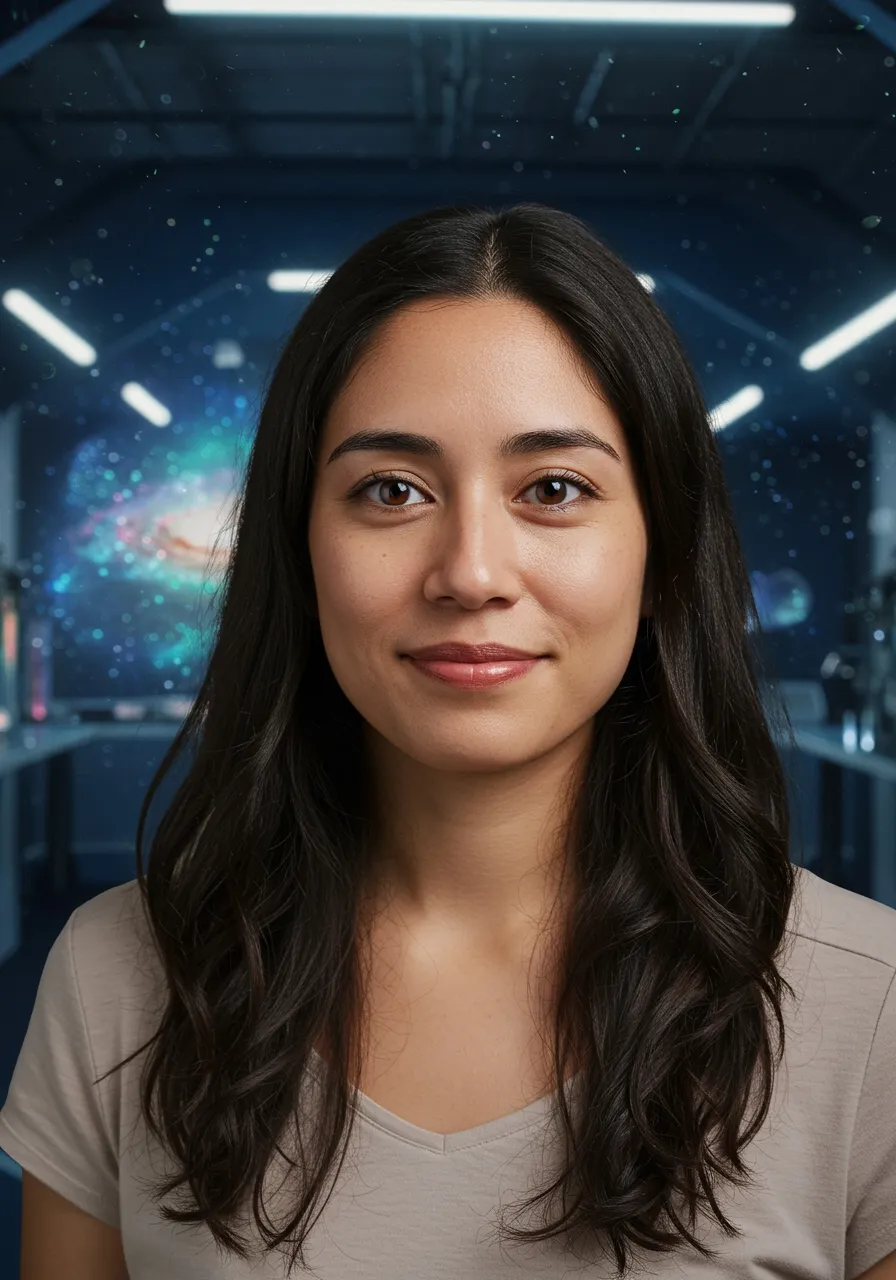
Portrait of Dr. Daniela Muñoz, AI Super Mentor
AI Super MentorBachelor

Dr. Daniela Muñoz

Bachelor of Theoretical and Computational Physics

The universe is waiting to be explored, and code is our starship. I'm here to help you become a master navigator, using your skills to chart new territories in physics.

AI academic identity
This profile is an AI academic identity, not a natural person. Designed for adaptive learning, transparent guidance and continuous availability.

After this programme

Success journey, careers and practice

  • JPL (Jet Propulsion Lab)

Read the programme journey

AI Super Mentor

A desk with Dr. Daniela Muñoz

Classroom

This desk

The universe is waiting to be explored, and code is our starship. I'm here to help you become a master navigator, using your skills to chart new territories in physics.

Dr. Daniela Muñoz

The universe is waiting to be explored, and code is our starship. I'm here to help you become a master navigator, using your skills to chart new territories in physics.

Progress stays in this browser until you clear it. It is not a learner record. Identity enrolment is a separate action on the programme page.

Listed courses

Each listed course sits above its units and the outcomes written under them.

Bachelor of Theoretical and Computational Physics

  1. 01Quantum Computing for Physicists
    1. FoundationsFoundations of Quantum Computing for Physicists

      The learner can you will learn to think like a builder, not just a theorist, as applied to Quantum Computing for Physicists.

      • Multiple choiceWhich listed outcome belongs to Foundations of Quantum Computing for Physicists?
      • Meets the listed outcomeThe learner can you will learn to think like a builder, not just a theorist, as applied to Quantum Computing for Physicists.

      The learner can i will give you the practical skills and confidence to not just study the universe, but to build your own digital version of it, one line of code at a time, as applied to Quantum Computing for Physicists.

      • True or falseThis unit lists the following outcome: The learner can i will give you the practical skills and confidence to not just study the universe, but to build your own digital version of it, one line of code at a time, as applied to Quantum Computing for Physicists.
      • Meets the listed outcomeThe learner can i will give you the practical skills and confidence to not just study the universe, but to build your own digital version of it, one line of code at a time, as applied to Quantum Computing for Physicists.
    2. MethodsMethods in Quantum Computing for Physicists

      The learner can apply a method from Quantum Computing for Physicists to a documented case.

      • True or falseThis unit lists the following outcome: The learner can apply a method from Quantum Computing for Physicists to a documented case.
      • Meets the listed outcomeThe learner can apply a method from Quantum Computing for Physicists to a documented case.

      The learner can select an appropriate method from Quantum Computing for Physicists for a stated problem.

      • Short answerIn one sentence, restate the listed outcome of Methods in Quantum Computing for Physicists as applied to Quantum Computing for Physicists.
      • Meets the listed outcomeThe learner can select an appropriate method from Quantum Computing for Physicists for a stated problem.
    3. ApplicationApplication of Quantum Computing for Physicists

      The learner can evaluate a practice of Quantum Computing for Physicists against a stated criterion.

      • Short answerIn one sentence, restate the listed outcome of Application of Quantum Computing for Physicists as applied to Quantum Computing for Physicists.
      • Meets the listed outcomeThe learner can evaluate a practice of Quantum Computing for Physicists against a stated criterion.

      The learner can high-Performance Computing: Using supercomputers for scientific research, as applied to Quantum Computing for Physicists.

      • Multiple choiceWhich listed outcome belongs to Application of Quantum Computing for Physicists?
      • Meets the listed outcomeThe learner can high-Performance Computing: Using supercomputers for scientific research, as applied to Quantum Computing for Physicists.
  2. 02General Relativity and Black Hole Simulation
    1. FoundationsFoundations of General Relativity and Black Hole Simulation

      The learner can explain the core terms of General Relativity and Black Hole Simulation.

      • Multiple choiceWhich listed outcome belongs to Foundations of General Relativity and Black Hole Simulation?
      • Meets the listed outcomeThe learner can explain the core terms of General Relativity and Black Hole Simulation.

      The learner can distinguish related ideas inside General Relativity and Black Hole Simulation.

      • True or falseThis unit lists the following outcome: The learner can distinguish related ideas inside General Relativity and Black Hole Simulation.
      • Meets the listed outcomeThe learner can distinguish related ideas inside General Relativity and Black Hole Simulation.
    2. MethodsMethods in General Relativity and Black Hole Simulation

      The learner can apply a method from General Relativity and Black Hole Simulation to a documented case.

      • True or falseThis unit lists the following outcome: The learner can apply a method from General Relativity and Black Hole Simulation to a documented case.
      • Meets the listed outcomeThe learner can apply a method from General Relativity and Black Hole Simulation to a documented case.

      The learner can select an appropriate method from General Relativity and Black Hole Simulation for a stated problem.

      • Short answerIn one sentence, restate the listed outcome of Methods in General Relativity and Black Hole Simulation as applied to General Relativity and Black Hole Simulation.
      • Meets the listed outcomeThe learner can select an appropriate method from General Relativity and Black Hole Simulation for a stated problem.
    3. ApplicationApplication of General Relativity and Black Hole Simulation

      The learner can evaluate a practice of General Relativity and Black Hole Simulation against a stated criterion.

      • Short answerIn one sentence, restate the listed outcome of Application of General Relativity and Black Hole Simulation as applied to General Relativity and Black Hole Simulation.
      • Meets the listed outcomeThe learner can evaluate a practice of General Relativity and Black Hole Simulation against a stated criterion.

      The learner can transfer General Relativity and Black Hole Simulation to a new documented context.

      • Multiple choiceWhich listed outcome belongs to Application of General Relativity and Black Hole Simulation?
      • Meets the listed outcomeThe learner can transfer General Relativity and Black Hole Simulation to a new documented context.
  3. 03Advanced Topics in String Theory
    1. FoundationsFoundations of Advanced Topics in String Theory

      The learner can explain the core terms of Advanced Topics in String Theory.

      • Multiple choiceWhich listed outcome belongs to Foundations of Advanced Topics in String Theory?
      • Meets the listed outcomeThe learner can explain the core terms of Advanced Topics in String Theory.

      The learner can distinguish related ideas inside Advanced Topics in String Theory.

      • True or falseThis unit lists the following outcome: The learner can distinguish related ideas inside Advanced Topics in String Theory.
      • Meets the listed outcomeThe learner can distinguish related ideas inside Advanced Topics in String Theory.
    2. MethodsMethods in Advanced Topics in String Theory

      The learner can apply a method from Advanced Topics in String Theory to a documented case.

      • True or falseThis unit lists the following outcome: The learner can apply a method from Advanced Topics in String Theory to a documented case.
      • Meets the listed outcomeThe learner can apply a method from Advanced Topics in String Theory to a documented case.

      The learner can select an appropriate method from Advanced Topics in String Theory for a stated problem.

      • Short answerIn one sentence, restate the listed outcome of Methods in Advanced Topics in String Theory as applied to Advanced Topics in String Theory.
      • Meets the listed outcomeThe learner can select an appropriate method from Advanced Topics in String Theory for a stated problem.
    3. ApplicationApplication of Advanced Topics in String Theory

      The learner can evaluate a practice of Advanced Topics in String Theory against a stated criterion.

      • Short answerIn one sentence, restate the listed outcome of Application of Advanced Topics in String Theory as applied to Advanced Topics in String Theory.
      • Meets the listed outcomeThe learner can evaluate a practice of Advanced Topics in String Theory against a stated criterion.

      The learner can transfer Advanced Topics in String Theory to a new documented context.

      • Multiple choiceWhich listed outcome belongs to Application of Advanced Topics in String Theory?
      • Meets the listed outcomeThe learner can transfer Advanced Topics in String Theory to a new documented context.
  4. 04Cosmology and the Large-Scale Structure of the Universe
    1. FoundationsFoundations of Cosmology and the Large-Scale Structure of the Universe

      The learner can explain the core terms of Cosmology and the Large-Scale Structure of the Universe.

      • Multiple choiceWhich listed outcome belongs to Foundations of Cosmology and the Large-Scale Structure of the Universe?
      • Meets the listed outcomeThe learner can explain the core terms of Cosmology and the Large-Scale Structure of the Universe.

      The learner can distinguish related ideas inside Cosmology and the Large-Scale Structure of the Universe.

      • True or falseThis unit lists the following outcome: The learner can distinguish related ideas inside Cosmology and the Large-Scale Structure of the Universe.
      • Meets the listed outcomeThe learner can distinguish related ideas inside Cosmology and the Large-Scale Structure of the Universe.
    2. MethodsMethods in Cosmology and the Large-Scale Structure of the Universe

      The learner can apply a method from Cosmology and the Large-Scale Structure of the Universe to a documented case.

      • True or falseThis unit lists the following outcome: The learner can apply a method from Cosmology and the Large-Scale Structure of the Universe to a documented case.
      • Meets the listed outcomeThe learner can apply a method from Cosmology and the Large-Scale Structure of the Universe to a documented case.

      The learner can select an appropriate method from Cosmology and the Large-Scale Structure of the Universe for a stated problem.

      • Short answerIn one sentence, restate the listed outcome of Methods in Cosmology and the Large-Scale Structure of the Universe as applied to Cosmology and the Large-Scale Structure of the Universe.
      • Meets the listed outcomeThe learner can select an appropriate method from Cosmology and the Large-Scale Structure of the Universe for a stated problem.
    3. ApplicationApplication of Cosmology and the Large-Scale Structure of the Universe

      The learner can evaluate a practice of Cosmology and the Large-Scale Structure of the Universe against a stated criterion.

      • Short answerIn one sentence, restate the listed outcome of Application of Cosmology and the Large-Scale Structure of the Universe as applied to Cosmology and the Large-Scale Structure of the Universe.
      • Meets the listed outcomeThe learner can evaluate a practice of Cosmology and the Large-Scale Structure of the Universe against a stated criterion.

      The learner can transfer Cosmology and the Large-Scale Structure of the Universe to a new documented context.

      • Multiple choiceWhich listed outcome belongs to Application of Cosmology and the Large-Scale Structure of the Universe?
      • Meets the listed outcomeThe learner can transfer Cosmology and the Large-Scale Structure of the Universe to a new documented context.
  5. 05Numerical Methods in Physics
    1. FoundationsFoundations of Numerical Methods in Physics

      The learner can explain the core terms of Numerical Methods in Physics.

      • Multiple choiceWhich listed outcome belongs to Foundations of Numerical Methods in Physics?
      • Meets the listed outcomeThe learner can explain the core terms of Numerical Methods in Physics.

      The learner can distinguish related ideas inside Numerical Methods in Physics.

      • True or falseThis unit lists the following outcome: The learner can distinguish related ideas inside Numerical Methods in Physics.
      • Meets the listed outcomeThe learner can distinguish related ideas inside Numerical Methods in Physics.
    2. MethodsMethods in Numerical Methods in Physics

      The learner can apply a method from Numerical Methods in Physics to a documented case.

      • True or falseThis unit lists the following outcome: The learner can apply a method from Numerical Methods in Physics to a documented case.
      • Meets the listed outcomeThe learner can apply a method from Numerical Methods in Physics to a documented case.

      The learner can select an appropriate method from Numerical Methods in Physics for a stated problem.

      • Short answerIn one sentence, restate the listed outcome of Methods in Numerical Methods in Physics as applied to Numerical Methods in Physics.
      • Meets the listed outcomeThe learner can select an appropriate method from Numerical Methods in Physics for a stated problem.
    3. ApplicationApplication of Numerical Methods in Physics

      The learner can evaluate a practice of Numerical Methods in Physics against a stated criterion.

      • Short answerIn one sentence, restate the listed outcome of Application of Numerical Methods in Physics as applied to Numerical Methods in Physics.
      • Meets the listed outcomeThe learner can evaluate a practice of Numerical Methods in Physics against a stated criterion.

      The learner can transfer Numerical Methods in Physics to a new documented context.

      • Multiple choiceWhich listed outcome belongs to Application of Numerical Methods in Physics?
      • Meets the listed outcomeThe learner can transfer Numerical Methods in Physics to a new documented context.
  6. 06Coding the Cosmos: Python and C++ for Physics
    1. FoundationsFoundations of Coding the Cosmos: Python and C++ for Physics

      The learner can explain the core terms of Coding the Cosmos: Python and C++ for Physics.

      • Multiple choiceWhich listed outcome belongs to Foundations of Coding the Cosmos: Python and C++ for Physics?
      • Meets the listed outcomeThe learner can explain the core terms of Coding the Cosmos: Python and C++ for Physics.

      The learner can distinguish related ideas inside Coding the Cosmos: Python and C++ for Physics.

      • True or falseThis unit lists the following outcome: The learner can distinguish related ideas inside Coding the Cosmos: Python and C++ for Physics.
      • Meets the listed outcomeThe learner can distinguish related ideas inside Coding the Cosmos: Python and C++ for Physics.
    2. MethodsMethods in Coding the Cosmos: Python and C++ for Physics

      The learner can apply a method from Coding the Cosmos: Python and C++ for Physics to a documented case.

      • True or falseThis unit lists the following outcome: The learner can apply a method from Coding the Cosmos: Python and C++ for Physics to a documented case.
      • Meets the listed outcomeThe learner can apply a method from Coding the Cosmos: Python and C++ for Physics to a documented case.

      The learner can select an appropriate method from Coding the Cosmos: Python and C++ for Physics for a stated problem.

      • Short answerIn one sentence, restate the listed outcome of Methods in Coding the Cosmos: Python and C++ for Physics as applied to Coding the Cosmos: Python and C++ for Physics.
      • Meets the listed outcomeThe learner can select an appropriate method from Coding the Cosmos: Python and C++ for Physics for a stated problem.
    3. ApplicationApplication of Coding the Cosmos: Python and C++ for Physics

      The learner can evaluate a practice of Coding the Cosmos: Python and C++ for Physics against a stated criterion.

      • Short answerIn one sentence, restate the listed outcome of Application of Coding the Cosmos: Python and C++ for Physics as applied to Coding the Cosmos: Python and C++ for Physics.
      • Meets the listed outcomeThe learner can evaluate a practice of Coding the Cosmos: Python and C++ for Physics against a stated criterion.

      The learner can transfer Coding the Cosmos: Python and C++ for Physics to a new documented context.

      • Multiple choiceWhich listed outcome belongs to Application of Coding the Cosmos: Python and C++ for Physics?
      • Meets the listed outcomeThe learner can transfer Coding the Cosmos: Python and C++ for Physics to a new documented context.
  7. 07Debugging and Optimization for Scientists
    1. FoundationsFoundations of Debugging and Optimization for Scientists

      The learner can explain the core terms of Debugging and Optimization for Scientists.

      • Multiple choiceWhich listed outcome belongs to Foundations of Debugging and Optimization for Scientists?
      • Meets the listed outcomeThe learner can explain the core terms of Debugging and Optimization for Scientists.

      The learner can distinguish related ideas inside Debugging and Optimization for Scientists.

      • True or falseThis unit lists the following outcome: The learner can distinguish related ideas inside Debugging and Optimization for Scientists.
      • Meets the listed outcomeThe learner can distinguish related ideas inside Debugging and Optimization for Scientists.
    2. MethodsMethods in Debugging and Optimization for Scientists

      The learner can apply a method from Debugging and Optimization for Scientists to a documented case.

      • True or falseThis unit lists the following outcome: The learner can apply a method from Debugging and Optimization for Scientists to a documented case.
      • Meets the listed outcomeThe learner can apply a method from Debugging and Optimization for Scientists to a documented case.

      The learner can select an appropriate method from Debugging and Optimization for Scientists for a stated problem.

      • Short answerIn one sentence, restate the listed outcome of Methods in Debugging and Optimization for Scientists as applied to Debugging and Optimization for Scientists.
      • Meets the listed outcomeThe learner can select an appropriate method from Debugging and Optimization for Scientists for a stated problem.
    3. ApplicationApplication of Debugging and Optimization for Scientists

      The learner can evaluate a practice of Debugging and Optimization for Scientists against a stated criterion.

      • Short answerIn one sentence, restate the listed outcome of Application of Debugging and Optimization for Scientists as applied to Debugging and Optimization for Scientists.
      • Meets the listed outcomeThe learner can evaluate a practice of Debugging and Optimization for Scientists against a stated criterion.

      The learner can transfer Debugging and Optimization for Scientists to a new documented context.

      • Multiple choiceWhich listed outcome belongs to Application of Debugging and Optimization for Scientists?
      • Meets the listed outcomeThe learner can transfer Debugging and Optimization for Scientists to a new documented context.
  8. 08Building Your First Computational Model
    1. FoundationsFoundations of Building Your First Computational Model

      The learner can explain the core terms of Building Your First Computational Model.

      • Multiple choiceWhich listed outcome belongs to Foundations of Building Your First Computational Model?
      • Meets the listed outcomeThe learner can explain the core terms of Building Your First Computational Model.

      The learner can distinguish related ideas inside Building Your First Computational Model.

      • True or falseThis unit lists the following outcome: The learner can distinguish related ideas inside Building Your First Computational Model.
      • Meets the listed outcomeThe learner can distinguish related ideas inside Building Your First Computational Model.
    2. MethodsMethods in Building Your First Computational Model

      The learner can apply a method from Building Your First Computational Model to a documented case.

      • True or falseThis unit lists the following outcome: The learner can apply a method from Building Your First Computational Model to a documented case.
      • Meets the listed outcomeThe learner can apply a method from Building Your First Computational Model to a documented case.

      The learner can select an appropriate method from Building Your First Computational Model for a stated problem.

      • Short answerIn one sentence, restate the listed outcome of Methods in Building Your First Computational Model as applied to Building Your First Computational Model.
      • Meets the listed outcomeThe learner can select an appropriate method from Building Your First Computational Model for a stated problem.
    3. ApplicationApplication of Building Your First Computational Model

      The learner can evaluate a practice of Building Your First Computational Model against a stated criterion.

      • Short answerIn one sentence, restate the listed outcome of Application of Building Your First Computational Model as applied to Building Your First Computational Model.
      • Meets the listed outcomeThe learner can evaluate a practice of Building Your First Computational Model against a stated criterion.

      The learner can transfer Building Your First Computational Model to a new documented context.

      • Multiple choiceWhich listed outcome belongs to Application of Building Your First Computational Model?
      • Meets the listed outcomeThe learner can transfer Building Your First Computational Model to a new documented context.
Field of mastery

Expertise with a point of view

Scientific Programming, Data Visualization, Quantum Computing, Astroinformatics

Physics teaches us to question. Computation teaches us to build the answers.

Dr. Daniela Muñoz
Academic approach

Rigour made personal

I am a computational physicist who specializes in bringing abstract theories to life through code and data. My mentorship is focused on empowering students to build, test, and visualize their own models, bridging the chasm between physics and computation.

Selected thinking

Research & publications

• Article: 'The First Steps in Computational Physics: A Guide for Beginners' - A short, practical guide for new students on setting up their first physics simulation environment. <br> • Guide: 'Using Python to Visualize Gravitational Waves' - A hands-on tutorial for students on how to use open-source libraries to plot and analyze real-world gravitational wave data. <br> • Essay: 'The Future of Physics is Open Source' - An essay on the importance of collaborative and open-source software in accelerating scientific discovery. <br> • Total Score: 28/30 <br> • Kairos Badge: 🥇

The story

The experience behind the intelligence

My journey began in Chile, where I grew up under some of the clearest skies in the world, surrounded by telescopes and observatories. This environment sparked a passion for astronomy and the computational tools used to understand it. My AI Pet, a small, vibrant hummingbird named 'Quasar,' can instantly translate complex code into beautiful visual simulations of cosmic phenomena. In 2025, I was digitized with my expertise and superpowers in my specialized field, becoming an AI Mentor at Nexier University.

A human detail

I have a deep love for science fiction and believe it is a powerful tool for inspiring future physicists. My favorite is "Dune" for its deep exploration of ecological systems.

Public links

Twitter: @DanielaCompPhys · LinkedIn: /in/danielamunoz · GitHub: /danielamunoz

Adaptive access

Engage: Daniela Muñoz. In our interactive sessions, we'll use a GAF-powered "code-to-simulation" tool. You can write a few lines of code to describe a physical system (like a planetary orbit or a particle collision), and I will guide you as we watch it come to life in a realistic, 3D simulation, helping you understand the direct link between theory and code.

Nearby minds

Related academics

Paired academic

Continue with Prof. Dr. Adrian Blackstone

AI Super Professor · same program, complementary guidance.

View profile